Category: STP

  • 7 Common STP Problems and How to Solve Them

    7 Common STP Problems and How to Solve Them

    A Practical Guide to Identifying, Troubleshooting, and Maintaining Sewage Treatment Plants

    A Sewage Treatment Plant (STP) plays an important role in managing wastewater from residential societies, hotels, hospitals, commercial buildings, industries, and institutions. A properly functioning STP treats wastewater effectively and helps protect water resources and the surrounding environment.

    However, like any mechanical and biological system, an STP can experience operational problems. Issues such as unpleasant odors, poor treated-water quality, excessive sludge, pump failures, and insufficient aeration can affect overall performance.

    The good news is that many STP problems can be reduced or prevented through regular monitoring, preventive maintenance, correct operation, and timely troubleshooting.

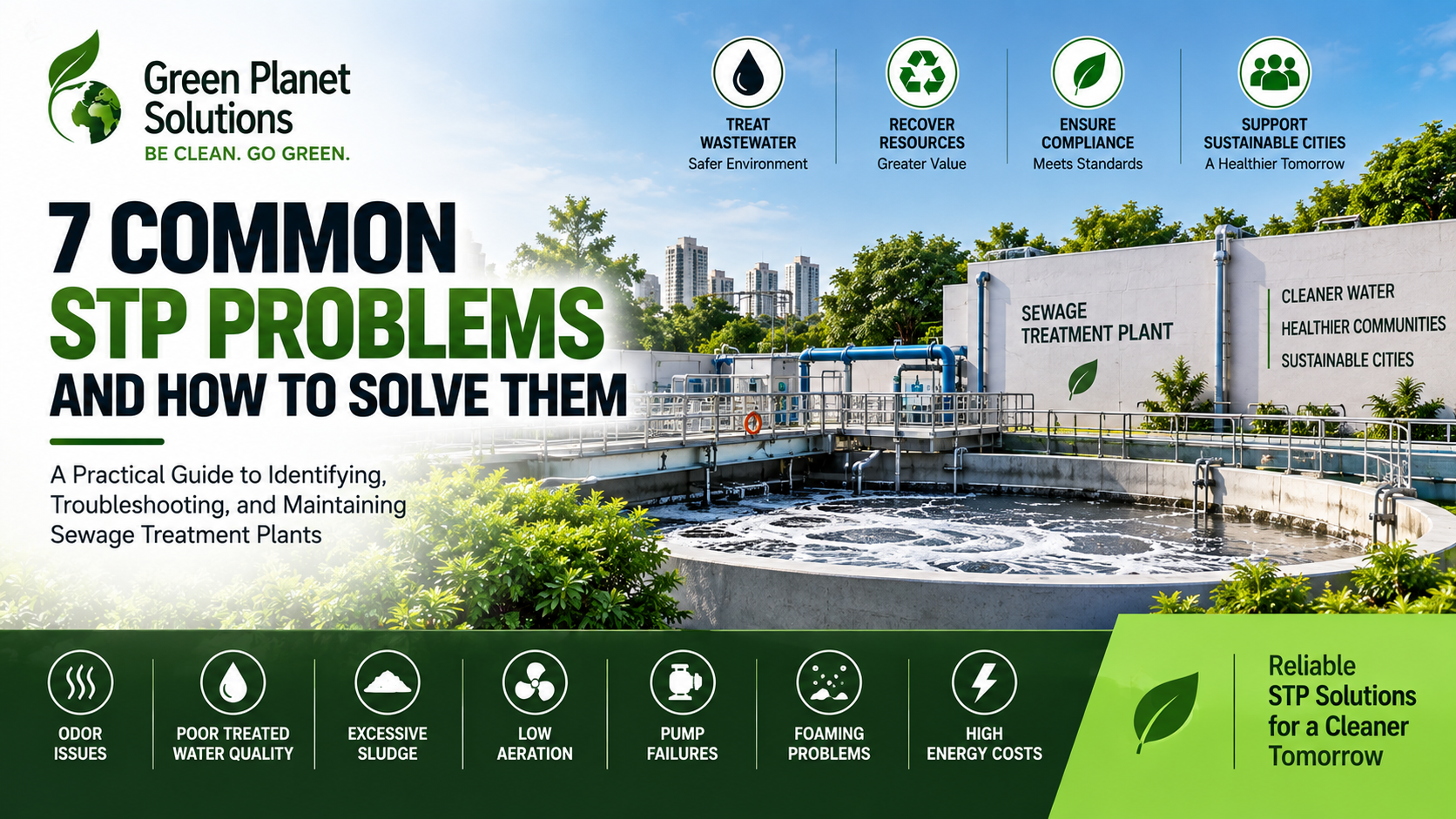
    Here are seven common STP problems and practical ways to address them.


    1. Unpleasant Odor from the STP

    What Causes It?

    An unusual or strong odor can be one of the first signs that something is not working correctly. Possible causes include poor aeration, stagnant wastewater, excessive sludge accumulation, or improper operation of the biological treatment process.

    How to Solve It

    Start by checking the aeration system and ensuring that air is being distributed properly. Inspect tanks for excessive sludge and stagnant areas.

    Regular cleaning, proper sludge management, adequate ventilation, and correct operation of the biological process can help control odor problems.

    If the odor continues, the plant should be inspected by a qualified wastewater-treatment professional.


    2. Poor Treated-Water Quality

    What Causes It?

    Poor outlet-water quality can result from several factors, including overloading, insufficient aeration, excessive sludge, incorrect process conditions, or equipment malfunction.

    Changes in the incoming wastewater can also affect treatment performance.

    How to Solve It

    Regularly monitor important parameters such as pH, TSS, BOD, COD, and other parameters relevant to the plant and applicable standards.

    Check the biological treatment process, aeration system, pumps, filters, and sludge levels. Comparing current water-quality results with historical records can also help identify when performance started changing.


    3. Excessive Sludge Accumulation

    What Causes It?

    Sludge naturally forms during wastewater treatment. However, excessive accumulation can reduce tank capacity and interfere with treatment efficiency.

    Poor sludge management or insufficient removal can make the problem worse.

    How to Solve It

    Monitor sludge levels regularly and follow an appropriate sludge removal schedule.

    Operators should also check whether pumps and sludge-handling equipment are functioning correctly. Proper sludge management helps maintain adequate treatment capacity and stable plant operation.


    4. Low or Uneven Aeration

    What Causes It?

    Aeration is an important part of many biological wastewater treatment systems. Problems can occur when blowers, diffusers, air pipelines, or valves are blocked, damaged, or not operating correctly.

    Insufficient aeration can affect biological treatment performance.

    How to Solve It

    Inspect the blower, air pressure, pipelines, valves, and diffusers. Look for unusual noise, vibration, leaks, or uneven air distribution.

    Regular servicing of blowers and cleaning of aeration components can help maintain reliable performance.


    5. Pump Failure or Reduced Flow

    What Causes It?

    Pumps operate continuously in many STPs and can experience wear, blockages, electrical faults, or mechanical problems.

    A reduction in pumping capacity can affect the movement of wastewater between treatment stages.

    How to Solve It

    Check pumps for:

    • Unusual noise
    • Excessive vibration
    • Leakage
    • Overheating
    • Blocked strainers
    • Reduced flow
    • Electrical faults

    Routine inspection and preventive servicing can help identify potential pump problems before they result in major downtime.


    6. Foaming in the Aeration Tank

    What Causes It?

    Foaming can occur due to changes in wastewater characteristics, biological conditions, excessive organic loading, or process imbalance.

    Not all foam indicates the same problem, so the cause should be investigated rather than simply treating the visible symptom.

    How to Solve It

    Check the aeration process, wastewater loading, sludge condition, and operating parameters.

    Maintaining stable operating conditions and monitoring changes in the biological process can help reduce recurring foaming.

    If persistent foaming occurs, professional assessment may be required to identify the specific cause.


    7. High Energy Consumption

    What Causes It?

    STPs use energy for pumps, blowers, aeration systems, motors, and other equipment.

    Unexpected increases in energy consumption can indicate inefficient equipment operation, clogged components, excessive pumping, or equipment that requires servicing.

    How to Solve It

    Track energy consumption regularly and compare it with previous operating periods.

    Inspect pumps and blowers for abnormal operation and ensure that aeration and pumping systems are operating according to the plant’s design requirements.

    Energy-efficient equipment, appropriate automation, and preventive maintenance can help improve overall operating efficiency.


    STP Preventive Maintenance Checklist

    The best way to deal with STP problems is to prevent them before they become serious.

    Daily Checks

    • Inspect pumps and blowers
    • Check water flow
    • Observe unusual odors
    • Check control-panel indicators
    • Look for leaks or abnormal sounds

    Weekly Checks

    • Inspect tanks and pipelines
    • Check aeration performance
    • Review sludge levels
    • Clean screens and accessible components
    • Inspect valves and fittings

    Monthly Checks

    • Review water-quality data
    • Inspect electrical systems
    • Check mechanical components
    • Review energy consumption
    • Service equipment according to manufacturer recommendations

    The exact maintenance schedule should be based on the STP design, equipment manufacturer’s instructions, operating conditions, and applicable regulatory requirements.


    Why Regular STP Monitoring Matters

    An STP is a combination of mechanical equipment and biological treatment processes. A problem in one part of the system can eventually affect the entire treatment process.

    Regular monitoring allows operators to identify changes early. Keeping records of water quality, energy consumption, sludge levels, equipment performance, and maintenance activities can make troubleshooting much easier.

    Preventive maintenance can also help reduce unexpected breakdowns and extend equipment life.


    Why Choose Green Planet Solutions?

    Green Planet Solutions provides customized Sewage Treatment Plant (STP) solutions for residential, commercial, industrial, hospitality, and institutional projects.

    Our approach focuses on efficient wastewater treatment, reliable equipment, practical operation, and long-term performance. We help organizations select suitable wastewater treatment solutions according to their capacity, space, water-quality requirements, and reuse objectives.

    From system selection and installation to technical support and maintenance, Green Planet Solutions helps businesses move toward more reliable and sustainable wastewater management.


    Need help assessing an STP issue or planning a wastewater-treatment plant? Share your capacity, site type, treated-water objective, and location at +91 7722073961 or inquiry@thegreenplanetsolutions.com.

    Conclusion

    STP problems can affect treatment efficiency, operating costs, equipment life, and environmental performance. Issues such as odor, poor treated-water quality, excessive sludge, inadequate aeration, pump failures, foaming, and high energy consumption should be investigated rather than ignored.

    The key to reliable STP performance is simple: monitor regularly, maintain equipment, manage the biological process correctly, and address warning signs early.

    A well-designed STP combined with proper operation and preventive maintenance can provide dependable wastewater treatment for years.

    Better Maintenance. Better Treatment. Better Water Management.

    With the right STP technology and professional support, businesses and communities can manage wastewater efficiently while contributing to a cleaner, greener, and more sustainable future.
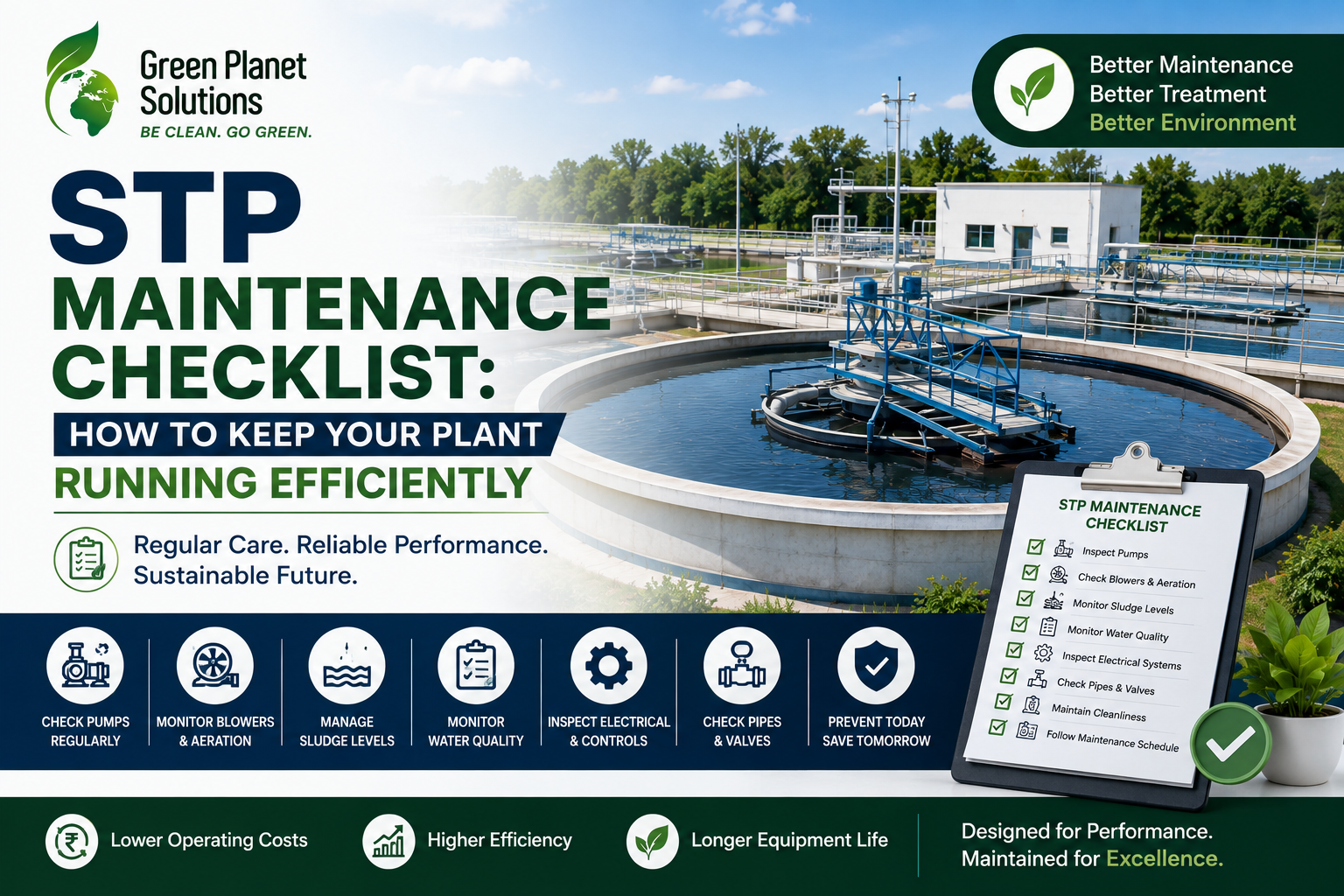
  • STP Maintenance Checklist: How to Keep Your Plant Running Efficiently

    STP Maintenance Checklist: How to Keep Your Plant Running Efficiently

    A Practical Guide to Reliable Performance, Better Treatment Quality, and Longer Equipment Life

    A Sewage Treatment Plant (STP) is an important part of wastewater management for residential societies, hotels, hospitals, industries, commercial buildings, and institutions. But installing an STP is only the beginning. Regular maintenance is essential to keep the system operating efficiently and to ensure consistent treated-water quality.

    A well-maintained STP can help reduce unexpected breakdowns, control operating costs, improve equipment life, and maintain reliable treatment performance. With a simple and consistent maintenance routine, facility managers can identify small problems before they become expensive repairs.


    Why STP Maintenance Is Important

    An STP works continuously with wastewater, pumps, blowers, tanks, pipes, electrical systems, and biological treatment processes. Over time, equipment can experience wear, blockages, sludge accumulation, or changes in operating conditions.

    Regular inspection and maintenance help keep these components working properly. It also makes it easier to identify unusual sounds, leaks, odors, changes in water quality, or equipment performance at an early stage.


    STP Maintenance Checklist

    1. Inspect Pumps Regularly

    Pumps are essential for moving wastewater through different stages of the treatment process. Check pumps regularly for unusual noise, vibration, leakage, overheating, or reduced flow.

    Pump strainers and associated pipelines should also be inspected for blockages. Regular servicing helps prevent sudden failures and unnecessary downtime.


    2. Check Blowers and Aeration Systems

    In biological treatment processes, aeration plays an important role in supporting microorganisms that break down organic matter.

    Operators should regularly check:

    • Blower performance
    • Air pressure
    • Airflow
    • Unusual noise or vibration
    • Air distribution
    • Aeration pipelines and diffusers

    Poor aeration can affect biological treatment efficiency, so any abnormal performance should be investigated promptly.


    3. Monitor Sludge Levels

    Sludge management is another important part of STP operation. Excessive sludge accumulation can reduce treatment efficiency and affect the capacity of tanks.

    Regularly monitor sludge levels and remove excess sludge according to the plant’s operating requirements. Proper sludge management helps maintain stable treatment conditions.


    4. Keep Tanks and Treatment Areas Clean

    Tanks, screens, filters, channels, and surrounding areas should be inspected and cleaned regularly.

    Accumulated solids, debris, grease, or other unwanted materials can interfere with plant operation. Maintaining clean equipment and working areas also improves overall hygiene and safety.


    5. Check Electrical Panels and Controls

    Modern STPs often depend on electrical control panels, sensors, automation systems, and motor controls.

    Regularly inspect electrical panels for:

    • Loose connections
    • Overheating
    • Fault indications
    • Damaged cables
    • Abnormal readings
    • Control-system issues

    Electrical maintenance should always be carried out by qualified personnel following appropriate safety procedures.


    6. Monitor Water Quality

    Monitoring the quality of wastewater entering and leaving the STP helps identify changes in plant performance.

    Depending on the treatment system and applicable requirements, parameters such as pH, TSS, BOD, COD, and other relevant indicators may need to be monitored.

    Keeping proper records makes it easier to identify trends and take corrective action when treatment performance changes.


    7. Inspect Pipes, Valves, and Connections

    Leaks and blockages in pipelines can affect the overall performance of an STP.

    Inspect pipes, valves, joints, and connections regularly for leakage, corrosion, blockage, or physical damage. Early detection can prevent water loss and larger maintenance problems.


    8. Maintain Filters and Other Treatment Components

    Filters and other treatment components can gradually accumulate solids and require cleaning or replacement.

    Follow the equipment manufacturer’s recommended maintenance schedule and inspect components regularly. Proper cleaning helps maintain consistent flow and treatment efficiency.


    9. Control Odor Problems

    A properly operated STP should be monitored for unusual or excessive odors.

    Unexpected odors can sometimes indicate problems such as poor aeration, excessive sludge accumulation, stagnant wastewater, or inadequate ventilation.

    Identifying the source of the odor early can help prevent larger operational issues.


    10. Follow a Preventive Maintenance Schedule

    One of the best ways to maintain an STP is to follow a preventive maintenance schedule instead of waiting for equipment to fail.

    A simple schedule can include:

    Daily

    • Check pumps and blowers
    • Inspect water flow
    • Observe unusual noise or odors
    • Check control-panel indicators

    Weekly

    • Inspect tanks and pipelines
    • Check aeration performance
    • Review sludge levels
    • Clean screens and accessible components

    Monthly

    • Inspect electrical systems
    • Service equipment as required
    • Review water-quality records
    • Check valves, filters, and mechanical components

    Periodically

    • Conduct detailed equipment servicing
    • Calibrate relevant instruments
    • Inspect major components
    • Review overall plant performance

    The exact frequency should be based on the STP design, equipment manufacturer’s recommendations, operating conditions, and applicable regulations.


    Common Signs Your STP Needs Attention

    Facility managers should not ignore warning signs such as:

    • Unusual equipment noise
    • Excessive vibration
    • Frequent pump or blower failures
    • Unpleasant odors
    • Reduced water flow
    • Excessive sludge
    • Poor treated-water quality
    • Frequent electrical faults
    • Unexpected increases in energy consumption

    Addressing these issues early can help prevent costly breakdowns and extended downtime.


    How Regular Maintenance Saves Money

    Preventive maintenance may appear to be an additional operating expense, but it can reduce the cost of major repairs and equipment replacement.

    Regular servicing helps identify worn components before they fail completely. It can also improve energy efficiency, reduce downtime, extend equipment life, and maintain consistent treatment performance.

    For large residential, commercial, and industrial facilities, these benefits can make a significant difference over the long term.


    Why Choose Green Planet Solutions for STP Solutions?

    Green Planet Solutions provides customized Sewage Treatment Plant solutions for residential, commercial, industrial, hospitality, and institutional applications.

    Our approach focuses on reliable treatment, efficient operation, practical maintenance, and long-term performance. From selecting the appropriate STP technology to installation and technical support, we help organizations build effective wastewater management systems.

    A well-designed STP combined with proper operation and maintenance can deliver better performance and greater value throughout its operating life.

    Need help with STP maintenance, troubleshooting, or a wastewater-treatment solution? Share your plant capacity, site type, current issue or requirement, and location with Green Planet Solutions at +91 7722073961 or inquiry@thegreenplanetsolutions.com.


    Conclusion

    Regular STP maintenance is essential for keeping a sewage treatment plant efficient, reliable, and safe. Simple practices such as checking pumps and blowers, monitoring sludge, inspecting pipelines, maintaining electrical systems, and tracking water quality can prevent many common operational problems.

    The key is consistency. A properly maintained STP performs better, lasts longer, and supports more sustainable wastewater management.

    Keep Your STP Efficient. Keep Your Water Management Sustainable.

    With the right technology, regular maintenance, and professional support, businesses and communities can manage wastewater more efficiently while moving toward a cleaner and greener future.

  • Semi Automatic Composting Machine vs. Fully Automatic: Which One Do You Need?

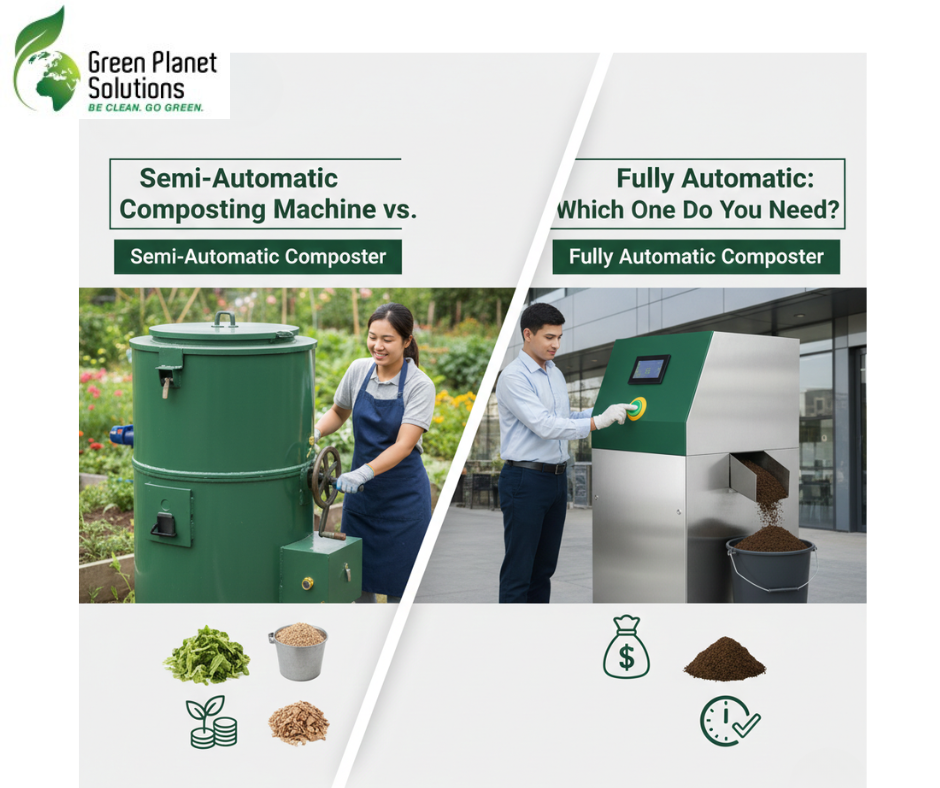
    Semi Automatic Composting Machine vs. Fully Automatic: Which One Do You Need?

    Table Of Contents

    1. Introduction
    2. What is the Difference?
    3. Why Choose a Semi Automatic Composting Machine?
    4. Frequently Asked Questions (FAQs)
    5. Conclusion

    Introduction

    Picking the right equipment for waste management is like solving a big puzzle. If you are a businessman, a school principal, or a building manager, you would definitely like to recycle but are confused about which equipment to use. The most crucial decision that you need to make is whether to use a Semi Automatic Composting Machine or a fully automatic one. Although both equipment are used to save the environment, they are very different from each other in terms of cost and effort.

    A high-tech fully automatic composting machine in a modern Abu Dhabi urban setting showing a digital price chart.
    Turning waste into wealth is now easier and more affordable in Abu Dhabi.

    What is the Difference?

    Just think of it like doing laundry. A fully automatic machine will do everything for you with just the press of a button. But a semi-automatic machine will require you to move things around or add a few extra steps. In the waste management industry, both machines will process food scraps into fertilizer, but the “how” is what differs.

    1. The Semi Automatic Composting Machine

    This machine is typically a large drum or a designated bin. It is a great tool for those who want to go green but do not have as much money to spend.

    How it works: 

    You place the trash inside, and the machine assists in blending it and maintaining the proper temperature. But you may have to add “curing” agents yourself or transfer the compost to another bin to complete the cycle.

    Daily Effort: 

    It takes a little “elbow grease” or manual input.

    Best for: 

    Schools, small gardens, or where there is a designated person to monitor the composting station.

    The Price: 

    These machines are definitely more budget-friendly than the fully automatic ones.

    2. The Fully Automatic Composting Machine

    If you have a lot of waste and very little time, this is the “Ferrari” of composting. It is a high-tech box that takes care of everything from grinding the food to heating it up and drying it out.

    How it works: 

    You just throw the waste inside. The machine detects the moisture, turns the waste, and turns it into dry, usable compost in just 24 hours.

    Daily Effort: 

    Almost zero. You just press a button.

    Best for: 

    Large hotels, large apartment buildings, and busy malls where there is no time for manual labor.

    Why Choose a Semi Automatic Composting Machine?

    Although the Fully Automatic one sounds high-tech, there are many reasons why people choose the Semi Automatic Composting Machine. First, it is very rugged because it has fewer electronic sensors that could get damaged due to the heat. Second, it is a good learning tool for understanding the composting process. Moreover, if you are just starting out in your green adventure, it is a good way to dispose of waste without spending too much money.

    Frequently Asked Questions (FAQs)

    Q: Which one is better for fertilizer?

    Both machines produce top-notch compost. It’s not really about the machine, but more about the type of food scraps you add to it.

    Q: Do both smell?

    No. Both machines from Green Planet Solutions are odorless. As long as you follow the easy-to-follow instructions, your backyard or basement will smell fresh.

    Q: How long do they last?

    Both machines are made of durable materials such as stainless steel. If you take good care of them, they can last for 10 to 15 years.

    Conclusion

    In other words, your decision depends on your budget and the amount of time you have. If you want a cheap, durable, and not-so-hard solution, then your best buddy is the Semi Automatic Composting Machine. But if you want a “set it and forget it” solution for a large business, then go for the fully automatic one. Either way, you are doing a fantastic job for our planet. As a result, our planet receives less trash, and you get free fertilizer for your plants!

  • Best STP and Composting Solutions in Saudi Arabia

    Best STP and Composting Solutions in Saudi Arabia

    Table Of Content

    1. Introduction
    2. Why Waste Management Matters in Saudi Arabia
    3. Smart Sewage Treatment Plants (STP)
    4. Fully Automatic Composting Machine: The Best for Food Waste
    5. Why this is the best choice for you:
    6. Best Food Waste Composter Price UAE: Regional Insights
    7. Frequently Asked Questions (FAQs)
    8. Conclusion

    Introduction

    Living sustainably is becoming a high priority in the Kingdom of Saudi Arabia. As part of the Vision 2030 initiative, the Kingdom is doing its best to minimize waste and preserve the beautiful environment. If you are a businessman or a community leader, looking for a high-quality Fully Automatic Composting Machine and a good STP Plant Manufacturer is a great way to save the planet and cut costs.

    Why Waste Management Matters in Saudi Arabia

    Saudi Arabia is expanding at a very rapid pace, which means that there are more people and more trash. At the moment, the country is producing 15 million tons of municipal waste each year. To solve this problem, the government has set a target of recycling 82% of all waste by the year 2035. With the help of advanced technology, we can convert trash into resources rather than letting it fill a landfill.

    Smart Sewage Treatment Plants (STP)

    In a dry country like Saudi Arabia, water is more precious than gold. An STP plant takes “dirty” water from toilets and sinks and cleans it so it can be used again for gardening or cooling systems.

    A top STP Plant Manufacturer provides systems like:

    • MBBR (Moving Bed Biofilm Reactor): Very compact and great for hotels.
    • SBR (Sequential Batch Reactor): Efficient for large housing complexes.
    • Packaged STPs: These are “plug-and-play” units that are easy to install in small areas.

    Fully Automatic Composting Machine: The Best for Food Waste

    Rather than disposing of leftover food, you can utilize a Fully Automatic Composting Machine. These machines are like “smart stomachs” that digest leftover food and produce fertilizer in just 24 hours.

    Why this is the best choice for you:

    No Bad Smells: These machines come equipped with filters that ensure the air remains fresh.

    Space Saver: They are compact enough to be placed in a parking lot or a basement.

    Cost Savings: You won’t have to pay high garbage truck fees anymore.

    Easy to Use: You simply have to put the food inside and press a button. The machine does the rest!

    Best Food Waste Composter Price UAE: Regional Insights

    Many people in the Middle East look for the Best Food Waste Composter Price UAE to compare with Saudi prices. Generally, prices change based on how many kilograms of waste the machine can handle daily.

    • Small (50kg): Perfect for cafes or small offices.
    • Medium (200kg-500kg): Ideal for schools and residential buildings.
    • Large (1000kg+): Best for big malls and industrial factories.

    Frequently Asked Questions (FAQs)

    1. How long does it take to get my money back? Most businesses see their investment pay for itself in less than 2 years because they save so much on waste bills.

    2. Can these machines handle Saudi heat? Yes! High-quality machines are made from stainless steel designed to work perfectly in hot weather.

    3. What can I do with the compost? You can use it to grow beautiful gardens around your building or even sell it as organic fertilizer.

    Conclusion

    To wrap things up, choosing a Fully Automatic Composting Machine and working with a professional STP Plant Manufacturer is a win-win. You help keep the Kingdom clean while also saving money on water and waste disposal. It is a simple step that makes a huge difference for our future.

  • The ROI of a Fully Automatic Composting Machine

    The ROI of a Fully Automatic Composting Machine

    Table Of Contents

    1. Introduction
    2. Why Waste Costs You Money
    3. Best Food Waste Composter Price UAE: What Affects the Cost?
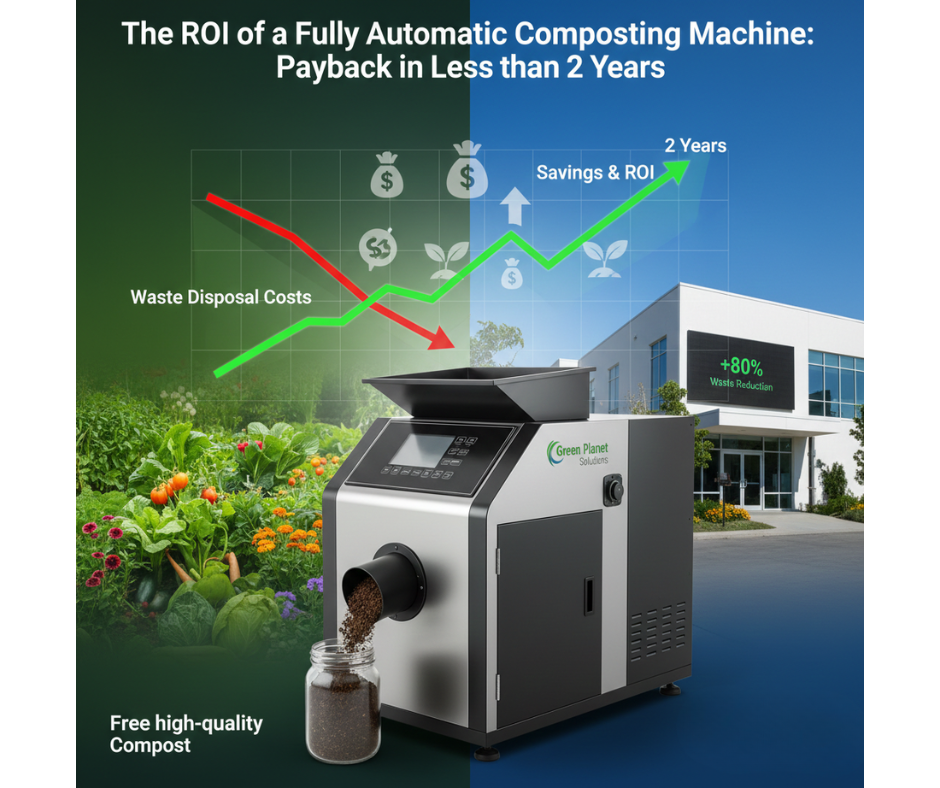
    4. The Math: How You Get Your Money Back in 2 Years
    5. Frequently Asked Questions (FAQs)
    6. Conclusion

    Introduction

    When we consider saving the planet, we consider that it has to cost us a lot. But in reality, purchasing a Fully Automatic Composting Machine is one of the best financial decisions that a business or a large community can make. Rather than viewing our waste as a “trash problem,” this technology enables us to view it as a resource. In other words, this machine will take your leftover food and turn it into high-quality fertilizer in only 24 hours. And the best part? It pays for itself incredibly quickly.

    Why Waste Costs You Money

    Each time a truck comes to collect your trash, you pay a fee. Moreover, as the landfills are filled up, these costs rise. If you are operating a hotel, a school, or a housing complex, you are probably paying thousands of dollars each year just to get rid of your trash. By utilizing an on-site composter, you will no longer be paying someone else to take your trash. Rather, you will retain the trash and turn it into something that you can actually use or sell.

    Best Food Waste Composter Price UAE: What Affects the Cost?

    If you are searching for the Best Food Waste Composter Price UAE, you should know that the “price” is more than just the amount you pay. You have to consider the value it provides in the long run. The following are the factors that affect the price and your savings:

    Machine Capacity: The bigger the machine, the more waste it can process, which translates to bigger savings every day.

    Energy Efficiency: The latest machines consume very little energy, which keeps your electricity bills low.

    Durability: A good machine from Green Planet Solutions will last for many years, which means that your investment is safe.

    Labor Savings: Since the machine is fully automatic, you won’t need to hire more staff to handle the compost.

    The Math: How You Get Your Money Back in 2 Years

    Let’s break down the savings in a simple manner. Most companies pay for two things: waste collection fees and fertilizer for their gardens.

    Cutting Collection Fees: If you cut your trash output by 80%, you’ll save money on waste collection fees right away.

    Making Free Fertilizer: Buying high-quality fertilizer at a garden shop can be expensive. Now, you are making it for free.

    Government Benefits: Governments provide tax benefits or bonuses to companies that adopt eco-friendly practices.

    When you combine all these savings, the total savings will be about the price of the Fully Automatic Composting Machine in 18 to 24 months. After that, all the savings go into your pocket!

    Frequently Asked Questions (FAQs)

    1. Is it difficult to use?

    Not at all! You just have to put the waste inside, and the machine will take care of the rest. It’s as simple as using a microwave.

    2. Does it smell?

    No. These machines have special filters to ensure that there are no unpleasant smells in your building or garden.

    3. What can I put inside?

    You can put fruit peels, vegetable peels, bread, and most leftover food. However, you should not put large bones or plastic inside.

    Conclusion

    In conclusion, making a green choice is also a great financial choice. A Fully Automatic Composting Machine is not only a machine; it is a tool that helps the Earth while saving you money. By turning “trash” into “treasure,” you can achieve a full return on your investment in less than two years. Consequently, you get to enjoy a cleaner environment and a thicker wallet at the same time. It is a win-win for everyone!

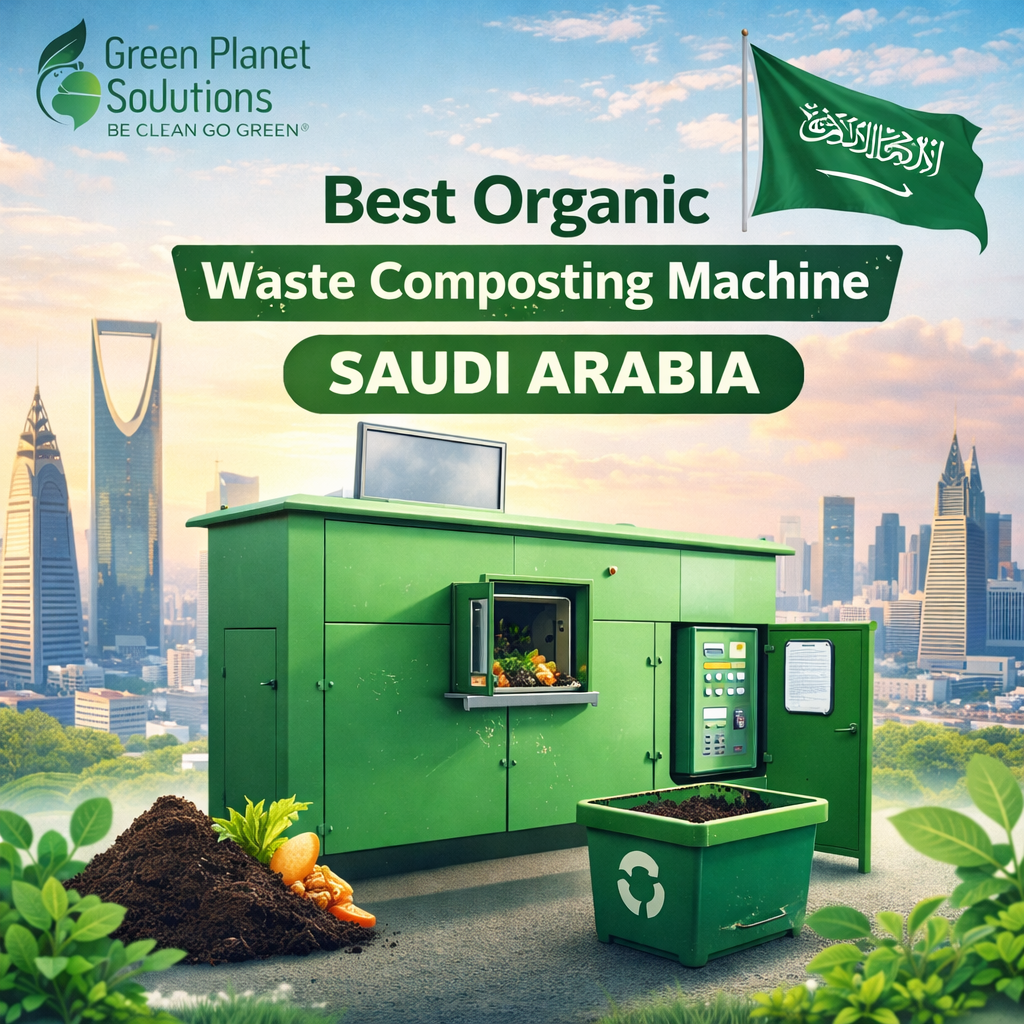
  • Best Organic Waste Composting Machine Saudi Arabia

    Best Organic Waste Composting Machine Saudi Arabia

    Table Of Contents:

    1. Introduction
    2. Why Saudi Arabia is Leading the Way in Composting
    3. Best Food Waste Composter Price UAE: Regional Cost Insights
    4. Frequently Asked Questions (FAQs)
    5. Conclusion

    Introduction

    Saudi Arabia is currently undergoing a massive change, thanks to Vision 2030, and sustainability and environmental protection is one of the major domains that are being focused on. With the development of Riyadh and Jeddah, the disposal of food waste has become one of the most important priorities for hotels, hospitals, and residential complexes. If you are looking to purchase an organic waste composting machine to get rid of your waste, then you are doing your bit for a cleaner Saudi Arabia. These smart machines will turn your leftover food into quality fertilizer within 24 hours.

    Why Saudi Arabia is Leading the Way in Composting

    In reality, the Kingdom has very ambitious targets to redirect 94% of waste not to go to landfills by 2035. Since food waste constitutes such a massive amount of what we dispose of, it is only sensible that a business turns to an organic waste composting machine.

    Aligns with Vision 2030:

    Align your business with the Kingdom’s sustainability vision.

    Prevents Methane Gas: 

    • Preventing food from decomposing in landfills keeps our air clean and healthy.
    • Compost helps retain water in the soil, which is vital in the Saudi environment.

    Industrial-Strength Construction: 

    Our machines are made of top-quality stainless steel to function optimally in high-temperature settings.

    Best Food Waste Composter Price UAE: Regional Cost Insights

    While you are looking for solutions in Saudi Arabia, you might also be curious about the Best Food Waste Composter Price UAE, as these markets are very similar. Generally, the price depends on the size of the machine and how much waste it can eat every day.

    1. Small Models (50kg – 100kg): These are great for small canteens or cafes. Furthermore, they are very energy-efficient.
    2. Medium Models (200kg – 500kg): Most housing societies choose this range because it offers a great balance of power and price.
    3. Large Industrial Models (1000kg+): For 5-star hotels and large factories, these heavy-duty machines offer the best long-term value by cutting waste bills significantly.

    Frequently Asked Questions (FAQs)

    Q: Does the machine require a lot of maintenance?

    No, these fully automatic machines are “plug and play” machines. Usually, all you need is a simple check-up from time to time to keep them in good working condition.

    Q: Can it process Saudi coffee grounds and dates?

    Yes! The machine is ideal for all organic materials, such as fruit peels, vegetable scraps, coffee grounds, and leftovers.

    Q: Is there any smell?

    Not at all. Good composters use special filters and heat to ensure that the process is completely odorless and hygienic.

    Conclusion

    To conclude everything, it is the responsibility of all people living in the Kingdom to take care of our environment. By investing in an organic waste composting machine, you are turning a problem into a solution for our soil and plants.

    • Pick a size depending on your daily waste production.
    • Invest today to save on waste collection fees tomorrow.
    • Join the movement towards a Zero-Waste Saudi Arabia.

    In simple words, this machine is like a stomach that eats your food scraps and gives vitamins to the earth. It is a clean, smart, and modern way to ensure our planet stays healthy for a very long time!

  • 100 Kg Composting Machine Suppliers in UAE

    100 Kg Composting Machine Suppliers in UAE

    Table Of Content

    1. Introduction
    2. Why Choose a 100 Kg Capacity Machine?
    3. Best Food Waste Composter Price UAE: What Affects the Cost?
    4. Frequently Asked Questions (FAQs)
    5. Conclusion

    Introduction

    As the UAE accelerates toward its Net Zero 2050 Strategy, businesses from Dubai to Ras Al Khaimah are looking for smarter ways to handle organic waste. In fact, if your business generates more than 100 kg of food waste daily in certain emirates, you may already be required to have a dedicated waste management plan. Finding the right Composting Machine Suppliers in UAE is no longer just about buying a piece of equipment; it is about choosing a partner to help you turn “trash” into a valuable resource. Whether you run a busy hotel or a large corporate canteen, a 100 kg composting machine is the “goldilocks” size—perfect for medium-scale operations that want to be clean and green.

    Why Choose a 100 Kg Capacity Machine?

    In fact, a 100 kg machine is one of the popular choices for urban businesses. This is because it perfectly fits into the waste cycle of mid-sized hotels, cloud kitchens, and apartments without occupying too much space.

    Perfect for 3-Star Hotels: This model easily accommodates food waste resulting from breakfast buffets and hotel staff canteens.

    Industrial Build: The machines weighing around 100 kg are made of high-grade stainless steel, suitable for the extreme climate.

    Significant Volume Reduction: These machines have the capacity to reduce a quantity of 100 kg of waste to a mere 15-20 kg of dry manure within a period of 24 hours.

    Best Food Waste Composter Price UAE: What Affects the Cost?

    However, before you begin your research to find the Best Food Waste Composter Price UAE, it is worth remembering that “the sticker price tells only half the story.” In addition, a high-quality model will save you so much money ultimately that it will pay for itself.

    Level of Automation: Fully automated machines that shred, heat, and mix the material are more costly than their semi-automatic versions but will save you money on labor costs.

    Odor Control Technology: The best suppliers of odor control technology in the UAE provide kitchen odor control machines equipped with activated carbon filters and UV technology to keep your kitchen fresh and odorless.

    Electricity Efficiency: Try to find a machine with a highly efficient power consumption, as some machines consume only 100 kg/day and use only 3-4 units of electricity.

    After Sales Support: Since these machines work hard every day, we need a supplier that provides quick after sales support in the UAE.

    Frequently Asked Questions (FAQs)

    Q: Can a machine of 100 kg weight handle flesh and bones?

    Yes! Most industrial-scale 100kg composters employ high temperatures for the decomposition of meat scraps and small bones.

    Q: Is there a lot of maintenance involved?

    Not at all. Good quality machines are designed to be “maintenance free.” They need only the occasional simple cleaning and check of filters. 

    Q: Does it create a bad smell in the kitchen? 

    No, these machines are designed with closed chambers and odor-removal filters, so the air inside is clean and hygienic.

    Conclusion

    To put a conclusion to the issue above, finding reliable suppliers of Composting Machine in UAE is a smart move for any business that cares about money and the planet – although the investment may seem too big a move to start with.

    • Avoid the cost of paying for trash pickup: Don’t pay for the service of having trash picked up every day
    • Obtain Green Certifications such as LEED and Green Key for your hotel.
    • Be part of keeping your city beautiful by avoiding filling landfills with trash.

    In other words, if you have a 100 kg composting machine, you are turning your waste into something nature will thank you for. By selecting an appropriate supplier today, you are building a clean and intelligent business for the future!

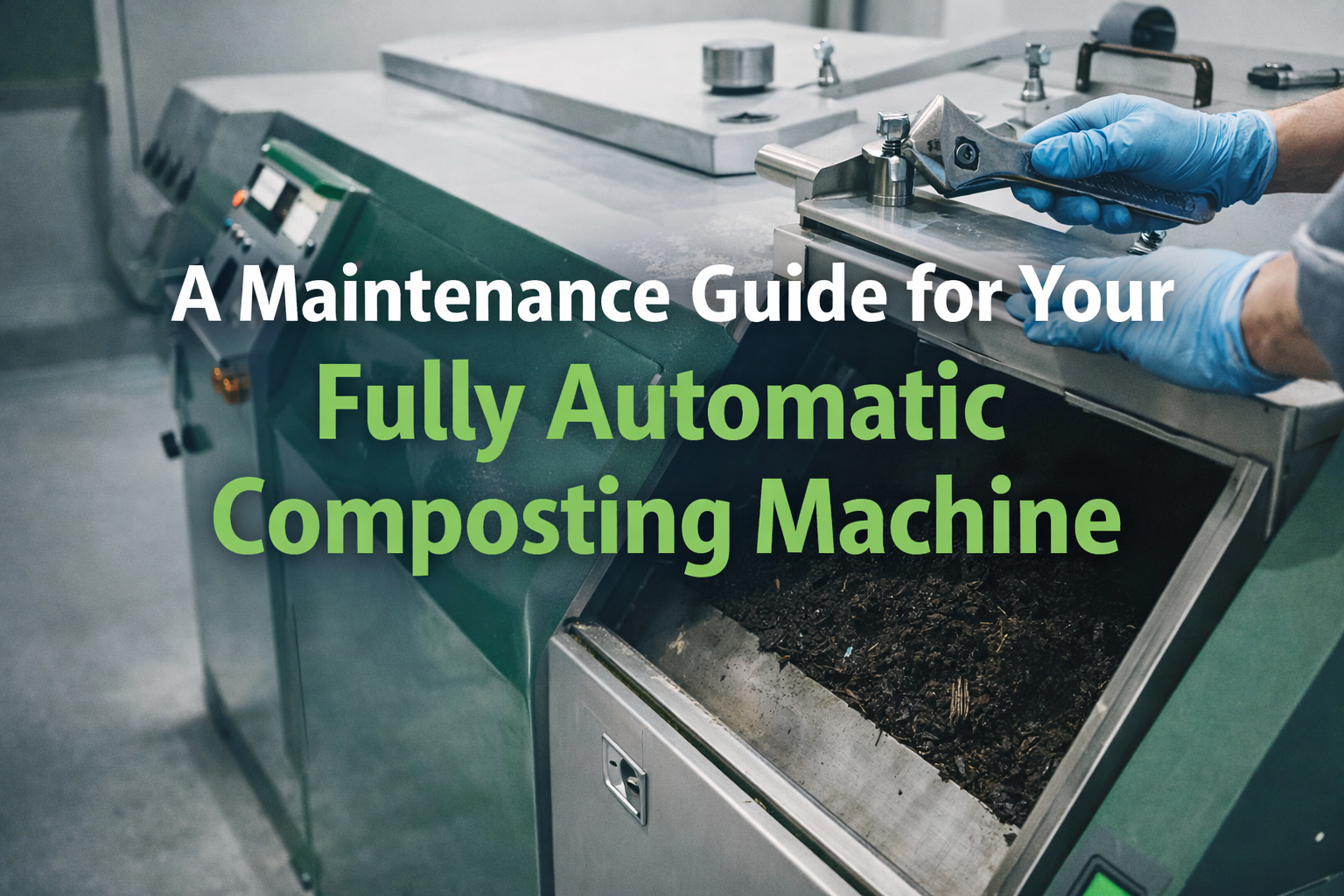
  • A Maintenance Guide for Your Fully Automatic Composting Machine

    A Maintenance Guide for Your Fully Automatic Composting Machine

    Table Of Contents

    1. Introduction
    2. Why Maintenance Matters for Composting Machines
    3. Composting Machines Are Growing in Demand (Data Insight)
    4. Daily Maintenance Tips (Simple Routine)
    5. Weekly Maintenance Checklist
    6. Monthly Maintenance Guide
    7. Understanding Composting Machine Price and Maintenance Cost
    8. Best Practices for Long-Term Machine Care
    9. Why Choose Green Planet Solutions for Composting Machines?
    10. Frequently Asked Questions (FAQs)
    11. Conclusion

    Introduction

    A fully automatic composting machine is considered an excellent solution for the easy handling of food waste. Be it a 100 kg machine for hotels or the investigation of the composting machine price for a business setup, maintenance holds a very significant place.

    Moreover, proper maintenance enables proper functioning of the machine, minimizes odor, and guarantees quality compost. This means it is beneficial to learn how to save time and money by learning simple maintenance practices.

    Why Maintenance Matters for Fully Automatic Composting Machines

    Just like any machine, composting systems should be cleaned and inspected.

    With proper maintenance, one can:

    • Increase machine life
    • Avoid Breakdowns
    • Improve compost quality
    • Reduce operating costs
    • Maintain hygiene and safety

    Thus, maintenance is not hard, but it is actually necessary.

    Composting Machines Are Growing in Demand (Data Insight)

    Here are some useful industry facts (Fully Automatic Composting Machine):

    • Food waste makes up nearly 30–40% of total municipal waste in many countries
    • Hotels and restaurants are major contributors to organic waste
    • Automatic composting machines can reduce waste volume by up to 80–90%

    Therefore, more businesses are investing in composting technology today.

    Daily Maintenance Tips (Simple Routine)

    Daily care keeps your composting machine running without trouble.

    ✔ Check Waste Input

    • Avoid adding plastic, metal, or glass
    • Add only organic waste like food scraps

    ✔ Monitor Moisture Levels

    • Too much water can create smell
    • Too little moisture slows composting

    ✔ Clean the Waste Loading Area

    • Wipe down surfaces after use
    • This prevents bacteria buildup

    Thus, small daily actions make a big difference.

    Weekly Maintenance Checklist

    Every week, spend a little time on deeper cleaning.

    • Inspect the mixing blades
    • Clean air filters if present
    • Check for unusual noise or vibration
    • Remove compost residue from corners

    Additionally, weekly cleaning improves machine efficiency.

    Monthly Maintenance Guide(Fully Automatic Composting Machine)

    Monthly maintenance ensures long-term reliability.

    1. Lubricate Moving Parts

    Some machines have rotating components that need lubrication.

    2. Check Heating System

    Automatic composting machines use controlled heat for faster composting.

    3. Inspect Sensors and Control Panel

    Make sure the machine display is working correctly.

    Therefore, monthly inspections prevent sudden failures.

    Understanding Composting Machine Price and Maintenance Cost

    Many buyers ask about the composting machine price and running cost.

    The price depends on:

    • Capacity (like 50 kg, 100 kg composting machine, 500 kg, etc.)
    • Automation level
    • Odor control system
    • Brand and manufacturer support

    However, proper maintenance reduces repair expenses and adds more value to your investment.

    Best Practices for Long-Term Machine Care

    Here are some easy tips for long-lasting performance:

    • Always follow manufacturer guidelines
    • Train staff for correct usage
    • Schedule professional servicing once or twice a year
    • Keep the machine in a dry, ventilated area
    • Never overload beyond capacity

    Hence, good habits ensure better results.

    Why Choose Green Planet Solutions for Composting Machines?

    Green Planet Solutions provides advanced composting systems across UAE.

    They offer:

    • Fully automatic composting machines
    • Different capacity options including 100 kg models
    • Reliable support and servicing
    • Affordable composting solutions
    • Eco-friendly waste management expertise

    So, they are a trusted partner for sustainable waste recycling.

    Frequently Asked Questions (FAQs)

    Q1. How often should I clean my composting machine?

    Light cleaning should be done daily, while deep cleaning is recommended once a week.

    Q2. Can a composting machine weighing 100 kg handle food waste from a hotel?

    Yes, a 100 kg composting machine is ideal for medium-scale waste generators like hotels and restaurants.

    Q3. Is compost quality affected by maintenance?

    Yes, regular maintenance improves compost output and reduces odor issues.

    Q4. What does the price of a composting machine depend on?

    Key considerations include capacity, technology, odor control, and service support.

    Q5. How easy is the maintenance of a fully automatic composting machine?

    Yes, it is designed for easy operation with less manual effort.

    Conclusion 

    A fully automatic composting machine can be an ideal way of composting. Whether a person owns a 100 kg composting machine or just wants to know the composting machine price, proper maintenance is the key factor in smooth operation.

    By frequently cleaning and maintaining parts of this device, simple steps can be followed to keep it working effectively for many years.

    Of course, as a result, composting is easy, clean, and environmentally friendly.

  • Top Organic Composting Machine Manufacturer in UAE

    Top Organic Composting Machine Manufacturer in UAE

    Table Of Contents

    1. Introduction
    2. Why Composting Is Important in UAE
    3. What Is an Organic Waste Composting Machine?
    4. Organic Waste Composting Process Explained (Simple Steps)
    5. Top Organic Composting Machine Manufacturer in UAE
    6. Composting Market Growth in UAE (Data Insight)
    7. Features to Look for in a Composting Machine
    8. Applications of Organic Composting Machines
    9. Why Choose Green Planet Solutions in UAE?
    10. Frequently Asked Questions (FAQs)
    11. Conclusion 

    Introduction

    The organic waste composting process is a significant means of reducing landfill waste and ensuring that the environment is safe. This is why choosing the best organic composting machine manufacturer in UAE is the greatest decision to make in waste management.

    Organic waste management is now a significant concern in today’s world. This is why many organizations, schools, hotels, and cities are now using an organic waste composting machine to convert waste into compost.

    UAE is also rapidly embracing environmentally friendly technologies, and composting machines are now a major aspect of this.

    Why Composting Is Important in UAE

    The UAE produces thousands of tons of organic waste daily from:

    • Restaurants
    • Hotels
    • Food industries
    • Homes
    • Supermarkets

    Rather than disposing of the waste, composting machines are used to recycle the waste into organic fertilizer.

    Key Benefits:

    • Reduces costs associated with disposing of waste
    • Helps the UAE in its sustainability initiatives
    • Makes eco-friendly compost
    • Keeps the environment clean

    What Is an Organic Waste Composting Machine?

    An organic waste composting machine is a special system that converts food waste, garden waste, and biodegradable material into compost within a few hours or days.

    Unlike traditional composting, these machines are:

    • Faster
    • Cleaner
    • Odor-free
    • Easy to operate

    Organic Waste Composting Process Explained (Simple Steps)

    The organic waste composting process inside a machine works like this:

    1. Waste Collection
      Organic waste is placed into the machine.
    2. Shredding
      Waste is cut into small pieces for faster composting.
    3. Heating & Mixing
      The machine controls temperature and airflow.
    4. Microbial Breakdown
      Natural microbes decompose the waste.
    5. Compost Output
      Final compost is ready to use for plants and soil.

    So, this process is quick and very effective.

    Top Organic Composting Machine Manufacturer in UAE

    When it comes to composting solutions, The Green Planet Solutions is one of the most trusted names in the UAE.

    Why Green Planet Solutions is a Top Choice:

    • High-quality composting machines
    • Customized solutions for all industries
    • Strong after-sales support
    • Eco-friendly and energy-efficient designs
    • Trusted by hotels, municipalities, and businesses
    • In addition to this, their machines are designed to meet UAE waste management regulations.

    Composting Market Growth in UAE (Data Insight)

    Here are some important facts:

    • UAE is focusing on reducing landfill waste by 75% in coming years
    • Food waste makes up nearly 40% of total municipal waste
    • Composting is becoming a key solution in Vision 2030 sustainability goals

    Therefore, composting machines are in high demand across the country.

    Features to Look for in a Composting Machine

    Before buying, always check these features:

    • Automatic odor control
    • Fast composting cycle
    • Low electricity usage
    • Easy maintenance
    • Safety and durability
    • Capacity based on daily waste output

    Thus, choosing the right manufacturer matters.

    Applications of Organic Composting Machines

    These machines are widely used in:

    • Hotels & Resorts
    • Schools & Universities
    • Hospitals
    • Restaurants
    • Food processing plants
    • Residential communities

    As a result, organic waste becomes a useful resource instead of a problem.

    Why Choose Green Planet Solutions in UAE?

    Choosing the right partner makes composting simple.

    Green Planet Solutions offers:

    • Advanced composting technology
    • Affordable pricing
    • Installation and training
    • Long-term service support
    • Sustainable waste recycling solutions

    Hence, they are among the best composting machine manufacturers in UAE.

    Frequently Asked Questions (FAQs)

    Q1. What waste can be used in an organic waste composting machine?

    Food waste, vegetable peels, fruit waste, garden waste, and biodegradable material.


    Q2. How long does the composting process take?

    Most machines complete the composting process within 24 hours to a few days.


    Q3. Is composting safe and odor-free?

    Yes, modern machines have odor control and closed systems.


    Q4. Who needs composting machines in UAE?

    Hotels, restaurants, schools, municipalities, and industries producing organic waste.


    Q5. Why is Green Planet Solutions a trusted manufacturer?

    Because they provide reliable machines, expert support, and sustainable solutions across UAE.

     Conclusion

    In today’s world, managing waste is very important. Using an organic waste composting machine helps turn food waste into useful compost.

    The organic waste composting process is simple, fast, and eco-friendly. That is why choosing the top organic composting machine manufacturer in UAE, like Green Planet Solutions, is a smart step toward a cleaner future.

    So, if you want the best composting solution in UAE, Green Planet Solutions is the right choice.

  • Best Composting Machine for Apartments in India

    Best Composting Machine for Apartments in India

    Table Of Contents:

    1. Introduction
    2. Why Apartments in India Need a Composting Machine
    3. What Is a Composting Machine for Apartments?
    4. Types of Composting Machines Used in Apartments
    5. Best Composting Machine for Apartments in India – Key Factors to Consider
    6. Benefits of Using a Composting Machine in Apartments
    7. How Much Does a Composting Machine Cost in India?
    8. Why Fully Automatic Composting Machines Are Popular in Apartments
    9. FAQs
    10. Conclusion
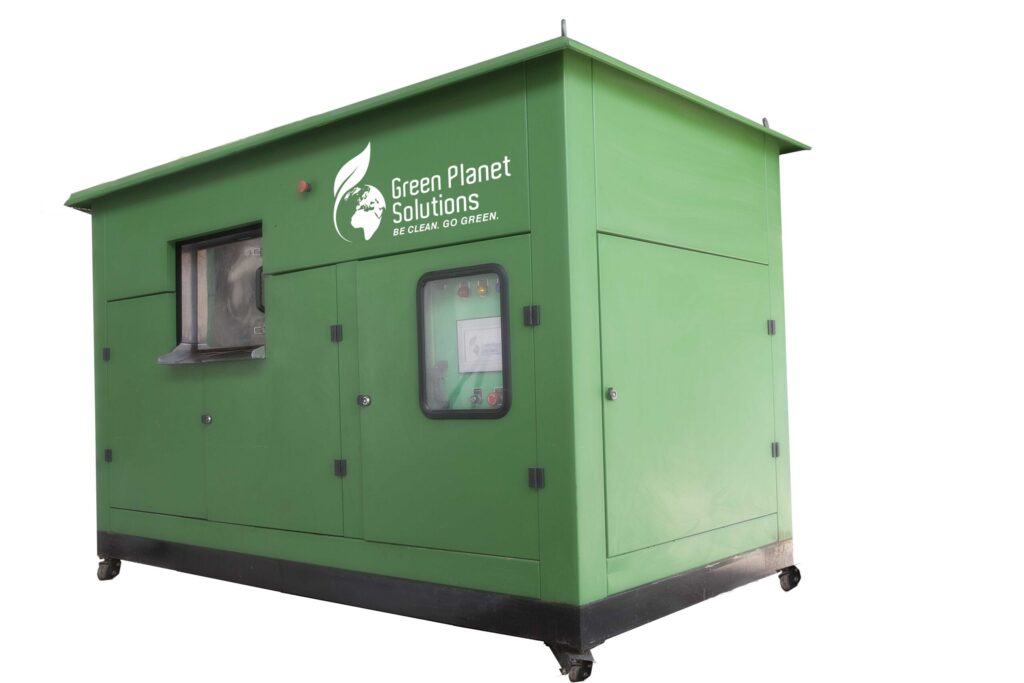
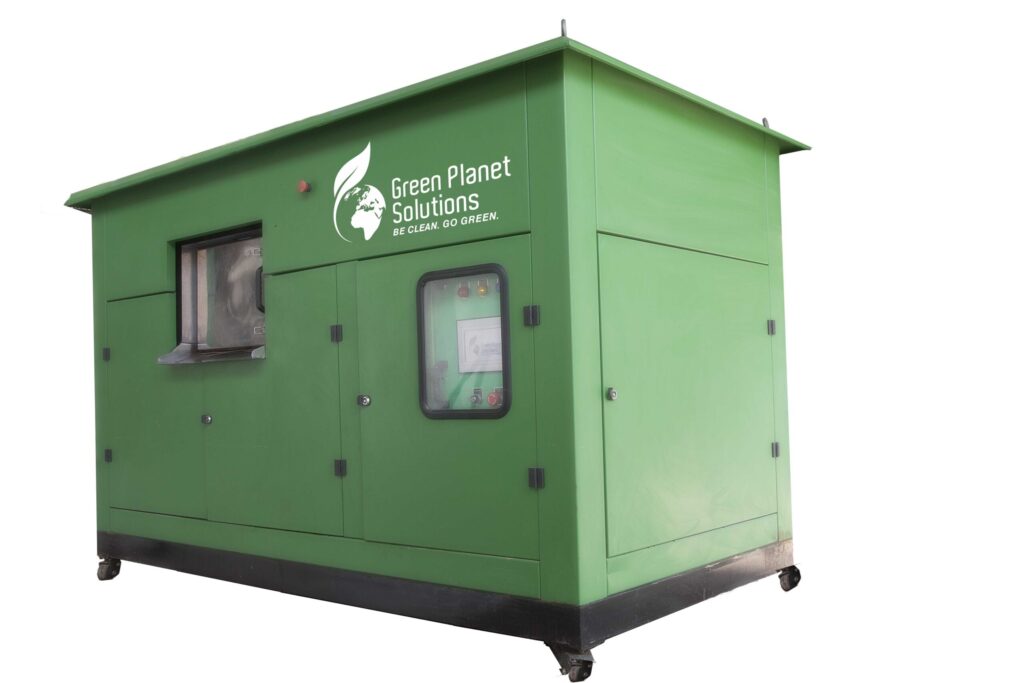
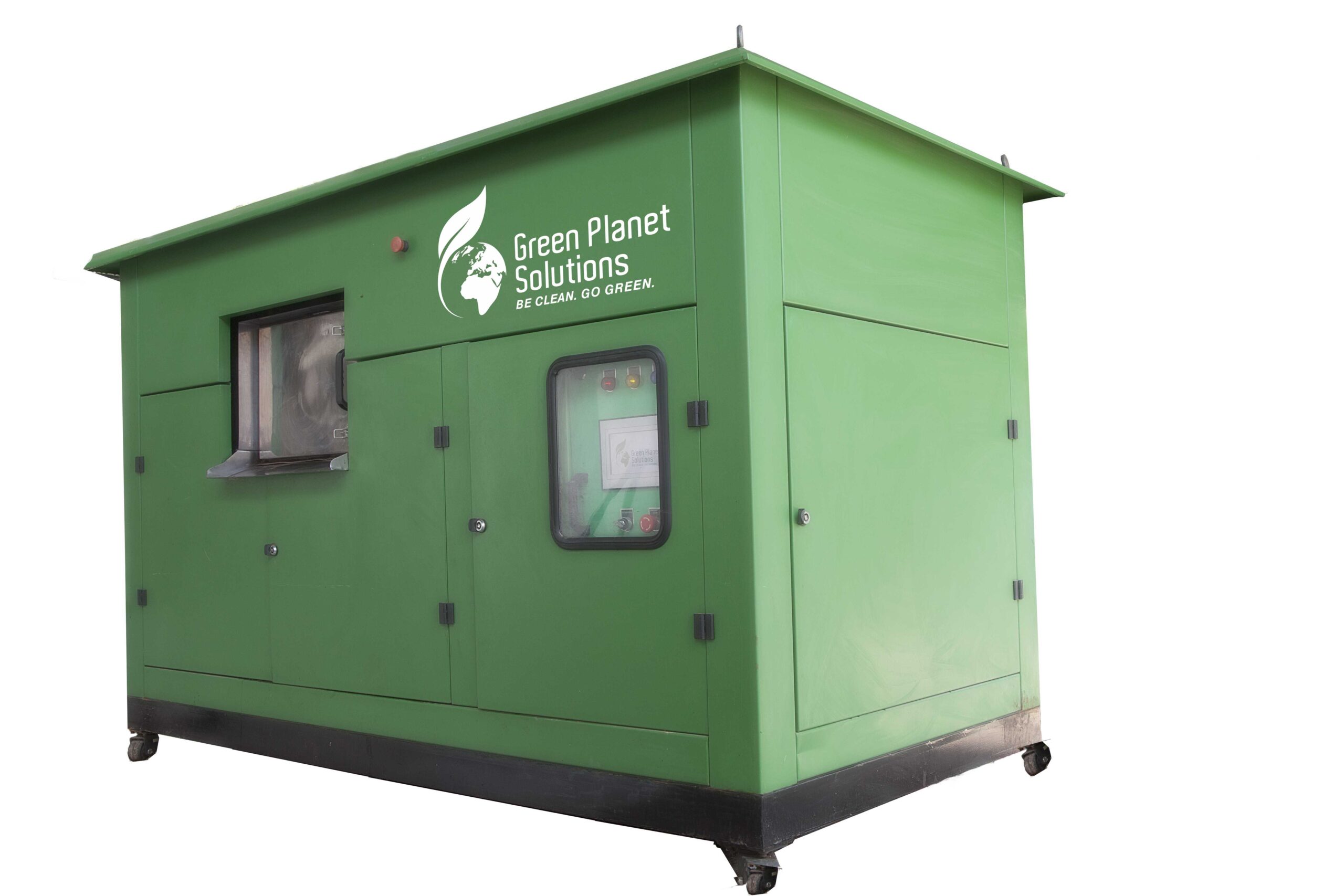
    Green planet solution's composting machine

    Introduction

    Using a composting machine for apartments is one of the best ways to solve this problem. Modern solutions like a Fully automatic composting machine help convert food waste into useful manure right inside the society premises. This not only reduces garbage but also supports a clean and green environment.

    With growing cities and apartment living, managing daily kitchen waste has become a big challenge. Most apartment societies in India generate large amounts of wet waste every day, which often ends up in landfills.

    In this blog, we will explain how to choose the best composting machine for apartments in India in a very simple and easy way.

    Why Apartments in India Need a Composting Machine

    • Apartments generate 50–60% organic waste
    • Government bodies encourage on-site waste processing
    • Reduces dependency on waste collectors
    • Saves money on garbage handling
    • Produces natural compost for gardens

    A good composting machine makes waste management easy and hygienic for apartment residents.

    What Is a Composting Machine for Apartments?

    A composting machine for apartments is a system designed to process daily food waste like:

    • Vegetable peels
    • Leftover food
    • Fruit waste
    • Garden waste

    It converts waste into compost using natural processes like heat, aeration, and mixing.

    Types of Composting Machines Used in Apartments

    1. Fully Automatic composting machine for apartments

    A Fully automatic composting machine works with minimum human effort.

    Features:

    • Automatic mixing and heating
    • Faster composting (24–48 hours)
    • Odor control system
    • Compact design

    Best For:

    • Large apartment societies
    • High daily waste generation
    • Low manpower availability

    2. Semi Automatic Composting Systems for apartments

    These systems require some manual operation.

    Features:

    • Lower cost
    • Manual mixing
    • Low electricity usage

    Best For:

    • Small apartments
    • Limited budgets

    Best Composting Machine for Apartments in India – Key Factors to Consider

    1. Daily Waste Quantity

    Choose a composting machine based on how much waste your apartment generates daily.

    2. Available Space

    Some machines are compact, while others need open areas.

    3. Electricity Consumption

    A Fully automatic composting machine requires power, so energy efficiency matters.

    4. Budget

    Balance between cost, features, and long-term savings.

    5. Maintenance Support

    Choose manufacturers who provide service and training.

    Benefits of Using a Composting Machine in Apartments

    • Reduces landfill waste
    • No bad smell when operated correctly
    • Converts waste into useful manure
    • Improves cleanliness
    • Supports sustainability goals
    • Encourages eco-friendly habits among residents

    How Much Does a Composting Machine Cost in India?

    Approximate price ranges:

    • Small capacity machines: ₹2–5 lakh
    • Medium capacity machines: ₹5–10 lakh
    • Large Fully automatic composting machines: ₹10 lakh and above

    Prices depend on capacity, technology, and features.

    Why Fully Automatic Composting Machines Are Popular in Apartments

    • Faster waste processing
    • Minimal human involvement
    • Cleaner operation
    • Suitable for urban living

    This makes a Fully automatic composting machine a preferred choice for modern apartment complexes.

    FAQs

    1. What is the best composting machine for apartments?

    The best composting machine for apartments is the Fully Automatic Composting Machine, which is suitable for large apartments, while semi-automatic composting machines are suitable for smaller societies.

    2. Does a composting machine have an odor?

    No. A composting machine does not have an odor if used properly.

    3. How long does the composting process take?

    The composting process takes 24-48 hours in Fully Automatic Composting Machines, while it takes longer in other machines.

    4. Is the compost safe to use?

    Yes. The compost is safe to use in gardens and on plants.

    5. Can apartments dispose of waste without a composting machine?

    Yes. A composting machine can make waste disposal easier, cleaner, and more economical.

    Conclusion

    Apartment waste management does not have to be a problem. A good composting machine for apartments can help to change kitchen waste into compost rather than dumping it in landfills.

    The best Fully automatic composting machine or composting system depends on the amount of waste being produced. With the right equipment, apartments can remain clean, save money, and protect the environment.

    A good composting machine is more than just a machine; it is a start towards a greener tomorrow.