Table of Contents
- Introduction
- Waste Management Challenges in Real Estate Projects
- What is a Semi-Automatic Drum Composter?
- How a Semi-Automatic Drum Composter Works
- Benefits of Semi-Automatic Drum Composters
- Applications in Real Estate Developments
- Why Real Estate Developers Are Adopting Composting Solutions
- Frequently Asked Questions (FAQs)
- Conclusion
Introduction
Rapid urban development and population growth have significantly increased the amount of waste generated in residential and commercial spaces. Real estate projects such as residential societies, apartment complexes, townships, and commercial buildings produce large volumes of organic waste every day.
Traditional waste disposal methods such as landfill dumping and municipal collection systems are becoming inefficient and environmentally harmful. This has created a need for modern and sustainable waste management solutions.
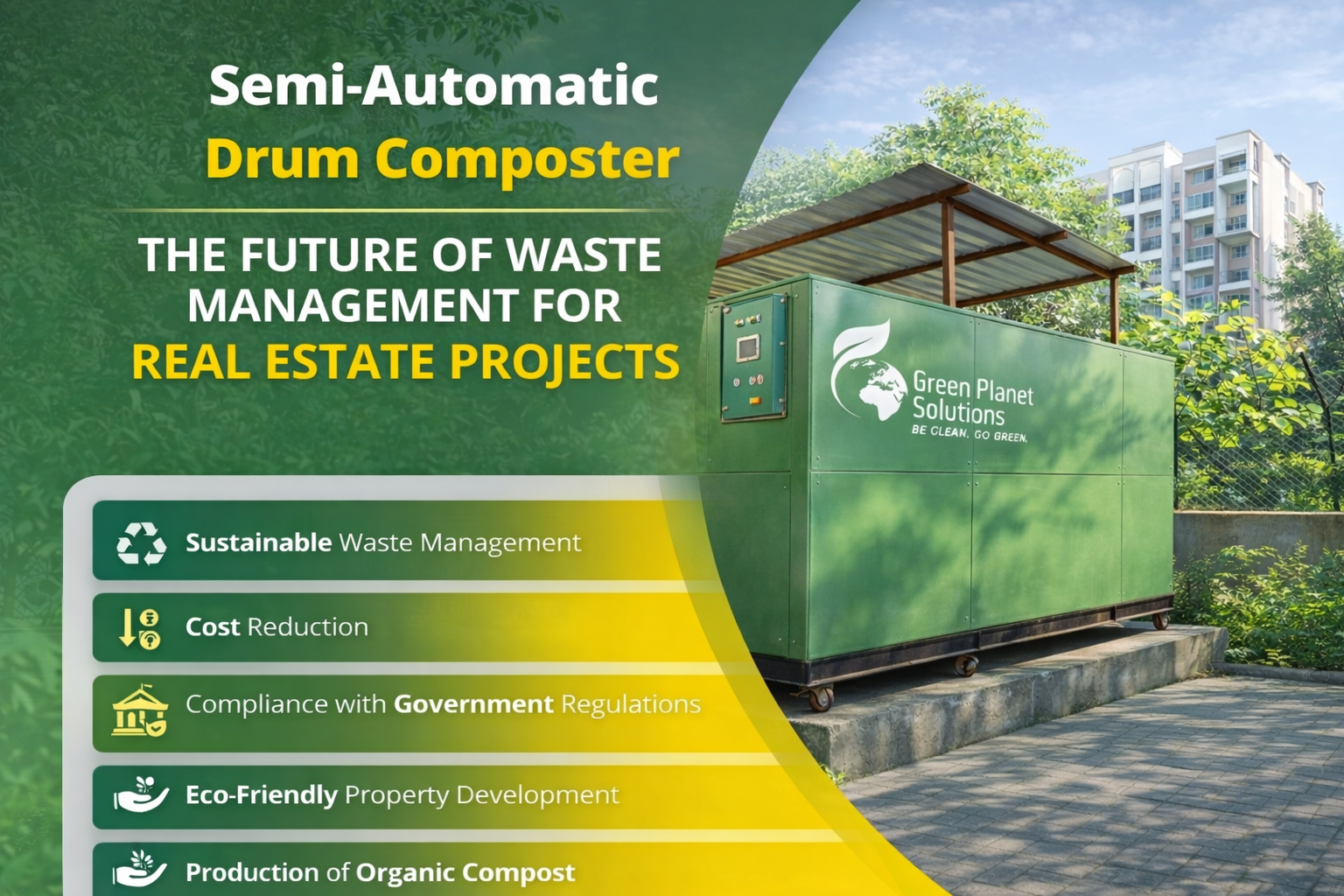
A Semi-Automatic Drum Composter is an innovative technology designed to convert organic waste into useful compost directly at the source. By installing composting machines within residential or commercial properties, developers can reduce waste disposal costs while promoting sustainable waste management practices.
Waste Management Challenges in Real Estate Projects
Modern real estate developments generate waste from multiple sources including:
- Kitchen waste from households
- Food waste from restaurants and food courts
- Garden and landscaping waste
- Organic waste from commercial establishments
Managing this waste is becoming a serious challenge due to several factors:
Increasing Waste Disposal Costs
Transporting waste to municipal dumping sites requires significant operational costs for societies and property managers.
Environmental Pollution
Landfills release harmful greenhouse gases and contribute to soil and water pollution.
Government Waste Management Regulations
Many local authorities now require societies and commercial establishments to segregate and process organic waste at the source.
Lack of Efficient Waste Processing Systems
Without proper systems, large volumes of organic waste remain unmanaged and create sanitation issues.
To solve these challenges, developers and societies are now adopting Semi-Automatic Drum Composters for efficient organic waste management.
What is a Semi-Automatic Drum Composter?
A Semi-Automatic Drum Composter is a waste processing machine designed to convert biodegradable waste into nutrient-rich compost.
The system uses a rotating drum mechanism that accelerates the natural decomposition process of organic waste.
Organic waste such as:
- Food scraps
- Vegetable waste
- Fruit peels
- Garden waste
- Biodegradable materials
is processed inside the drum where controlled aeration and microbial activity convert it into compost.
The final product is high-quality organic compost that can be used for landscaping, gardening, and maintaining green spaces.
How a Semi-Automatic Drum Composter Works
The composting process in a drum composter follows a simple and efficient system:
Waste Collection
Organic waste is collected from residential units, kitchens, restaurants, or commercial spaces.
Waste Segregation
Biodegradable waste is separated from non-biodegradable materials such as plastic and metal.
Feeding into the Drum
The segregated waste is fed into the drum composter along with microbial culture or composting agents.
Drum Rotation and Aeration
The drum rotates periodically to mix the waste and provide oxygen for microbial decomposition.
Compost Formation
Within a short period, the waste breaks down into nutrient-rich compost that can be reused.
This process significantly reduces the volume of waste and eliminates the need for landfill disposal.
Benefits of Semi-Automatic Drum Composters
Sustainable Waste Management
Drum composters help reduce the amount of organic waste sent to landfills and promote environmentally responsible waste processing.
Cost Reduction
By processing waste within the premises, societies and commercial buildings can reduce waste transportation and disposal costs.
Compliance with Government Regulations
Many municipalities require on-site organic waste processing. Installing a composting machine helps developers comply with waste management rules.
Eco-Friendly Property Development
Real estate projects that incorporate green technologies such as composting systems enhance their environmental value and reputation.
Production of Organic Compost
The compost produced can be used in gardens, parks, and landscaping areas within the property.
Applications in Real Estate Developments
Semi-Automatic Drum Composters are ideal for multiple types of developments including:
- Residential housing societies
- Apartment complexes
- Large gated communities
- Commercial office complexes
- Hotels and resorts
- Shopping malls and food courts
- Corporate campuses
These systems are available in different capacities to handle varying volumes of organic waste.
Why Real Estate Developers Are Adopting Composting Solutions
Today’s developers are focusing on sustainable infrastructure and environmentally responsible projects.
Installing composting systems helps developers:
- Improve environmental sustainability
- Reduce operational waste management costs
- Meet government compliance requirements
- Increase property value and market appeal
- Promote green building practices
Buyers and investors are also increasingly interested in properties that support sustainable living and eco-friendly infrastructure.
Frequently Asked Questions (FAQs)
What is a Semi-Automatic Drum Composter?
A Semi-Automatic Drum Composter is a waste processing machine that converts organic waste into compost using a rotating drum system.
How long does composting take in a drum composter?
Typically, compost is produced within 10–15 days, depending on the waste type and operating conditions.
What types of waste can be processed?
The machine can process:
- Food waste
- Vegetable and fruit waste
- Garden waste
- Organic biodegradable waste
Who should install a drum composter?
Drum composters are ideal for:
- Residential societies
- Commercial complexes
- Hotels and restaurants
- Corporate campuses
- Real estate developments
What are the advantages of composting machines?
They reduce waste disposal costs, support sustainable waste management, and produce useful organic compost.
Conclusion
Organic waste management is becoming an essential part of modern urban development. Real estate projects generate large volumes of biodegradable waste every day, and relying solely on traditional waste disposal systems is no longer sustainable.
A Semi-Automatic Drum Composter provides an efficient and eco-friendly solution for processing organic waste directly at the source. By converting waste into nutrient-rich compost, these machines help reduce landfill dependency, lower waste management costs, and promote environmental sustainability.
For real estate developers, societies, and commercial establishments, adopting composting technology is a smart step toward building greener and more responsible communities.
Implementing Semi-Automatic Drum Composters not only improves waste management efficiency but also contributes to a cleaner environment and sustainable urban development.
Leave a Reply