Author: Green Planet Solutions

  • Fully Automatic Composting Machine: How Do They Work?

    Fully Automatic Composting Machine: How Do They Work?

    A Simple Guide to Turning Organic Waste into Compost with Automated Technology

    Managing food and organic waste has become a growing challenge for hotels, restaurants, shopping malls, hospitals, residential communities, institutions, and commercial facilities. Sending this waste to landfills takes up valuable space, increases transportation requirements, and can create unpleasant odors and environmental concerns. A fully automatic composting machine offers a smarter approach. It processes organic waste on-site and accelerates the natural composting process with controlled temperature, moisture, airflow, and mixing. The result is partially or fully stabilized compost-like organic material, depending on the machine and process used.


    What Is a Fully Automatic Composting Machine?

    A fully automatic composting machine is an enclosed system designed to process biodegradable waste with minimal manual intervention.

    Food scraps, vegetable and fruit waste, and other suitable organic materials are loaded into the machine. Automated systems then control important operating conditions to support microbial decomposition.

    Unlike traditional open composting, the process takes place inside a controlled environment, making it easier to manage space, hygiene, odors, and day-to-day operations.


    How Does a Fully Automatic Composting Machine Work?

    The exact process varies depending on the machine design, but most systems follow a series of basic steps.

    Step 1: Organic Waste Is Collected

    The process begins with collecting suitable biodegradable waste from kitchens, restaurants, cafeterias, food courts, or other waste-generating areas.

    Waste should ideally be separated at the source to prevent plastic, glass, metal, and other non-biodegradable materials from entering the composting system.


    Step 2: Waste Is Loaded into the Composting Machine

    The segregated organic waste is placed into the machine through its designated loading chamber.

    Depending on the equipment design and capacity, the machine can handle different quantities of organic waste per day. Selecting the appropriate capacity is important to avoid overloading and maintain consistent performance.


    Step 3: Shredding and Mixing

    Some composting systems use a shredding or grinding mechanism to reduce the size of organic waste.

    Smaller particles provide a more uniform material and can help microorganisms access the organic matter more easily.

    The waste may then be mixed to create a more consistent composting environment.


    Step 4: Controlled Decomposition

    This is the main stage of the process.

    Microorganisms naturally break down organic matter. The machine helps create favorable conditions by controlling factors such as temperature, moisture, airflow, and mixing.

    Some systems use automated heating or aeration to maintain appropriate conditions, depending on their design.


    Step 5: Moisture and Temperature Management

    Moisture and temperature have a direct influence on biological decomposition.

    Too much moisture can affect airflow, while insufficient moisture can slow microbial activity. Similarly, temperature changes can influence the rate and consistency of decomposition.

    Automated monitoring and control help maintain suitable conditions during the process.


    Step 6: Odor Management

    One of the common concerns with food waste is unpleasant odor.

    Enclosed composting machines can incorporate ventilation and odor-control systems to help manage emissions from the process. Proper waste segregation, loading practices, airflow, and regular maintenance are also important for effective odor management.


    Step 7: Compost Output

    After the processing cycle, the organic material is removed from the machine.

    Depending on the technology and process duration, the output may require curing, maturation, screening, or further processing before it is used as finished compost.

    The final material can be useful for landscaping, gardening, soil improvement, or other appropriate applications, subject to its quality and local requirements.


    What Makes the Composting Machine “Fully Automatic”?

    The main advantage of automation is reduced manual involvement.

    Depending on the model, automated features may include:

    • Automatic mixing
    • Temperature monitoring
    • Automated heating
    • Moisture management
    • Airflow or aeration control
    • Programmable processing cycles
    • Touchscreen controls
    • Safety alerts
    • Automatic operating sequences

    These features allow operators to monitor the process rather than manually manage every stage.


    Benefits of Fully Automatic Composting Machine

    1. Reduces Organic Waste Sent to Landfills

    Processing organic waste on-site can significantly reduce the amount of biodegradable material that needs to be transported for disposal.

    2. Saves Space

    Because the process takes place inside an enclosed machine, it can be suitable for facilities where traditional composting requires too much space.

    3. Reduces Manual Work

    Automation reduces the need for continuous manual handling and monitoring, making daily waste management easier for facility teams.

    4. Helps Control Odors

    Enclosed processing and appropriate odor-control systems can make organic waste management more suitable for commercial environments.

    5. Supports Sustainability Goals

    Converting organic waste into a useful resource supports circular economy practices and can contribute to an organization’s broader sustainability objectives.

    6. Creates a Useful Organic Resource

    Instead of treating food waste simply as something to throw away, composting allows businesses to recover value from biodegradable material.


    Where Can Fully Automatic Composting Machine Be Used?

    These machines can be suitable for many waste-generating facilities, including:

    • Hotels and Resorts
    • Restaurants and Cafés
    • Shopping Malls and Food Courts
    • Hospitals
    • Residential Communities
    • Corporate Offices
    • Universities and Schools
    • Industrial Canteens
    • Food Processing Facilities
    • Municipal and Institutional Projects

    The right machine depends on the quantity and type of organic waste generated at the facility.


    How to Choose the Right Composting Machine

    Before purchasing a composting machine, businesses should consider more than just the machine’s capacity.

    Important factors include:

    Waste Quantity

    Estimate the average amount of organic waste generated per day rather than selecting equipment based only on occasional peak volumes.

    Type of Organic Waste

    Understand whether the waste consists mainly of cooked food, vegetable scraps, fruit waste, garden waste, or a combination of materials.

    Available Space

    Consider the machine’s dimensions, loading area, output area, electrical requirements, and space needed for maintenance.

    Processing Time

    Different technologies and machines have different processing cycles. Understand the expected output and whether additional curing or maturation is required.

    Energy Consumption

    Compare power requirements and operating costs before making a decision.

    Maintenance and After-Sales Support

    Reliable technical support, spare parts availability, operator training, and preventive maintenance can make a significant difference over the machine’s operating life.


    Why Businesses Are Moving Toward On-Site Composting

    For businesses that generate organic waste every day, transporting waste away from the facility is not always the most efficient long-term solution.

    On-site composting brings waste processing closer to the point of generation. This can reduce waste transportation requirements while giving organizations greater control over their organic waste management.

    It also provides a visible sustainability initiative that can support environmental programs and corporate responsibility efforts.


    Why Choose Green Planet Solutions?

    Green Planet Solutions provides commercial composting solutions designed for organizations looking for efficient and sustainable organic waste management.

    Our composting machines are designed with automation, controlled processing, durable construction, and practical operation in mind. We work with businesses across different sectors to identify suitable composting solutions based on their waste quantity, application, available space, and operational requirements.

    From equipment selection to installation and support, Green Planet Solutions helps businesses take a practical step toward responsible organic waste management.


    Conclusion

    Fully automatic composting machines are changing the way businesses manage organic waste. By combining controlled biological decomposition with automation, these systems make it easier to process food waste on-site while reducing landfill dependency and supporting sustainability.

    The key is choosing a machine that matches your waste quantity, waste type, space, processing requirements, and operating goals.

    For businesses looking to turn organic waste into a useful resource, a well-designed composting system can be an important part of a cleaner and more sustainable waste management strategy.

    Turn Organic Waste into a Sustainable Resource

    With the right technology and responsible waste segregation, businesses can reduce waste, improve operational efficiency, and move closer to a cleaner, greener future with Green Planet Solutions.

  • How Smart Cities Are Transforming Wastewater Management

    How Smart Cities Are Transforming Wastewater Management

    Using Smart Technology, Automation, and Water Reuse to Build Cleaner and More Sustainable Cities

    Cities around the world are growing faster than ever. With more people, businesses, residential communities, and industries comes a greater demand for water—and a growing amount of Wastewater Management

    Traditional wastewater management systems often depend on manual monitoring, fixed operating schedules, and large centralized infrastructure. Smart cities are changing this approach by combining advanced sewage treatment plants, automation, sensors, data monitoring, and water reuse to create more efficient and sustainable wastewater management systems.


    What Is Smart Wastewater Management?

    Smart wastewater management uses modern technology to monitor, control, and optimize the treatment of wastewater.

    Instead of simply collecting and disposing of sewage, smart systems focus on treating wastewater efficiently and finding opportunities to reuse treated water.

    Modern Sewage Treatment Plants can incorporate automated controls, sensors, monitoring systems, efficient equipment, and real-time data to help operators understand how the plant is performing.

    This approach can make wastewater treatment more reliable while reducing unnecessary resource consumption.


    Why Wastewater Management Matters in Smart Cities

    A smart city is not only about digital connectivity and intelligent transportation. Efficient management of essential resources such as water and waste is equally important.

    As urban populations increase, cities need solutions that can:

    • Reduce water pollution
    • Conserve freshwater
    • Improve wastewater treatment
    • Reduce operating costs
    • Reuse treated water
    • Minimize environmental impact
    • Improve infrastructure efficiency

    Smart wastewater management helps address these challenges while supporting long-term urban development.


    1. Automation Makes Treatment More Efficient

    Automation is becoming an important part of modern wastewater treatment.

    Automated control systems can help manage pumps, blowers, valves, dosing systems, and other equipment according to operating conditions. This reduces dependence on constant manual intervention and helps maintain consistent plant performance.

    For commercial buildings, residential communities, hotels, hospitals, and industrial facilities, automation can make day-to-day STP operation simpler and more efficient.


    2. Sensors Enable Better Monitoring

    Sensors can provide important information about wastewater treatment processes and equipment performance.

    Depending on the system, parameters such as pH, dissolved oxygen, flow, water levels, and other operating conditions can be monitored.

    This information allows operators to identify unusual changes and take corrective action before a small operational issue develops into a major problem.


    3. Real-Time Data Improves Decision-Making

    Data is becoming an important part of modern wastewater management.

    Instead of relying only on periodic manual checks, smart systems can provide ongoing information about plant performance. Operators can use this information to understand energy consumption, water flow, equipment performance, and treatment conditions.

    Over time, this data can help identify patterns and improve plant operation.


    4. Predictive Maintenance Can Reduce Downtime

    Unexpected equipment failures can interrupt wastewater treatment and result in expensive repairs.

    Smart monitoring can help identify signs of abnormal equipment performance, such as changes in vibration, temperature, operating pressure, or energy consumption.

    This supports a more proactive approach to maintenance. Instead of waiting for equipment to fail, operators can investigate potential problems earlier and schedule maintenance when required.


    5. Treated Water Can Be Reused

    One of the biggest opportunities in smart wastewater management is water reuse.

    After appropriate treatment and in accordance with applicable regulations, treated wastewater can be reused for applications such as:

    • Landscape irrigation
    • Gardening
    • Toilet flushing
    • Cooling systems
    • Road cleaning
    • Certain industrial applications

    Reusing treated water reduces pressure on freshwater resources and helps cities become more water-efficient.


    6. Smart STPs Can Improve Energy Efficiency

    Wastewater treatment requires energy, particularly for pumping and aeration.

    Modern equipment and automated control systems can help optimize how equipment operates. Efficient pumps, blowers, motors, and aeration systems can contribute to lower energy consumption when properly designed and operated.

    Reducing unnecessary energy use can lower operating costs while supporting sustainability objectives.


    7. Decentralized Wastewater Treatment Is Growing

    Not every wastewater treatment system needs to be located far away from the area generating the wastewater.

    Decentralized and packaged STPs can be installed closer to residential communities, hotels, commercial buildings, institutions, and other facilities.

    Treating wastewater closer to its source can reduce the need for extensive wastewater transportation infrastructure and make water reuse more practical within the same development.


    8. Smart Wastewater Management Supports Sustainable Development

    Efficient wastewater treatment contributes to several important sustainability goals.

    By treating wastewater properly and reusing water where appropriate, cities can reduce pollution, conserve freshwater, and make better use of existing resources.

    This supports the transition from a traditional “use and dispose” approach toward a more circular model where water is treated, recovered, and reused.


    Where Smart STP Solutions Can Be Used

    Smart wastewater treatment solutions are suitable for a wide range of applications, including:

    • Smart Cities
    • Residential Townships
    • Hotels and Resorts
    • Hospitals
    • Shopping Malls
    • Corporate Campuses
    • Educational Institutions
    • Industrial Facilities
    • Airports
    • Municipal Projects

    The right solution depends on factors such as wastewater quantity, wastewater characteristics, available space, required treated-water quality, and intended reuse.


    The Future of Smart Wastewater Management

    The future of wastewater management will increasingly combine automation, digital monitoring, efficient treatment technologies, and water recycling.

    As cities become more connected, wastewater treatment plants will also become smarter. Remote monitoring, intelligent controls, data analytics, and improved equipment can help operators manage treatment systems more effectively.

    The goal is not simply to treat wastewater but to create systems that use fewer resources, reduce environmental impact, and recover valuable water.


    Why Choose Green Planet Solutions?

    Green Planet Solutions provides advanced Sewage Treatment Plant (STP) solutions for residential, commercial, industrial, hospitality, and institutional projects.

    Our wastewater treatment solutions are designed with a focus on efficient treatment, automation, water reuse, reliable operation, and long-term sustainability. We help organizations select and implement STP systems according to their specific wastewater requirements.

    From project planning and system selection to installation and technical support, Green Planet Solutions works toward creating practical wastewater management solutions for a cleaner future.


    Conclusion

    Smart cities need smart solutions for managing their most important resources. Wastewater is no longer simply something that needs to be collected and disposed of—it can be treated, monitored, and reused as part of a sustainable urban water cycle.

    By combining advanced STPs, automation, sensors, data monitoring, efficient equipment, and water reuse, cities and businesses can improve wastewater management while reducing their environmental footprint.

    The future of wastewater management is smarter, more efficient, and more sustainable—and the transformation has already begun.

    Smart Water Management. Sustainable Cities. Greener Future.

    With the right wastewater treatment technology, every city, business, and community can take a meaningful step toward responsible water management.

  • STP Maintenance Checklist: How to Keep Your Plant Running Efficiently

    STP Maintenance Checklist: How to Keep Your Plant Running Efficiently

    A Practical Guide to Reliable Performance, Better Treatment Quality, and Longer Equipment Life

    A Sewage Treatment Plant (STP) is an important part of wastewater management for residential societies, hotels, hospitals, industries, commercial buildings, and institutions. But installing an STP is only the beginning. Regular maintenance is essential to keep the system operating efficiently and to ensure consistent treated-water quality.

    A well-maintained STP can help reduce unexpected breakdowns, control operating costs, improve equipment life, and maintain reliable treatment performance. With a simple and consistent maintenance routine, facility managers can identify small problems before they become expensive repairs.


    Why STP Maintenance Is Important

    An STP works continuously with wastewater, pumps, blowers, tanks, pipes, electrical systems, and biological treatment processes. Over time, equipment can experience wear, blockages, sludge accumulation, or changes in operating conditions.

    Regular inspection and maintenance help keep these components working properly. It also makes it easier to identify unusual sounds, leaks, odors, changes in water quality, or equipment performance at an early stage.


    STP Maintenance Checklist

    1. Inspect Pumps Regularly

    Pumps are essential for moving wastewater through different stages of the treatment process. Check pumps regularly for unusual noise, vibration, leakage, overheating, or reduced flow.

    Pump strainers and associated pipelines should also be inspected for blockages. Regular servicing helps prevent sudden failures and unnecessary downtime.


    2. Check Blowers and Aeration Systems

    In biological treatment processes, aeration plays an important role in supporting microorganisms that break down organic matter.

    Operators should regularly check:

    • Blower performance
    • Air pressure
    • Airflow
    • Unusual noise or vibration
    • Air distribution
    • Aeration pipelines and diffusers

    Poor aeration can affect biological treatment efficiency, so any abnormal performance should be investigated promptly.


    3. Monitor Sludge Levels

    Sludge management is another important part of STP operation. Excessive sludge accumulation can reduce treatment efficiency and affect the capacity of tanks.

    Regularly monitor sludge levels and remove excess sludge according to the plant’s operating requirements. Proper sludge management helps maintain stable treatment conditions.


    4. Keep Tanks and Treatment Areas Clean

    Tanks, screens, filters, channels, and surrounding areas should be inspected and cleaned regularly.

    Accumulated solids, debris, grease, or other unwanted materials can interfere with plant operation. Maintaining clean equipment and working areas also improves overall hygiene and safety.


    5. Check Electrical Panels and Controls

    Modern STPs often depend on electrical control panels, sensors, automation systems, and motor controls.

    Regularly inspect electrical panels for:

    • Loose connections
    • Overheating
    • Fault indications
    • Damaged cables
    • Abnormal readings
    • Control-system issues

    Electrical maintenance should always be carried out by qualified personnel following appropriate safety procedures.


    6. Monitor Water Quality

    Monitoring the quality of wastewater entering and leaving the STP helps identify changes in plant performance.

    Depending on the treatment system and applicable requirements, parameters such as pH, TSS, BOD, COD, and other relevant indicators may need to be monitored.

    Keeping proper records makes it easier to identify trends and take corrective action when treatment performance changes.


    7. Inspect Pipes, Valves, and Connections

    Leaks and blockages in pipelines can affect the overall performance of an STP.

    Inspect pipes, valves, joints, and connections regularly for leakage, corrosion, blockage, or physical damage. Early detection can prevent water loss and larger maintenance problems.


    8. Maintain Filters and Other Treatment Components

    Filters and other treatment components can gradually accumulate solids and require cleaning or replacement.

    Follow the equipment manufacturer’s recommended maintenance schedule and inspect components regularly. Proper cleaning helps maintain consistent flow and treatment efficiency.


    9. Control Odor Problems

    A properly operated STP should be monitored for unusual or excessive odors.

    Unexpected odors can sometimes indicate problems such as poor aeration, excessive sludge accumulation, stagnant wastewater, or inadequate ventilation.

    Identifying the source of the odor early can help prevent larger operational issues.


    10. Follow a Preventive Maintenance Schedule

    One of the best ways to maintain an STP is to follow a preventive maintenance schedule instead of waiting for equipment to fail.

    A simple schedule can include:

    Daily

    • Check pumps and blowers
    • Inspect water flow
    • Observe unusual noise or odors
    • Check control-panel indicators

    Weekly

    • Inspect tanks and pipelines
    • Check aeration performance
    • Review sludge levels
    • Clean screens and accessible components

    Monthly

    • Inspect electrical systems
    • Service equipment as required
    • Review water-quality records
    • Check valves, filters, and mechanical components

    Periodically

    • Conduct detailed equipment servicing
    • Calibrate relevant instruments
    • Inspect major components
    • Review overall plant performance

    The exact frequency should be based on the STP design, equipment manufacturer’s recommendations, operating conditions, and applicable regulations.


    Common Signs Your STP Needs Attention

    Facility managers should not ignore warning signs such as:

    • Unusual equipment noise
    • Excessive vibration
    • Frequent pump or blower failures
    • Unpleasant odors
    • Reduced water flow
    • Excessive sludge
    • Poor treated-water quality
    • Frequent electrical faults
    • Unexpected increases in energy consumption

    Addressing these issues early can help prevent costly breakdowns and extended downtime.


    How Regular Maintenance Saves Money

    Preventive maintenance may appear to be an additional operating expense, but it can reduce the cost of major repairs and equipment replacement.

    Regular servicing helps identify worn components before they fail completely. It can also improve energy efficiency, reduce downtime, extend equipment life, and maintain consistent treatment performance.

    For large residential, commercial, and industrial facilities, these benefits can make a significant difference over the long term.


    Why Choose Green Planet Solutions for STP Solutions?

    Green Planet Solutions provides customized Sewage Treatment Plant solutions for residential, commercial, industrial, hospitality, and institutional applications.

    Our approach focuses on reliable treatment, efficient operation, practical maintenance, and long-term performance. From selecting the appropriate STP technology to installation and technical support, we help organizations build effective wastewater management systems.

    A well-designed STP combined with proper operation and maintenance can deliver better performance and greater value throughout its operating life.


    Conclusion

    Regular STP maintenance is essential for keeping a sewage treatment plant efficient, reliable, and safe. Simple practices such as checking pumps and blowers, monitoring sludge, inspecting pipelines, maintaining electrical systems, and tracking water quality can prevent many common operational problems.

    The key is consistency. A properly maintained STP performs better, lasts longer, and supports more sustainable wastewater management.

    Keep Your STP Efficient. Keep Your Water Management Sustainable.

    With the right technology, regular maintenance, and professional support, businesses and communities can manage wastewater more efficiently while moving toward a cleaner and greener future.

  • How Composting Machine Support Swachh Bharat and Sustainable Cities

    How Composting Machine Support Swachh Bharat and Sustainable Cities

    Subtitle: Turning Everyday Food Waste into a Valuable Resource for Cleaner, Greener Urban Communities

    India’s cities are growing rapidly, and with increasing urbanization comes an equally important challenge—managing the growing amount of waste generated every day. Housing societies, hotels, restaurants, offices, institutions, markets, and commercial establishments produce significant quantities of organic waste, particularly food and kitchen waste. When this waste is mixed with other garbage and sent to landfills, it creates environmental and operational challenges for cities. Composting Machine

    Sustainable cities need smarter ways to manage waste at the source. Composting machines can play an important role by helping organizations process suitable organic waste closer to where it is generated. By encouraging waste segregation and decentralized waste management, composting solutions can support cleaner communities and contribute to the broader vision of Swachh Bharat.

    The Growing Challenge of Urban Food Waste

    Food waste is generated every day in homes, residential societies, hotels, restaurants, canteens, and commercial kitchens. Much of this waste is biodegradable, which means it can be processed instead of simply being treated as garbage.

    However, when food waste is mixed with plastic, packaging, and other non-biodegradable materials, it becomes more difficult to manage. Mixed waste can also reduce recycling opportunities and increase the amount of waste requiring transportation and disposal.

    This is why segregation at the source is the foundation of effective waste management. Once suitable organic waste is separated, it can be directed towards composting and other appropriate treatment methods.

    How a Composting Machine Helps Manage Organic Waste

    A composting machine is designed to help process suitable biodegradable waste in a controlled manner. Depending on the technology and operating process, the system can reduce and process organic waste and produce compost or processed organic material that can be further matured and used as a soil conditioner.

    For large waste generators, on-site composting can make waste management more organized. Instead of depending entirely on external collection and disposal systems, organizations can take greater responsibility for the organic waste generated on their own premises.

    Housing societies, hotels, restaurants, institutions, corporate campuses, and other establishments can select a solution based on the quantity and type of waste they generate.

    Supporting the Swachh Bharat Vision

    The vision of a cleaner India depends not only on waste collection but also on responsible waste management. Proper segregation, processing, recycling, and reduction of landfill dependence are all important parts of building cleaner communities.

    Composting machines support this approach by encouraging organizations to manage biodegradable waste separately. When organic waste is processed closer to its source, communities can develop a more systematic approach to daily waste handling.

    The use of composting solutions can also create greater awareness among residents, employees, and facility managers about the importance of separating wet and dry waste.

    Reducing the Burden on Landfills

    Landfills continue to receive large quantities of mixed municipal waste. Sending biodegradable food waste to landfills is not always the most sustainable use of a material that can potentially be processed.

    On-site or decentralized composting can help divert suitable organic waste away from the general waste stream. This means that a portion of the waste generated by a society, hotel, restaurant, or institution can be managed separately rather than being mixed with all other garbage.

    When more communities adopt responsible organic waste management practices, cities can move towards reducing their dependence on landfill-based disposal.

    Supporting Decentralized Waste Management

    One of the key advantages of composting solutions is the possibility of managing waste closer to where it is generated. This is known as decentralized waste management.

    Instead of transporting every kilogram of food waste over long distances, suitable organic waste can be segregated and processed at or near the source. This can make the overall waste management process more efficient and easier to monitor.

    Decentralized systems also encourage local responsibility. Residents and organizations become more aware of the waste they generate and can actively participate in managing it.

    Creating Cleaner Housing Societies and Communities

    Housing societies generate food waste every day from hundreds or sometimes thousands of residents. With a proper segregation system and a suitable composting solution, societies can create a more organized method of handling organic waste.

    Residents can separate wet waste at home, while housekeeping teams can collect it through a planned system. The segregated organic waste can then be directed to the composting process.

    Apart from supporting cleanliness, this approach can help create awareness about sustainable living within the community. It encourages residents to see waste management as a shared responsibility.

    Sustainable Waste Management for Hotels and Commercial Establishments

    Hotels, restaurants, commercial kitchens, corporate offices, and institutions can also benefit from better organic waste management practices. These establishments often generate regular quantities of food waste, making proper segregation particularly important.

    A composting machine can become part of a larger sustainability strategy that includes waste reduction, responsible disposal, recycling, and environmental awareness.

    For businesses, adopting sustainable waste management practices can also demonstrate a commitment to environmental responsibility and cleaner operations.

    Turning Waste into a Useful Resource using Composting Machine

    One of the most important ideas behind composting is changing the way we look at organic waste. Food scraps and biodegradable materials do not always need to be viewed as useless garbage.

    When suitable organic waste is properly processed, the output can be further managed and used as a valuable resource for landscaping, gardens, and green spaces, depending on the composting process and maturity of the final product.

    This creates a more circular approach to waste management. Organic material is returned to the environment instead of simply being discarded.

    Encouraging Responsible Waste Segregation

    A composting machine can only work effectively when the input waste is properly segregated. Plastic, glass, metal, foil, and other unsuitable materials should be kept out of the organic waste stream.

    Therefore, installing a composting machine can also encourage better waste habits. Organizations may introduce separate bins, awareness programs, staff training, and clear signage to ensure that waste is segregated correctly.

    Technology and responsible human behaviour must work together to create an effective waste management system.

    Building Sustainable Cities One Community at a Time using Composting Machine

    A sustainable city is built through the combined efforts of individuals, communities, businesses, and public institutions. Large environmental challenges can often be addressed through practical changes at the local level.

    When a housing society manages its own food waste responsibly, it contributes to a cleaner neighborhood. When hotels and restaurants segregate and process organic waste, they reduce the amount of mixed waste entering the collection system. When more organizations adopt sustainable practices, the collective impact can support cleaner and better-managed cities.

    Composting machines are not a complete solution to every waste management challenge, but they can be an important part of an integrated approach that includes waste reduction, segregation, recycling, responsible processing, and regular maintenance.

    The Importance of Regular Composting Machine Maintenance

    Installing a composting machine is only the first step. Regular operation, cleaning, inspection, and servicing are important for maintaining smooth performance.

    Proper maintenance can help identify operational issues early and reduce unexpected downtime. Staff members should also be trained to follow the recommended loading and operating procedures.

    A well-maintained composting system is more likely to deliver consistent performance and support long-term waste management goals.

    Conclusion

    The journey towards Swachh Bharat and sustainable cities requires a shift from simply collecting waste to managing it responsibly. Food and organic waste should be segregated at the source and directed towards appropriate processing solutions wherever possible.

    Composting machines can support this transition by helping housing societies, hotels, restaurants, institutions, and commercial establishments manage suitable organic waste in a more organized and sustainable way.

    By reducing mixed waste, encouraging source segregation, supporting decentralized waste management, and creating useful organic resources, composting solutions can contribute to cleaner communities and greener cities.

    A cleaner city starts with responsible waste management at the source. Segregate waste, compost organic materials, and take a step towards a more sustainable tomorrow. 🌱♻️

    Green Planet Solutions – Working Towards a Cleaner, Greener and More Sustainable Future.

  • Wet Waste vs Dry Waste: Why Proper Waste Segregation Matters

    Wet Waste vs Dry Waste: Why Proper Waste Segregation Matters

    Subtitle: A Simple Guide to Better Waste Management, Cleaner Communities, and Successful Composting

    Waste is generated every day in homes, housing societies, hotels, restaurants, offices, schools, and commercial establishments. However, the real challenge is not just collecting waste—it is managing it correctly. One of the most important steps in effective waste management is proper waste segregation.

    Separating wet waste from dry waste at the source makes recycling, composting, and disposal easier and more efficient. When different types of waste are mixed together, valuable recyclable materials can become contaminated, organic waste cannot be processed properly, and a larger amount of waste may eventually end up in landfills.

    Understanding the difference between wet waste and dry waste is the first step towards building a cleaner and more sustainable environment.

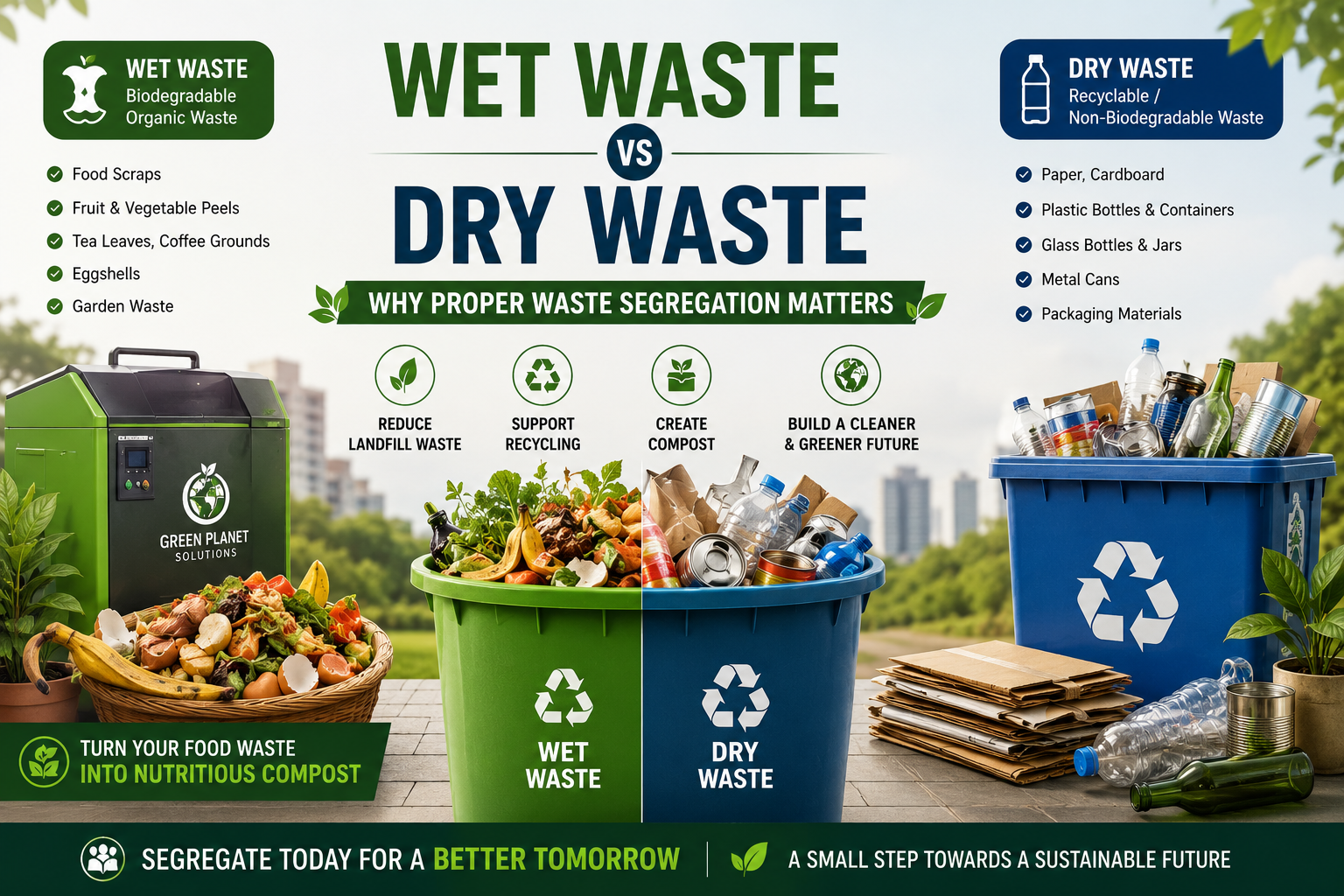
    What Is Wet Waste?

    Wet waste, also known as organic or biodegradable waste, mainly comes from kitchens, gardens, and food-related activities. It generally contains moisture and can decompose naturally over time.

    Common examples of wet waste include vegetable and fruit peels, leftover food, tea leaves, coffee grounds, eggshells, spoiled food, and certain types of garden waste.

    Instead of treating this waste as useless garbage, it can be processed through composting. A food waste composting machine or organic waste converter can help process suitable organic waste and convert it into compost or processed organic material that can be further used as a soil conditioner.

    What Is Dry Waste?

    Dry waste generally includes materials that do not contain significant moisture and may be recyclable, reusable, or require separate disposal.

    Common examples include paper, cardboard, plastic bottles, plastic containers, metal cans, glass bottles, packaging materials, and certain types of clean plastic waste.

    Proper segregation is important because many dry waste materials can be sent for recycling or recovery. However, when paper, plastic, and other recyclable materials are mixed with food waste, they can become contaminated and more difficult to recycle.

    Why Should Wet Waste and Dry Waste Be Separated?

    Waste segregation at the source is one of the simplest ways to improve the entire waste management process. When wet and dry waste are separated before collection, each type of waste can be sent for the appropriate treatment.

    Wet waste can be directed towards composting or other suitable organic waste treatment processes. Dry waste can be sorted for recycling, reuse, or recovery. This reduces the amount of mixed waste that requires transportation and disposal.

    For housing societies and commercial establishments, proper segregation can also help maintain cleaner waste collection areas and create a more organized waste management system.

    How Proper Segregation Supports Composting

    A composting machine is designed to process suitable organic waste. If plastic, metal, glass, foil, or other non-biodegradable materials are mixed with food waste, they can interfere with the process and may create operational and maintenance issues.

    For this reason, waste should be checked and segregated before it is loaded into a composting machine. Kitchen staff, housekeeping teams, residents, and waste handlers should understand which materials belong in the organic waste stream.

    Proper segregation helps improve the quality of the input material and supports smoother operation of the composting system.

    The Problems Caused by Mixing Wet and Dry Waste

    When wet and dry waste are mixed, both waste streams lose value. Food waste can contaminate paper, cardboard, and recyclable materials. At the same time, plastic and other non-biodegradable items can contaminate organic waste intended for composting.

    Mixed waste may also create unpleasant odours, attract pests, and make manual sorting more difficult. It increases the amount of work required after collection and can lead to inefficient waste processing.

    The easiest solution is to segregate waste at the point where it is generated rather than waiting for someone else to separate it later.

    Waste Segregation in Housing Societies

    Housing societies generate a significant amount of kitchen and household waste every day. With the cooperation of residents, housekeeping staff, and facility managers, societies can create an effective segregation system.

    Separate bins for wet and dry waste should be placed in convenient locations. Residents should be informed about what belongs in each bin, and clear labels can help avoid confusion.

    The segregated wet waste can be processed through an on-site composting solution, while dry waste can be sent through the appropriate recycling and recovery channels. This approach can help societies manage their waste more responsibly and reduce their dependence on landfill disposal.

    Waste Segregation for Hotels and Restaurants

    Hotels, restaurants, canteens, and commercial kitchens generate large quantities of food waste. Proper segregation is especially important in these establishments because mixed waste can quickly create hygiene and operational problems.

    Kitchen staff should separate food waste from packaging, plastic, glass, metal, and other non-organic materials. A systematic collection process can then help direct suitable food waste towards an appropriate composting or organic waste treatment solution.

    Regular staff training and clear waste segregation procedures can make the system easier to maintain.

    Simple Steps for Effective Waste Segregation

    Successful waste segregation does not need to be complicated. The first step is to keep separate containers for wet and dry waste. Clear labels should be placed on every bin so that users know where each type of waste belongs.

    Waste generators should be encouraged to avoid mixing food waste with plastic packaging and other non-biodegradable materials. The collected waste should also be checked before being processed in a composting machine.

    Regular awareness programs can help residents and employees develop better waste disposal habits. When everyone follows the same process, waste management becomes easier and more effective.

    The Environmental Benefits of Proper Waste Segregation

    Proper waste segregation helps reduce the amount of waste that is unnecessarily sent to landfills. Organic waste can be processed separately, while recyclable materials have a better chance of being recovered and reused.

    This supports a more sustainable approach to waste management. It also encourages people and organizations to see waste not simply as something to throw away, but as a resource that can be processed, reused, recycled, or recovered.

    Small actions at the source can therefore create a significant positive impact on the overall waste management system.

    How Composting Machines Help Manage Wet Waste

    For organizations that generate regular quantities of food waste, a composting machine can provide an effective on-site waste management solution. The machine helps process suitable segregated organic waste and can reduce the need to transport all food waste to external disposal locations.

    However, the effectiveness of the machine depends greatly on the quality of the waste being loaded into it. Proper segregation, correct loading, regular cleaning, and timely servicing are important for smooth operation.

    A composting solution works best when it is combined with responsible waste segregation practices.

    Conclusion

    The difference between wet waste and dry waste may seem simple, but proper segregation plays a major role in successful waste management. Separating organic waste from recyclable and non-biodegradable materials makes composting, recycling, and disposal more efficient.

    For housing societies, hotels, restaurants, offices, and commercial establishments, source segregation can be the foundation of a cleaner and more sustainable waste management system. By separating waste correctly and adopting suitable composting and recycling solutions, we can reduce landfill waste and move towards a greener future.

    Segregate at the source. Manage waste responsibly. Build a sustainable tomorrow. 🌱♻️

    Frequently Asked Questions (FAQs)

    1. What is the main difference between wet waste and dry waste?

    Wet waste mainly consists of biodegradable organic materials such as food scraps, fruit peels, and vegetable waste. Dry waste includes materials such as paper, cardboard, plastic, glass, and metal that may be reusable, recyclable, or require separate processing.

    2. Can wet waste be put into a composting machine?

    Suitable segregated organic waste can be processed in a composting machine. However, the exact materials accepted may depend on the type of machine and its operating guidelines.

    3. Why should plastic not be mixed with food waste?

    Plastic does not decompose like organic waste and can contaminate the waste stream. It may also create operational problems during organic waste processing.

    4. Can all dry waste be recycled?

    Not all dry waste can necessarily be recycled through the same process. Recycling depends on the type of material, its condition, and the facilities available. Proper sorting and clean material improve the chances of recovery.

    5. How can a housing society improve waste segregation?

    Housing societies can provide separate bins, use clear labels, educate residents and staff, monitor waste collection areas, and establish a regular process for handling wet and dry waste separately.

    6. What happens if wet and dry waste are mixed?

    Mixed waste can contaminate recyclable materials, affect composting, create hygiene issues, and make sorting and processing more difficult.

    7. Why is waste segregation important before composting?

    Proper segregation ensures that suitable organic waste enters the composting process. Removing plastic, metal, glass, and other unwanted materials helps support smoother operation and better-quality output.

    8. Can hotels and restaurants install a food waste composting machine?

    Yes, hotels, restaurants, commercial kitchens, and other establishments that generate regular quantities of suitable food waste can consider a composting solution based on their waste quantity, available space, operational requirements, and local regulations.

  • Common Mistakes to Avoid When Operating a Food Waste Composting Machine

    Common Mistakes to Avoid When Operating a Food Waste Composting Machine

    Food waste composting machines are becoming an important part of sustainable waste management for housing societies, hotels, restaurants, commercial kitchens, institutions, and other organizations. These machines help convert organic waste into compost while reducing the amount of waste sent to landfills. However, simply installing a composting machine is not enough. Proper operation, waste segregation, regular monitoring, and timely servicing are essential for achieving the best results.

    Many common operational problems occur because of small mistakes that can easily be avoided. Understanding these mistakes can help improve machine performance, reduce maintenance requirements, and produce better-quality compost.

    1. Not Segregating Waste Properly

    One of the biggest mistakes is putting mixed waste into the composting machine. Food waste may contain plastic wrappers, bottles, metal items, glass, rubber, foil, and other non-biodegradable materials. These materials do not decompose and can affect the working of the machine.

    Proper waste segregation should always be done before feeding waste into the machine. Only suitable biodegradable waste should be processed. A well-planned segregation system also helps protect the machine and improves the quality of the final compost.

    2. Overloading the Composting Machine

    Every composting machine is designed to handle a specific amount of organic waste per day. Adding more waste than the recommended capacity can affect the composting process and put unnecessary pressure on the machine.

    Overloading may lead to poor mixing, excess moisture, unpleasant odours, and incomplete processing. Organizations should select the right machine capacity according to their daily food waste generation and avoid exceeding the recommended loading limit.

    3. Adding Too Much Water or Wet Waste

    Food waste naturally contains moisture, but excessive water can create problems during composting. Very wet waste can make the material sticky and reduce proper aeration inside the machine.

    It is important to maintain the right moisture balance. Depending on the type of machine and waste, suitable dry material or bulking agents may be required. Following the manufacturer’s operating guidelines can help maintain the correct balance.

    4. Ignoring the Importance of Dry Material

    Some users add only wet kitchen waste to the composting machine without maintaining the proper balance of organic materials. This can result in excess moisture and poor compost quality.

    Dry organic material can help improve the texture and balance of the waste. Using the recommended bulking material in the correct quantity supports better airflow and helps create suitable conditions for the composting process.

    5. Not Following the Recommended Operating Procedure

    Every food waste composting machine may have specific operating instructions. Ignoring these instructions can lead to operational problems and reduce the efficiency of the system.

    Staff members responsible for operating the machine should receive proper training. They should understand what type of waste can be added, how much waste should be loaded, how to operate the controls, and how to handle the output material safely.

    6. Neglecting Regular Cleaning

    Like any other waste management equipment, a composting machine requires regular cleaning. If waste residues are allowed to accumulate, they may cause hygiene issues, unpleasant smells, and operational difficulties.

    Regular cleaning of the machine and surrounding area helps maintain a hygienic environment. It also makes it easier to identify any unusual issues before they become major maintenance problems.

    7. Skipping Regular Servicing and Maintenance

    Many organizations only contact a service provider after the machine develops a problem. Preventive maintenance is much more effective than waiting for a breakdown.

    Regular servicing helps check important components, identify wear and tear, and ensure that the machine continues to operate efficiently. Timely maintenance can also improve the life of the equipment and reduce unexpected downtime.

    8. Using the Machine Without Trained Staff

    A composting machine may be easy to operate, but the person handling it should still understand the basic process. Improper operation can affect both the machine and the quality of the compost.

    Providing basic training to housekeeping staff, facility managers, or machine operators can make a significant difference. A trained operator is more likely to identify problems early and follow the correct waste-loading procedure.

    9. Ignoring Unusual Smells or Changes in Performance

    Bad odours, unusual sounds, poor-quality output, or changes in processing performance should not be ignored. These signs may indicate problems such as incorrect waste segregation, excess moisture, overloading, or the need for maintenance.

    Early attention can prevent small issues from becoming major problems. Regular monitoring is therefore an important part of successful composting machine operation.

    10. Treating Composting as Only a Machine-Based Process

    A composting machine is an effective solution, but successful waste management also requires participation from the people generating the waste. Residents, kitchen staff, employees, and housekeeping teams all have a role to play.

    Creating awareness about waste segregation and proper disposal can significantly improve the overall effectiveness of the composting system. Sustainable waste management works best when technology and responsible behaviour work together.

    Conclusion

    Operating a food waste composting machine correctly is essential for achieving efficient and sustainable waste management. Simple practices such as proper waste segregation, avoiding overloading, maintaining the right moisture balance, regular cleaning, trained operation, and timely servicing can make a major difference.

    For housing societies, hotels, restaurants, and commercial establishments, a well-maintained composting machine can help manage organic waste responsibly and reduce dependence on landfills. By avoiding these common mistakes, organizations can ensure smoother machine operation and contribute to a cleaner, greener, and more sustainable future. 🌱♻️
  • What Can and Cannot Go into a Commercial Composting Machine?

    A Simple Guide to Better Food Waste Management

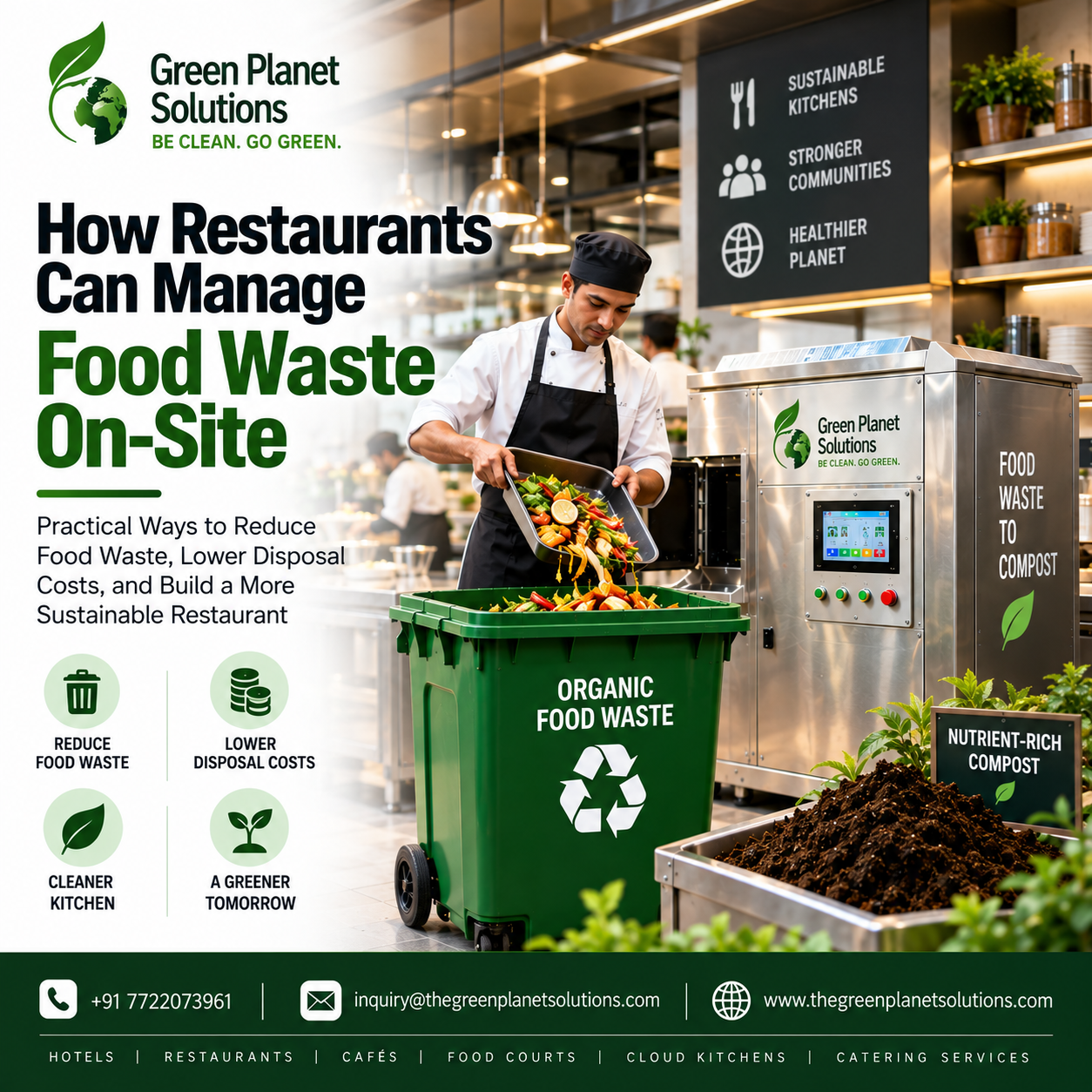
    Commercial composting machine are helping restaurants, hotels, residential societies, institutions, and commercial facilities manage organic waste more efficiently. These machines can process suitable biodegradable waste and reduce the amount of organic material that needs to be handled through conventional disposal methods.

    However, successful composting depends on one important factor: putting the right materials into the machine.

    Not all waste is suitable for a commercial composting machine. Mixing plastic, metal, glass, or other unwanted materials with food waste can affect the composting process, reduce the quality of the output, and potentially damage equipment. Proper waste segregation is therefore the first step towards efficient and successful composting.

    What Can Go into a Commercial Composting Machine?

    The exact materials accepted can vary depending on the machine, technology, manufacturer instructions, and local regulations. However, commercial composting systems are generally designed to process suitable biodegradable organic waste.

    Fruit and Vegetable Waste

    Fruit peels, vegetable peels, spoiled fruits, vegetable scraps, and other plant-based kitchen waste are commonly suitable for composting. Restaurants, hotels, and commercial kitchens generate large quantities of this type of waste every day.

    Instead of sending these materials directly for disposal, properly segregated organic waste can be processed through a suitable composting system.

    Leftover Food

    Suitable leftover food from kitchens, cafeterias, restaurants, and dining areas may also be processed in many commercial composting systems.

    Rice, bread, cooked vegetables, and other food leftovers can contribute to the organic waste stream. However, businesses should always follow the manufacturer’s guidelines regarding the quantity and type of food waste accepted by their specific machine.

    Tea Leaves and Coffee Grounds

    Used tea leaves and coffee grounds are organic materials that are commonly suitable for composting. Hotels, cafés, offices, and restaurants can generate significant quantities of this waste.

    Separating tea and coffee waste from plastic packaging and other contaminants makes it easier to process.

    Eggshells and Other Suitable Biodegradable Kitchen Waste

    Eggshells and certain other biodegradable kitchen materials may also be accepted by commercial composting systems. Before adding any material, it is important to check whether the machine requires the waste to be crushed, mixed, or processed in a specific way.

    Garden and Landscaping Waste

    Small amounts of leaves, grass clippings, and other suitable green waste may be accepted by some composting systems. However, large branches, wood pieces, and bulky garden waste may require separate processing or specialized equipment.

    What Should Not Go into a Commercial Composting Machine?

    Keeping unsuitable materials out of the machine is just as important as adding suitable organic waste.

    Plastic and Plastic Packaging

    Plastic bags, wrappers, bottles, straws, food packaging, and disposable plastic items should not be placed in a composting machine unless specifically designed for that material.

    Plastic does not break down like organic waste and can contaminate the processed output. It may also interfere with the machine’s mechanical components.

    Metal and Aluminium

    Metal cans, foil, cutlery, bottle caps, and other metal objects should be removed from the waste before processing.

    These materials are not biodegradable and can create operational problems or damage parts of the equipment.

    Glass

    Glass bottles, broken glass, and glass containers should never be mixed with food waste going into a composting machine.

    Apart from being unsuitable for composting, broken glass can create serious safety risks for employees handling the waste.

    Chemicals and Cleaning Products

    Cleaning chemicals, detergents, disinfectants, paints, oils, and other hazardous substances should not be placed in a commercial composting machine.

    These materials can interfere with the biological process and may make the resulting organic material unsuitable for further use.

    Batteries and Electronic Waste

    Batteries, electrical components, wires, chargers, and electronic devices should never enter the organic waste stream.

    These items contain materials that require separate and appropriate disposal methods.

    Large Bones, Shells and Hard Materials

    Large bones, hard shells, stones, and other hard materials may not be suitable for every commercial composting machine. They can be difficult to process and may affect machine performance.

    Always check the machine manufacturer’s recommendations before adding such materials.

    Why Proper Waste Segregation Is So Important

    A commercial composting machine performs best when the input waste is clean and properly segregated.

    When organic waste is mixed with plastic, metal, glass, or other contaminants, employees may need to spend additional time sorting the waste. Contamination can also affect the quality of the final output and create unnecessary operational challenges.

    Using clearly labelled bins for organic waste, recyclable waste, and general waste can make segregation easier.

    How Businesses Can Create a Better Composting System

    Successful composting is not only about installing a machine. Businesses also need a simple process for collecting and handling waste.

    Restaurants and commercial kitchens can place organic waste bins close to food-preparation areas. Staff should receive clear instructions about what belongs in each bin. Visual signs and regular training can help employees follow the correct process.

    Before loading the composting machine, the waste should be checked for unsuitable items. This simple step can help protect the equipment and improve the efficiency of the composting process.

    A Quick Rule: When in Doubt, Keep It Out

    If employees are unsure whether a material can be processed in the composting machine, it is better not to add it until they confirm the manufacturer’s guidelines.

    Different commercial composting machines have different capabilities. A material suitable for one system may not be suitable for another. Following the operating manual and supplier recommendations is always the safest approach.

    Conclusion

    Commercial composting machines can provide an effective solution for managing suitable food and organic waste, but the quality of the input material plays a major role in the success of the process.

    Fruit and vegetable waste, suitable food leftovers, tea leaves, coffee grounds, and other biodegradable materials can often be processed effectively. Plastic, metal, glass, chemicals, batteries, and other non-organic materials should be kept out of the system.

    With proper waste segregation, staff awareness, and the right composting technology, businesses can create a cleaner and more efficient approach to food waste management.

    The key is simple: Segregate properly, process the right waste, and compost smarter.

  • The Role of Waste Segregation in Successful Food Waste Composting

    The Role of Waste Segregation in Successful Food Waste Composting

    Why Separating Waste Is the First Step Towards Better Composting

    Food waste is generated every day in restaurants, hotels, commercial kitchens, residential communities, institutions, and food-processing facilities. Fruit and vegetable peels, leftover food, expired ingredients, and kitchen scraps are often mixed with plastic packaging, glass, metal, tissues, and other unwanted materials. This is where waste segregation becomes important. Before food waste enters a composting system, it should be properly separated from non-organic waste. Effective segregation helps businesses manage organic waste more efficiently and supports a smoother composting process.

    Simply put, better segregation leads to better food waste management.

    What Is Waste Segregation?

    Waste segregation is the process of separating waste into different categories at the point where it is generated. For food waste management, this generally means keeping organic and biodegradable waste separate from recyclable and non-recyclable materials.

    In a commercial kitchen, for example, vegetable peels, fruit scraps, leftover food, and other suitable organic materials can be collected separately. Plastic wrappers, bottles, cans, metal objects, glass, and other unsuitable materials should be placed in different waste streams.

    This simple practice can make a significant difference in the efficiency of the overall waste-management process.

    Why Waste Segregation Is Important for Composting

    Composting works best when the input material is primarily suitable organic waste. When plastic, metal, glass, or other unwanted materials are mixed with food waste, they can create operational challenges.

    Contamination may affect the quality of the final compost or organic output and can increase the effort required to sort the waste before processing. In some cases, unsuitable materials may also create problems for equipment.

    By segregating food waste correctly at the source, businesses can provide cleaner organic material to the composting system.

    Protecting the Composting Machine

    For businesses using commercial composting machines, proper waste segregation is an important part of equipment care.

    Hard objects, plastic materials, metal items, and other foreign objects can interfere with the waste-processing process. Employees should be trained to check food waste before placing it into the machine.

    Using clearly labelled bins and simple waste-separation guidelines can help reduce the chances of unsuitable materials entering the composting machine.

    A few minutes spent on segregation can help make daily operations more efficient.

    Improving the Quality of the Final Output

    The quality of compost depends significantly on the quality of the material used during the composting process.

    When organic waste is relatively clean and free from contamination, the resulting compost or processed organic material is more suitable for further use, subject to the specific composting process and applicable requirements.

    On the other hand, mixed waste can introduce unwanted materials into the final output. Proper segregation helps businesses maintain a cleaner and more consistent input stream.

    Reducing Waste-Management Costs

    Mixed waste is often more difficult and expensive to handle. When organic waste is separated at the source, businesses may be able to process it more efficiently while sending recyclable and other waste through appropriate disposal or recovery channels.

    Good segregation can also reduce the time spent sorting waste later. For large restaurants, hotels, and commercial facilities, even small improvements in daily waste handling can create better operational efficiency over time.

    The actual cost benefits will depend on local waste-disposal systems, waste volume, and the facility’s overall waste-management practices.

    How Businesses Can Improve Waste Segregation

    Successful waste segregation does not have to be complicated. Businesses can begin with a few practical steps.

    Place clearly labelled bins in kitchens and waste-generation areas. Use simple instructions so employees can easily identify where different types of waste should go. Regular staff training can also help create awareness about the importance of proper segregation.

    Restaurants and commercial kitchens can establish separate bins for organic food waste, recyclable materials, and general waste. Regular monitoring can help ensure that the system is being followed correctly.

    The Role of Employees in Successful Composting

    A composting system is not only about the machine—it also depends on the people who use it.

    Kitchen staff, housekeeping teams, facility managers, and waste-handling employees all play an important role. When employees understand which materials belong in the organic waste stream, the entire process becomes easier to manage.

    Regular training and simple visual reminders can encourage employees to follow proper segregation practices.

    Creating a Complete Food Waste Management System

    Waste segregation should be considered the starting point of a complete food waste management strategy.

    The process can begin with reducing unnecessary food waste through better purchasing and inventory management. Unavoidable organic waste can then be segregated and processed through a suitable composting system.

    Recyclable materials can be sent for recycling, while other waste can be handled through appropriate disposal methods. This approach helps businesses move away from a single mixed-waste system and towards more responsible resource management.

    Conclusion

    Successful food waste composting starts before the waste enters the composting machine. Proper waste segregation helps ensure that suitable organic material is collected, contamination is reduced, equipment is protected, and the composting process can operate more efficiently.

    For restaurants, hotels, commercial kitchens, residential communities, and institutions, creating a simple and effective segregation system can be the first step towards smarter organic waste management.

    Separate better. Compost smarter. Build a greener future.

    Green Planet Solutions supports businesses with sustainable organic waste management and composting solutions designed for a cleaner and more responsible future.

  • Composting vs. Landfilling: Which Is Better for Food Waste Management?

    Composting vs. Landfilling: Which Is Better for Food Waste Management?

    Choosing a Smarter Way to Manage Food Waste

    Food waste is one of the biggest challenges faced by restaurants, hotels, commercial kitchens, residential communities, and other businesses. Every day, large quantities of organic waste are generated from food preparation, leftover meals, fruit and vegetable scraps, and expired food.

    Traditionally, much of this waste has been sent to landfills. However, businesses are increasingly looking for cleaner and more sustainable alternatives. Composting is one such solution that can help transform organic waste into a useful resource instead of simply sending it for disposal.

    So, when it comes to food waste management, is composting a better option than landfilling? Let’s take a closer look.

    What Happens When Food Waste Goes to a Landfill?

    When food waste is sent to a landfill, it is mixed with other types of waste and buried. Organic material then breaks down under landfill conditions, where oxygen availability is limited.

    This process can contribute to the generation of methane and other environmental impacts. Landfills also require significant amounts of land and depend on regular waste collection and transportation.

    For businesses that generate large amounts of food waste, continuously sending organic waste to landfill can also mean ongoing disposal and transportation expenses.

    What Is Food Waste Composting?

    Composting is a natural process in which organic materials are broken down into a nutrient-rich material that can be used to improve soil.

    Modern composting machines can accelerate and control this process, allowing businesses to manage organic food waste closer to where it is generated. Depending on the technology and system used, food waste can be processed into a compost-like output in a much shorter time than traditional open composting.

    This makes composting particularly useful for restaurants, hotels, institutions, and commercial facilities with a regular supply of organic waste.

    Composting vs. Landfilling: The Key Difference

    The biggest difference is simple: landfilling treats food waste as something to dispose of, while composting treats it as a resource.

    With landfilling, food waste leaves the business premises and becomes part of the general waste stream. With composting, organic waste can be processed and potentially returned to the soil as a useful organic material.

    This shift from disposal to resource recovery is an important part of developing a more circular approach to waste management.

    Environmental Benefits of Composting

    Composting can provide several environmental advantages when properly implemented.

    By diverting organic waste from landfills, businesses can reduce the amount of food waste entering the landfill waste stream. Composting also creates an opportunity to recover nutrients from organic material rather than permanently disposing of them.

    The resulting compost or organic output can potentially be used for landscaping, gardening, soil improvement, or other suitable applications, depending on its quality and local regulations.

    Can Composting Reduce Waste-Disposal Costs?

    For businesses, waste management is not only an environmental issue—it is also an operational cost.

    Landfill-based waste management may involve collection, transportation, handling, and disposal charges. By processing a portion of organic waste on-site, businesses may be able to reduce the volume of food waste requiring external disposal.

    The actual financial benefit depends on factors such as daily waste generation, local disposal charges, machine capacity, electricity consumption, maintenance, and operating requirements.

    A simple cost assessment can help businesses determine whether an on-site composting solution makes financial sense.

    Better Hygiene and Cleaner Waste Handling

    Food waste can quickly create unpleasant odors and attract insects when stored for extended periods.

    Regular processing of organic waste can help businesses reduce the quantity of food waste sitting in bins and waste-storage areas. This can support cleaner waste-handling practices and improve the overall working environment.

    For restaurants and commercial kitchens, where hygiene is particularly important, efficient organic waste management can be an important part of daily operations.

    Why Composting Machines Are Useful for Businesses

    Traditional composting can require considerable space, time, and careful management. Composting machines are designed to make organic waste processing more controlled and convenient.

    Businesses can select systems based on their waste volume, available space, processing requirements, and operational needs. Both semi-automatic and fully automatic systems are available for different applications.

    For facilities generating food waste every day, an on-site composting machine can provide a practical way to manage organic waste at its source.

    Is Landfilling Ever Necessary?

    Landfilling remains part of waste-management systems in many locations, particularly for waste that cannot be recycled, composted, or otherwise recovered.

    The goal is not necessarily to eliminate landfills completely, but to reduce the amount of avoidable organic waste being sent there. Better waste segregation and appropriate treatment methods can help ensure that food waste is handled through more sustainable pathways wherever practical.

    Which Is Better for Food Waste Management?

    For suitable organic food waste, composting generally offers a more resource-oriented approach than landfilling.

    Landfilling focuses on disposal, while composting focuses on recovery and reuse. For businesses with sufficient organic waste generation, space, and suitable operating conditions, composting can help reduce landfill dependence while supporting sustainability goals.

    The best solution will depend on the type and quantity of waste generated, local regulations, available infrastructure, and the business’s operational requirements.

    Conclusion

    Food waste does not have to be viewed simply as something that needs to be thrown away. With proper segregation and suitable technology, organic waste can become a valuable resource.

    While landfilling remains a part of modern waste-management systems, composting provides businesses with an opportunity to reduce organic waste disposal and support a more circular approach to resource management.

    For restaurants, hotels, commercial kitchens, and other businesses looking for a smarter way to manage food waste, composting machines can be an important step toward cleaner, more efficient, and sustainable waste management.

    Green Planet Solutions provides composting solutions designed to help businesses manage organic waste more responsibly and move toward a greener future.

  • Restaurant Food Waste Management: How Composting Machines Can Reduce Waste

    Restaurant Food Waste Management: How Composting Machines Can Reduce Waste

    Turning Restaurant Food Waste into a Sustainable Resource

    Restaurants generate a significant amount of organic waste every day. Vegetable peels, leftover food, fruit waste, spoiled ingredients, and kitchen scraps can quickly accumulate. When this waste is sent to landfills, it can create unpleasant odors, attract pests, and contribute to environmental problems. With the right waste management approach, however, restaurants can turn much of this organic waste into a useful resource.

    Composting machines provide a practical solution by allowing restaurants to process food waste on-site and significantly reduce the amount of organic waste that needs to be transported and disposed of.

    Why Food Waste Management Matters for Restaurants

    Managing food waste is not only an environmental responsibility but also an important operational challenge. Restaurants need to deal with waste every day, and traditional disposal methods can increase collection, transportation, and waste-management costs.

    Poorly managed food waste can also create hygiene issues, unpleasant smells, and pest problems around kitchen and waste-storage areas. A well-planned food waste management system helps restaurants maintain cleaner operations while supporting their sustainability goals.

    How a Composting Machine Works

    A composting machine is designed to process organic food waste through a controlled treatment process. Depending on the machine and technology used, the food waste can be broken down and converted into a dry or compost-like organic output within a significantly shorter period than traditional composting.

    The process generally begins with collecting food waste from the kitchen and segregating it from plastics, metals, and other non-organic materials. The organic waste is then placed into the composting machine, where controlled conditions help accelerate its decomposition.

    The resulting material can be further processed or matured depending on the system and can potentially be used as an organic soil amendment.

    Reducing the Volume of Food Waste

    One of the biggest advantages of composting machines is their ability to reduce the volume of organic waste that restaurants send for external disposal.

    Instead of storing large quantities of food waste for daily collection, restaurants can process their organic waste on-site. This can reduce the frequency and volume of waste transportation and make waste handling easier for kitchen and facility-management teams.

    For restaurants that generate large quantities of food waste, this can make a noticeable difference in their overall waste-management process.

    Improving Kitchen Hygiene

    Food waste can become a hygiene concern when it remains in bins for long periods. Decomposing food can produce strong odors and attract insects and other pests.

    By processing organic waste regularly, restaurants can minimize the amount of food waste stored around their premises. This can contribute to cleaner waste-storage areas and a more hygienic working environment for employees.

    Supporting Sustainable Restaurant Operations

    Consumers are increasingly interested in businesses that take sustainability seriously. Restaurants can demonstrate their environmental commitment by adopting responsible food-waste management practices.

    Using a composting machine can become part of a broader sustainability strategy that includes food-waste reduction, recycling, responsible sourcing, energy efficiency, and water conservation.

    Rather than treating food waste only as something to be discarded, restaurants can take a circular approach by recovering value from organic waste.

    Potential Cost Savings

    Food waste disposal involves more than the cost of garbage collection. Restaurants may also spend money on waste storage, transportation, collection frequency, and facility maintenance.

    On-site composting can help reduce the quantity of organic waste requiring external disposal. Depending on the restaurant’s waste volume, local disposal costs, and operating conditions, this may create opportunities for long-term savings.

    The financial benefits should be evaluated based on factors such as daily waste generation, machine capacity, electricity consumption, maintenance requirements, and current waste-disposal costs.

    Choosing the Right Composting Machine

    Every restaurant has different waste-generation patterns, so choosing the right composting machine is important. Businesses should consider their average daily food-waste volume, available installation space, processing capacity, operating requirements, and type of organic waste generated.

    Restaurants should also consider whether they need a semi-automatic or fully automatic system. A properly sized machine can help ensure efficient operation without unnecessary investment in excess capacity.

    Composting Machines for Hotels, Restaurants and Commercial Kitchens

    Large hotels, restaurants, food courts, catering facilities, and institutional kitchens can generate substantial quantities of organic waste every day. For these businesses, an on-site composting solution can provide a structured way to manage food waste closer to its source.

    Instead of transporting large quantities of organic waste away from the property, businesses can process it on-site and reduce their dependence on conventional waste-disposal methods.

    Building a More Sustainable Food System

    Food waste management is becoming an important part of sustainable business operations. Restaurants have an opportunity to reduce waste at multiple stages—from better purchasing and portion control to food donation, recycling, and composting.

    A composting machine does not replace efforts to prevent food waste, but it can play an important role in managing unavoidable organic waste responsibly.

    Conclusion

    Restaurant food waste is an everyday challenge, but it can also become an opportunity for more sustainable operations. Composting machines allow restaurants to process organic waste on-site, reduce the volume of waste sent for disposal, improve waste-handling conditions, and potentially reduce long-term disposal costs.

    For restaurants looking to adopt a more sustainable approach to organic waste management, investing in the right composting technology can be an important step toward a cleaner and more resource-efficient operation.