For a housing society committee, choosing a composting machine is not simply a purchase decision. The proposal has to fit the waste actually generated, the place where it will operate, the people who will run it, and the society’s plan for the processed output. A quotation that looks complete on paper may still leave important operating questions unanswered.
This checklist is designed for committee members, facility managers, and maintenance teams comparing proposals for an on-site organic-waste composter. It complements our wet-waste management plan for housing societies, which covers the wider day-to-day system. Use this article when the society is ready to compare options and approve a practical proposal.
Start with one clear design brief
Ask every vendor to respond to the same written brief. This prevents the committee from comparing one proposal based on resident count, another based on average waste, and another based only on machine capacity. A good brief should state the measured wet-waste range, likely peak days, current segregation quality, available area, utilities, collection route, and the person or team expected to operate the system.
Count of flats is useful background information, but it is not enough to define a machine. Occupancy, food habits, common kitchens, events, and garden waste can change the daily waste stream. A short site audit gives a much better basis for comparison.
1. What daily input has the proposal assumed?
Request that the proposal clearly states the assumed daily wet-waste input and whether that figure is an average, a peak, or a design allowance. The committee should be able to trace the number back to a recent measurement exercise rather than an estimate made only from flat count.
- How many days of records were used?
- Were buffet-style events, festivals, or weekends considered where relevant?
- Is garden waste included, excluded, or handled through a separate route?
- What happens if incoming wet waste is temporarily higher than the assumed quantity?
2. What material is suitable for the proposed process?
A committee should not assume that every item placed in a green bin is suitable for every processing route. Ask the vendor to state the expected input material, items that should be kept out, and the handling method for contamination. This makes resident communication and housekeeping training much easier after installation.
The national solid-waste framework emphasises segregation at source and the useful processing of segregated material. Local-body requirements can differ, so the society should confirm its own applicable collection, storage, and processing requirements before implementation. The Ministry of Environment, Forest and Climate Change rules and regulations page is a useful starting reference.
3. Does capacity cover normal and peak operating days?
Capacity should be discussed as part of an operating routine, not as an isolated number on a brochure. Clarify the proposed loading frequency, any temporary holding arrangement, and how the system is expected to cope with a higher-than-usual day. The committee should also understand whether the stated capacity refers to incoming material, a processing stage, or another measure used by the supplier.
A clear written explanation lets the society compare proposals fairly and avoids an unrealistic expectation that a machine can compensate for mixed waste, missed operating days, or an unsuitable site layout.
4. Is the proposed location genuinely workable?
Before approving a proposal, walk the route from collection points to the proposed machine area. Confirm the floor, covered area, access, electrical supply, water, drainage, ventilation, cleaning arrangements, and distance from sensitive areas. Also consider how staff will move containers safely during rain or a maintenance interruption.
The right location is a place that can be cleaned, supervised, and used daily. It is not simply the largest unused corner of the property.
5. Who will operate, inspect, and clean the system?
Every proposal should identify the daily workflow. The committee can own oversight, while a named facility or housekeeping supervisor owns collection checks, loading, cleaning, and issue escalation. Ask for the training scope, the daily checklist, and the practical records required for handover or committee changes.
Clarifying ownership before purchase is more useful than discovering later that no one has been assigned to inspect input quality or manage the output.
6. What happens to the processed output?
Ask how the proposal describes the output, its handling, and the space or process needed after the main machine step. The society should decide whether the output will be used in landscaping where appropriate, managed through an agreed route, or handled in another site-specific way. Avoid promising a particular result unless it is supported by the selected process, operating conditions, and applicable local requirements.
7. What is included in commissioning and support?
Compare the scope, not just the headline price. A useful proposal explains delivery, installation prerequisites, training, initial operating support, documentation, routine maintenance expectations, escalation contacts, and exclusions. Put the accepted scope in writing so that the committee, managing agency, and vendor are working from the same understanding.
8. Can the committee compare every proposal on one page?
Create a simple comparison sheet with the same columns for every option: assumed daily input, peak-day approach, input exclusions, footprint, utilities, collection route, operating roles, training, output plan, support scope, and commercial terms. Mark unclear assumptions for follow-up instead of treating them as included.
This one-page review turns the discussion from “Which machine is cheapest?” into “Which proposal is workable for our society every day?”
Plan a practical next step
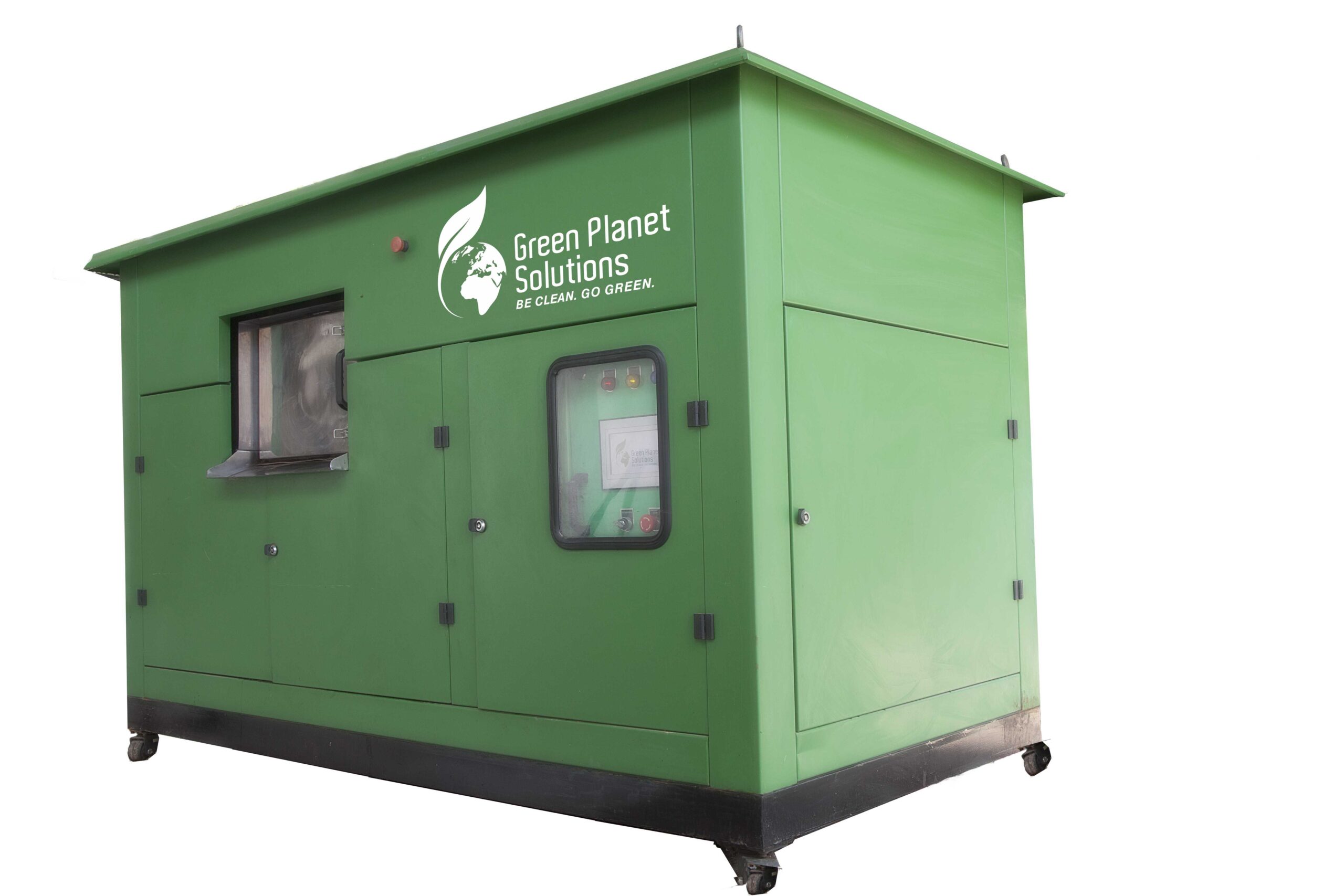
Green Planet Solutions can discuss your society’s approximate wet-waste quantity, available space, location, and operating model to help identify a suitable next step. You can also review our fully automatic composting machine solution before a project discussion.
Planning a housing-society waste-management project?
Open the enquiry form for a practical assessment.
Or call +91 7722073961 or email inquiry@thegreenplanetsolutions.com.
This article is general planning guidance. Confirm local requirements and site-specific technical details before selecting or implementing a waste-management system.