Tag: Sewage Treatment Plant

  • 7 Common STP Problems and How to Solve Them

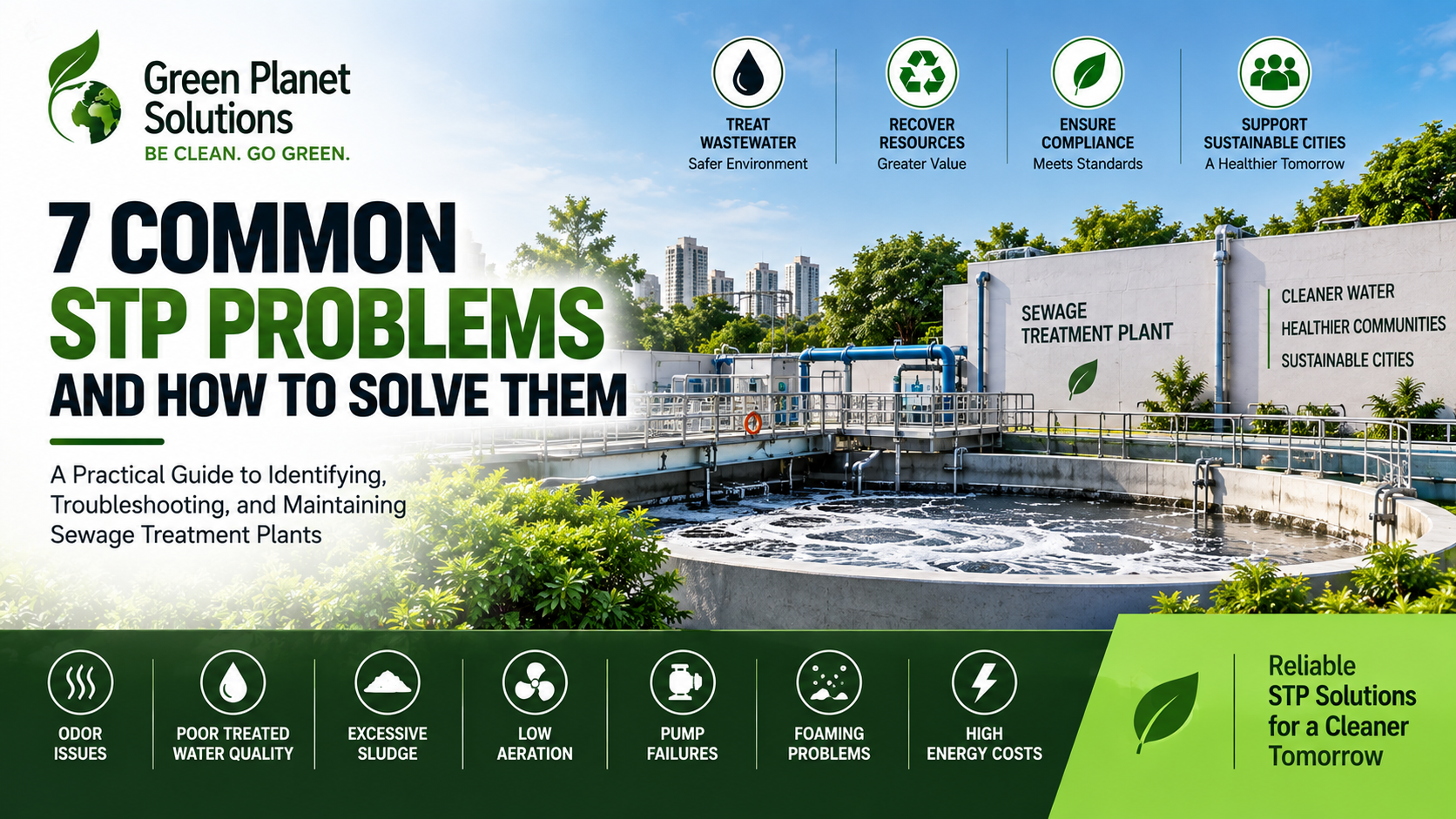
    7 Common STP Problems and How to Solve Them

    A Practical Guide to Identifying, Troubleshooting, and Maintaining Sewage Treatment Plants

    A Sewage Treatment Plant (STP) plays an important role in managing wastewater from residential societies, hotels, hospitals, commercial buildings, industries, and institutions. A properly functioning STP treats wastewater effectively and helps protect water resources and the surrounding environment.

    However, like any mechanical and biological system, an STP can experience operational problems. Issues such as unpleasant odors, poor treated-water quality, excessive sludge, pump failures, and insufficient aeration can affect overall performance.

    The good news is that many STP problems can be reduced or prevented through regular monitoring, preventive maintenance, correct operation, and timely troubleshooting.

    Here are seven common STP problems and practical ways to address them.


    1. Unpleasant Odor from the STP

    What Causes It?

    An unusual or strong odor can be one of the first signs that something is not working correctly. Possible causes include poor aeration, stagnant wastewater, excessive sludge accumulation, or improper operation of the biological treatment process.

    How to Solve It

    Start by checking the aeration system and ensuring that air is being distributed properly. Inspect tanks for excessive sludge and stagnant areas.

    Regular cleaning, proper sludge management, adequate ventilation, and correct operation of the biological process can help control odor problems.

    If the odor continues, the plant should be inspected by a qualified wastewater-treatment professional.


    2. Poor Treated-Water Quality

    What Causes It?

    Poor outlet-water quality can result from several factors, including overloading, insufficient aeration, excessive sludge, incorrect process conditions, or equipment malfunction.

    Changes in the incoming wastewater can also affect treatment performance.

    How to Solve It

    Regularly monitor important parameters such as pH, TSS, BOD, COD, and other parameters relevant to the plant and applicable standards.

    Check the biological treatment process, aeration system, pumps, filters, and sludge levels. Comparing current water-quality results with historical records can also help identify when performance started changing.


    3. Excessive Sludge Accumulation

    What Causes It?

    Sludge naturally forms during wastewater treatment. However, excessive accumulation can reduce tank capacity and interfere with treatment efficiency.

    Poor sludge management or insufficient removal can make the problem worse.

    How to Solve It

    Monitor sludge levels regularly and follow an appropriate sludge removal schedule.

    Operators should also check whether pumps and sludge-handling equipment are functioning correctly. Proper sludge management helps maintain adequate treatment capacity and stable plant operation.


    4. Low or Uneven Aeration

    What Causes It?

    Aeration is an important part of many biological wastewater treatment systems. Problems can occur when blowers, diffusers, air pipelines, or valves are blocked, damaged, or not operating correctly.

    Insufficient aeration can affect biological treatment performance.

    How to Solve It

    Inspect the blower, air pressure, pipelines, valves, and diffusers. Look for unusual noise, vibration, leaks, or uneven air distribution.

    Regular servicing of blowers and cleaning of aeration components can help maintain reliable performance.


    5. Pump Failure or Reduced Flow

    What Causes It?

    Pumps operate continuously in many STPs and can experience wear, blockages, electrical faults, or mechanical problems.

    A reduction in pumping capacity can affect the movement of wastewater between treatment stages.

    How to Solve It

    Check pumps for:

    • Unusual noise
    • Excessive vibration
    • Leakage
    • Overheating
    • Blocked strainers
    • Reduced flow
    • Electrical faults

    Routine inspection and preventive servicing can help identify potential pump problems before they result in major downtime.


    6. Foaming in the Aeration Tank

    What Causes It?

    Foaming can occur due to changes in wastewater characteristics, biological conditions, excessive organic loading, or process imbalance.

    Not all foam indicates the same problem, so the cause should be investigated rather than simply treating the visible symptom.

    How to Solve It

    Check the aeration process, wastewater loading, sludge condition, and operating parameters.

    Maintaining stable operating conditions and monitoring changes in the biological process can help reduce recurring foaming.

    If persistent foaming occurs, professional assessment may be required to identify the specific cause.


    7. High Energy Consumption

    What Causes It?

    STPs use energy for pumps, blowers, aeration systems, motors, and other equipment.

    Unexpected increases in energy consumption can indicate inefficient equipment operation, clogged components, excessive pumping, or equipment that requires servicing.

    How to Solve It

    Track energy consumption regularly and compare it with previous operating periods.

    Inspect pumps and blowers for abnormal operation and ensure that aeration and pumping systems are operating according to the plant’s design requirements.

    Energy-efficient equipment, appropriate automation, and preventive maintenance can help improve overall operating efficiency.


    STP Preventive Maintenance Checklist

    The best way to deal with STP problems is to prevent them before they become serious.

    Daily Checks

    • Inspect pumps and blowers
    • Check water flow
    • Observe unusual odors
    • Check control-panel indicators
    • Look for leaks or abnormal sounds

    Weekly Checks

    • Inspect tanks and pipelines
    • Check aeration performance
    • Review sludge levels
    • Clean screens and accessible components
    • Inspect valves and fittings

    Monthly Checks

    • Review water-quality data
    • Inspect electrical systems
    • Check mechanical components
    • Review energy consumption
    • Service equipment according to manufacturer recommendations

    The exact maintenance schedule should be based on the STP design, equipment manufacturer’s instructions, operating conditions, and applicable regulatory requirements.


    Why Regular STP Monitoring Matters

    An STP is a combination of mechanical equipment and biological treatment processes. A problem in one part of the system can eventually affect the entire treatment process.

    Regular monitoring allows operators to identify changes early. Keeping records of water quality, energy consumption, sludge levels, equipment performance, and maintenance activities can make troubleshooting much easier.

    Preventive maintenance can also help reduce unexpected breakdowns and extend equipment life.


    Why Choose Green Planet Solutions?

    Green Planet Solutions provides customized Sewage Treatment Plant (STP) solutions for residential, commercial, industrial, hospitality, and institutional projects.

    Our approach focuses on efficient wastewater treatment, reliable equipment, practical operation, and long-term performance. We help organizations select suitable wastewater treatment solutions according to their capacity, space, water-quality requirements, and reuse objectives.

    From system selection and installation to technical support and maintenance, Green Planet Solutions helps businesses move toward more reliable and sustainable wastewater management.


    Need help assessing an STP issue or planning a wastewater-treatment plant? Share your capacity, site type, treated-water objective, and location at +91 7722073961 or inquiry@thegreenplanetsolutions.com.

    Conclusion

    STP problems can affect treatment efficiency, operating costs, equipment life, and environmental performance. Issues such as odor, poor treated-water quality, excessive sludge, inadequate aeration, pump failures, foaming, and high energy consumption should be investigated rather than ignored.

    The key to reliable STP performance is simple: monitor regularly, maintain equipment, manage the biological process correctly, and address warning signs early.

    A well-designed STP combined with proper operation and preventive maintenance can provide dependable wastewater treatment for years.

    Better Maintenance. Better Treatment. Better Water Management.

    With the right STP technology and professional support, businesses and communities can manage wastewater efficiently while contributing to a cleaner, greener, and more sustainable future.
  • STP Maintenance Checklist: How to Keep Your Plant Running Efficiently

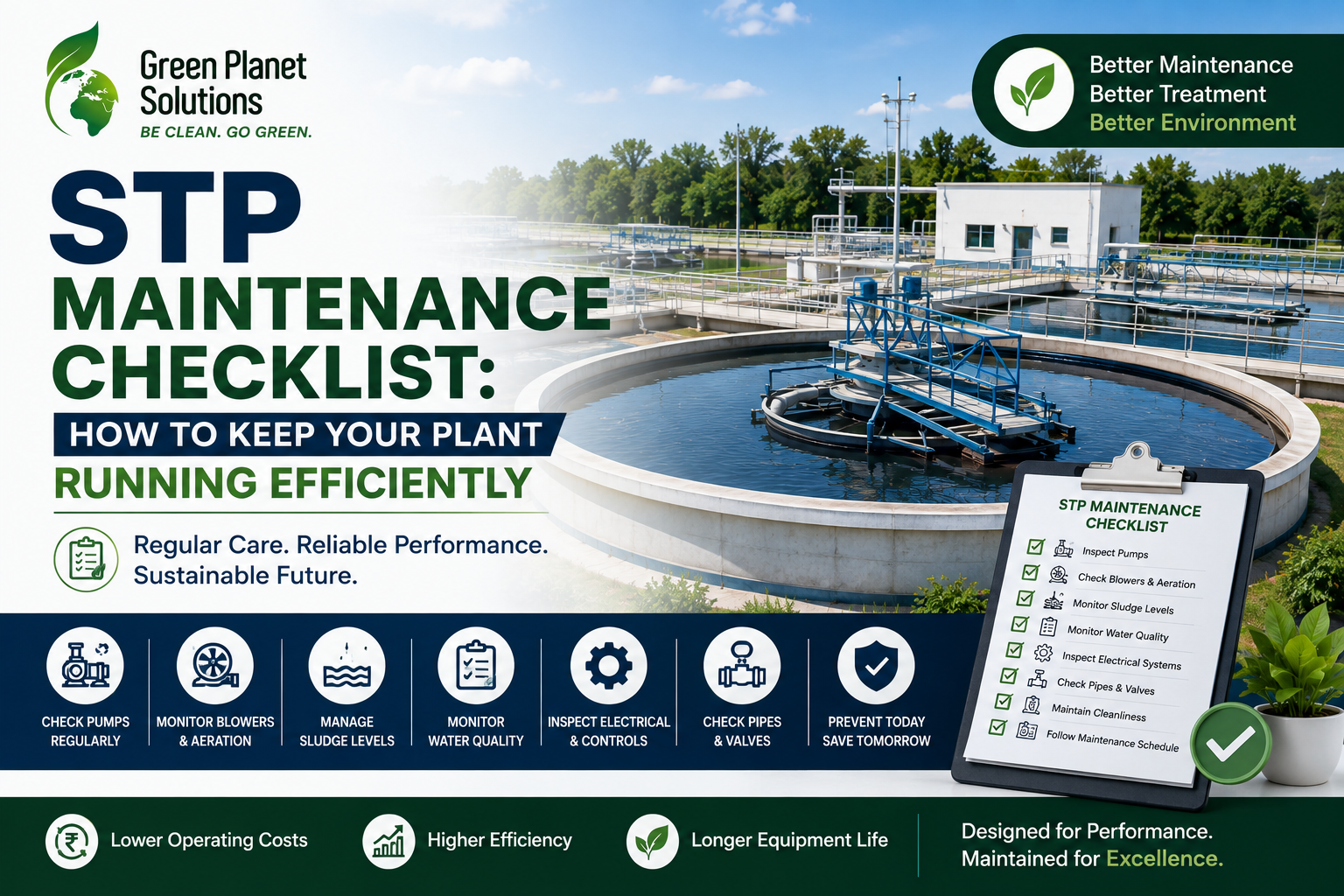
    STP Maintenance Checklist: How to Keep Your Plant Running Efficiently

    A Practical Guide to Reliable Performance, Better Treatment Quality, and Longer Equipment Life

    A Sewage Treatment Plant (STP) is an important part of wastewater management for residential societies, hotels, hospitals, industries, commercial buildings, and institutions. But installing an STP is only the beginning. Regular maintenance is essential to keep the system operating efficiently and to ensure consistent treated-water quality.

    A well-maintained STP can help reduce unexpected breakdowns, control operating costs, improve equipment life, and maintain reliable treatment performance. With a simple and consistent maintenance routine, facility managers can identify small problems before they become expensive repairs.


    Why STP Maintenance Is Important

    An STP works continuously with wastewater, pumps, blowers, tanks, pipes, electrical systems, and biological treatment processes. Over time, equipment can experience wear, blockages, sludge accumulation, or changes in operating conditions.

    Regular inspection and maintenance help keep these components working properly. It also makes it easier to identify unusual sounds, leaks, odors, changes in water quality, or equipment performance at an early stage.


    STP Maintenance Checklist

    1. Inspect Pumps Regularly

    Pumps are essential for moving wastewater through different stages of the treatment process. Check pumps regularly for unusual noise, vibration, leakage, overheating, or reduced flow.

    Pump strainers and associated pipelines should also be inspected for blockages. Regular servicing helps prevent sudden failures and unnecessary downtime.


    2. Check Blowers and Aeration Systems

    In biological treatment processes, aeration plays an important role in supporting microorganisms that break down organic matter.

    Operators should regularly check:

    • Blower performance
    • Air pressure
    • Airflow
    • Unusual noise or vibration
    • Air distribution
    • Aeration pipelines and diffusers

    Poor aeration can affect biological treatment efficiency, so any abnormal performance should be investigated promptly.


    3. Monitor Sludge Levels

    Sludge management is another important part of STP operation. Excessive sludge accumulation can reduce treatment efficiency and affect the capacity of tanks.

    Regularly monitor sludge levels and remove excess sludge according to the plant’s operating requirements. Proper sludge management helps maintain stable treatment conditions.


    4. Keep Tanks and Treatment Areas Clean

    Tanks, screens, filters, channels, and surrounding areas should be inspected and cleaned regularly.

    Accumulated solids, debris, grease, or other unwanted materials can interfere with plant operation. Maintaining clean equipment and working areas also improves overall hygiene and safety.


    5. Check Electrical Panels and Controls

    Modern STPs often depend on electrical control panels, sensors, automation systems, and motor controls.

    Regularly inspect electrical panels for:

    • Loose connections
    • Overheating
    • Fault indications
    • Damaged cables
    • Abnormal readings
    • Control-system issues

    Electrical maintenance should always be carried out by qualified personnel following appropriate safety procedures.


    6. Monitor Water Quality

    Monitoring the quality of wastewater entering and leaving the STP helps identify changes in plant performance.

    Depending on the treatment system and applicable requirements, parameters such as pH, TSS, BOD, COD, and other relevant indicators may need to be monitored.

    Keeping proper records makes it easier to identify trends and take corrective action when treatment performance changes.


    7. Inspect Pipes, Valves, and Connections

    Leaks and blockages in pipelines can affect the overall performance of an STP.

    Inspect pipes, valves, joints, and connections regularly for leakage, corrosion, blockage, or physical damage. Early detection can prevent water loss and larger maintenance problems.


    8. Maintain Filters and Other Treatment Components

    Filters and other treatment components can gradually accumulate solids and require cleaning or replacement.

    Follow the equipment manufacturer’s recommended maintenance schedule and inspect components regularly. Proper cleaning helps maintain consistent flow and treatment efficiency.


    9. Control Odor Problems

    A properly operated STP should be monitored for unusual or excessive odors.

    Unexpected odors can sometimes indicate problems such as poor aeration, excessive sludge accumulation, stagnant wastewater, or inadequate ventilation.

    Identifying the source of the odor early can help prevent larger operational issues.


    10. Follow a Preventive Maintenance Schedule

    One of the best ways to maintain an STP is to follow a preventive maintenance schedule instead of waiting for equipment to fail.

    A simple schedule can include:

    Daily

    • Check pumps and blowers
    • Inspect water flow
    • Observe unusual noise or odors
    • Check control-panel indicators

    Weekly

    • Inspect tanks and pipelines
    • Check aeration performance
    • Review sludge levels
    • Clean screens and accessible components

    Monthly

    • Inspect electrical systems
    • Service equipment as required
    • Review water-quality records
    • Check valves, filters, and mechanical components

    Periodically

    • Conduct detailed equipment servicing
    • Calibrate relevant instruments
    • Inspect major components
    • Review overall plant performance

    The exact frequency should be based on the STP design, equipment manufacturer’s recommendations, operating conditions, and applicable regulations.


    Common Signs Your STP Needs Attention

    Facility managers should not ignore warning signs such as:

    • Unusual equipment noise
    • Excessive vibration
    • Frequent pump or blower failures
    • Unpleasant odors
    • Reduced water flow
    • Excessive sludge
    • Poor treated-water quality
    • Frequent electrical faults
    • Unexpected increases in energy consumption

    Addressing these issues early can help prevent costly breakdowns and extended downtime.


    How Regular Maintenance Saves Money

    Preventive maintenance may appear to be an additional operating expense, but it can reduce the cost of major repairs and equipment replacement.

    Regular servicing helps identify worn components before they fail completely. It can also improve energy efficiency, reduce downtime, extend equipment life, and maintain consistent treatment performance.

    For large residential, commercial, and industrial facilities, these benefits can make a significant difference over the long term.


    Why Choose Green Planet Solutions for STP Solutions?

    Green Planet Solutions provides customized Sewage Treatment Plant solutions for residential, commercial, industrial, hospitality, and institutional applications.

    Our approach focuses on reliable treatment, efficient operation, practical maintenance, and long-term performance. From selecting the appropriate STP technology to installation and technical support, we help organizations build effective wastewater management systems.

    A well-designed STP combined with proper operation and maintenance can deliver better performance and greater value throughout its operating life.

    Need help with STP maintenance, troubleshooting, or a wastewater-treatment solution? Share your plant capacity, site type, current issue or requirement, and location with Green Planet Solutions at +91 7722073961 or inquiry@thegreenplanetsolutions.com.


    Conclusion

    Regular STP maintenance is essential for keeping a sewage treatment plant efficient, reliable, and safe. Simple practices such as checking pumps and blowers, monitoring sludge, inspecting pipelines, maintaining electrical systems, and tracking water quality can prevent many common operational problems.

    The key is consistency. A properly maintained STP performs better, lasts longer, and supports more sustainable wastewater management.

    Keep Your STP Efficient. Keep Your Water Management Sustainable.

    With the right technology, regular maintenance, and professional support, businesses and communities can manage wastewater more efficiently while moving toward a cleaner and greener future.