Tag: wet waste management

  • Wet-Waste Management Plan for Housing Societies in India

    Wet-Waste Management Plan for Housing Societies in India

    Housing societies can make wet-waste handling more reliable when they treat it as an everyday operating process, rather than only an equipment purchase. A workable plan starts with knowing how much material is generated, where it is collected, who is responsible at each step, and what will happen to the processed material.

    This guide gives a practical structure for resident welfare associations, committee members, facility managers, and housekeeping teams. The exact system should be selected only after a site assessment, because quantity, available space, local collection arrangements, staffing, and local rules differ from one property to another.

    1. Estimate the daily wet-waste quantity

    Begin with a short measurement exercise. For seven representative days, ask the housekeeping team to separately record food scraps, fruit and vegetable waste, garden waste, and contaminated mixed waste from common areas. Record the approximate weight or number of containers, along with unusual events such as functions, holidays, or low occupancy.

    The objective is not a perfect laboratory measurement. It is to establish a realistic daily range and identify peak days. This information helps the society compare processing options and plan storage and collection capacity.

    Useful information to record includes:

    • number of occupied flats and approximate residents;
    • wet-waste quantity by day;
    • garden-waste quantity, if handled separately;
    • collection timings and collection-point location;
    • current municipal collection arrangement; and
    • available covered space, power, drainage, and staff availability.

    2. Make segregation simple for residents and staff

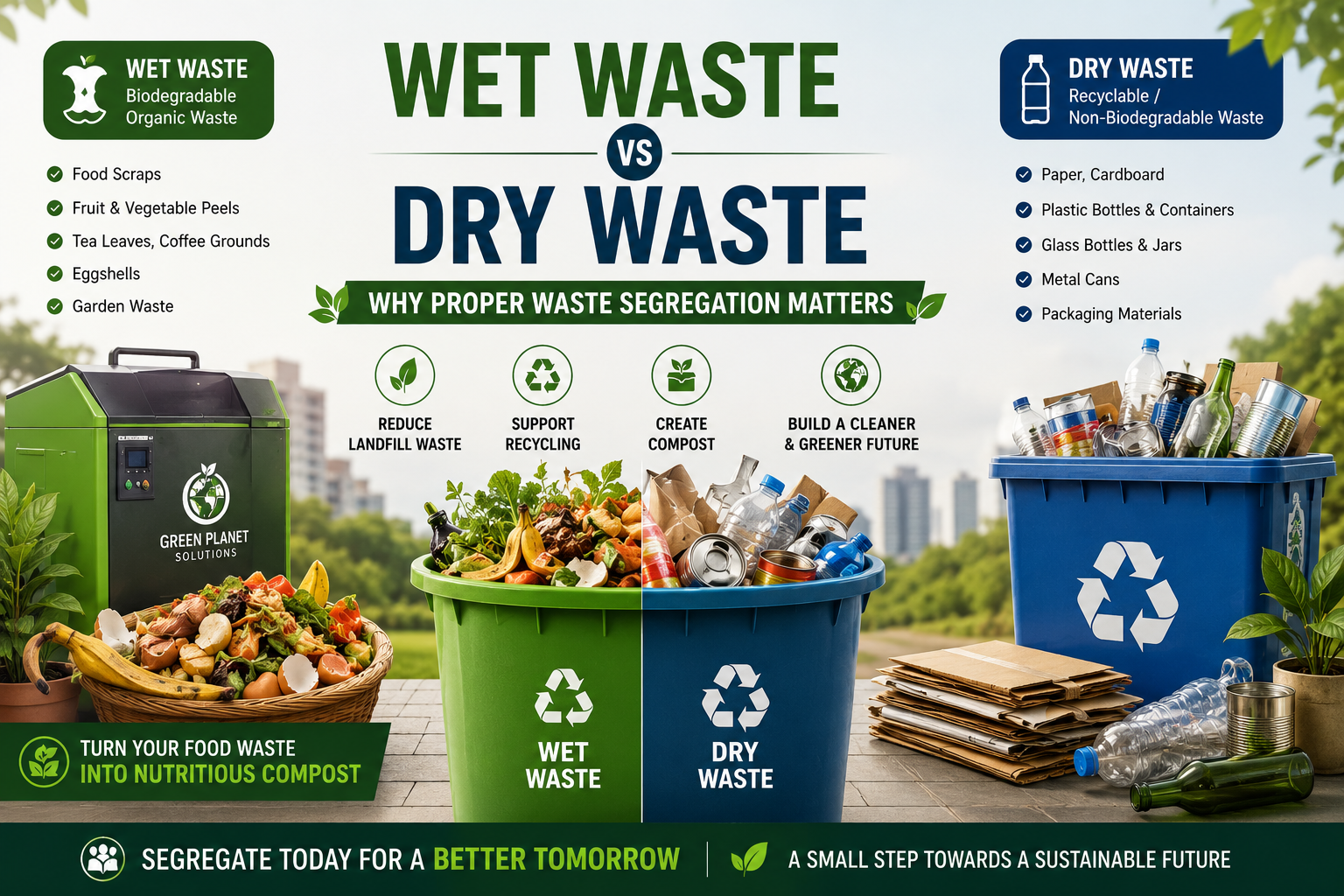
    Wet-waste processing works best when the input is reasonably clean. The society should make the expected household behaviour easy to understand: keep food waste separate from dry recyclables, sanitary waste, e-waste, glass, and hazardous items.

    Use clear bin labels with examples rather than only technical terms. Place the same instructions at lift lobbies, collection points, and in resident communication groups. Housekeeping staff should have a short, consistent procedure for what to do when a bag is mixed or contains unsuitable material.

    A short message, repeated consistently, is more useful than a detailed one-time circular.

    3. Design the collection point before selecting equipment

    A collection point should support safe, clean daily work. Confirm where waste will be brought, whether the area is covered, how containers will be cleaned, and how staff will move material without crossing inconvenient routes or creating odour issues near homes.

    Before commissioning any system, inspect:

    • access route from towers and common areas;
    • floor surface, water supply, drainage, and electrical connection where relevant;
    • ventilation and housekeeping arrangements;
    • distance from sensitive locations such as entrances, play areas, and windows; and
    • how the society will store material temporarily during maintenance or peak days.

    The best location is not necessarily the largest unused corner. It is a space that can be operated, cleaned, supervised, and accessed every day.

    4. Assign operating roles clearly

    Many projects slow down because the equipment is delivered but daily ownership is unclear. Write down who is responsible for collection, inspection of input material, loading, cleaning, record keeping, compost handling, and escalation when a problem occurs.

    For a typical society, the committee or facility manager can own oversight, while a named housekeeping supervisor owns the day-to-day checklist. The maintenance team should know whom to contact if power, drainage, or mechanical support is needed. The vendor or solution provider should be contacted through the agreed support route for issues that require specialist assistance.

    Keep a simple daily log. It can record approximate incoming quantity, contamination observed, operating time, output handling, and any issue requiring follow-up. The record is valuable during handover, committee changes, and performance reviews.

    5. Compare processing routes using site facts

    The right route depends on the actual site. Some societies may use an on-site organic-waste composter; others may use decentralised composting, authorised collection, or a combination with separate handling of garden waste. The choice should account for the expected quantity, space, staffing, budget, desired output, and the downstream use or removal of processed material.

    Do not select capacity using only the number of flats. Occupancy, food habits, events, common kitchens, and garden waste can change daily volumes. Use the measured daily range and allow for realistic operation and maintenance rather than assuming ideal input quality.

    For a starting point, review the Best Organic Waste Composter in India guide and the fully automatic composting machine solution page. A site discussion can then match the option to your actual operational requirements.

    6. Prepare a commissioning checklist

    Before the system begins regular operation, confirm that the society has:

    • a named owner for daily operation and another for backup;
    • resident and staff segregation instructions;
    • containers, cleaning materials, and personal protective equipment appropriate to the task;
    • a collection schedule and a covered temporary-holding arrangement;
    • an operating and maintenance checklist;
    • a plan for compost or processed output; and
    • a support and escalation contact path.

    Start with a supervised first week. Review the incoming material daily and solve contamination or collection problems early. A gradual, visible start usually produces better resident cooperation than silently launching a process and correcting it later.

    Common mistakes to avoid

    The most common issues are mixed waste at source, an inconvenient collection point, no named operator, unrealistic capacity assumptions, and no plan for the output. Another avoidable problem is treating resident communication as complete after one announcement. New residents, staff turnover, and changing habits mean the message needs occasional reinforcement.

    Request a practical site assessment

    Green Planet Solutions can discuss a suitable next step using your resident count, approximate daily wet-waste quantity, available space, city, and preferred operating model. Call +91 7722073961 or email inquiry@thegreenplanetsolutions.com. For a structured enquiry, use the existing project-enquiry route.

    This article is practical operational guidance. Confirm applicable local requirements and site-specific technical details before implementing a waste-management system.
  • How waste wet shredder is the first step to faster composting

    How waste wet shredder is the first step to faster composting

    Table Of Contents:

    1. Introduction
    2. How a Wet Waste Shredder Speeds Everything Up
    • 1. More Surface Area for Microbes
    • 2. Perfect Moisture Balance
    • 3. Better Air Circulation
    • 4. Saves Massive Amounts of Space
    • 5. No More “Identify the Trash” Game
    1. Frequently Asked Questions (FAQs)
    2. Conclusion

    Introduction:

    Have you ever tried taking an entire apple at once? It is almost not possible! You would need to munch on it piece by piece in order for your stomach to be able to process it well, right? Composting is exactly the same! If you put large pieces of food waste into a composter, it would take years to decompose! This is why a wet waste shredder is the best place to start on your journey to becoming green!

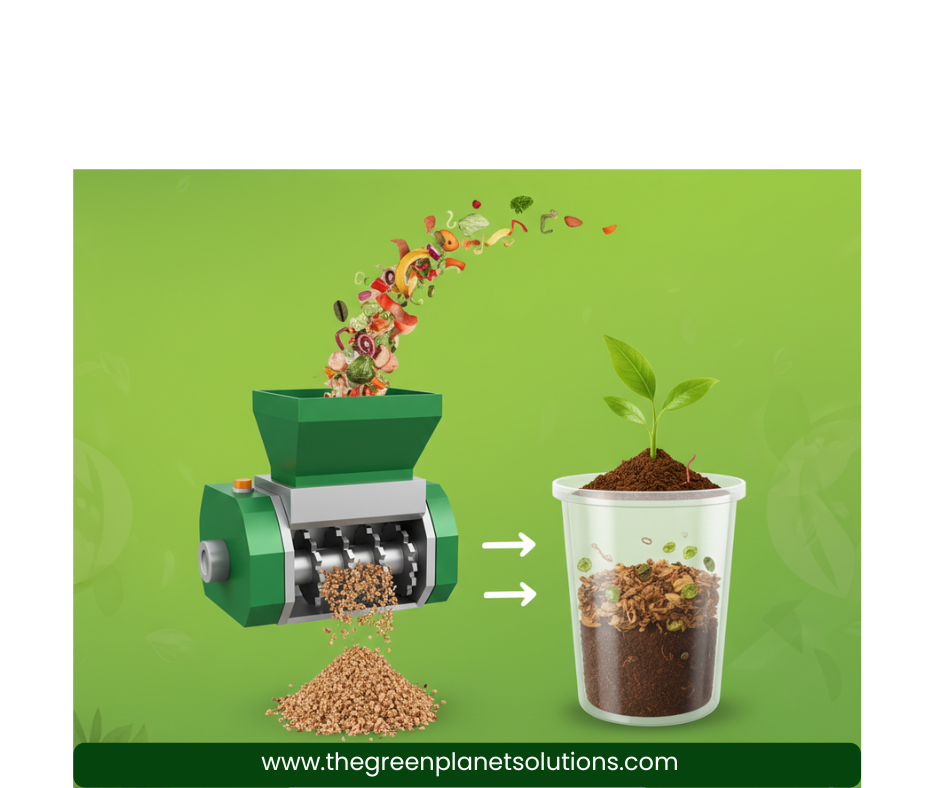
    When you shred the waste into very small pieces, you are basically “chewing” the food for the microbe bugs that help you compost. This one step alone will cause your composting to work twice as fast.

    How a Wet Waste Shredder Speeds Everything Up

    1. More Surface Area for Microbes

    Microbes dig from the outside in. A whole watermelon skin contains very little area that can be attacked by microbes. However, if you put it in a wet waste shredder, you will end up with thousands of edges that will allow millions of microbes to dig simultaneously.

    2. Perfect Moisture Balance

    “As Wet As a Wet Paper Bag”

         Wet waste, such as fruit peels or vegetables, is very wet. If it is left to sit in a large heap, the wetness is retained in a squishy mess. Shredding allows some of that moisture to be distributed evenly to keep the heap from smelling like a swamp.

    3. Better Air Circulation

    Compost must “breathe.” Large flat leaves or cabbage pieces may mat down, excluding oxygen. Shredded waste allows a small amount of air to be trapped, which secures oxygen exposure to all parts of the bin.

    4. Saves Massive Amounts of Space

    Raw organic waste is very bulky and takes up a lot of room in your society’s waste area. Shredding can reduce the volume of your trash by up to 70%. This means you can fit much more waste into a smaller composting machine.

    5. No More “Identify the Trash” Game

    Have you ever opened your compost pile and found that a whole banana peel from three weeks ago was still visible? By shredding, you know that everything is breaking down at the same rate. There won’t be any random leftovers inside your fertilizer either.

    Frequently Asked Questions (FAQs)

    Q: Is it noisy to use? 

    Most shredders today are built to be quite quiet enough for use in residential societies. It sounds like a heavy-duty kitchen blender.

    Q: Can it shred bones and coconut shells? 

    Though it is a powerful shredder for wet waste, its intended use is for “soft” organic waste such as peels, trim, and garden waste. Large bones, for instance, should not be shredded and should instead be removed.

    Q: How long does it take to shred the day’s waste?

    To shred all the green waste collected in a day in a small society, it would take only around 15 to 20 minutes.

    Conclusion

    If you want to turn garbage to gold overnight, you obviously need the right equipment. A wet waste shredder is essentially a turbocharger for your compost heap. It makes life easier for the microbes, prevents the air from getting stale, and helps you save a lot of space. This is the best first move the planet and personal pockets can afford to make to become richer than ever before.

  • Top 5 Industries That Benefit from Wet Waste Shredders

    Top 5 Industries That Benefit from Wet Waste Shredders

    Wet Waste Shredders

    Managing waste efficiently is a big responsibility for many industries, especially when it comes to dealing with wet waste. Wet waste includes materials like food scraps, plant debris, and other organic waste that can be difficult to handle. A wet waste shredder can make the process easier by reducing the volume of waste, helping businesses save money and protect the environment. In this blog, we’ll look at five key industries that can benefit from using wet waste shredders, with a special focus on Green Planet Solutions in the USA, a leader in providing waste management solutions.

    1. Food Processing Industry

    The food processing industry generates large amounts of wet waste, including discarded fruits, vegetables, and other organic materials. Managing this waste can be challenging, but a wet waste shredder helps break it down into smaller pieces, making it easier to compost or recycle. This not only reduces waste disposal costs but also minimizes the environmental impact of food waste.

    Why Food Processors Need Wet Waste Shredders:

    • Reduces the size of waste, making transportation and disposal easier.
    • Helps convert waste into compost for agricultural use.
    • Saves money by reducing landfill and disposal fees.

    2. Agriculture

    In the agriculture industry, managing organic waste like crop residues, green waste, and other biodegradable materials is crucial for maintaining clean and sustainable farming practices. Wet waste shredders help farmers process these materials efficiently, turning them into valuable compost that can be reused to enrich the soil.

    How Wet Waste Shredders Benefit Agriculture:

    • Turns organic waste into compost for better soil quality.
    • Reduces the need for chemical fertilizers by using compost.
    • Helps maintain sustainable farming practices by reducing waste.

    3. Hospitality Industry (Hotels and Restaurants)

    The hospitality industry, which includes hotels, restaurants, and catering businesses, produces large amounts of food waste daily. Wet waste shredders are essential tools for these businesses to manage waste effectively, reduce odor, and prevent pests. By shredding the waste, hospitality businesses can lower their environmental footprint and improve their sustainability practices.

    Key Benefits for the Hospitality Industry:

    • Reduces food waste volume, lowering disposal costs.
    • Helps manage odors and pests by properly handling waste.
    • Supports eco-friendly practices by turning waste into compost.

    4. Municipal Services

    Municipal services, such as city waste management departments, handle the collection and disposal of waste from households, parks, and public spaces. Wet waste, especially from food and garden waste, can create problems if not managed properly. Wet waste shredders are used by municipalities to process this waste efficiently, reducing landfill waste and promoting recycling.

    Why Municipalities Need Wet Waste Shredders:

    • Helps reduce the volume of waste sent to landfills.
    • Improves the efficiency of waste collection and recycling.
    • Supports city-wide composting initiatives.

    5. Retail and Supermarkets

    Supermarkets and large retailers that sell fresh produce often have unsellable, expired, or spoiled food. This wet waste can be challenging to manage, but shredders can reduce the volume and prepare it for composting or disposal. Using a wet waste shredder helps these businesses minimize their waste disposal costs and support sustainable practices.

    How Wet Waste Shredders Help Retailers:

    • Reduces the cost of managing expired and spoiled food.
    • Makes waste easier to compost or recycle.
    • Improves sustainability by lowering the amount of food waste sent to landfills.

    Green Planet Solutions: Leading the Way in Waste Management

    When it comes to providing top-tier wet waste shredders in the USA, Green Planet Solutions is a brand you can trust. They offer a wide range of high-quality machines that are designed to handle organic waste efficiently. From food processing plants to municipal services, Green Planet Solutions delivers tailored solutions to meet the waste management needs of various industries.

    Why Choose Green Planet Solutions?

    • Innovative, energy-efficient shredders for different industries.
    • Commitment to environmental sustainability.
    • Expert support and maintenance to keep your shredding system running smoothly.

    Conclusion

    Wet waste shredders are valuable tools for many industries, from food processing and agriculture to hospitality and municipal services. They help businesses and organizations manage waste more efficiently, reduce costs, and support environmental sustainability. If you’re in need of a reliable solution for your wet waste management, Green Planet Solutions in the USA offers the perfect machines to handle the job.

    By investing in a wet waste shredder, businesses can not only manage their waste more effectively but also contribute to a greener, more sustainable future.

  • The Growing Problem of Food Waste in Urban Areas: Causes and Solutions

    The Growing Problem of Food Waste in Urban Areas: Causes and Solutions


    The Growing Problem of Food Waste in Urban Areas: Causes and Solutions

    Urban areas across the globe are facing a critical issue—food waste. With increasing population density and rapid urbanization, food waste has become a major concern, particularly in cities. The challenge is not just the quantity of food being discarded but also the lack of proper disposal methods. This is where solutions like food waste composting machine come into play, helping mitigate the impact of this growing problem.

    Causes of Food Waste in Urban Areas

    1. Overconsumption and Overproduction:
      In urban centers, restaurants, supermarkets, and households often purchase or prepare more food than they can consume. This leads to large amounts of excess food being thrown away, which contributes to food waste.
    2. Inefficient Supply Chain:
      In cities, the journey from farms to urban consumers can result in significant food spoilage due to poor storage, transportation, and handling practices. Perishable items often go bad before reaching the consumer, contributing to waste.
    3. Lack of Awareness:
      Many people living in cities are unaware of the environmental impact of their food waste. The absence of proper education on sustainable consumption practices contributes to the problem.
    4. Limited Infrastructure for Waste Management:
      Cities often lack adequate systems for handling organic waste. Without food waste composting options, a significant portion of discarded food ends up in landfills, releasing harmful methane gas into the atmosphere.

    The Role of Food Waste Composting Machines

    Food waste composting machines offer a sustainable solution to this urban crisis. These machines break down organic waste into nutrient-rich compost, reducing the amount of waste sent to landfills. Composting food waste not only cuts down on pollution but also creates a valuable product that can be used in gardening, landscaping, or urban farming.

    Solutions to Reduce Food Waste in Urban Areas

    1. Implementing Composting Programs:
      Cities can adopt food waste composting machine for residential areas, restaurants, and public spaces. Green Planet Solutions, a leader in waste management technologies, provides advanced food waste composting machines that can process food scraps efficiently. These machines turn organic waste into compost, reducing waste volumes and benefiting the environment.
    2. Encouraging Sustainable Consumption:
      Raising awareness about portion control, meal planning, and reducing food waste in homes and restaurants is essential. Urban populations need to be educated on the environmental and financial benefits of minimizing food waste.
    3. Better Waste Segregation:
      Urban households and businesses can segregate organic waste from non-organic materials to ensure proper disposal through composting. Government-led campaigns can promote the use of composting machines to handle organic waste.
    4. Reducing Food Waste in the Supply Chain:
      Urban suppliers should improve their storage and transportation methods to prevent spoilage. Technologies like cold storage and optimized delivery routes can help reduce food wastage along the supply chain.

    Conclusion

    Food waste is a growing problem in urban areas, but with the right solutions, cities can tackle this challenge. Food waste composting machines from Green Planet Solutions provide an effective way to manage organic waste while contributing to environmental sustainability. By embracing these technologies and promoting conscious consumption, urban centers can significantly reduce food waste and its harmful effects.