Blog

  • How STP Plants Help Businesses Save Water and Reduce Costs

    How STP Plants Help Businesses Save Water and Reduce Costs

    Smart Wastewater Management for Sustainable Business Growth

    Water is one of the most valuable resources for businesses across industries. With increasing environmental regulations, rising water costs, and growing sustainability expectations, organizations are looking for smarter ways to manage water consumption. Sewage Treatment Plants (STP) have emerged as an effective solution that helps businesses treat wastewater, reuse water, and significantly reduce operational costs.

    From hotels and residential communities to industries, commercial complexes, and institutions, STP plants are becoming an essential part of modern infrastructure and sustainable development.

    What is a Sewage Treatment Plant (STP)?

    A Sewage Treatment Plant is a system designed to collect, treat, and purify wastewater generated from residential, commercial, and industrial activities. The treatment process removes contaminants, harmful bacteria, and pollutants, making the water suitable for reuse in various non-potable applications.

    Instead of discharging untreated wastewater into the environment, STPs transform wastewater into a reusable resource, helping businesses reduce water consumption and environmental impact.

    Why Water Management Matters for Businesses

    Many businesses consume large quantities of water every day for operations, landscaping, cooling systems, cleaning, and sanitation purposes. As water demand increases, organizations face higher utility expenses and stricter environmental compliance requirements.

    Implementing an STP allows businesses to manage water more efficiently while reducing their dependence on fresh water sources.

    How STP Plants Help Save Water

    Water Recycling and Reuse

    One of the biggest advantages of an STP is its ability to recycle wastewater. Treated water can be reused for landscaping, gardening, flushing systems, cooling towers, and cleaning activities.

    This reduces the need for fresh water and helps organizations conserve valuable natural resources.

    Reduced Dependence on Municipal Water

    By reusing treated wastewater, businesses can significantly reduce their reliance on municipal water supplies. This is particularly beneficial in regions facing water scarcity and increasing water costs.

    Sustainable Water Conservation

    STP systems support long-term water conservation strategies and help businesses achieve sustainability objectives while maintaining operational efficiency.

    How STP Plants Reduce Business Costs

    Lower Water Bills

    Reusing treated wastewater reduces fresh water consumption, leading to substantial savings on monthly water expenses.

    Reduced Wastewater Disposal Costs

    Businesses can lower the costs associated with wastewater transportation, disposal, and environmental compliance.

    Improved Resource Efficiency

    By recovering and reusing water, organizations maximize resource utilization and improve overall operational performance.

    Long-Term Financial Benefits of STP

    Although STPs require an initial investment, the long-term savings on water procurement and disposal costs often result in an attractive return on investment.

    Environmental Benefits of STP Plants

    Protecting Natural Water Resources

    Treating and reusing wastewater helps reduce pressure on freshwater resources and supports sustainable water management.

    Reducing Environmental Pollution

    Proper wastewater treatment prevents harmful contaminants from entering rivers, lakes, and groundwater sources.

    Supporting Sustainability Goals

    Organizations with STPs demonstrate a strong commitment to environmental responsibility and corporate sustainability.

    Lower Carbon Footprint

    Efficient water management and reduced water transportation contribute to lower overall environmental impact.

    Industries That Benefit from STP Plants

    STP systems are widely used across various sectors, including:

    • Hotels and Resorts
    • Residential Communities
    • Shopping Malls
    • Commercial Buildings
    • Educational Institutions
    • Hospitals
    • Manufacturing Industries
    • Corporate Offices

    These organizations benefit from lower operating costs, improved sustainability performance, and better environmental compliance.

    How Green Planet Solutions Helps Businesses

    Green Planet Solutions provides advanced Sewage Treatment Plant (STP) solutions designed to help businesses manage wastewater efficiently and sustainably. The company offers customized wastewater treatment systems that meet the specific requirements of commercial, industrial, and residential projects.

    With a focus on innovation, performance, and environmental responsibility, Green Planet Solutions helps organizations reduce water consumption, lower operational costs, and support long-term sustainability goals. The company’s expert team ensures reliable installation, efficient operation, and ongoing support for every project.

    The Future of Sustainable Water Management using STP

    As businesses continue to prioritize sustainability and resource efficiency, wastewater treatment and water reuse will play a crucial role in future development. Investing in modern technology not only helps organizations save money but also contributes to environmental conservation and responsible resource management.

    Businesses that adopt water recycling practices today will be better prepared for future water challenges while strengthening their sustainability initiatives.

    Conclusion

    Sewage Treatment Plants are more than just wastewater treatment systems—they are valuable investments that help businesses conserve water, reduce costs, and improve sustainability. By recycling wastewater and enabling water reuse, STPs create both environmental and economic benefits.

    With reliable and innovative wastewater treatment solutions, Green Planet Solutions continues to help businesses build smarter, greener, and more sustainable operations for the future.
  • Why Organic Waste Management is Crucial for Dubai’s Green Future

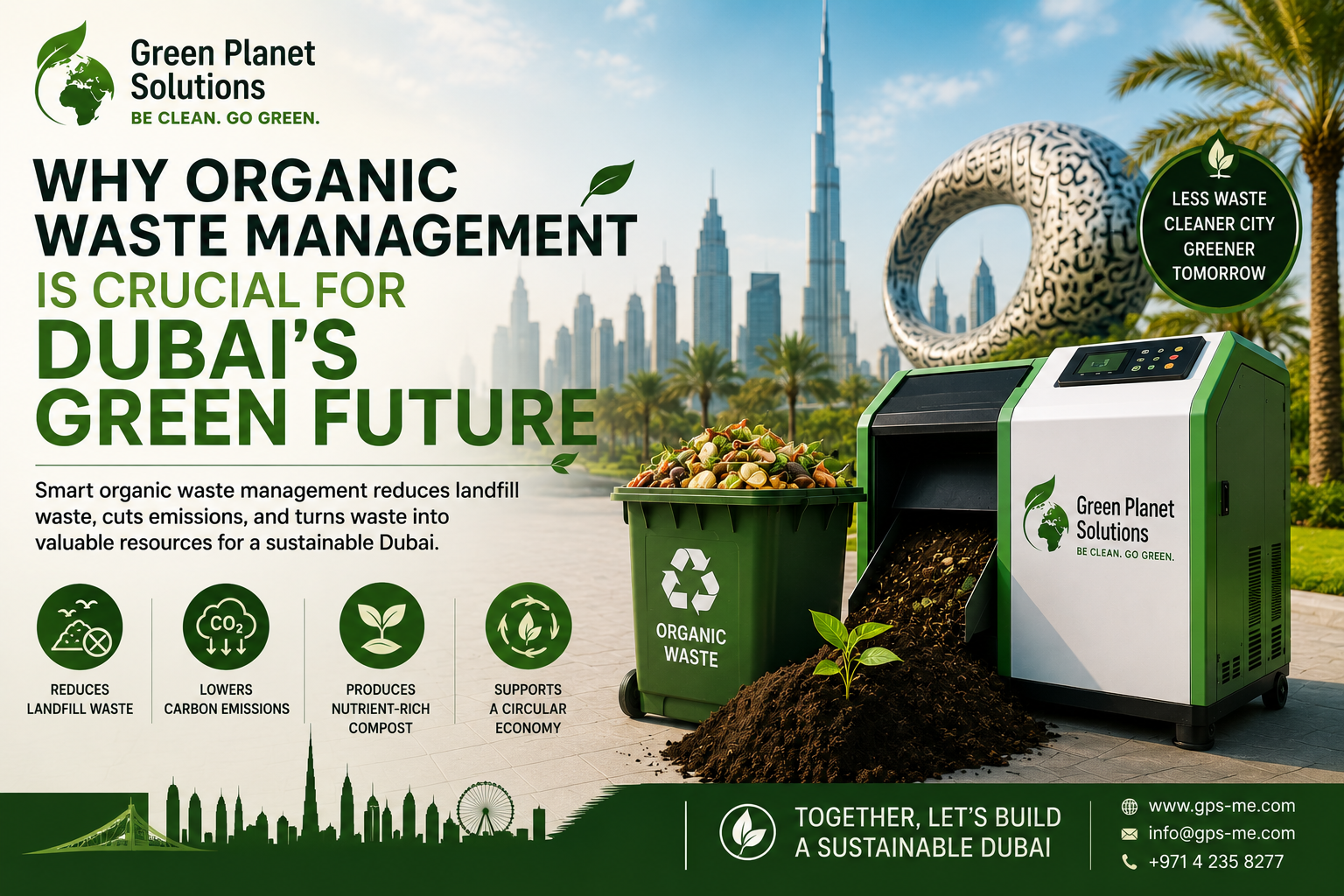
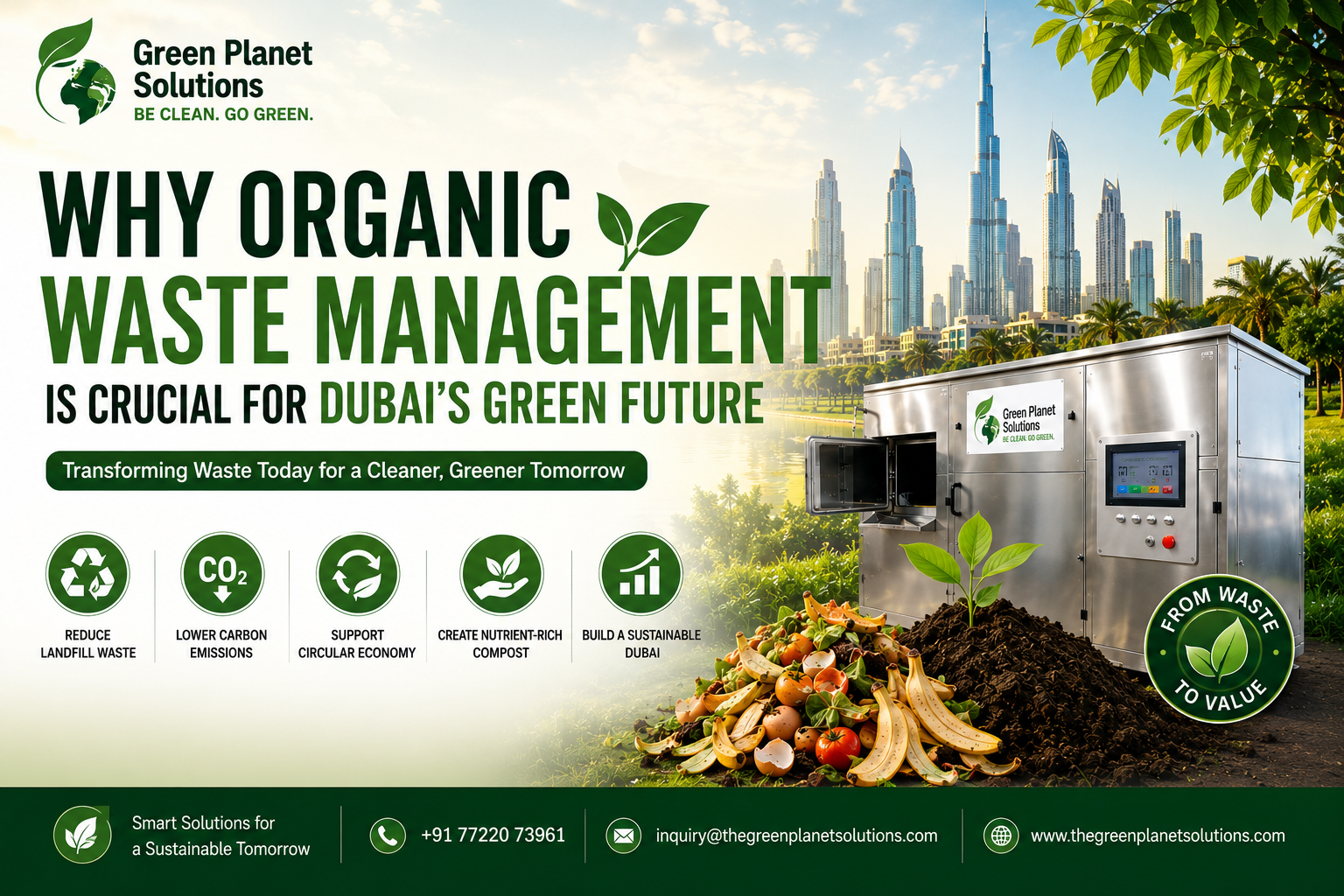
    Why Organic Waste Management is Crucial for Dubai’s Green Future

    Turning Organic Waste into Sustainable Opportunities

    Dubai is recognized globally for its innovation, rapid development, and commitment to sustainability. As the city continues to grow, so does the amount of waste generated by hotels, restaurants, shopping malls, residential communities, and commercial establishments. Among the different types of waste, organic waste represents a significant portion and requires special attention to ensure a cleaner and greener future.

    Effective waste management is no longer just an environmental responsibility—it is a necessity for supporting Dubai’s sustainability goals, reducing landfill dependency, and creating a more circular economy.

    Understanding Organic Waste

    Organic waste includes food scraps, fruit and vegetable peels, garden waste, agricultural residues, and other biodegradable materials. Every day, thousands of tons of organic waste are generated across Dubai’s hospitality, retail, and residential sectors.

    When this waste is sent directly to landfills, it decomposes and releases methane gas, a greenhouse gas that contributes significantly to climate change. Proper management of organic waste helps reduce these emissions while creating valuable resources that can benefit the environment.

    The Growing Need for Sustainable Waste Management

    Dubai has ambitious environmental goals aimed at reducing waste, increasing recycling rates, and promoting sustainable development. As businesses and communities become more environmentally conscious, the demand for efficient waste management solutions continues to rise.

    Organic waste management plays a critical role in achieving these objectives by reducing the volume of waste sent to landfills and encouraging resource recovery.

    Environmental Benefits of Organic Waste Management

    Reducing Landfill Waste

    A large percentage of municipal waste consists of organic materials. Diverting this waste from landfills helps reduce pressure on waste disposal infrastructure and extends landfill lifespan.

    Lowering Carbon Emissions

    Proper treatment of organic waste reduces methane emissions and supports climate action initiatives. Composting and resource recovery help create a more sustainable waste management ecosystem.

    Supporting a Circular Economy

    Organic waste should not be viewed as a disposal problem but as a valuable resource. Through composting and recycling, waste can be transformed into useful products that contribute to landscaping, agriculture, and environmental projects.

    Conserving Natural Resources

    Compost produced from organic waste improves soil quality, supports plant growth, and reduces the need for chemical fertilizers.

    The Role of Composting in Dubai’s Sustainability Journey

    Composting is one of the most effective methods for managing organic waste. Modern composting machines accelerate the natural decomposition process and convert food waste into nutrient-rich compost within a short period.

    Businesses such as hotels, restaurants, food courts, shopping malls, and residential communities can significantly reduce their waste disposal costs while contributing to sustainability goals through composting solutions.

    How Businesses Can Contribute

    Organizations across Dubai can take several steps to improve organic waste management:

    • Implement waste segregation at the source
    • Reduce food waste through better planning
    • Invest in composting technologies
    • Train staff on sustainable waste practices
    • Partner with professional waste management providers

    These initiatives not only benefit the environment but also improve operational efficiency and strengthen sustainability performance.

    How Green Planet Solutions Supports Dubai’s Green Future

    Green Planet Solutions is committed to helping businesses and communities adopt smarter and more sustainable waste management practices. Through advanced composting machines and innovative organic waste management solutions, the company enables organizations to convert food waste into valuable compost while reducing landfill dependency.

    Green Planet Solutions serves hotels, restaurants, industries, residential communities, educational institutions, and commercial establishments by providing customized waste management solutions that align with environmental goals. The company’s focus on innovation, efficiency, and sustainability makes it a trusted partner for organizations seeking long-term waste management success.

    By helping businesses transform waste into valuable resources, Green Planet Solutions actively contributes to Dubai’s vision of a cleaner, greener, and more sustainable future.

    Economic Benefits of Organic Waste Management

    Beyond environmental advantages, effective organic waste management also provides financial benefits. Businesses can reduce waste transportation costs, lower landfill fees, improve resource utilization, and enhance their corporate sustainability image.

    As consumers increasingly support environmentally responsible brands, investing in sustainable waste management can also strengthen customer trust and brand reputation.

    Conclusion

    Organic waste management is a vital component of Dubai’s sustainability journey. By reducing landfill waste, lowering greenhouse gas emissions, and supporting circular economy initiatives, organizations can make a meaningful contribution to environmental protection.

    Through innovative composting technologies and sustainable waste management solutions, Green Planet Solutions continues to help businesses and communities manage organic waste responsibly, creating a cleaner and greener future for Dubai and generations to come.

  • The Role of Composting Machines in Achieving UAE Sustainability Goals 2030

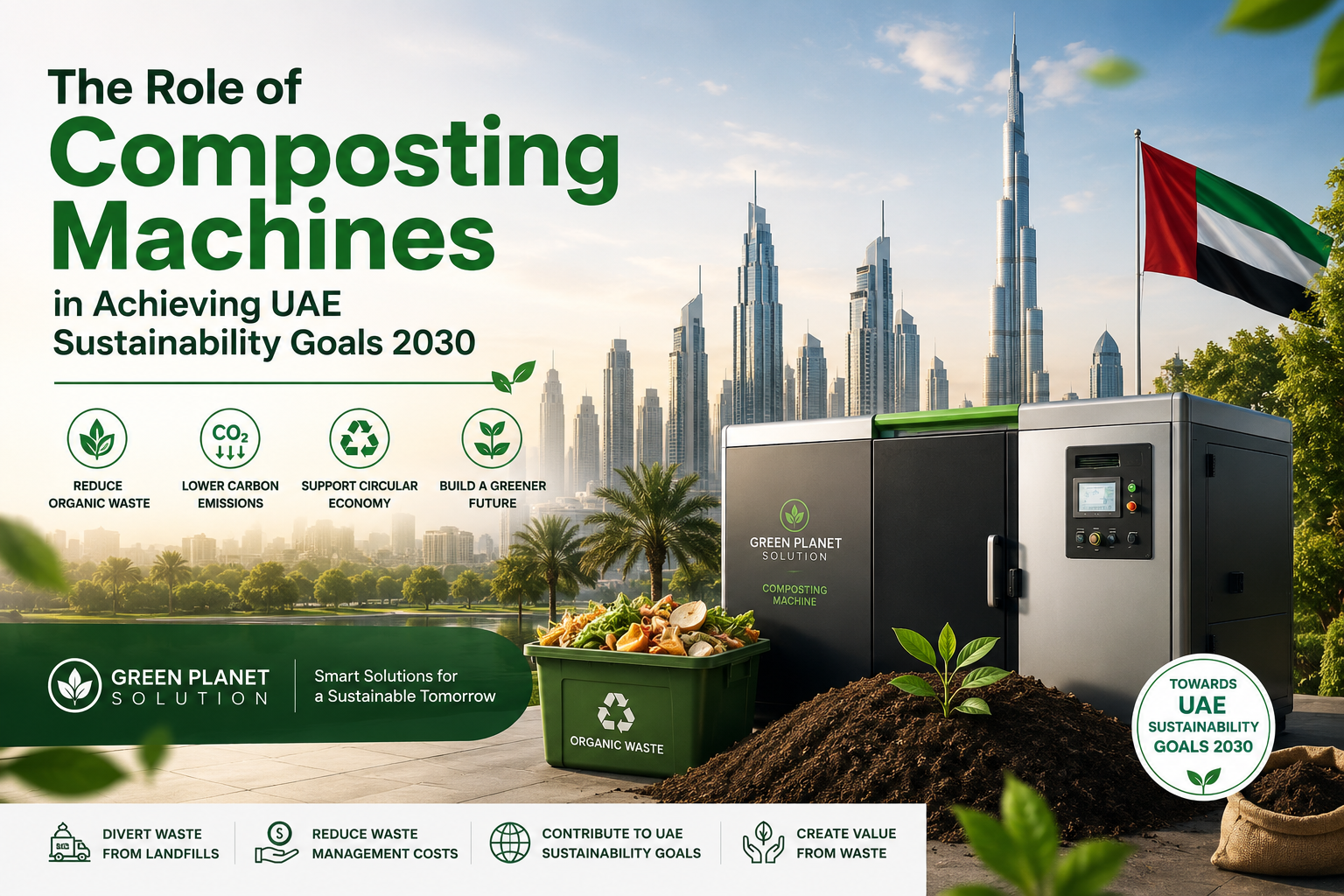
    The Role of Composting Machines in Achieving UAE Sustainability Goals 2030

    Turning Food Waste into Sustainable Growth

    The United Arab Emirates has established ambitious sustainability goals aimed at creating a greener, more resource-efficient future. As part of its vision for sustainable development, the UAE is focusing on reducing waste generation, minimizing landfill dependency, and promoting circular economy practices. One of the most effective solutions supporting these objectives is the adoption of advanced composting machines. By converting organic waste into valuable compost, these systems help businesses, communities, and government organizations contribute directly to the nation’s environmental goals.

    The Growing Challenge of Organic Waste in the UAE

    With rapid urbanization, a thriving hospitality sector, and increasing population growth, the UAE generates significant amounts of organic waste every day. Hotels, restaurants, shopping malls, hospitals, and residential communities produce tons of food waste that often ends up in landfills. When organic waste decomposes in landfills, it releases methane, a greenhouse gas that contributes significantly to climate change.

    Managing this waste efficiently has become a priority for organizations seeking to align with the UAE’s sustainability initiatives while reducing their environmental footprint.

    How Composting Machines Support Sustainability Goals

    Modern composting machines offer an innovative solution by transforming food waste into nutrient-rich compost within a short period. Instead of transporting waste to landfills, organizations can process organic waste on-site, reducing disposal costs and environmental impact.

    These machines help achieve sustainability goals by:

    • Reducing the volume of waste sent to landfills.
    • Lowering greenhouse gas emissions.
    • Supporting resource recovery and circular economy practices.
    • Producing organic compost for landscaping and agriculture.
    • Promoting responsible waste management within organizations.

    By implementing composting technology, businesses can actively participate in building a more sustainable future while meeting environmental compliance requirements.

    Supporting the UAE’s Circular Economy Vision

    The UAE has placed significant emphasis on developing a circular economy where resources are reused and recycled rather than discarded. Composting machines play a crucial role in this transition by converting waste into a valuable resource.

    The compost produced can be used for landscaping projects, public parks, gardens, and agricultural applications. This reduces reliance on chemical fertilizers and helps improve soil quality, supporting sustainable land management practices across the country.

    Benefits for Hotels, Restaurants, and Commercial Facilities

    The hospitality and food service sectors are among the largest generators of organic waste in the UAE. Composting machines provide these businesses with a practical and environmentally responsible solution.

    Key benefits include:

    Reduced Waste Disposal Costs

    Processing waste on-site significantly decreases transportation and landfill charges.

    Enhanced Sustainability Performance

    Organizations can demonstrate their commitment to environmental responsibility and ESG objectives.

    Improved Brand Reputation

    Consumers increasingly prefer businesses that adopt sustainable practices and reduce their environmental impact.

    Compliance with Environmental Regulations

    Proactive waste management helps businesses align with current and future sustainability requirements.

    Advancing Towards UAE Sustainability Goals 2030

    Achieving the UAE Sustainability Goals 2030 requires collaboration between governments, businesses, and communities. Composting machines offer a simple yet highly effective way to reduce waste, conserve resources, and support environmental stewardship.

    As more organizations embrace sustainable waste management technologies, the UAE moves closer to its vision of a cleaner, greener, and more resilient future.

    How Green Planet Solution Is Driving Sustainable Waste Management

    At Green Planet Solution, we are committed to helping organizations across the UAE and GCC region achieve their sustainability objectives through innovative organic waste management solutions. Our fully automatic composting machines are designed to efficiently convert food waste into valuable compost while reducing operational costs and environmental impact.

    By partnering with Green Planet Solution, businesses can take a meaningful step toward achieving sustainability goals, supporting circular economy initiatives, and creating a cleaner future for generations to come.

    Conclusion

    Composting machines are more than just waste management equipment—they are powerful tools for environmental transformation. As the UAE continues its journey toward Sustainability Goals 2030, investing in advanced composting technology will play a vital role in reducing waste, conserving resources, and building a sustainable economy. Organizations that adopt these solutions today will not only contribute to national sustainability efforts but also gain long-term operational and environmental benefits.

  • The Growing Importance of Organic Waste Management in GCC Countries

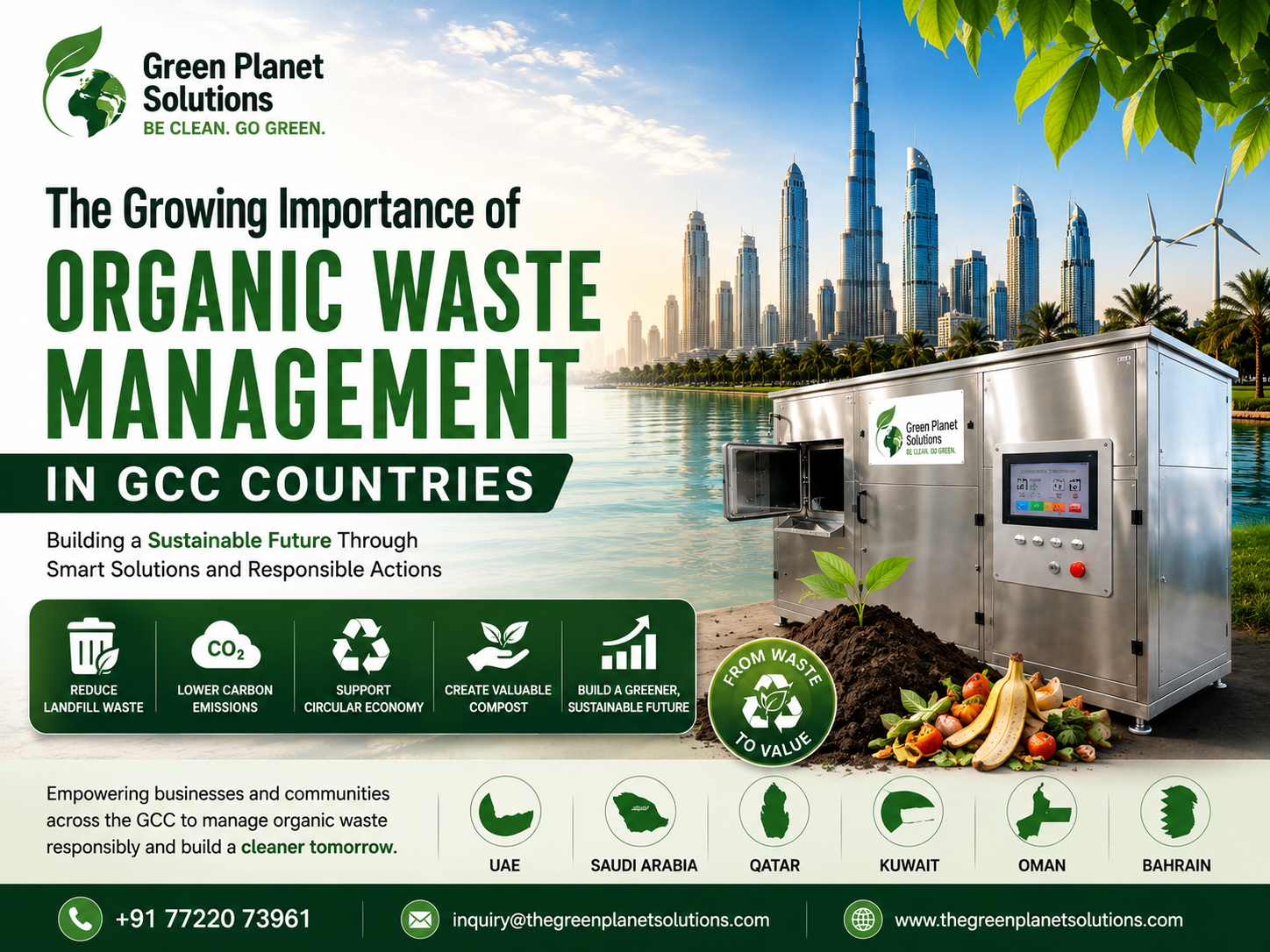
    The Growing Importance of Organic Waste Management in GCC Countries

    Driving Sustainability and Environmental Responsibility Across the Gulf Region

    The Gulf Cooperation Council (GCC) countries, including the United Arab Emirates, Saudi Arabia, Qatar, Kuwait, Oman, and Bahrain, are experiencing rapid economic growth, urban development, and population expansion. While this growth has created numerous opportunities, it has also increased the challenge of managing waste effectively. Among the various waste streams, organic waste has become one of the most significant environmental concerns.

    As governments and businesses across the GCC focus on sustainability and environmental protection, organic waste management is emerging as a critical solution for reducing landfill waste, lowering carbon emissions, and supporting a circular economy.

    Understanding Organic Waste

    waste includes food scraps, fruit and vegetable peels, garden waste, agricultural residues, and other biodegradable materials. Hotels, restaurants, shopping malls, residential communities, food processing facilities, and commercial establishments generate large quantities of organic waste every day.

    When organic waste is disposed of in landfills, it decomposes and releases methane gas, a greenhouse gas that is significantly more harmful than carbon dioxide. This contributes to climate change and increases environmental pressure across the region.

    Why Organic Waste Management is Becoming a Priority

    The GCC region is actively investing in sustainability initiatives as part of its long-term development strategies. Governments are implementing environmental regulations and encouraging businesses to adopt greener practices to reduce their environmental footprint.

    Effective organic waste management helps organizations:

    • Reduce landfill dependency
    • Minimize greenhouse gas emissions
    • Improve environmental compliance
    • Support sustainability goals
    • Recover valuable resources from waste
    • Lower waste management costs

    As sustainability becomes a key focus area, businesses are increasingly recognizing the importance of responsible waste management practices.

    The Challenge of Food Waste in the GCC

    Food waste remains one of the largest contributors to organic waste generation in GCC countries. The hospitality industry, restaurants, catering services, and large commercial facilities often produce significant volumes of food waste daily.

    Without proper management systems, this waste creates environmental challenges and increases disposal costs. As a result, businesses are seeking innovative solutions that can process organic waste efficiently while supporting sustainability objectives.

    The Role of Composting in Organic Waste Management

    Composting is one of the most effective methods for managing waste. Modern composting machines accelerate the natural decomposition process and convert food waste into nutrient-rich compost.

    The compost produced can be used for landscaping, agriculture, and green infrastructure projects, transforming waste into a valuable resource. Composting not only reduces landfill waste but also supports the development of sustainable communities throughout the GCC region.

    Benefits of Organic Waste Management for Businesses

    Reduced Waste Disposal Costs

    By processing organic waste on-site, businesses can significantly reduce transportation and landfill disposal expenses.

    Improved Sustainability Performance

    Organizations can strengthen their environmental initiatives and contribute to national sustainability goals.

    Enhanced Brand Reputation

    Customers, investors, and stakeholders increasingly favor businesses that demonstrate environmental responsibility.

    Lower Carbon Footprint

    Organic waste diversion and composting help reduce greenhouse gas emissions and environmental impact.

    Support for ESG Objectives

    Effective waste management contributes directly to Environmental, Social, and Governance (ESG) performance metrics.

    How Green Planet Solutions Supports GCC Businesses

    Green Planet Solutions is helping organizations across the GCC region adopt smarter and more sustainable waste management practices. Through advanced composting machines and innovative organic waste management solutions, the company enables businesses to transform waste into valuable resources while reducing environmental impact.

    Green Planet Solutions provides customized waste management systems for hotels, restaurants, industries, residential communities, institutions, and commercial establishments. With a focus on efficiency, sustainability, and long-term value, the company supports clients in achieving their waste reduction and environmental goals.

    By helping organizations manage waste responsibly, Green Planet Solutions contributes to the region’s vision for a cleaner and more sustainable future.

    The Future of Organic Waste Management in the GCC

    As GCC countries continue to invest in smart cities, sustainability initiatives, and environmental protection programs, the demand for effective organic waste management solutions will continue to grow.

    Businesses that adopt composting technologies and sustainable waste management practices today will be better positioned to meet future regulations, reduce costs, and strengthen their environmental performance.

    Conclusion

    Organic waste management is becoming increasingly important across GCC countries as governments, businesses, and communities work toward a more sustainable future. From reducing landfill dependency and greenhouse gas emissions to creating valuable compost and supporting circular economy initiatives, the benefits are substantial.

    With innovative composting technologies and a commitment to sustainability, Green Planet Solutions continues to help organizations across the GCC transform organic waste into opportunity, creating cleaner, greener, and more environmentally responsible communities.

  • Why Composting Machines and STP Plants Are Essential for Developing Countries

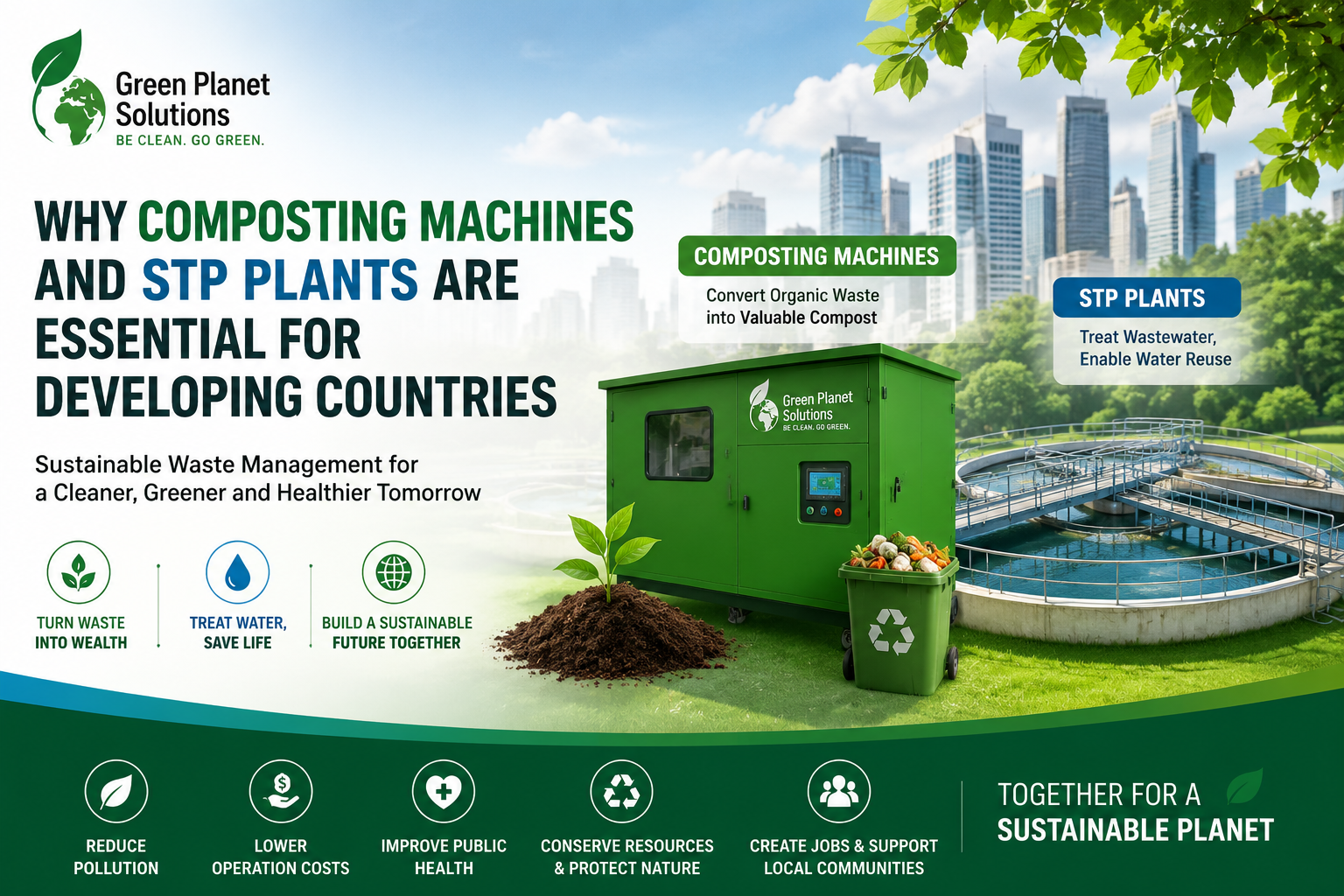
    Why Composting Machines and STP Plants Are Essential for Developing Countries

    Building a Cleaner, Healthier, and More Sustainable Future

    As developing countries continue to experience rapid urbanization and population growth, managing waste and wastewater has become one of the biggest environmental challenges. Overflowing landfills, water pollution, poor sanitation, and increasing greenhouse gas emissions threaten both public health and economic development.

    To address these challenges, sustainable technologies such as Composting Machines and Sewage Treatment Plants (STP) are becoming essential infrastructure. These solutions not only help manage waste efficiently but also contribute to cleaner cities, healthier communities, and long-term environmental sustainability.

    The Growing Waste Management Challenge

    Many developing nations generate thousands of tons of organic waste and wastewater every day. Unfortunately, a significant portion of this waste is either dumped in landfills or discharged into water bodies without proper treatment. This leads to environmental degradation, unpleasant odors, disease outbreaks, and contamination of valuable natural resources.

    As cities expand and industries grow, traditional waste disposal methods are no longer sufficient. Modern and sustainable waste management solutions are needed to support future development.

    How Composting Machines Transform Waste into Value

    Organic waste from households, hotels, restaurants, markets, and industries represents a major portion of municipal waste. Composting machines offer an effective way to convert this waste into nutrient-rich compost that can be used in agriculture, landscaping, and gardening.

    By processing organic waste at the source, composting machines help reduce landfill dependency, minimize transportation costs, and significantly lower methane emissions. They also create valuable compost that improves soil health and supports sustainable farming practices.

    For developing countries, composting technology provides an opportunity to turn a waste problem into an economic and environmental advantage.

    Why STP Plants Are Critical for Water Conservation

    Water scarcity is becoming an increasingly serious concern across many developing regions. At the same time, untreated wastewater continues to pollute rivers, lakes, and groundwater sources.

    Sewage Treatment Plants (STPs) play a crucial role in addressing this challenge. They treat wastewater and make it suitable for reuse in landscaping, irrigation, industrial processes, and other non-potable applications.

    By recycling water and reducing pollution, STP plants help communities conserve valuable resources while protecting ecosystems and public health.

    Economic and Environmental Benefits

    The implementation of composting machines and STP plants offers several long-term benefits:

    Reduced Environmental Pollution

    Proper waste and wastewater treatment significantly reduce contamination of land, air, and water resources.

    Improved Public Health

    Cleaner environments help prevent diseases associated with poor sanitation and unmanaged waste.

    Resource Conservation

    Composting recycles organic waste into useful products, while STPs enable water reuse and conservation.

    Lower Waste Management Costs

    Processing waste locally reduces transportation, landfill, and disposal expenses.

    Support for Sustainable Development

    These technologies align with global sustainability goals and help create resilient communities.

    The Need for Integrated Waste Management Solutions

    Developing countries require more than standalone technologies—they need comprehensive waste management strategies that address the entire lifecycle of waste generation, treatment, and resource recovery.

    This is where experienced solution providers become valuable partners in driving sustainable change.

    Green Planet Solutions: Your Partner for Sustainable Waste Management

    Green Planet Solutions is committed to helping organizations, municipalities, industries, hotels, hospitals, and residential communities achieve their sustainability goals through innovative waste management technologies.

    From advanced Composting Machines to efficient Sewage Treatment Plants and integrated waste management systems, Green Planet Solutions delivers reliable, eco-friendly, and cost-effective solutions tailored to diverse requirements.

    By helping clients transform waste into valuable resources and reduce environmental impact, Green Planet Solutions contributes to building cleaner and greener communities across the globe.

    Conclusion

    As developing countries strive for economic growth and environmental sustainability, investing in Composting Machines and STP Plants is no longer an option—it is a necessity. These technologies help reduce pollution, conserve resources, improve public health, and create a more sustainable future for generations to come.

    With the right technology and trusted partners like Green Planet Solutions, communities can transform waste challenges into opportunities for growth, innovation, and environmental stewardship.

  • Smart Waste Management Solutions for Dubai’s Commercial Sector

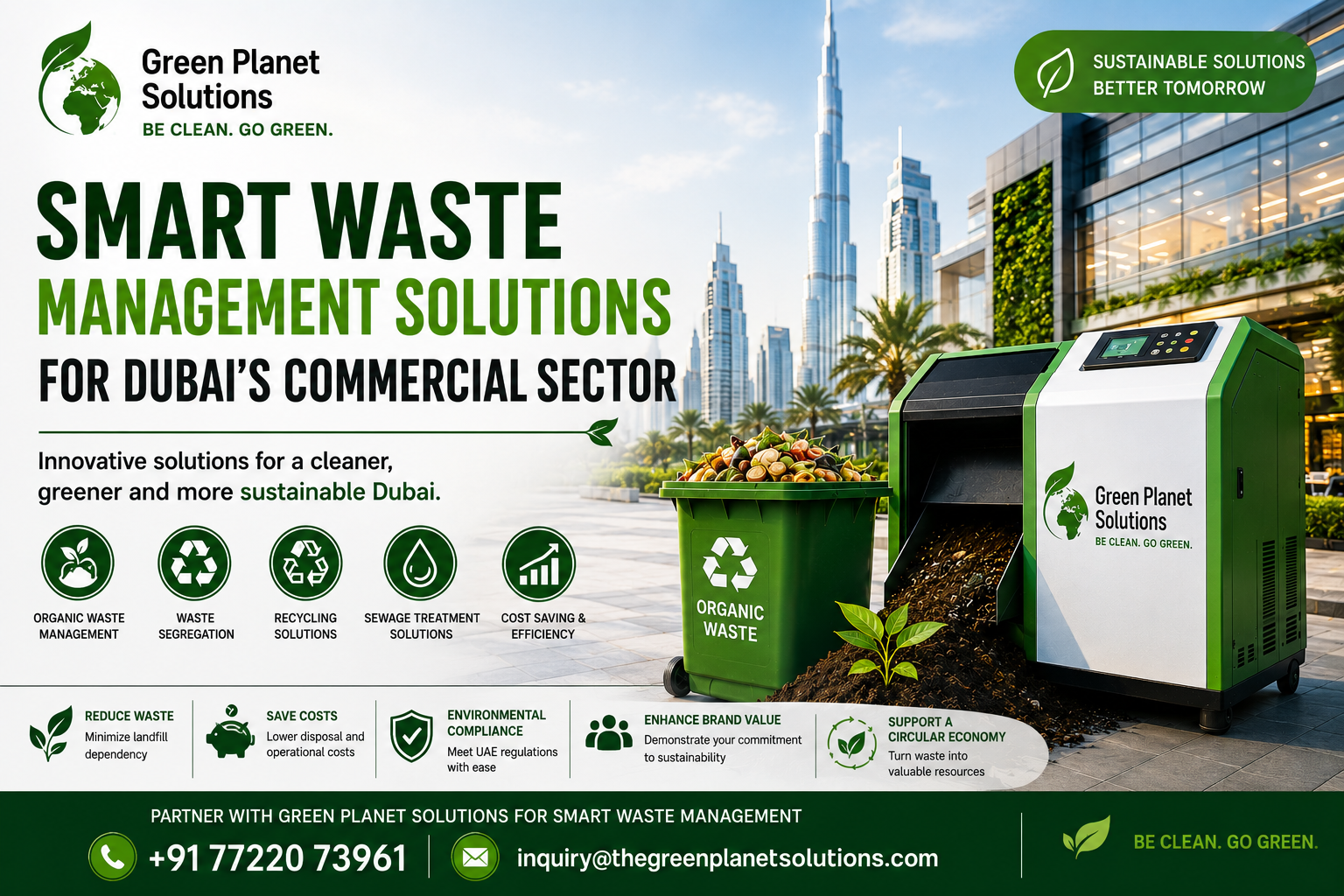
    Smart Waste Management Solutions for Dubai’s Commercial Sector

    Driving Sustainability and Efficiency Through Innovative smart waste management

    Dubai’s commercial sector continues to expand rapidly, with office complexes, shopping malls, hotels, restaurants, retail outlets, and business parks contributing significantly to the city’s economic growth. However, this growth also brings increased waste generation, creating a need for smarter and more sustainable Smart waste management practices.

    As Dubai strengthens its commitment to environmental sustainability and smart city initiatives, businesses are increasingly adopting smart waste management solutions to reduce waste, improve operational efficiency, and support long-term sustainability goals.

    The Growing Smart Waste Management Challenge

    Commercial establishments generate a wide range of waste, including organic waste, packaging materials, paper, plastics, and wastewater. Traditional waste disposal methods often result in increased landfill dependency, higher operational costs, and unnecessary environmental impact.

    To meet modern sustainability expectations, businesses need waste management systems that focus on waste reduction, resource recovery, recycling, and responsible disposal practices.

    What is Smart Waste Management?

    Smart waste management combines innovative technologies, data-driven processes, and sustainable practices to improve how waste is collected, processed, and reused. Instead of simply disposing of waste, businesses can recover valuable resources and reduce environmental impact through efficient waste handling systems.

    This approach helps organizations lower costs while supporting Dubai’s vision for a cleaner and greener future.

    Key Smart Waste Management Solutions

    Organic Smart Waste Management and Composting

    Food waste and biodegradable materials make up a significant portion of commercial waste, especially in hotels, restaurants, and food courts. Modern composting machines help convert organic waste into nutrient-rich compost, reducing landfill waste while creating valuable resources.

    Smart Waste Segregation Systems

    Proper waste segregation is the foundation of effective waste management. Separating organic waste, recyclable materials, and general waste improves recycling rates and enhances resource recovery.

    Recycling Programs

    Commercial businesses can significantly reduce their environmental footprint by implementing structured recycling programs for paper, plastic, metal, and glass waste.

    Sewage Treatment Solutions

    Advanced sewage treatment plants help businesses manage wastewater responsibly while promoting water conservation and environmental compliance.

    Integrated Waste Management Systems

    A comprehensive waste management strategy combines collection, segregation, recycling, composting, and treatment solutions to maximize efficiency and sustainability.

    Benefits for Dubai’s Commercial Sector

    Reduced Operational Costs

    Smart waste management systems reduce transportation, disposal, and landfill costs while improving overall resource utilization.

    Improved Environmental Compliance

    Businesses can meet environmental regulations more effectively through responsible waste management practices.

    Enhanced Corporate Reputation

    Customers, investors, and stakeholders increasingly prefer organizations that demonstrate a commitment to sustainability.

    Support for ESG Goals

    Environmental, Social, and Governance (ESG) initiatives are becoming a major priority for businesses. Effective waste management contributes directly to achieving these objectives.

    Reduced Carbon Footprint

    By minimizing landfill waste and promoting recycling and composting, organizations can significantly reduce greenhouse gas emissions.

    The Importance of Organic Smart Waste Management

    Organic waste remains one of the biggest challenges for commercial facilities. Improper disposal of food and biodegradable waste contributes to landfill overcrowding and methane emissions.

    Composting solutions allow businesses to transform organic waste into useful compost while reducing disposal costs and supporting circular economy practices. This approach is particularly beneficial for hotels, restaurants, malls, and food service establishments throughout Dubai.

    How Green Planet Solutions Supports Commercial Businesses

    Green Planet Solutions provides innovative waste management technologies designed to help commercial organizations achieve sustainability and operational efficiency. From advanced composting machines and organic waste management systems to sewage treatment plants and integrated waste solutions, the company offers customized services tailored to the needs of modern businesses.

    By helping organizations reduce waste, recover valuable resources, and improve environmental performance, Green Planet Solutions supports Dubai’s commercial sector in achieving its sustainability objectives. The company’s commitment to innovation, reliability, and eco-friendly solutions makes it a trusted partner for businesses seeking smarter waste management strategies.

    Building a Sustainable Commercial Future

    As sustainability becomes a key driver of business success, smart waste management is no longer optional. Organizations that invest in innovative waste management technologies today will be better positioned to reduce costs, improve efficiency, and meet future environmental requirements.

    Dubai’s commercial sector has a unique opportunity to lead by example through responsible waste management and sustainable business practices.

    Conclusion

    Smart waste management solutions are transforming how businesses handle waste across Dubai’s commercial sector. Through waste segregation, recycling, composting, wastewater treatment, and integrated waste management systems, organizations can create both environmental and economic value.

    With advanced technologies and a strong focus on sustainability, Green Planet Solutions continues to help businesses build cleaner, smarter, and more sustainable operations, contributing to Dubai’s vision of a greener future.

  • Why Organic Waste Management is Crucial for Dubai’s Green Future

    Why Organic Waste Management is Crucial for Dubai’s Green Future

    Transforming Food and Organic Waste into Sustainable Opportunities

    Dubai has emerged as a global leader in innovation, sustainability, and smart city development. As the city continues to grow, managing waste efficiently has become one of the most important environmental priorities. Among all waste streams, organic waste represents a significant challenge due to the large volumes generated by hotels, restaurants, residential communities, shopping malls, and commercial establishments.

    Effective waste management is essential for reducing environmental impact, conserving resources, and supporting Dubai’s vision of a greener and more sustainable future.

    Understanding Organic Waste

    waste includes food scraps, fruit and vegetable peels, garden waste, agricultural residues, and other biodegradable materials. While these materials naturally decompose, improper disposal in landfills creates serious environmental concerns.

    When organic waste is sent to landfills, it decomposes without sufficient oxygen and releases methane gas, one of the most potent greenhouse gases contributing to climate change. Managing this waste responsibly is critical for protecting the environment and reducing carbon emissions.

    The Growing Need for Organic Waste Management in Dubai

    Dubai’s thriving hospitality, tourism, and commercial sectors generate substantial quantities of food and organic waste every day. Without effective waste management systems, valuable resources are lost, and landfill pressure continues to increase.

    As sustainability becomes a priority across industries, businesses are recognizing the importance of implementing organic waste management solutions that reduce waste, improve operational efficiency, and support environmental goals.

    Environmental Benefits of Organic Waste Management

    Reducing Landfill Dependency

    Organic waste accounts for a significant portion of municipal waste. Proper waste processing and composting can dramatically reduce the amount of waste sent to landfills.

    Lowering Greenhouse Gas Emissions

    Managing waste through composting and resource recovery helps reduce methane emissions, contributing to climate change mitigation efforts.

    Conserving Natural Resources

    waste can be transformed into nutrient-rich compost that improves soil quality and supports landscaping, agriculture, and green infrastructure projects.

    Supporting a Circular Economy

    Organic waste management promotes the reuse and recovery of resources, creating a sustainable cycle where waste becomes a valuable asset rather than a burden.

    The Role of Composting in Sustainable Waste Management

    Composting is one of the most effective methods for managing organic waste. Modern composting machines accelerate the natural decomposition process, converting food and biodegradable waste into valuable compost within a short period.

    For businesses, composting offers numerous benefits, including reduced waste disposal costs, improved sustainability performance, and lower environmental impact. It also helps organizations move closer to their zero-waste and environmental responsibility goals.

    How Businesses Can Contribute

    Organizations can play a significant role in supporting Dubai’s green future by adopting responsible waste management practices. Simple steps such as waste segregation, food waste reduction programs, recycling initiatives, and composting systems can create a substantial environmental impact.

    Hotels, restaurants, educational institutions, hospitals, residential communities, and corporate facilities can all benefit from implementing effective organic waste management strategies.

    How Green Planet Solutions Supports Dubai’s Sustainability Goals

    Green Planet Solutions is committed to helping businesses and communities manage organic waste efficiently through innovative and sustainable technologies. The company provides advanced composting machines and integrated waste management solutions that convert organic waste into valuable compost while reducing landfill dependency.

    By offering reliable, eco-friendly, and customized waste management systems, Green Planet Solutions helps organizations improve sustainability performance, reduce operational costs, and contribute to a cleaner environment. Through a strong focus on resource recovery and environmental responsibility, the company supports Dubai’s journey toward a greener future.

    Building a Greener Future Together

    Sustainability is no longer an option—it is a necessity. Effective organic waste management is a critical step in reducing environmental impact and preserving natural resources for future generations.

    By investing in innovative waste management technologies and adopting responsible waste practices, businesses can contribute significantly to Dubai’s environmental objectives while improving operational efficiency and sustainability performance.

    Conclusion

    Organic waste management plays a vital role in creating a cleaner, healthier, and more sustainable Dubai. From reducing landfill waste and greenhouse gas emissions to generating valuable compost and supporting circular economy initiatives, the benefits are both environmental and economic.

    With advanced composting solutions and a commitment to sustainability, Green Planet Solutions continues to help businesses transform organic waste into valuable resources, supporting Dubai’s vision of a greener and more environmentally responsible future.

  • Zero Waste Future: How Businesses Can Achieve Sustainability

    Zero Waste Future: How Businesses Can Achieve Sustainability

    Building a Greener Tomorrow Through Smart Waste Management

    Sustainability has become a key priority for businesses worldwide. As environmental concerns continue to grow, organizations are looking for ways to reduce waste, conserve resources, and operate more responsibly. One of the most effective approaches is adopting a zero-waste strategy. A zero-waste future is not just about reducing waste sent to landfills—it is about rethinking how resources are used, recovered, and reused to create long-term environmental and economic value.

    Businesses that embrace sustainable waste management practices can reduce costs, improve efficiency, strengthen their brand reputation, and contribute to a healthier planet.

    What Does Zero Waste Mean?

    Zero waste is a waste management philosophy focused on minimizing waste generation and maximizing the recovery of valuable resources. Instead of treating waste as something to be discarded, businesses view it as a resource that can be reused, recycled, composted, or converted into useful products.

    The goal is to divert as much waste as possible from landfills while creating a circular economy where materials remain in use for longer periods.

    Why Sustainability Matters for Businesses

    Modern customers, investors, and regulatory authorities increasingly expect organizations to operate sustainably. Businesses that prioritize environmental responsibility often experience improved customer trust, stronger brand value, and better long-term growth opportunities.

    Sustainable practices also help organizations reduce operational costs by improving resource efficiency and reducing waste disposal expenses.

    Key Steps to Achieve Zero Waste Goals

    Conduct a Waste Audit

    The first step toward sustainability is understanding the types and quantities of waste generated. A waste audit helps identify opportunities for waste reduction, recycling, and resource recovery.

    Implement Waste Segregation

    Proper segregation of waste at the source improves recycling efficiency and prevents valuable materials from ending up in landfills. Businesses should separate organic waste, recyclables, and non-recyclable waste into dedicated collection streams.

    Focus on Organic Waste Management

    Organic waste often represents a significant portion of business waste, especially in hotels, restaurants, food processing units, and residential communities. Composting organic waste helps reduce landfill dependency while producing nutrient-rich compost that can be reused for landscaping and agriculture.

    Increase Recycling Efforts

    Recycling materials such as paper, plastic, metal, and glass helps conserve natural resources and reduce environmental impact. Businesses should work with professional waste management partners to maximize recycling rates.

    Adopt Sustainable Technologies

    Modern waste management technologies can significantly improve waste processing efficiency. Composting machines, recycling systems, and wastewater treatment solutions enable businesses to manage waste responsibly while reducing environmental impact.

    The Role of Organic Waste Management in Sustainability

    Organic waste is one of the largest contributors to landfill waste. When food waste and biodegradable materials are disposed of improperly, they release greenhouse gases and contribute to environmental pollution.

    Composting offers an effective solution by converting organic waste into valuable compost. This not only reduces waste disposal costs but also supports sustainable landscaping and agricultural practices.

    How Green Planet Solutions Supports Zero Waste Goals

    Green Planet Solutions helps businesses move closer to a zero-waste future through innovative waste management technologies and sustainable solutions. The company provides advanced composting machines, sewage treatment plants, and integrated waste management systems that help organizations reduce waste, improve efficiency, and achieve sustainability targets.

    By focusing on organic waste management, resource recovery, and environmentally responsible practices, Green Planet Solutions enables businesses to transform waste into valuable resources while supporting long-term environmental goals.

    Whether serving hotels, industries, residential communities, institutions, or commercial establishments, Green Planet Solutions delivers customized solutions that make sustainability practical and achievable.

    Benefits of Adopting a Zero-Waste Strategy

    Businesses that embrace zero-waste practices can experience several benefits:

    • Reduced waste disposal costs
    • Improved operational efficiency
    • Stronger environmental compliance
    • Enhanced corporate reputation
    • Reduced carbon footprint
    • Better resource utilization
    • Increased sustainability performance

    These benefits create both environmental and financial value, making sustainability a smart business investment.

    Creating a Sustainable Future

    Achieving a zero-waste future requires commitment, innovation, and collaboration. Businesses that invest in responsible waste management today will be better positioned to meet future environmental challenges while creating long-term value for stakeholders.

    Through waste reduction, recycling, composting, and sustainable technologies, organizations can contribute to a cleaner and greener world while improving business performance.

    Conclusion

    A zero-waste future is achievable when businesses adopt sustainable waste management practices and invest in innovative solutions. By reducing waste generation, improving recycling efforts, and implementing effective organic waste management systems, organizations can significantly improve their sustainability performance.

    With advanced waste management technologies and a commitment to environmental responsibility, Green Planet Solutions continues to help businesses transform waste challenges into sustainable opportunities, paving the way for a cleaner, greener, and more sustainable future.

  • How Green Planet Solutions Helps Businesses Turn Waste into Value

    How Green Planet Solutions Helps Businesses Turn Waste into Value

    Transforming Waste into Sustainable Opportunities for a Greener Future

    In today’s environmentally conscious world, businesses are under increasing pressure to adopt sustainable practices and reduce their environmental footprint. Waste management is no longer just about disposal—it is about creating value from waste through innovative and sustainable solutions. Organizations across industries are looking for smarter ways to manage waste, reduce costs, and contribute to a cleaner environment.

    Green Planet Solutions is helping businesses achieve these goals by providing advanced waste management technologies that transform waste into valuable resources while supporting long-term sustainability.

    The Growing Challenge of Waste Management

    As industries, commercial establishments, hotels, restaurants, and residential communities continue to grow, waste generation is increasing significantly. Improper waste disposal not only contributes to environmental pollution but also increases operational costs and landfill dependency.

    Businesses today require efficient waste management systems that help them reduce waste, recover resources, and comply with environmental regulations. This is where innovative waste management solutions play a critical role.

    Turning Waste into Value

    Waste should not be viewed as a burden. With the right technology and management practices, waste can become a valuable resource. Organic waste can be converted into compost, recyclable materials can be recovered for reuse, and wastewater can be treated for sustainable applications.

    The concept of turning waste into value helps organizations reduce disposal costs while generating environmental and economic benefits.

    The Importance of Organic Waste Management

    Organic waste, including food scraps, vegetable waste, garden waste, and biodegradable materials, represents a significant portion of total waste generated by businesses. When sent to landfills, organic waste releases harmful greenhouse gases and contributes to environmental degradation.

    Effective organic waste management helps organizations divert waste from landfills and convert it into useful compost that can support landscaping, agriculture, and green initiatives.

    How Green Planet Solutions Supports Businesses

    Green Planet Solutions offers comprehensive waste management solutions designed to help businesses manage waste more efficiently and sustainably.

    Advanced Composting Machines

    Green Planet Solutions provides innovative composting machines that convert organic waste into nutrient-rich compost. These systems help businesses significantly reduce waste disposal costs while supporting environmentally responsible operations.

    Sustainable Waste Management Solutions

    From waste segregation and recycling support to integrated waste management systems, Green Planet Solutions helps organizations improve waste handling processes and maximize resource recovery.

    Sewage Treatment Solutions

    The company also offers advanced sewage treatment plant solutions that help organizations manage wastewater effectively while supporting water conservation and environmental compliance.

    Customized Solutions for Every Industry

    Whether serving hotels, restaurants, industries, hospitals, educational institutions, corporate offices, or residential communities, Green Planet Solutions delivers tailored solutions that address specific waste management challenges.

    Benefits of Turning Waste into Value

    Businesses that adopt sustainable waste management practices can enjoy numerous advantages:

    Reduced Waste Disposal Costs

    Processing waste at the source reduces transportation and landfill expenses.

    Improved Sustainability Performance

    Organizations can strengthen their environmental commitments and achieve sustainability goals more effectively.

    Enhanced Brand Reputation

    Customers and stakeholders increasingly prefer businesses that demonstrate environmental responsibility.

    Reduced Environmental Impact

    Waste reduction, recycling, and composting contribute to lower carbon emissions and decreased landfill dependency.

    Better Regulatory Compliance

    Professional waste management solutions help businesses meet environmental standards and regulations.

    Building a Sustainable Future Together

    The future of waste management lies in innovation, sustainability, and resource recovery. Organizations that invest in modern waste management technologies today will be better positioned to achieve long-term environmental and business success.

    By helping businesses transform waste into valuable resources, Green Planet Solutions is supporting the transition toward cleaner, greener, and more sustainable operations.

    Conclusion

    Waste management is no longer simply about disposal—it is about creating value from resources that would otherwise be wasted. Through advanced composting machines, sustainable waste management systems, and innovative treatment solutions, Green Planet Solutions helps businesses reduce waste, lower costs, and contribute to a healthier environment.

    As organizations continue their sustainability journey, partnering with an experienced waste management provider like Green Planet Solutions can turn environmental challenges into opportunities for growth, efficiency, and long-term success.

  • Organic Waste Management Solutions for Dubai’s Hospitality Industry

    Organic Waste Management Solutions for Dubai’s Hospitality Industry

    Transforming Food Waste into Sustainable Opportunities

    Dubai’s hospitality industry is one of the fastest-growing sectors in the Middle East, attracting millions of tourists every year. From luxury hotels and resorts to restaurants and catering businesses, the industry generates a significant amount of organic waste daily. Managing this waste efficiently is essential not only for environmental protection but also for reducing operational costs and supporting Dubai’s sustainability goals.

    As businesses increasingly focus on eco-friendly practices, organic waste management has become a key component of responsible hospitality operations.

    The Challenge of Organic Waste in the Hospitality Sector

    Hotels, restaurants, cafes, and catering services produce large quantities of food waste, vegetable scraps, fruit peels, leftover meals, and biodegradable materials. When disposed of in landfills, organic waste decomposes and releases methane, a greenhouse gas that contributes to climate change.

    In addition to environmental concerns, improper waste disposal can lead to unpleasant odors, increased waste management costs, and inefficiencies in daily operations. This makes effective organic waste management a necessity for hospitality businesses across Dubai.

    Why Organic Waste Management Matters

    Sustainable waste management practices help hospitality businesses reduce their environmental footprint while improving operational efficiency. By implementing proper waste segregation and organic waste treatment systems, organizations can divert a significant amount of waste from landfills.

    Effective organic waste management supports:

    • Reduced landfill dependency
    • Lower waste disposal costs
    • Improved environmental compliance
    • Enhanced sustainability performance
    • Stronger brand reputation among environmentally conscious customers

    Modern Solutions for Organic Waste Management

    Composting Machines

    Composting machines are among the most effective solutions for managing food waste in hotels and restaurants. These systems convert organic waste into nutrient-rich compost that can be used for landscaping, gardening, and agricultural purposes.

    By processing waste at the source, businesses can significantly reduce waste transportation and disposal costs while contributing to a circular economy.

    Waste Segregation Systems

    Proper segregation of organic and recyclable waste is the first step toward effective waste management. Hotels and restaurants can improve waste recovery rates by implementing structured waste segregation programs.

    Sustainable Waste Collection

    Partnering with professional waste management companies ensures that organic waste is collected, processed, and managed responsibly according to environmental regulations.

    Benefits for Hotels and Restaurants

    Hospitality businesses that invest in organic waste management solutions enjoy multiple advantages. They can reduce operational expenses, improve sustainability ratings, support environmental initiatives, and strengthen their reputation among guests who increasingly value eco-friendly practices.

    Sustainable waste management also aligns with Dubai’s vision of becoming one of the world’s leading green and smart cities.

    How Green Planet Solutions Supports the Hospitality Industry

    Green Planet Solutions provides innovative organic waste management solutions designed specifically for hotels, restaurants, resorts, and commercial establishments. With advanced composting machines and sustainable waste management technologies, the company helps businesses convert food waste into valuable resources while reducing their environmental impact.

    Green Planet Solutions focuses on delivering reliable, efficient, and eco-friendly systems that support sustainability goals and help organizations move closer to zero-waste operations. Through customized solutions and ongoing technical support, the company assists hospitality businesses in creating cleaner and greener environments.

    Building a Sustainable Future for Dubai

    As the hospitality industry continues to grow, adopting responsible waste management practices is becoming increasingly important. Businesses that invest in organic waste management not only improve operational efficiency but also contribute to Dubai’s long-term sustainability objectives.

    By embracing innovative technologies and partnering with experienced waste management providers, hotels and restaurants can transform waste into value while creating a positive environmental impact.

    Conclusion

    Organic waste management is no longer just an environmental responsibility—it is a smart business strategy for Dubai’s hospitality industry. From reducing waste disposal costs to supporting sustainability initiatives, effective organic waste management delivers long-term benefits for businesses and the environment.

    With advanced composting solutions and sustainable waste management expertise, Green Planet Solutions continues to help hospitality businesses manage organic waste efficiently and build a greener future for Dubai.