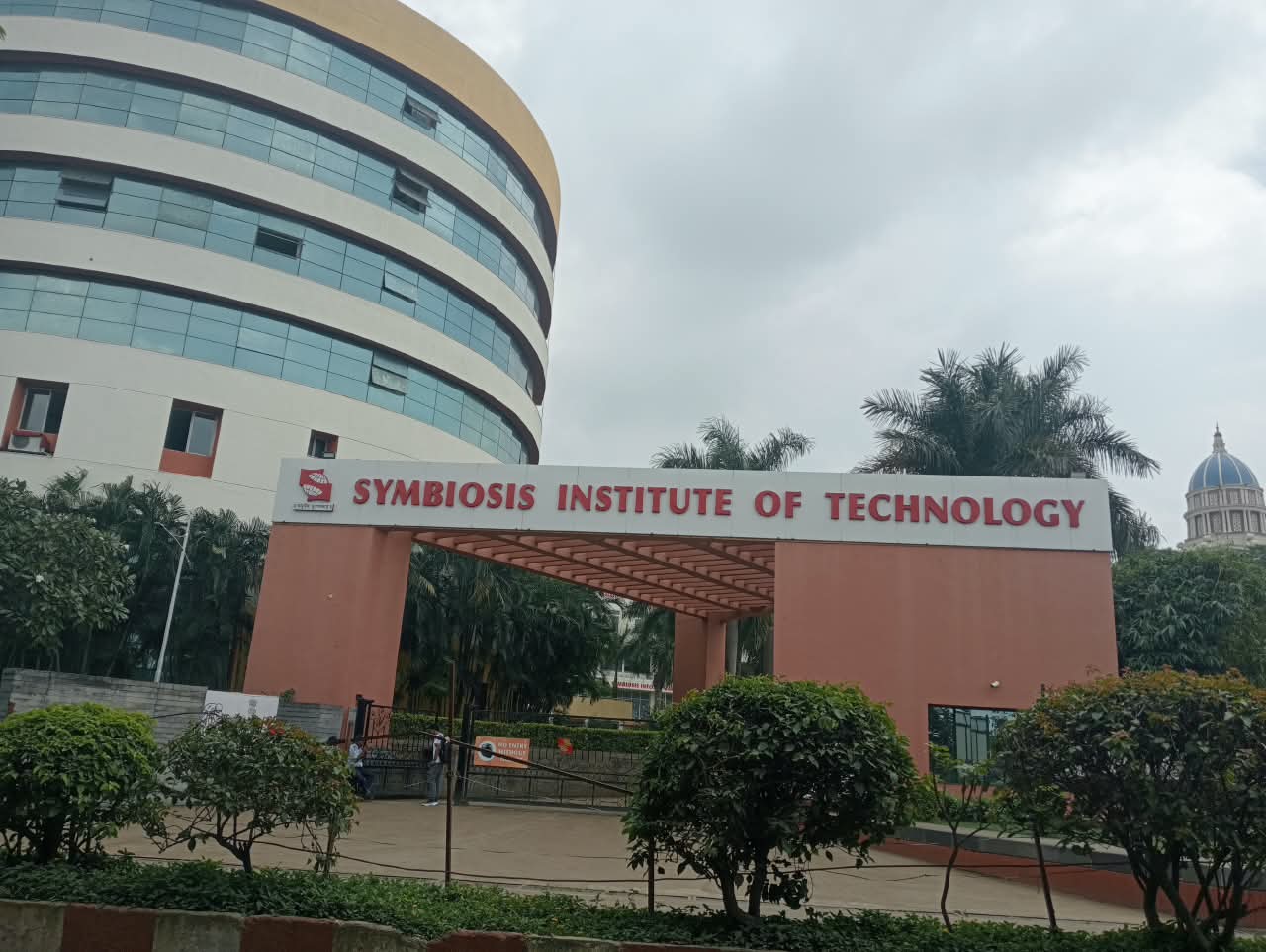
Educational campuses manage a daily mix of classroom, hostel, dining, event and facility activity. That also creates a regular stream of biodegradable material which needs a clear, practical handling process. Green Planet Solutions has installed a composting machine at Symbiosis Institute of Technology (SIT), Pune, supporting an on-campus approach to suitable organic-waste management.
The project is a useful example of how institutions can move from general sustainability intent to a defined operational workflow. The site team has a dedicated point for bringing segregated organic material to the equipment in line with its prescribed operating process. This article shares approved high-level information about the installation; machine model, capacity, output figures and project performance are not stated here.
A dedicated composting setup on campus
The installed Green Planet Solutions composting unit includes a front loading area and an enclosed control-panel section. A defined equipment location can help an institution make the waste-management process visible, easier to organise and easier to include in routine facility operations.
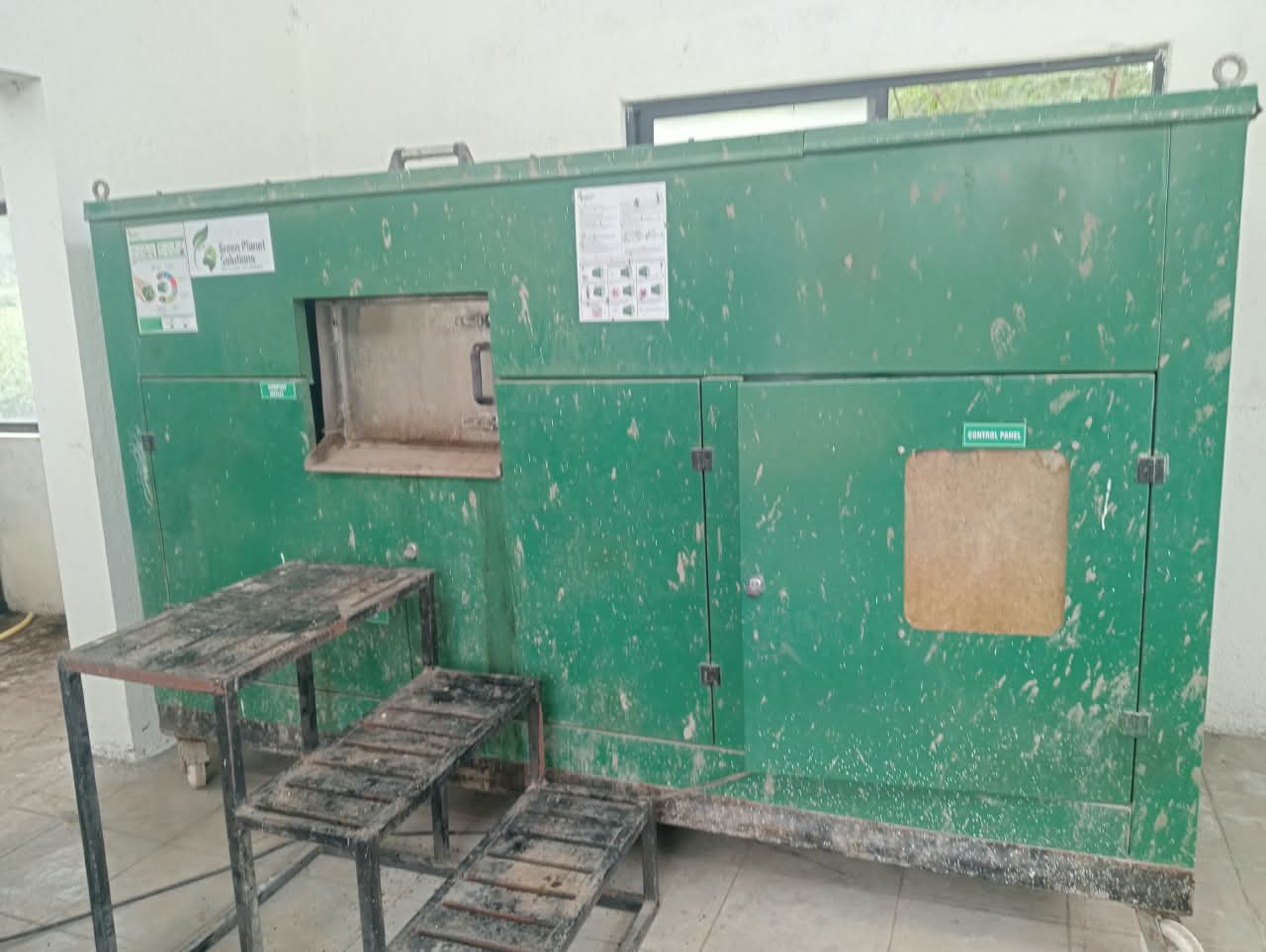
For a campus, the value is not only in having equipment on site. A workable system also needs a collection route, a clean operating area, responsible team members and a reliable routine for bringing appropriate material to the unit. These details help convert a good sustainability initiative into a process that can be managed day after day.
Why institutions need an operating plan, not only a machine
Organic-waste management works best when it forms part of the wider campus waste system. Housekeeping teams, facility managers, students, staff and food-service teams all have a role in keeping the input stream suitable for the selected process. Segregation at source is particularly important because plastic, metal, glass and other contaminants can disrupt the workflow.
- Identify where suitable biodegradable material is generated: kitchens, dining areas, hostels, events or landscaped areas.
- Set clear segregation guidance at the point where waste is generated.
- Keep unsuitable items out of the organic-waste stream.
- Define how material moves from collection points to the equipment area.
- Assign daily loading, cleaning, inspection and escalation responsibilities.
- Follow the manufacturer’s operating, maintenance and safety guidance.
The national solid-waste framework emphasises segregation at source and the processing of segregated material. Individual institutions should also confirm applicable local requirements and their own site procedures before implementation. The Ministry of Environment, Forest and Climate Change rules and regulations page is a useful starting point for general reference.
Making composting part of campus culture
An on-campus composting installation can provide a practical touchpoint for environmental awareness, but the daily operating routine remains the foundation. When teams understand which materials belong in the process, where they should be placed and who is responsible for each step, the system is easier to maintain through changing academic schedules, events and staff transitions.
Institutions planning a similar project should begin with the real conditions on their own site: approximate waste sources and quantity, segregation quality, available area, access, power and water requirements, drainage and ventilation, collection routes, operating ownership and the intended handling of processed material. A short site review gives decision-makers a more useful basis than choosing only from a capacity figure or quotation.
Questions to ask before planning an institutional composting project
- What types of biodegradable material will be collected, and how consistently are they segregated?
- How does waste quantity vary between normal days, events, holidays and peak occupancy?
- Is the proposed equipment area accessible, cleanable and suitable for regular operation?
- Who owns daily collection checks, loading, cleaning and basic inspection?
- What training, commissioning support and maintenance scope are included?
- How will the institution handle the processed output according to its site plan and applicable guidance?
For a broader planning framework, read our wet-waste management planning guide. While the operating context differs between a residential society and an institution, the core principles of segregation, ownership, a workable site layout and routine operation remain relevant.
Watch the SIT Pune installation
Watch the SIT Pune composting-machine installation video on YouTube. You can also watch the short project update on Instagram.
Plan a site-focused next step
Green Planet Solutions works with institutions and organisations to understand on-ground requirements and identify an appropriate composting approach. You can also explore our fully automatic composting machine solution before a project discussion.
Planning an organic-waste management project for your school, college, university or campus?
Open the enquiry form for a practical assessment.
Or call +91 7722073961 or email inquiry@thegreenplanetsolutions.com.
Project information is shared with approval. Confirm site-specific requirements, operating procedures and applicable local guidance before selecting or implementing any waste-management system.