Tag: composting

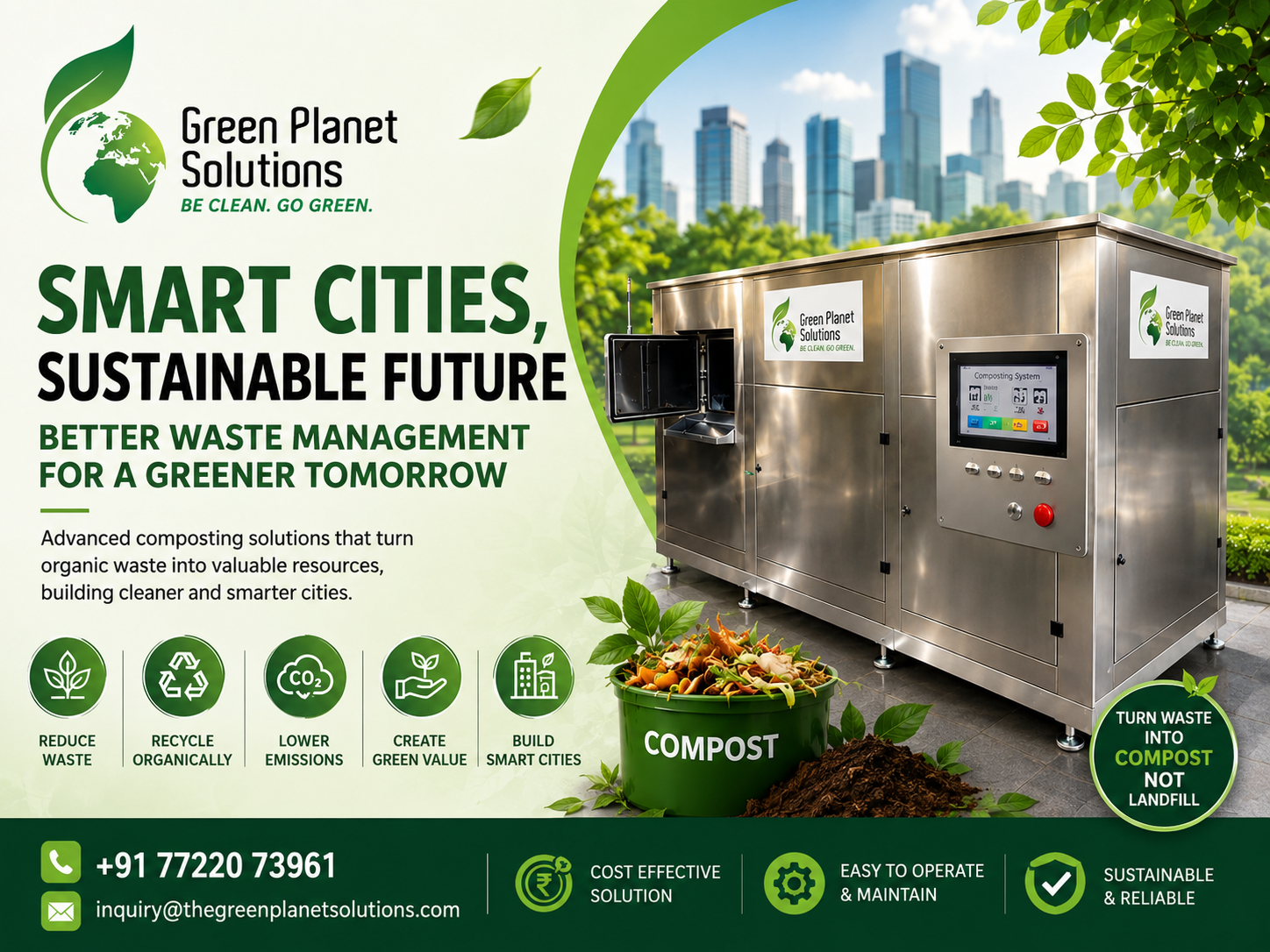
  • Smart Cities and the Future of Organic Waste Management

    Smart Cities and the Future of Organic Waste Management

    How Composting Technology is Building Cleaner, Greener, and More Sustainable Urban Communities

    As cities continue to grow, so does the challenge of managing the enormous amount of waste generated every day. According to urban development studies, organic waste—including food scraps, vegetable waste, garden waste, and biodegradable materials—accounts for nearly 50–60% of municipal solid waste in many Indian cities. When this waste is sent to landfills, it decomposes without oxygen and releases methane, a greenhouse gas that contributes significantly to climate change. For smart cities striving to become cleaner, healthier, and more sustainable, managing organic waste at its source is no longer an option—it’s a necessity.

    What is Organic Waste Management?

    Organic waste management is the process of collecting, treating, and converting biodegradable waste into valuable resources such as compost or biogas. Instead of transporting food waste to overcrowded landfills, modern composting systems recycle it into nutrient-rich compost that can be used in parks, gardens, landscaping projects, and agriculture.

    This approach not only reduces waste but also transforms a disposal problem into an environmental solution.

    Why Smart Cities Need Better Organic Waste Management

    Smart cities focus on using technology to improve the quality of life for residents while protecting the environment. Efficient waste management is one of the key pillars of every smart city because it directly impacts public health, cleanliness, and sustainability.

    By implementing decentralized organic waste management systems, cities can:

    • Reduce landfill dependency
    • Lower greenhouse gas emissions
    • Minimize transportation and waste collection costs
    • Produce eco-friendly compost for urban landscaping
    • Improve city cleanliness and hygiene
    • Support circular economy initiatives

    These benefits help municipalities meet sustainability goals while creating cleaner and more resilient urban environments.

    The Role of Composting Machines in Smart Cities

    Modern composting machines are transforming the way cities manage biodegradable waste. Unlike traditional compost pits that require large spaces and long processing times, automated composting machines convert food waste into compost within days using controlled temperature, aeration, and microbial activity.

    These machines are suitable for:

    • Residential housing societies
    • Hotels and restaurants
    • Corporate campuses
    • Educational institutions
    • Hospitals
    • Municipal parks
    • Shopping malls
    • Airports and railway stations

    By processing waste where it is generated, composting machines significantly reduce transportation costs and eliminate the need for large dumping sites.

    Environmental Benefits of Smart Composting

    Organic waste that reaches landfills generates methane and contaminates soil and groundwater over time. Composting offers a cleaner alternative by recycling waste into useful organic fertilizer.

    Some major environmental benefits include:

    • Reduced greenhouse gas emissions
    • Lower landfill waste volumes
    • Improved soil fertility
    • Reduced dependence on chemical fertilizers
    • Better urban greenery and landscaping
    • Conservation of natural resources

    This makes composting an essential component of climate-resilient city planning.

    Economic Advantages for Municipalities and Businesses

    Investing in composting technology also delivers long-term financial benefits. Local processing reduces waste transportation expenses, lowers landfill management costs, and creates valuable compost that can be used or sold.

    Organizations that install composting machines often benefit from:

    • Reduced waste disposal charges
    • Lower operational costs
    • Better compliance with environmental regulations
    • Enhanced sustainability credentials
    • Stronger ESG (Environmental, Social, and Governance) performance

    For businesses, these advantages can improve both operational efficiency and brand reputation.

    Supporting India’s Smart City Mission

    India’s Smart Cities Mission encourages the adoption of innovative technologies that improve urban infrastructure and environmental sustainability. Decentralized waste management aligns perfectly with this vision by promoting cleaner neighborhoods, efficient resource utilization, and responsible waste disposal.

    Many municipalities, residential communities, and commercial establishments are already adopting composting systems to comply with Solid Waste Management Rules and contribute to a cleaner urban ecosystem.

    The Future of Organic Waste Management

    The future of waste management lies in intelligent, decentralized, and technology-driven solutions. Emerging innovations such as IoT-enabled composting machines, AI-based waste monitoring, and real-time performance analytics will make organic waste processing even more efficient.

    As sustainability becomes a priority for governments, businesses, and communities, composting technology will play a central role in building smart cities that generate less waste, recycle more resources, and create healthier environments for future generations.

    Conclusion

    Smart cities are not just about digital infrastructure—they are about creating sustainable ecosystems where resources are used responsibly. Effective organic waste management is one of the most impactful ways to achieve this vision. By adopting modern composting machines and decentralized waste processing systems, cities can reduce landfill waste, cut carbon emissions, and transform everyday food waste into a valuable resource.

    Organizations, housing societies, municipalities, and businesses that invest in composting today are not only improving waste management but also contributing to a cleaner, greener, and more sustainable future.

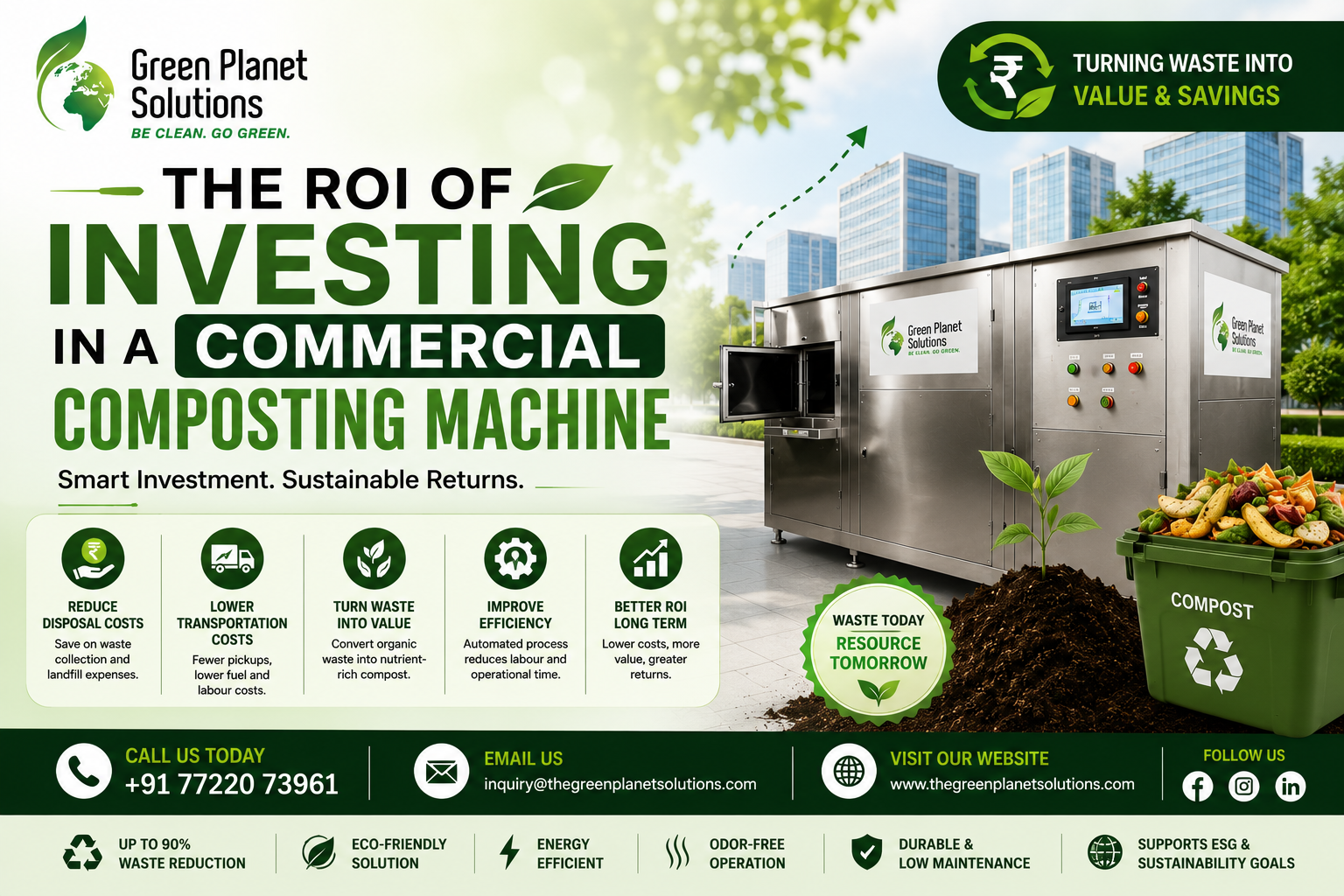
  • The ROI of Investing in a Commercial Composting Machine

    The ROI of Investing in a Commercial Composting Machine

    Introduction

    For many businesses, waste management is viewed as an unavoidable operational expense. Every day, hotels, restaurants, hospitals, corporate campuses, educational institutions, supermarkets, and food processing industries generate large amounts of organic waste, leading to recurring disposal costs and environmental challenges. However, investing in a commercial composting machine transforms waste management from a cost center into a valuable business asset.

    A commercial composting machine does much more than process organic waste—it reduces operational expenses, supports sustainability initiatives, improves workplace efficiency, and creates nutrient-rich compost that can be reused. This combination of financial savings and environmental benefits delivers a strong Return on Investment (ROI), making composting a smart long-term business decision.


    Understanding ROI in Commercial Composting Machine

    Return on Investment (ROI) measures the financial value gained from an investment compared to its cost. While a composting machine requires an initial investment, the long-term savings generated through reduced waste disposal, lower transportation costs, and improved operational efficiency often outweigh the purchase cost.

    Unlike many capital investments that take years to show measurable benefits, a commercial composting machine begins delivering savings from the first day it starts processing waste.


    Significantly Reduce Waste Disposal Costs using Composting Machine

    One of the biggest financial benefits of a commercial composting machine is the reduction in waste disposal expenses.

    Businesses that generate food and organic waste often spend a considerable amount on waste collection services and landfill charges. By processing organic waste on-site, businesses reduce the volume of waste by up to 90%, resulting in fewer waste collection trips and lower disposal fees.

    These recurring monthly savings contribute directly to a faster return on investment.


    Lower Transportation Expenses

    Transporting organic waste to disposal facilities requires fuel, labour, and logistics, all of which increase operational costs.

    With an on-site composting machine, businesses no longer need to transport large quantities of organic waste regularly. Reducing transportation not only saves money but also lowers carbon emissions associated with waste collection vehicles.

    This creates both financial and environmental value.


    Turn Organic Waste into Valuable Composting Machine

    Instead of paying to dispose of food waste, businesses can convert it into nutrient-rich compost.

    The compost produced can be used for:

    • Landscaping
    • Gardens
    • Parks
    • Green belts
    • Agricultural use
    • Tree plantations

    For hotels, corporate campuses, universities, and residential communities, this reduces the need to purchase chemical fertilizers while supporting sustainable landscaping practices.

    Waste becomes a useful resource rather than an expense.


    Improve Operational Efficiency using Composting Machine

    Modern commercial composting machines are designed for automation and ease of operation.

    Features such as automatic mixing, temperature control, moisture monitoring, and odour management minimise manual labour and simplify waste handling.

    Employees spend less time managing waste, allowing them to focus on more productive business activities. Increased efficiency translates into lower labour costs and smoother daily operations.


    Strengthen ESG and Sustainability Performance

    Environmental responsibility is becoming a key factor in business success. Customers, investors, and regulatory bodies increasingly expect organisations to implement sustainable practices.

    A commercial composting machine helps businesses:

    • Reduce landfill waste
    • Lower greenhouse gas emissions
    • Support circular economy initiatives
    • Improve ESG performance
    • Reduce carbon footprint
    • Demonstrate environmental leadership

    These sustainability achievements enhance corporate reputation and strengthen relationships with environmentally conscious customers and stakeholders.


    Future-Proof Your Business

    Waste disposal regulations and landfill costs continue to rise across the world. Businesses that invest in composting today are better prepared for future environmental regulations and changing waste management requirements.

    Installing a composting machine now protects businesses from increasing disposal costs while ensuring compliance with evolving sustainability standards.


    Industries That Benefit the Most Composting Machine

    Commercial composting machines provide excellent ROI across many sectors.

    Hotels and Resorts

    Process buffet leftovers and kitchen waste while producing compost for gardens and landscaping.

    Restaurants and Commercial Kitchens

    Reduce daily food waste disposal costs and maintain cleaner kitchen operations.

    Hospitals

    Manage biodegradable kitchen waste hygienically while supporting environmental initiatives.

    Corporate Campuses

    Improve sustainability performance and reduce waste management expenses.

    Schools and Universities

    Convert cafeteria waste into compost for campus landscaping and educational sustainability projects.

    Food Processing Industries

    Efficiently process production waste while reducing operational costs.


    Why Choose Green Planet Solutions?

    Green Planet Solutions provides advanced commercial composting machines designed to maximise business value and long-term savings.

    Our Advantages

    • Fully automatic operation
    • Up to 90% waste volume reduction
    • Energy-efficient technology
    • Fast composting process
    • Odour-free operation
    • Durable stainless-steel construction
    • Low maintenance requirements
    • Multiple machine capacities
    • Professional installation
    • Reliable after-sales support

    Our experienced team works closely with every customer to recommend the ideal composting solution based on waste generation and operational requirements.


    Measuring the Long-Term ROI using Composting Machine

    The return on investment extends beyond financial savings. Businesses also gain:

    • Lower monthly operating expenses
    • Reduced waste collection frequency
    • Improved workplace hygiene
    • Better environmental compliance
    • Enhanced corporate reputation
    • Stronger ESG performance
    • Increased sustainability credentials

    When these benefits are combined, the value of investing in a commercial composting machine continues to grow year after year.


    Conclusion

    Investing in a commercial composting machine is not simply purchasing equipment—it’s making a strategic investment in the future of your business. By reducing waste disposal costs, lowering transportation expenses, improving operational efficiency, and supporting sustainability goals, businesses achieve both financial and environmental returns.

    As organisations continue to seek smarter, greener, and more cost-effective waste management solutions, commercial composting has become one of the most valuable long-term investments available.

    Start Maximising Your ROI Today

    Partner with Green Planet Solutions to discover commercial composting machines that help your business reduce waste, save money, and build a more sustainable future. Contact our experts today to find the right composting solution for your organisation.

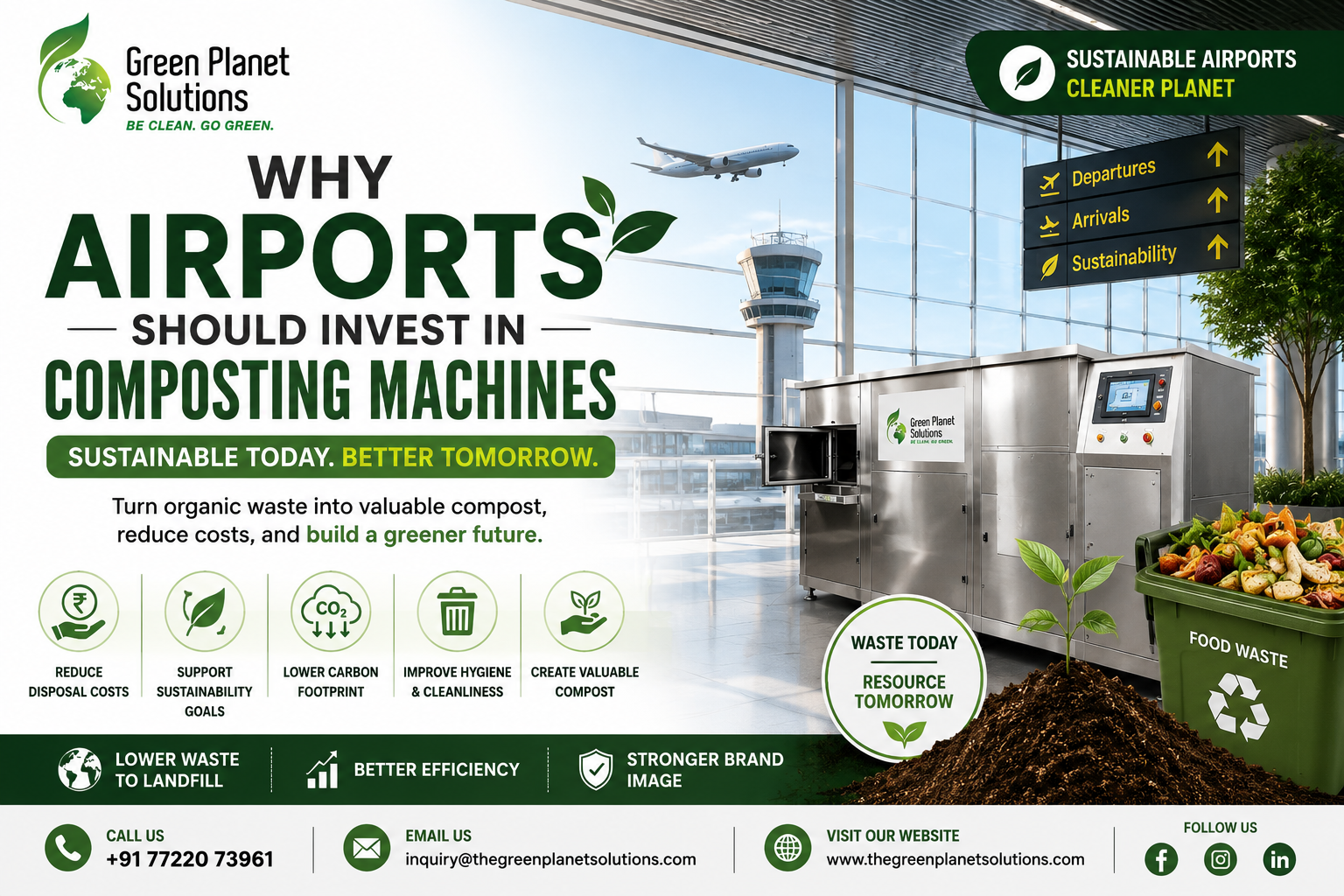
  • Why Airports Should Invest in Composting Machines

    Why Airports Should Invest in Composting Machines

    Introduction

    Airports are among the busiest public spaces in the world, serving thousands—or even millions—of passengers every year. With restaurants, cafés, airline lounges, food courts, and catering facilities operating around the clock, airports generate a significant amount of organic waste every day. Managing this waste efficiently is becoming increasingly important as environmental regulations tighten and sustainability expectations continue to rise. Instead of sending food waste to landfills, airports can adopt a smarter approach by investing in commercial composting machines.

    These systems convert organic waste into nutrient-rich compost on-site, reducing disposal costs, improving operational efficiency, and supporting long-term environmental goals. For airports aiming to become greener and more sustainable, composting is no longer just an option—it’s a strategic investment.


    The Growing Challenge of Organic Waste at Airports

    Airports produce a continuous stream of biodegradable waste from restaurants, airline catering kitchens, coffee shops, VIP lounges, and terminal food courts. Leftover meals, fruit and vegetable scraps, coffee grounds, paper napkins, and other organic materials often end up in landfill sites.

    Transporting this waste for disposal not only increases operating costs but also contributes to greenhouse gas emissions. As passenger traffic continues to grow, airports need smarter waste management systems that can handle large volumes of organic waste efficiently.


    What Is a Commercial Composting Machine?

    A commercial composting machine is an advanced waste management system that converts food and organic waste into nutrient-rich compost through a controlled biological process. The machine automatically manages temperature, moisture, and aeration, allowing waste to decompose quickly and hygienically.

    Instead of relying on traditional waste collection methods, airports can process organic waste directly on-site, reducing waste volume and creating useful compost for landscaping and green spaces.


    Reduce Waste Disposal Costs

    Waste collection and landfill fees represent a significant operational expense for airports. Large volumes of food waste require regular transportation and disposal, increasing both logistics and labour costs.

    A commercial composting machine can reduce organic waste volume by up to 90%, meaning fewer waste collection trips and lower disposal expenses. Over time, these savings can provide a strong return on investment while improving overall waste management efficiency.


    Support Airport Sustainability Goals using composting machines

    Many airports have committed to achieving ambitious environmental targets, including reducing carbon emissions and minimizing landfill waste.

    By installing composting machines, airports can:

    • Reduce organic waste sent to landfill
    • Lower methane emissions
    • Support circular economy initiatives
    • Improve environmental performance
    • Contribute to carbon reduction goals
    • Strengthen sustainability reporting

    Composting helps airports demonstrate their commitment to responsible environmental management while meeting the expectations of passengers, regulators, and stakeholders.


    Improve Airport Cleanliness and Hygiene using composting machines

    Organic waste stored for long periods can create unpleasant odours and attract pests, especially in busy food service areas.

    Commercial composting machines allow waste to be processed quickly, reducing the time organic materials remain in storage. Modern machines are equipped with odour-control systems, ensuring clean and hygienic operation without affecting airport environments.

    A cleaner waste management process also improves working conditions for airport staff and food service operators.


    Turn Waste into a Valuable Resource using composting machines

    Rather than treating food waste as a disposal problem, airports can convert it into nutrient-rich compost.

    The compost produced can be used for:

    • Airport gardens
    • Landscape maintenance
    • Green belts
    • Decorative plants
    • Tree plantations
    • Public green spaces around airport premises

    This supports sustainable landscaping while reducing the need for chemical fertilizers.


    Enhance Operational Efficiency using composting machines

    Modern composting machines are designed with automation and ease of use in mind.

    Features such as automatic mixing, moisture control, temperature monitoring, and touchscreen operation reduce manual handling and simplify waste management.

    Airport facility teams can process organic waste more efficiently while focusing on other critical operational responsibilities.


    Strengthen Brand Image

    Today’s travellers are increasingly aware of environmental issues and appreciate businesses that invest in sustainable practices.

    An airport that actively reduces waste, recycles organic materials, and promotes green initiatives enhances its reputation as an environmentally responsible organisation. These efforts can improve public perception while supporting international sustainability certifications and green airport initiatives.


    Why Choose Green Planet Solutions?

    Green Planet Solutions provides advanced commercial composting machines designed to meet the needs of high-volume facilities such as airports, transportation hubs, and large commercial campuses.

    Our Advantages

    • Fully automatic operation
    • Up to 90% waste volume reduction
    • Energy-efficient technology
    • Odour-control system
    • Durable stainless-steel construction
    • Low maintenance requirements
    • Multiple machine capacities
    • Professional installation
    • Reliable after-sales support

    Our customised composting solutions help airports efficiently manage organic waste while reducing costs and supporting long-term sustainability goals.


    Conclusion

    As airports continue to expand and passenger numbers increase, effective organic waste management has become more important than ever. Investing in a commercial composting machine allows airports to reduce waste disposal costs, improve hygiene, lower environmental impact, and convert food waste into a valuable resource.

    By adopting smart composting technology, airports can build more sustainable operations while demonstrating leadership in environmental responsibility.

    Ready to Make Your Airport More Sustainable?

    Partner with Green Planet Solutions to implement advanced composting solutions that reduce waste, save money, and create a cleaner, greener airport. Contact our team today to find the right composting machine for your facility.

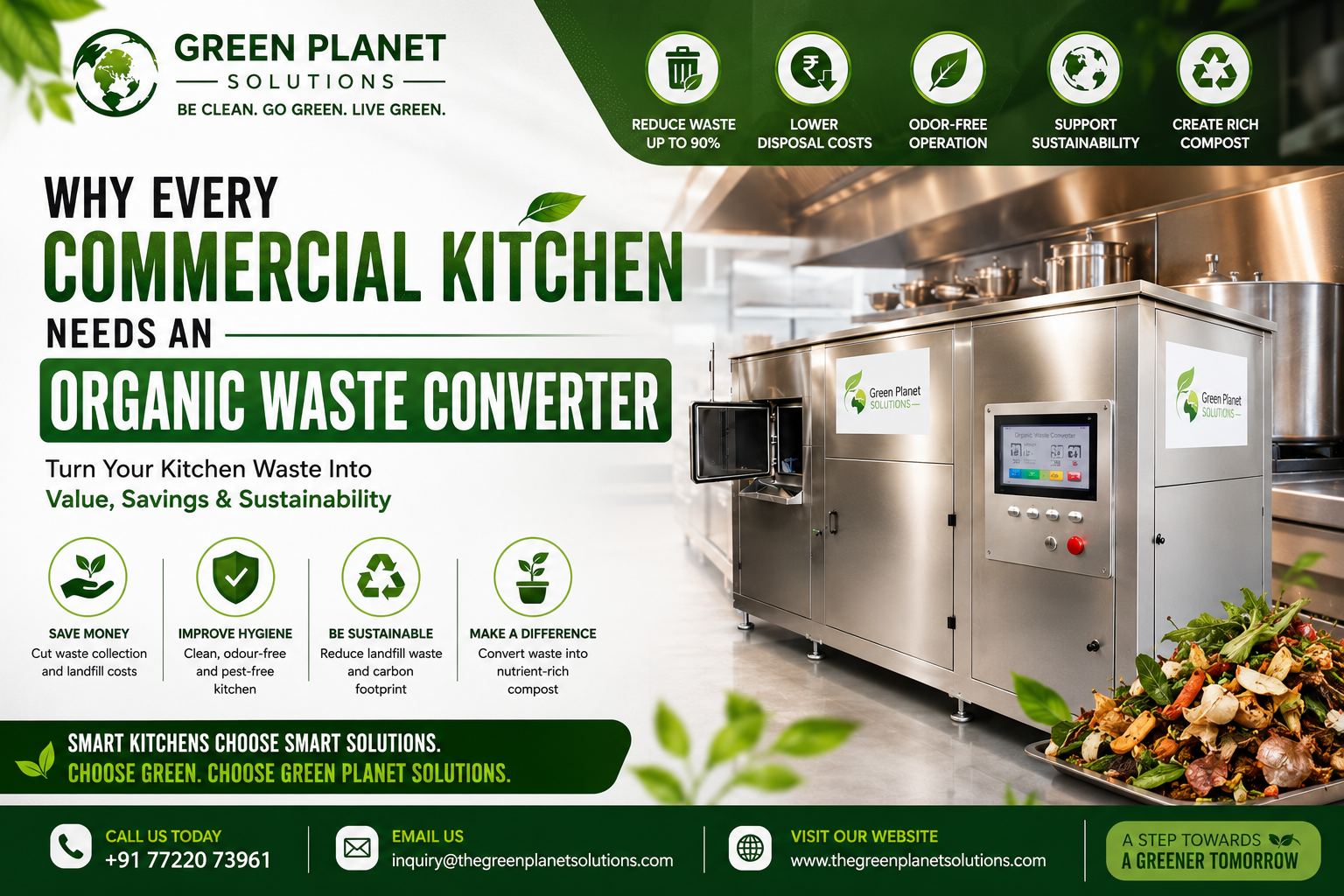
  • Why Every Commercial Kitchen Needs an Organic Waste Converter

    Why Every Commercial Kitchen Needs an Organic Waste Converter

    Introduction

    Commercial kitchens are the heart of hotels, restaurants, cafeterias, hospitals, educational institutions, and food courts. While they prepare thousands of meals every day, they also generate significant amounts of organic waste, including vegetable peels, fruit scraps, leftover food, eggshells, coffee grounds, and expired ingredients. Managing this waste efficiently has become a major challenge as disposal costs rise and environmental regulations become stricter. Instead of treating organic waste as a burden, businesses can transform it into a valuable resource with an Organic Waste Converter (OWC). Investing in a commercial organic waste converter not only reduces waste disposal costs but also supports sustainability goals and creates a cleaner working environment.


    The Growing Challenge of Kitchen Waste

    Every commercial kitchen produces biodegradable waste throughout the day. Traditionally, this waste is collected and transported to landfills, where it decomposes and releases methane, a greenhouse gas that contributes significantly to climate change.

    Apart from environmental concerns, businesses also face increasing expenses related to waste collection, transportation, and landfill charges. As customer expectations for sustainable practices continue to grow, commercial kitchens need smarter waste management solutions.


    What Is an Organic Waste Converter?

    An Organic Waste Converter is an advanced composting system designed to process food and biodegradable waste directly at the source. Using controlled biological decomposition, the machine converts organic waste into nutrient-rich compost within a short period.

    Unlike traditional composting methods, modern organic waste converters automate the process by controlling temperature, aeration, and moisture, making waste management faster, cleaner, and more efficient.


    Reduce Waste Disposal Costs

    One of the biggest advantages of installing an organic waste converter is the significant reduction in waste disposal expenses.

    Instead of paying for frequent waste collection and landfill disposal, businesses can process organic waste on-site. Since the waste volume is reduced substantially during composting, fewer waste collection trips are required, resulting in lower transportation and disposal costs.

    Over time, these savings contribute to an excellent return on investment.


    Improve Kitchen Hygiene

    Food waste left in storage areas can quickly create unpleasant odours, attract pests, and increase the risk of bacterial growth.

    An organic waste converter helps commercial kitchens maintain a cleaner and more hygienic environment by processing waste immediately after collection. Modern machines are designed with odour-control systems, ensuring smooth operation without disrupting kitchen activities.

    A cleaner workspace improves staff comfort while supporting higher hygiene standards.


    Support Sustainability Goals

    Consumers increasingly prefer businesses that demonstrate environmental responsibility. Hotels, restaurants, and corporate cafeterias are adopting sustainable waste management practices to reduce their environmental impact and strengthen their brand image.

    By converting organic waste into compost instead of sending it to landfill, businesses can:

    • Reduce landfill waste
    • Lower greenhouse gas emissions
    • Support circular economy initiatives
    • Improve ESG performance
    • Reduce their carbon footprint

    An organic waste converter becomes an important part of a company’s sustainability strategy.


    Turn Waste into a Valuable Resource

    Food waste does not have to end its journey in a landfill. With an organic waste converter, kitchen waste is transformed into nutrient-rich compost that can be used for:

    • Gardens
    • Landscaping
    • Lawns
    • Parks
    • Tree plantations
    • Agricultural applications

    Instead of paying to dispose of waste, businesses create something beneficial for the environment.


    Increase Operational Efficiency

    Modern organic waste converters are designed for convenience and automation.

    Features such as automatic mixing, temperature monitoring, moisture control, and touchscreen operation simplify the composting process while reducing manual labour.

    Kitchen staff spend less time handling waste, allowing them to focus on food preparation and customer service.


    Ideal for Every Commercial Kitchen

    Organic waste converters are suitable for a wide range of food service businesses.

    Hotels and Resorts

    Process buffet leftovers and kitchen waste efficiently while producing compost for landscaping.

    Restaurants and Cafés

    Reduce daily food waste, improve cleanliness, and lower disposal costs.

    Hospitals

    Manage biodegradable kitchen waste safely while maintaining hygiene standards.

    Educational Institutions

    Convert cafeteria waste into compost for campus gardens and sustainability programs.

    Corporate Cafeterias

    Support ESG initiatives while reducing operational waste management expenses.

    Food Courts and Catering Companies

    Handle high volumes of organic waste efficiently during daily operations.


    Why Choose Green Planet Solutions?

    Green Planet Solutions offers advanced Organic Waste Converters designed to help commercial kitchens manage food waste efficiently and sustainably.

    Our Advantages

    • Fully automatic operation
    • Fast composting process
    • Up to 90% waste volume reduction
    • Energy-efficient technology
    • Odour-free operation
    • Durable stainless-steel construction
    • Low maintenance requirements
    • Multiple machine capacities
    • Professional installation
    • Dedicated after-sales support

    Our solutions are trusted by businesses across hospitality, healthcare, education, food processing, and commercial sectors.


    Long-Term Benefits for Your Business

    Installing an organic waste converter delivers benefits that go far beyond waste reduction.

    Businesses enjoy:

    • Lower operating costs
    • Cleaner kitchen environments
    • Reduced environmental impact
    • Improved sustainability credentials
    • Better compliance with waste management practices
    • Stronger brand reputation among environmentally conscious customers

    As waste disposal costs continue to rise, investing in an organic waste converter is a practical step toward long-term operational efficiency and sustainability.


    Conclusion

    Every commercial kitchen generates organic waste, but that waste doesn’t have to become an environmental or financial burden. An Organic Waste Converter transforms food waste into valuable compost while reducing disposal costs, improving hygiene, and supporting sustainability goals.

    For businesses looking to build a cleaner, greener, and more efficient operation, investing in an Organic Waste Converter is a smart decision that delivers lasting value.

    Ready to Transform Your Kitchen Waste?

    Partner with Green Planet Solutions and discover how our advanced Organic Waste Converters can help your commercial kitchen reduce waste, save money, and contribute to a more sustainable future. Contact our team today to find the right solution for your business.

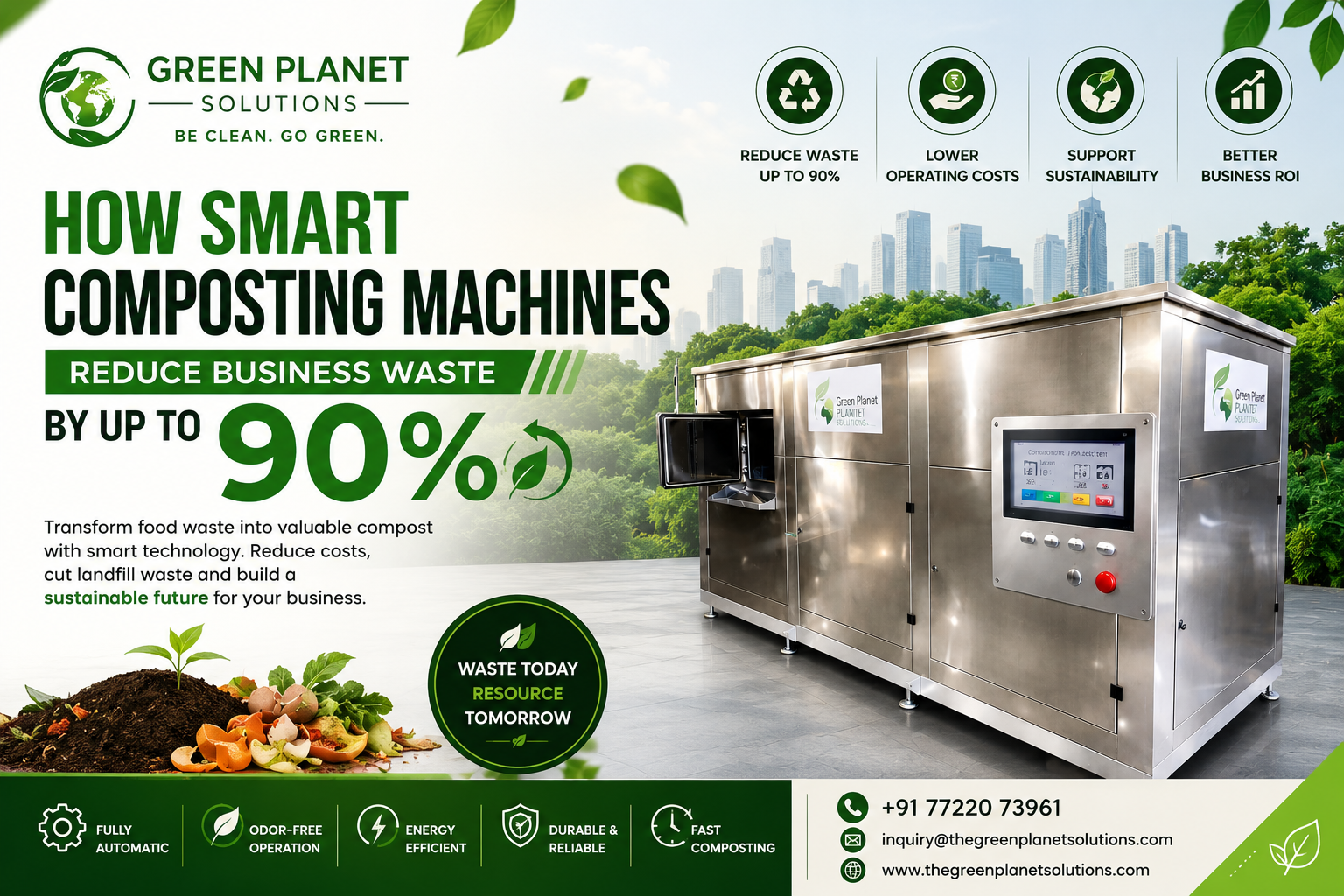
  • How Composting Machines Reduce Business Waste by Up to 90%

    How Composting Machines Reduce Business Waste by Up to 90%

    Introduction

    Organic waste is one of the biggest challenges faced by businesses today. Hotels, restaurants, hospitals, universities, supermarkets, and food processing facilities generate large amounts of food and biodegradable waste every day. When this waste is sent to landfills, it increases disposal costs, contributes to greenhouse gas emissions, and wastes valuable resources. composting machines are changing the way businesses manage organic waste. By processing waste directly on-site, these advanced systems can reduce the volume of organic waste by up to 90%, helping businesses lower costs, improve operational efficiency, and achieve their sustainability goals.


    The Growing Challenge of Organic Waste

    Every day, businesses dispose of food scraps, vegetable peels, expired produce, and other biodegradable materials. Traditional waste disposal methods rely heavily on transporting this waste to landfills, where it decomposes and releases methane, a greenhouse gas that contributes to climate change.

    As waste disposal costs continue to rise and environmental regulations become stricter, businesses are looking for smarter and more sustainable alternatives.


    What Is a Smart Composting Machine?

    A smart composting machine is an automated system that converts organic waste into nutrient-rich compost through a controlled biological process. Unlike traditional composting methods, modern machines regulate temperature, moisture, and aeration automatically to accelerate decomposition.

    The result is a fast, clean, and efficient composting process that requires minimal manual effort while producing high-quality compost suitable for landscaping, gardens, and green spaces.


    How Smart Composting Machines Reduce Waste by Up to 90%

    One of the biggest advantages of smart composting technology is its ability to significantly reduce the volume of organic waste.

    Instead of transporting large quantities of food waste to landfill sites, businesses process waste on-site. During the composting cycle, moisture evaporates naturally, and organic matter breaks down into stable compost. This process dramatically reduces the overall waste volume, leaving only a small amount of nutrient-rich compost that can be reused productively.

    This reduction means fewer waste collection trips, lower transportation costs, and less dependence on landfill disposal.


    Lower Waste Disposal Costs

    Waste collection and landfill fees can account for a significant portion of a business’s operational expenses. By reducing waste volume by up to 90%, businesses require fewer waste pickups and pay lower disposal charges.

    Over time, these savings contribute to an excellent return on investment, making smart composting machines a cost-effective solution for organizations of all sizes.


    Supporting Sustainability Goals

    Businesses are increasingly expected to demonstrate environmental responsibility. Smart composting machines help organizations reduce landfill waste, lower greenhouse gas emissions, and support circular economy practices.

    By converting waste into compost instead of sending it to landfill, businesses strengthen their Environmental, Social, and Governance (ESG) performance while contributing to a cleaner and greener future.


    Smart Features That Improve Efficiency

    Modern composting machines are designed to simplify waste management through automation and intelligent controls.

    Common features include:

    • Fully automatic operation
    • Intelligent temperature monitoring
    • Moisture control system
    • Odour-control technology
    • Energy-efficient operation
    • User-friendly touchscreen interface
    • Low maintenance requirements

    These features ensure consistent performance while reducing labour and operational complexity.


    Industries That Benefit the Most

    Smart composting machines provide value across many commercial sectors.

    Hotels and Restaurants

    Convert kitchen waste into compost while reducing disposal costs and supporting sustainable hospitality practices.

    Hospitals

    Manage biodegradable kitchen waste safely, hygienically, and efficiently.

    Universities and Schools

    Create greener campuses by converting cafeteria waste into compost for landscaping and educational sustainability projects.

    Supermarkets

    Process unsold fruits, vegetables, and expired organic products instead of sending them to landfill.

    Food Processing Industries

    Handle large quantities of organic production waste while improving operational efficiency.

    Residential Communities

    Reduce landfill waste and create compost for gardens and shared green spaces.


    Why Choose Green Planet Solutions?

    Green Planet Solutions offers advanced commercial composting machines that combine innovation, reliability, and sustainability. Our machines are designed to help businesses manage organic waste more efficiently while reducing operational costs.

    Why Businesses Trust Us

    • Fully automatic composting technology
    • Fast and efficient waste processing
    • Up to 90% waste volume reduction
    • Energy-efficient performance
    • Odour-free operation
    • Durable stainless-steel construction
    • Low maintenance design
    • Multiple machine capacities
    • Professional installation and after-sales support

    Whether you’re managing a hotel, hospital, university, restaurant, corporate office, or food manufacturing facility, Green Planet Solutions provides customised composting solutions that fit your operational needs.


    Long-Term Business Benefits

    Investing in a smart composting machine offers more than immediate waste reduction. It creates lasting value by lowering operating costs, improving sustainability performance, reducing environmental impact, and enhancing your company’s reputation.

    As governments and customers place greater emphasis on sustainable business practices, organizations that invest in innovative waste management solutions will be better positioned for long-term success.


    Conclusion

    Smart composting machines are transforming the way businesses manage organic waste. By reducing waste volume by up to 90%, lowering disposal costs, and converting food waste into valuable compost, these systems offer a practical and sustainable solution for modern organizations.

    If your business is looking to improve efficiency, reduce environmental impact, and achieve long-term cost savings, investing in a smart composting machine is a step toward a cleaner, greener future.

    Ready to Reduce Business Waste?

    Partner with Green Planet Solutions to discover advanced composting machines that help your business reduce waste, cut costs, and support a more sustainable future. Contact our team today to find the right solution for your organization.

  • The ROI of Investing in a Commercial Composting Machine

    The ROI of Investing in a Commercial Composting Machine

    Introduction

    For many businesses, investing in a commercial composting machine may seem like a significant upfront expense. However, when viewed as a long-term investment rather than a short-term cost, a composting machine delivers impressive returns. From reducing waste disposal expenses to improving sustainability performance, businesses across the hospitality, healthcare, education, retail, and food processing sectors are discovering that composting is both an environmental and financial advantage.

    In today’s competitive market, companies are expected to operate responsibly while controlling operational costs. A commercial composting machine helps achieve both goals by turning organic waste into a valuable resource instead of an ongoing expense.


    Understanding Return on Investment (ROI)

    Return on Investment (ROI) measures how much value an investment generates compared to its cost. When it comes to commercial composting machines, ROI is achieved through continuous savings in waste management, lower transportation costs, reduced landfill fees, and improved operational efficiency.

    Unlike many business investments that take years to show results, a composting machine begins delivering value from the moment it starts processing organic waste.


    Lower Waste Disposal Costs

    One of the biggest financial benefits of a commercial composting machine is the reduction in waste disposal costs. Businesses that generate large volumes of food and organic waste often spend significant amounts on waste collection and landfill charges.

    By processing organic waste on-site, companies dramatically reduce the amount of waste that needs to be transported and disposed of. This means fewer waste collection visits and lower monthly waste management bills, resulting in substantial long-term savings.


    Reduced Transportation Expenses

    Transporting organic waste to disposal facilities requires fuel, labour, and logistics, all of which contribute to operating expenses. On-site composting eliminates much of this transportation requirement.

    Instead of paying to move waste away from the property, businesses can process it where it is generated. This not only reduces costs but also lowers carbon emissions associated with waste transportation.


    Turning Waste into a Valuable Resource

    Organic waste should not be viewed as rubbish—it is a valuable resource. A commercial composting machine converts food scraps, fruit and vegetable waste, and other biodegradable materials into nutrient-rich compost.

    This compost can be used for:

    • Landscaping projects
    • Gardens and green spaces
    • Agricultural applications
    • Tree plantations
    • Community green initiatives

    For businesses that maintain outdoor spaces, using their own compost reduces the need to purchase commercial fertilizers and soil conditioners.


    Increased Operational Efficiency

    Modern composting machines are designed for automation and ease of use. Features such as automatic mixing, temperature control, moisture regulation, and odour management reduce manual labour and simplify daily waste handling.

    Employees spend less time managing waste, allowing them to focus on core business activities while improving overall productivity.


    Supporting ESG and Sustainability Goals

    Environmental responsibility has become a key factor in business success. Investors, customers, and stakeholders increasingly expect organizations to adopt sustainable practices.

    Installing a commercial composting machine helps businesses:

    • Reduce landfill waste
    • Lower greenhouse gas emissions
    • Improve recycling performance
    • Support the circular economy
    • Strengthen ESG reporting

    These sustainability achievements enhance brand reputation and can create new business opportunities with environmentally conscious clients and partners.


    Avoiding Future Waste Management Costs

    Waste disposal costs continue to rise due to stricter environmental regulations and increasing landfill charges. Businesses that invest in composting today are better prepared for future changes in waste management policies.

    A composting machine provides long-term protection against rising disposal costs while ensuring compliance with evolving sustainability standards.


    Industries That Benefit the Most

    Commercial composting machines deliver excellent ROI across a wide range of industries.

    Hotels and Resorts

    Reduce kitchen waste, lower disposal costs, and produce compost for gardens and landscaping.

    Restaurants and Cafés

    Convert daily food waste into useful compost while reducing collection frequency.

    Hospitals

    Efficiently manage biodegradable kitchen waste in a hygienic and environmentally responsible manner.

    Universities and Schools

    Support sustainable campuses by processing cafeteria waste and using compost for campus landscaping.

    Supermarkets

    Manage expired fruits, vegetables, and other organic products without relying entirely on landfill disposal.

    Food Processing Industries

    Handle large quantities of production waste efficiently while reducing operational expenses.


    Why Choose Green Planet Solutions?

    At Green Planet Solutions, we design advanced commercial composting machines that combine innovation, efficiency, and durability. Our solutions are built to help businesses maximise their return on investment while supporting long-term sustainability.

    Our Advantages

    • Fully automatic operation
    • Fast composting process
    • Energy-efficient technology
    • Odour-control system
    • Durable stainless-steel construction
    • Low maintenance requirements
    • Multiple capacity options
    • Professional installation and after-sales support

    Our team works closely with every customer to recommend the right solution based on their daily waste generation and business requirements.


    Conclusion

    Investing in a commercial composting machine is more than purchasing equipment—it’s a strategic decision that delivers long-term financial and environmental benefits. By reducing waste disposal costs, lowering transportation expenses, improving operational efficiency, and supporting sustainability initiatives, businesses can achieve an impressive return on investment while making a positive impact on the environment.

    As waste management costs continue to rise, now is the ideal time to invest in a solution that transforms organic waste into valuable compost. With Green Planet Solutions as your trusted partner, your business can reduce costs, strengthen its sustainability efforts, and build a cleaner, greener future.

    Ready to Maximise Your ROI?

    Contact Green Planet Solutions today to find the ideal commercial composting machine for your business and start turning organic waste into long-term value.

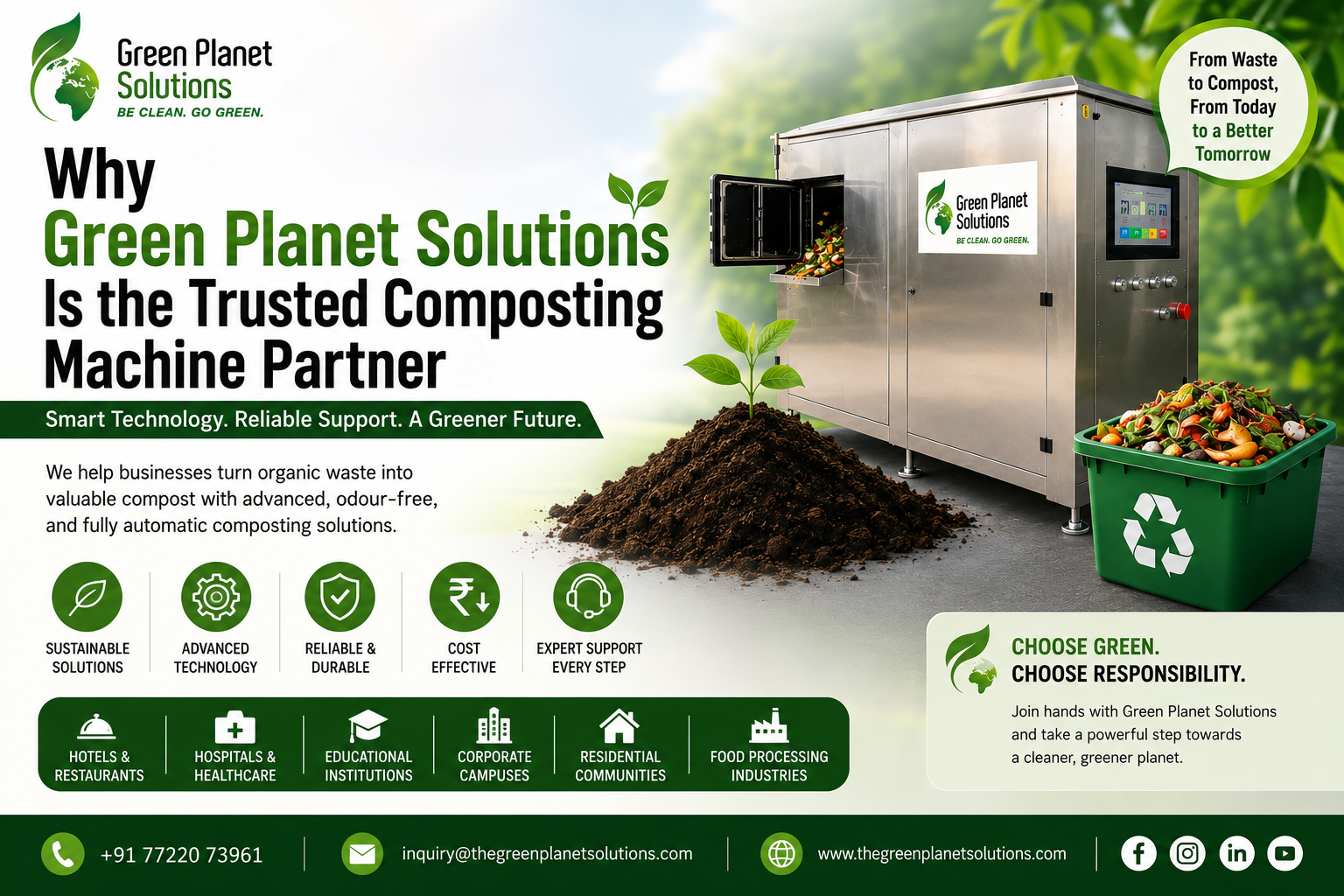
  • Why Green Planet Solutions Is the Trusted Composting Machine Partner

    Why Green Planet Solutions Is the Trusted Composting Machine Partner

    Introduction

    As businesses around the world strive to reduce their environmental impact, choosing the right composting machine is only part of the solution. Equally important is selecting a reliable partner who understands your waste management challenges and provides long-term support.

    At Green Planet Solutions, we believe that sustainable waste management should be simple, efficient, and cost-effective. With years of expertise in organic waste management, innovative technology, and customer-focused service, we help businesses transform food and organic waste into valuable compost while reducing landfill dependency and operational costs.

    Whether you operate a hotel, restaurant, hospital, university, corporate campus, residential community, or food processing facility, Green Planet Solutions is committed to helping you build a cleaner and greener future.


    Delivering Innovative Composting Technology

    Every business generates organic waste, but not every business has the same waste management needs. That’s why Green Planet Solutions offers advanced composting machines designed to handle different waste volumes while ensuring maximum efficiency.

    Our machines use modern composting technology to accelerate the natural decomposition process in a controlled environment. This allows businesses to convert organic waste into nutrient-rich compost quickly, safely, and with minimal manual effort.

    The result is a reliable waste management solution that improves operational efficiency while supporting sustainability goals.


    Built for Performance and Reliability

    A composting machine is a long-term investment, and businesses need equipment they can depend on every day.

    Green Planet Solutions designs machines using premium-quality stainless steel and high-performance components to ensure durability and consistent operation, even in demanding commercial environments.

    Our systems are built for continuous performance, helping organizations reduce downtime and maintenance costs while maximizing productivity.


    Smart Features That Simplify Waste Management

    Modern businesses require technology that is easy to operate and highly efficient.

    Our composting machines are equipped with intelligent features such as:

    • Fully automatic operation
    • User-friendly touchscreen controls
    • Temperature and moisture monitoring
    • Odour-control technology
    • Energy-efficient performance
    • Low maintenance requirements

    These features allow businesses to process organic waste with minimal effort while maintaining excellent compost quality.


    Solutions for Every Industry

    Different industries face different waste management challenges. Green Planet Solutions provides customized composting solutions for a wide range of sectors.

    Hotels and Restaurants

    Commercial kitchens generate significant quantities of food waste every day. Our composting machines help hospitality businesses reduce disposal costs while supporting sustainable operations.

    Universities and Educational Institutions

    Campuses produce organic waste from cafeterias, hostels, and landscaping activities. Composting creates an opportunity to reduce waste while promoting environmental awareness among students.

    Hospitals and Healthcare Facilities

    Healthcare organizations require clean, efficient, and hygienic waste management solutions. Our odour-controlled composting systems provide a reliable way to process biodegradable waste.

    Residential Communities

    Housing societies and apartment complexes can significantly reduce landfill waste while producing compost for gardens and green spaces.

    Food Processing Industries

    Manufacturing facilities benefit from large-capacity composting systems that efficiently process production waste while supporting sustainability initiatives.


    Helping Businesses Reduce Costs

    One of the biggest advantages of investing in a composting machine is the opportunity to lower long-term operating expenses.

    By reducing the volume of organic waste sent to landfill, businesses can decrease waste collection frequency, transportation costs, and disposal fees.

    Instead of paying to dispose of waste, organizations create a valuable product that can be used for landscaping, gardening, or agricultural applications.

    This makes composting both an environmentally responsible and financially smart investment.


    Supporting Sustainability and ESG Goals

    Environmental responsibility has become an essential part of modern business strategy.

    Green Planet Solutions helps organizations achieve their sustainability objectives by:

    • Reducing landfill waste
    • Lowering greenhouse gas emissions
    • Supporting circular economy practices
    • Producing natural compost
    • Improving ESG performance
    • Reducing carbon footprint

    Our composting solutions enable businesses to demonstrate their commitment to environmental stewardship while strengthening their reputation among customers, investors, and stakeholders.


    Comprehensive After-Sales Support

    A great composting machine is backed by excellent service.

    Green Planet Solutions offers complete customer support, including:

    • Professional consultation
    • Site assessment
    • Installation assistance
    • Operator training
    • Preventive maintenance
    • Technical support
    • Spare parts availability

    Our experienced team works closely with every customer to ensure smooth installation and reliable long-term performance.


    Why Businesses Choose Green Planet Solutions

    Businesses trust Green Planet Solutions because we deliver more than just equipment—we provide complete organic waste management solutions.

    What Sets Us Apart?

    • Advanced composting technology
    • Fully automatic operation
    • Fast composting process
    • Energy-efficient performance
    • Odour-free operation
    • Durable stainless-steel construction
    • Multiple machine capacities
    • Industry-specific solutions
    • Expert technical support
    • Reliable after-sales service
    • Commitment to sustainability

    Our mission is to help organizations reduce waste, lower costs, and create a positive environmental impact through innovative composting technology.


    Conclusion

    Choosing the right composting machine partner is an investment in your business’s future. Green Planet Solutions combines advanced technology, industry expertise, reliable products, and dedicated customer support to help organizations manage organic waste more efficiently.

    Whether your goal is to reduce waste disposal costs, improve sustainability, or achieve ESG targets, we provide the expertise and solutions needed to make your journey successful.

    Partner with Green Planet Solutions Today

    Ready to transform your organic waste into a valuable resource?

    Contact Green Planet Solutions today to discover how our advanced composting machines can help your business reduce waste, save money, and build a cleaner, greener future.

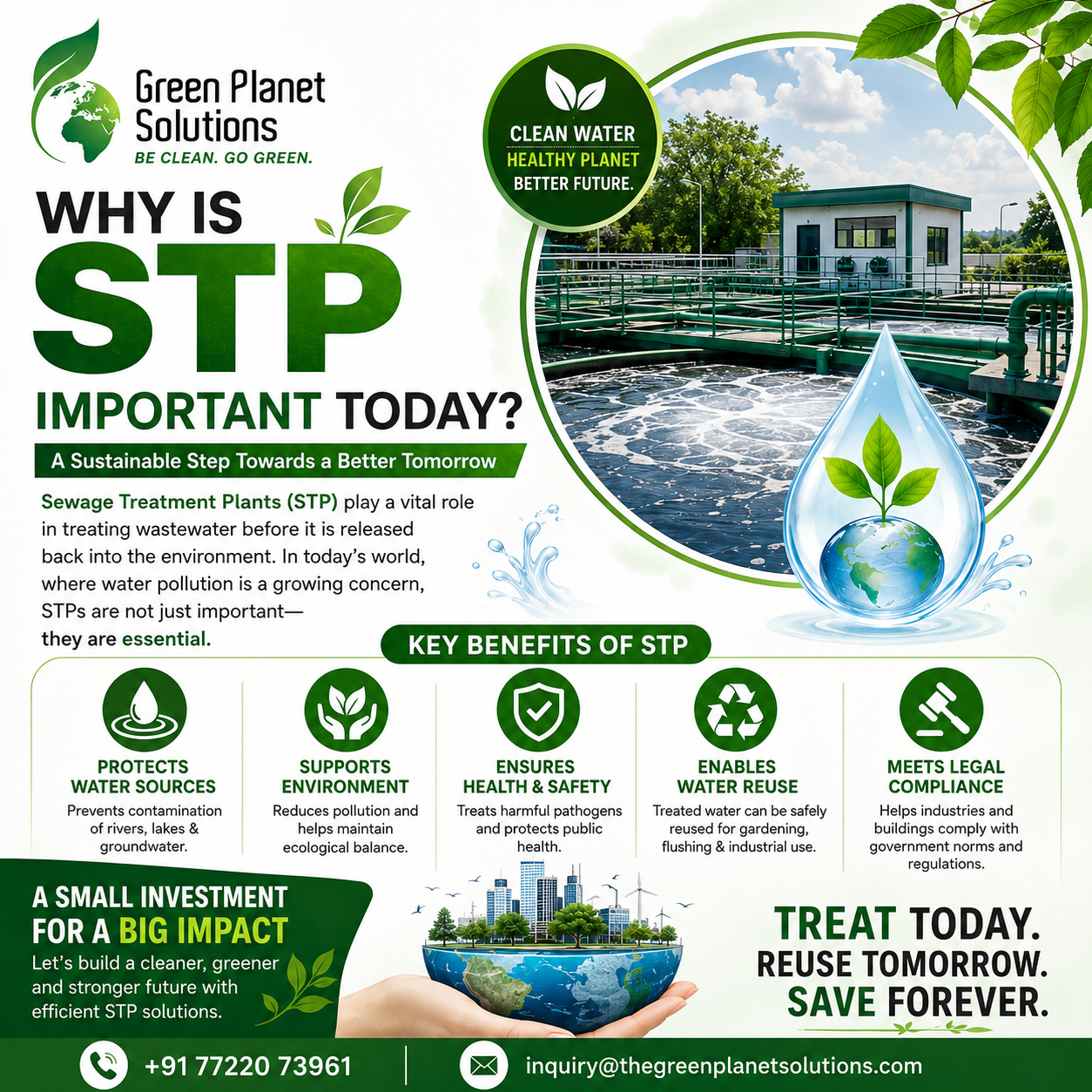
  • 10 Common Mistakes That Reduce STP Efficiency (And How to Avoid Them)

    10 Common Mistakes That Reduce STP Efficiency (And How to Avoid Them)

    Keep Your Sewage Treatment Plant (STP) Running Efficiently with Smart Maintenance

    A Sewage Treatment Plant (STP) is one of the most important systems for managing wastewater responsibly. Whether it’s installed in a residential society, hotel, hospital, commercial building, or industrial facility, an STP helps treat wastewater, protects the environment, and enables water reuse. However, even the most advanced STP can lose efficiency if it is not operated and maintained properly.

    Many businesses experience problems such as foul odors, poor water quality, high operating costs, or unexpected breakdowns simply because of avoidable mistakes. Understanding these common issues can help improve plant performance, reduce maintenance expenses, and extend equipment life.


    1. Ignoring Regular Maintenance

    Routine maintenance is the backbone of an efficient STP. Pumps, blowers, motors, valves, and pipelines require periodic inspection to ensure smooth operation. Delaying maintenance often leads to equipment failure, costly repairs, and reduced treatment efficiency.

    How to avoid it:

    • Follow a preventive maintenance schedule.
    • Inspect mechanical components regularly.
    • Replace worn-out parts before they fail.

    2. Poor Sludge Management

    Sludge naturally accumulates during wastewater treatment. If it is not removed on time, it can reduce tank capacity, increase odors, and negatively impact biological treatment.

    How to avoid it:

    • Monitor sludge levels regularly.
    • Schedule timely sludge removal.
    • Dispose of sludge according to environmental regulations.

    3. Overloading the STP

    Every STP is designed to handle a specific wastewater capacity. When wastewater flow exceeds the plant’s design limit, treatment efficiency drops significantly.

    Common reasons include building expansion, increased occupancy, or industrial process changes.

    How to avoid it:

    • Monitor daily wastewater generation.
    • Upgrade the plant if demand increases.
    • Balance wastewater flow wherever possible.

    4. Neglecting Aeration Systems

    Aeration provides oxygen to beneficial bacteria that break down organic waste. Poor aeration weakens bacterial activity, resulting in foul odors and incomplete treatment.

    How to avoid it:

    • Regularly inspect air blowers.
    • Clean diffusers periodically.
    • Maintain proper dissolved oxygen levels.

    5. Using Harmful Chemicals

    Strong disinfectants, acids, solvents, oils, and industrial chemicals can kill the microorganisms responsible for wastewater treatment.

    Without healthy bacteria, the entire treatment process becomes inefficient.

    How to avoid it:

    • Avoid discharging harmful chemicals into the drainage system.
    • Educate employees and residents about proper waste disposal.
    • Install pre-treatment systems if necessary.

    6. Ignoring Water Quality Testing

    Many operators only notice problems after the treated water quality deteriorates. Regular testing helps identify issues before they become serious.

    Important parameters include:

    • pH
    • BOD
    • COD
    • TSS
    • Dissolved Oxygen

    How to avoid it:

    • Conduct laboratory testing regularly.
    • Maintain proper operational records.
    • Take corrective action immediately if results exceed acceptable limits.

    7. Poor Operator Training

    Even an advanced STP cannot perform efficiently without skilled operators. Incorrect settings, delayed responses, or improper handling often reduce plant performance.

    How to avoid it:

    • Provide regular operator training.
    • Develop standard operating procedures (SOPs).
    • Keep maintenance manuals easily accessible.

    8. Delaying Equipment Repairs

    Small issues such as leaking pipes, noisy pumps, or malfunctioning sensors may seem minor but can quickly develop into expensive failures.

    How to avoid it:

    • Repair equipment as soon as faults are detected.
    • Maintain spare parts inventory.
    • Perform routine inspections.

    9. Ignoring Energy Efficiency

    Blowers, pumps, and motors consume a significant amount of electricity. Poorly maintained equipment increases energy consumption and operating costs.

    How to avoid it:

    • Use energy-efficient motors.
    • Install variable frequency drives (VFDs) where appropriate.
    • Optimize equipment operating schedules.

    10. Not Scheduling Professional STP Audits

    Many operational issues remain unnoticed without expert evaluation. Professional audits help identify hidden inefficiencies, equipment wear, and opportunities for improvement.

    How to avoid it:

    • Schedule annual or biannual STP inspections.
    • Review plant performance data regularly.
    • Implement recommendations from experienced professionals.

    Best Practices for Maximum STP Efficiency

    Maintaining a high-performing STP does not require complicated processes. A few proactive steps can make a significant difference:

    • Perform preventive maintenance consistently.
    • Monitor wastewater quality regularly.
    • Maintain healthy bacterial activity.
    • Train plant operators.
    • Avoid overloading the system.
    • Repair equipment without delay.
    • Conduct periodic professional inspections.

    How Green Planet Solutions Can Help

    At Green Planet Solutions, we provide complete sewage treatment solutions designed for reliable, efficient, and sustainable wastewater management. From STP design and installation to maintenance, upgrades, and technical support, our team helps organizations maximize plant performance while meeting environmental compliance standards.

    Whether you operate a residential complex, hospital, hotel, educational institution, commercial building, or industrial facility, we deliver customized solutions that reduce operational costs and improve water reuse efficiency.


    Conclusion

    A Sewage Treatment Plant is a long-term investment in environmental sustainability and water conservation. However, even the best system requires proper operation and regular maintenance to perform at its full potential. By avoiding these common mistakes and adopting preventive maintenance practices, businesses can improve treatment efficiency, reduce costs, and ensure compliance with environmental regulations.

    With expert guidance and timely servicing from Green Planet Solutions, your STP can deliver reliable performance for years to come.

    Ready to improve your STP performance?
    📞 Call: +91 77220 73961
    📧 Email: inquiry@thegreenplanetsolutions.com

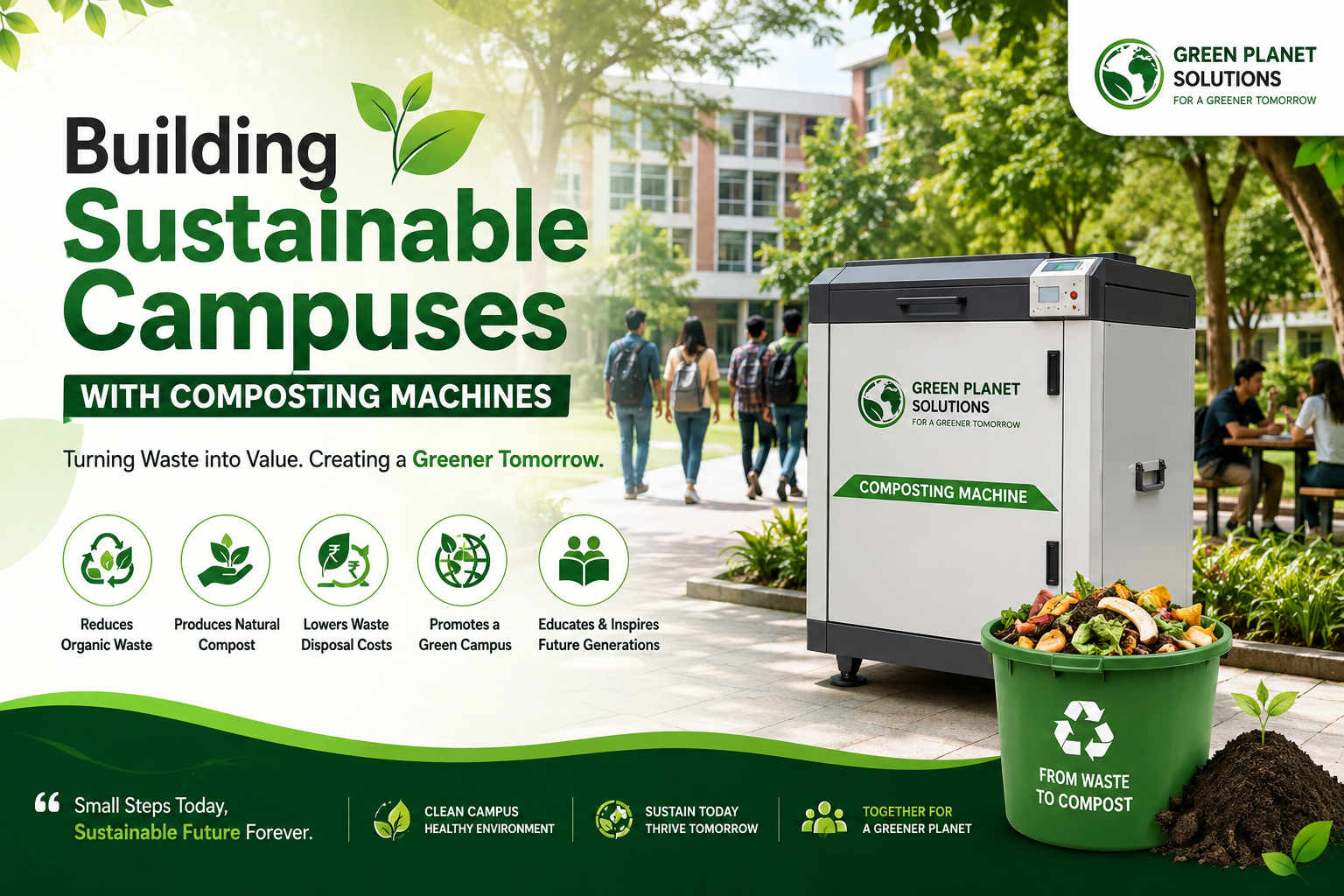
  • Building Sustainable Campuses with Composting Machines

    Building Sustainable Campuses with Composting Machines

    Turning Campus Waste into a Greener Future

    Educational institutions are more than places of learning—they are communities where thousands of students, faculty, and staff generate significant amounts of organic waste every day. From hostel kitchens and cafeterias to gardens and canteens, this waste often ends up in landfills, contributing to pollution and greenhouse gas emissions. By installing composting machines, schools, colleges, and universities can transform food and garden waste into nutrient-rich compost while creating a cleaner, greener, and more sustainable campus.


    Why Sustainable Waste Management Matters on Campuses

    Modern campuses are embracing sustainability as part of their environmental responsibility. However, managing large volumes of biodegradable waste remains a major challenge. Improper disposal leads to unpleasant odors, attracts pests, and increases waste transportation costs.

    A composting machine provides an efficient solution by converting organic waste into valuable compost directly on campus. This reduces landfill dependency and supports a circular waste management system where waste becomes a useful resource.


    How Composting Machines Work

    A composting machine processes biodegradable waste such as leftover food, vegetable peels, fruit waste, tea leaves, coffee grounds, and garden clippings. The machine uses advanced technology along with microbial decomposition to accelerate the composting process.

    Within a short period, organic waste is transformed into high-quality compost that can be safely used for campus gardens, lawns, landscaping projects, and tree plantations.


    Key Benefits of Composting Machines for Educational Institutions

    1. Reduce Campus Waste using Composting Machines

    A composting machine can convert up to 90% of organic waste into useful compost, significantly reducing the amount of waste sent to landfills.

    2. Promote Environmental Awareness

    Students witness sustainable waste management in action, making composting an effective educational tool for environmental studies and sustainability programs.

    3. Lower Waste Disposal Costs using Composting Machines

    On-site composting minimizes waste collection and transportation expenses, resulting in long-term financial savings for institutions.

    4. Produce Natural Fertilizer

    The compost generated can be used in campus gardens, sports fields, landscaping, and tree plantations, reducing the need for chemical fertilizers.

    5. Maintain a Cleaner Campus

    Advanced composting machines are designed to operate with minimal odor, helping campuses maintain a hygienic and pleasant environment.


    Where Composting Machines Can Be Used on Campus

    Composting machines are suitable for multiple locations within educational institutions, including:

    • School and college canteens
    • University hostels
    • Central kitchens
    • Cafeterias
    • Botanical gardens
    • Landscape maintenance departments
    • Residential campus communities

    Their compact design allows installation even in campuses with limited space.


    Supporting Green Campus Initiatives

    Many educational institutions aim to achieve Green Campus certifications and implement sustainable development practices. Installing a composting machine supports these initiatives by reducing carbon emissions, encouraging waste segregation, and promoting resource conservation.

    The compost produced can be used to maintain green landscapes, creating a self-sustaining ecosystem where waste is converted into a valuable resource.


    Inspiring Students Through Practical Sustainability

    A composting machine is more than waste management equipment—it is a practical learning tool. Students gain firsthand experience in environmental conservation, circular economy principles, and responsible waste management. These experiences help build environmentally conscious citizens who carry sustainable habits beyond the campus.


    Why Choose Green Planet Solutions?

    Green Planet Solutions offers advanced composting machines designed for educational institutions of all sizes. Our systems feature:

    • Fast and efficient composting technology
    • Energy-efficient operation
    • Compact and space-saving design
    • Low maintenance requirements
    • Odor-controlled processing
    • Durable and user-friendly construction
    • Multiple capacity options for schools, colleges, and universities

    Our expert team also provides installation, training, and after-sales support to ensure seamless operation.


    Conclusion

    Creating a sustainable campus begins with responsible waste management. Composting machines help educational institutions reduce waste, lower operational costs, produce organic fertilizer, and inspire students to adopt environmentally friendly practices.

    By investing in composting technology, campuses can transform everyday organic waste into a valuable resource while taking a meaningful step toward a cleaner, greener, and more sustainable future.

  • Choosing the Right Composting Machine for Your Business

    Choosing the Right Composting Machine for Your Business

    Introduction

    As businesses across the UK embrace sustainable waste management, investing in the right composting machine has become more than an environmental choice—it’s a smart business decision. Whether you operate a hotel, restaurant, hospital, university, supermarket, or food manufacturing facility, managing organic waste efficiently can significantly reduce disposal costs while supporting your sustainability goals.

    However, with different machine sizes, technologies, and capacities available, selecting the right composting machine can feel overwhelming. This guide will help you understand the key factors to consider so you can make a confident investment that benefits your business for years to come.


    Why Investing in the Right Composting Machine Matters

    A composting machine is more than just a waste disposal system. It transforms organic waste into nutrient-rich compost, reducing the amount of waste sent to landfill and helping businesses lower their environmental impact.

    Choosing the right machine ensures:

    • Lower waste management costs
    • Improved operational efficiency
    • Compliance with sustainability initiatives
    • Reduced carbon footprint
    • Faster return on investment (ROI)

    The wrong machine, on the other hand, may lead to unnecessary operating costs, maintenance issues, or insufficient processing capacity.


    Step 1: Understand Your Daily Organic Waste Volume

    The first step is to determine how much organic waste your business generates each day. Different industries produce different amounts of biodegradable waste.

    For example:

    • Restaurants and cafés may generate 20–100 kg per day.
    • Hotels often produce 100–500 kg daily.
    • Hospitals and universities may require medium to high-capacity systems.
    • Food processing facilities may generate several tonnes of organic waste every day.

    Choosing a machine that matches your daily waste volume ensures efficient operation without overloading the system or paying for unnecessary capacity.


    Step 2: Identify the Type of Waste You Generate

    Not all businesses produce the same kind of organic waste. Before selecting a composting machine, identify the materials you plan to process.

    Common compostable materials include:

    • Fruit and vegetable waste
    • Leftover cooked food
    • Coffee grounds and tea leaves
    • Garden and landscape waste
    • Bread and bakery products
    • Eggshells
    • Organic food preparation waste

    Understanding your waste stream helps ensure the machine is designed to process your specific type of organic waste efficiently.


    Step 3: Consider Available Installation Space

    Commercial composting machines are available in various sizes. Before purchasing, evaluate the available installation space within your facility.

    A suitable installation area should provide:

    • Easy waste loading access
    • Adequate ventilation
    • Safe maintenance access
    • Convenient compost removal
    • Accessibility for operators

    Compact, space-saving designs are ideal for urban businesses where floor space is limited.


    Step 4: Choose Automation for Maximum Efficiency

    Modern composting machines are equipped with advanced automation features that reduce manual effort and improve consistency.

    Look for features such as:

    • Automatic mixing
    • Temperature control
    • Moisture regulation
    • Odour management
    • User-friendly touchscreen controls
    • Energy-efficient operation

    Automated systems help businesses save time while producing high-quality compost with minimal supervision.


    Step 5: Evaluate Energy Efficiency

    Operating costs are an important consideration for any business. Energy-efficient composting machines reduce electricity consumption while maintaining high performance.

    Choosing an energy-efficient model helps lower operational expenses and supports long-term sustainability objectives.


    Step 6: Prioritise Odour Control

    One of the biggest concerns businesses have about composting is unpleasant odours. Modern commercial composting machines are designed with advanced aeration and filtration systems that minimise smells during operation.

    Odour-free composting is especially important for:

    • Hotels
    • Restaurants
    • Hospitals
    • Shopping centres
    • Educational institutions
    • Residential communities

    A clean and hygienic system ensures composting can take place without disrupting daily operations.


    Step 7: Think About Future Business Growth

    Your waste generation may increase as your business expands. Selecting a composting machine with scalable capacity or the option to upgrade later can prevent costly replacements in the future.

    Planning ahead allows your waste management system to grow alongside your business.


    Step 8: Look Beyond the Machine

    Choosing a reliable supplier is just as important as choosing the machine itself.

    A trusted composting partner should provide:

    • Professional consultation
    • Installation support
    • Staff training
    • Preventive maintenance
    • Technical assistance
    • Spare parts availability
    • Responsive after-sales service

    A strong support network ensures your investment continues to deliver value over its lifetime.


    Why Businesses Choose Green Planet Solutions

    At Green Planet Solutions, we understand that every business has unique waste management requirements. Our advanced composting machines are designed to deliver efficient, reliable, and environmentally responsible performance for organisations of all sizes.

    Our Advantages

    • Fully automatic operation
    • Fast composting process
    • Odour-free technology
    • Energy-efficient performance
    • Durable stainless-steel construction
    • Low maintenance design
    • Multiple capacity options for different industries
    • Professional installation and dedicated after-sales support

    Whether you’re managing a restaurant, hotel, hospital, university, corporate campus, or residential community, we provide customised composting solutions that help reduce waste, lower operating costs, and support your sustainability goals.


    Conclusion

    Selecting the right composting machine is an investment in your business’s future. By evaluating your waste volume, available space, automation features, energy efficiency, and long-term growth plans, you can choose a solution that delivers measurable environmental and financial benefits.

    With the right composting system in place, your business can transform organic waste into a valuable resource, reduce landfill dependence, improve sustainability performance, and build a stronger reputation as an environmentally responsible organisation.

    Ready to Find the Right Composting Machine?

    Green Planet Solutions offers tailored composting solutions for businesses across hospitality, healthcare, education, retail, manufacturing, and commercial sectors.

    Contact us today to discover the ideal composting machine for your business and take the next step toward smarter, greener waste management.