Keep Your Sewage Treatment Plant (STP) Running Efficiently with Smart Maintenance
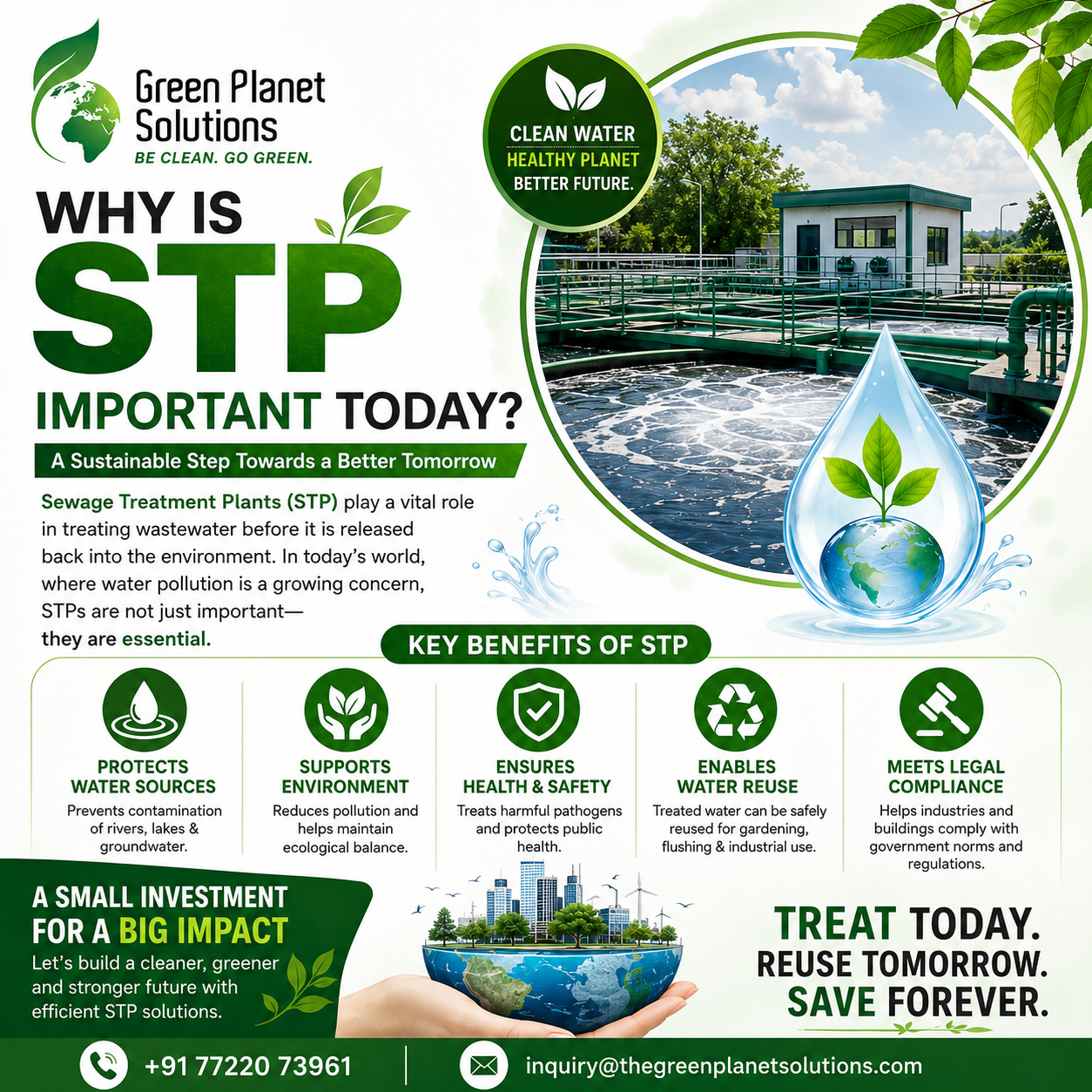
A Sewage Treatment Plant (STP) is one of the most important systems for managing wastewater responsibly. Whether it’s installed in a residential society, hotel, hospital, commercial building, or industrial facility, an STP helps treat wastewater, protects the environment, and enables water reuse. However, even the most advanced STP can lose efficiency if it is not operated and maintained properly.
Many businesses experience problems such as foul odors, poor water quality, high operating costs, or unexpected breakdowns simply because of avoidable mistakes. Understanding these common issues can help improve plant performance, reduce maintenance expenses, and extend equipment life.
1. Ignoring Regular Maintenance
Routine maintenance is the backbone of an efficient STP. Pumps, blowers, motors, valves, and pipelines require periodic inspection to ensure smooth operation. Delaying maintenance often leads to equipment failure, costly repairs, and reduced treatment efficiency.
How to avoid it:
- Follow a preventive maintenance schedule.
- Inspect mechanical components regularly.
- Replace worn-out parts before they fail.
2. Poor Sludge Management
Sludge naturally accumulates during wastewater treatment. If it is not removed on time, it can reduce tank capacity, increase odors, and negatively impact biological treatment.
How to avoid it:
- Monitor sludge levels regularly.
- Schedule timely sludge removal.
- Dispose of sludge according to environmental regulations.
3. Overloading the STP
Every STP is designed to handle a specific wastewater capacity. When wastewater flow exceeds the plant’s design limit, treatment efficiency drops significantly.
Common reasons include building expansion, increased occupancy, or industrial process changes.
How to avoid it:
- Monitor daily wastewater generation.
- Upgrade the plant if demand increases.
- Balance wastewater flow wherever possible.
4. Neglecting Aeration Systems
Aeration provides oxygen to beneficial bacteria that break down organic waste. Poor aeration weakens bacterial activity, resulting in foul odors and incomplete treatment.
How to avoid it:
- Regularly inspect air blowers.
- Clean diffusers periodically.
- Maintain proper dissolved oxygen levels.
5. Using Harmful Chemicals
Strong disinfectants, acids, solvents, oils, and industrial chemicals can kill the microorganisms responsible for wastewater treatment.
Without healthy bacteria, the entire treatment process becomes inefficient.
How to avoid it:
- Avoid discharging harmful chemicals into the drainage system.
- Educate employees and residents about proper waste disposal.
- Install pre-treatment systems if necessary.
6. Ignoring Water Quality Testing
Many operators only notice problems after the treated water quality deteriorates. Regular testing helps identify issues before they become serious.
Important parameters include:
- pH
- BOD
- COD
- TSS
- Dissolved Oxygen
How to avoid it:
- Conduct laboratory testing regularly.
- Maintain proper operational records.
- Take corrective action immediately if results exceed acceptable limits.
7. Poor Operator Training
Even an advanced STP cannot perform efficiently without skilled operators. Incorrect settings, delayed responses, or improper handling often reduce plant performance.
How to avoid it:
- Provide regular operator training.
- Develop standard operating procedures (SOPs).
- Keep maintenance manuals easily accessible.
8. Delaying Equipment Repairs
Small issues such as leaking pipes, noisy pumps, or malfunctioning sensors may seem minor but can quickly develop into expensive failures.
How to avoid it:
- Repair equipment as soon as faults are detected.
- Maintain spare parts inventory.
- Perform routine inspections.
9. Ignoring Energy Efficiency
Blowers, pumps, and motors consume a significant amount of electricity. Poorly maintained equipment increases energy consumption and operating costs.
How to avoid it:
- Use energy-efficient motors.
- Install variable frequency drives (VFDs) where appropriate.
- Optimize equipment operating schedules.
10. Not Scheduling Professional STP Audits
Many operational issues remain unnoticed without expert evaluation. Professional audits help identify hidden inefficiencies, equipment wear, and opportunities for improvement.
How to avoid it:
- Schedule annual or biannual STP inspections.
- Review plant performance data regularly.
- Implement recommendations from experienced professionals.
Best Practices for Maximum STP Efficiency
Maintaining a high-performing STP does not require complicated processes. A few proactive steps can make a significant difference:
- Perform preventive maintenance consistently.
- Monitor wastewater quality regularly.
- Maintain healthy bacterial activity.
- Train plant operators.
- Avoid overloading the system.
- Repair equipment without delay.
- Conduct periodic professional inspections.
How Green Planet Solutions Can Help
At Green Planet Solutions, we provide complete sewage treatment solutions designed for reliable, efficient, and sustainable wastewater management. From STP design and installation to maintenance, upgrades, and technical support, our team helps organizations maximize plant performance while meeting environmental compliance standards.
Whether you operate a residential complex, hospital, hotel, educational institution, commercial building, or industrial facility, we deliver customized solutions that reduce operational costs and improve water reuse efficiency.
Conclusion
A Sewage Treatment Plant is a long-term investment in environmental sustainability and water conservation. However, even the best system requires proper operation and regular maintenance to perform at its full potential. By avoiding these common mistakes and adopting preventive maintenance practices, businesses can improve treatment efficiency, reduce costs, and ensure compliance with environmental regulations.
With expert guidance and timely servicing from Green Planet Solutions, your STP can deliver reliable performance for years to come.
Ready to improve your STP performance?
📞 Call: +91 77220 73961
📧 Email: inquiry@thegreenplanetsolutions.com