Tag: composting

  • Turning Waste into Wealth: A Green Transformation by Green Planet Solutions

    Turning Waste into Wealth: A Green Transformation by Green Planet Solutions


    Introduction

    Waste management has become a major challenge for urban societies and businesses in India. Increasing population, daily waste generation, and limited disposal systems have created serious environmental and hygiene issues. This success story highlights how Green Planet Solutions transformed a waste problem into a sustainable and profitable solution.


    The Problem: Rising Waste Crisis

    A residential society was facing continuous issues due to unmanaged wet waste.

    Key Challenges:

    • Daily generation of 150–200 kg wet waste
    • Overflowing garbage bins
    • Foul smell and pest infestation
    • High dependency on municipal collection
    • Increasing complaints from residents

    Despite regular waste collection, the situation kept getting worse, affecting both hygiene and living standards.


    The Need for a Sustainable Solution by Green Planet Solutions

    The society realized that traditional waste disposal methods were not enough.

    They needed a solution that could:

    • Manage waste at the source
    • Reduce environmental impact
    • Comply with government regulations
    • Lower long-term costs
    • Provide a permanent and scalable system

    This is when Green Planet Solutions stepped in with a smart and efficient approach.


    The Solution: Composting Machine Installation by Green Planet Solutions

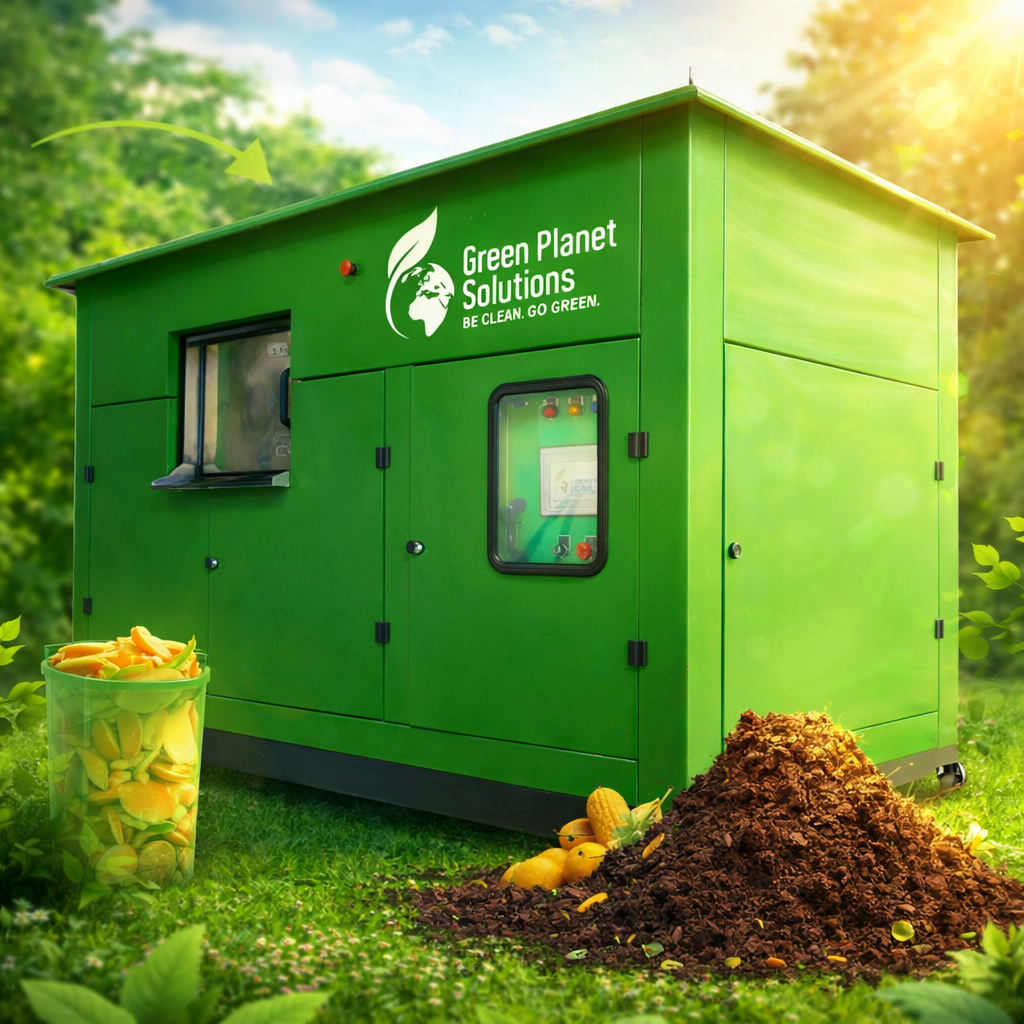
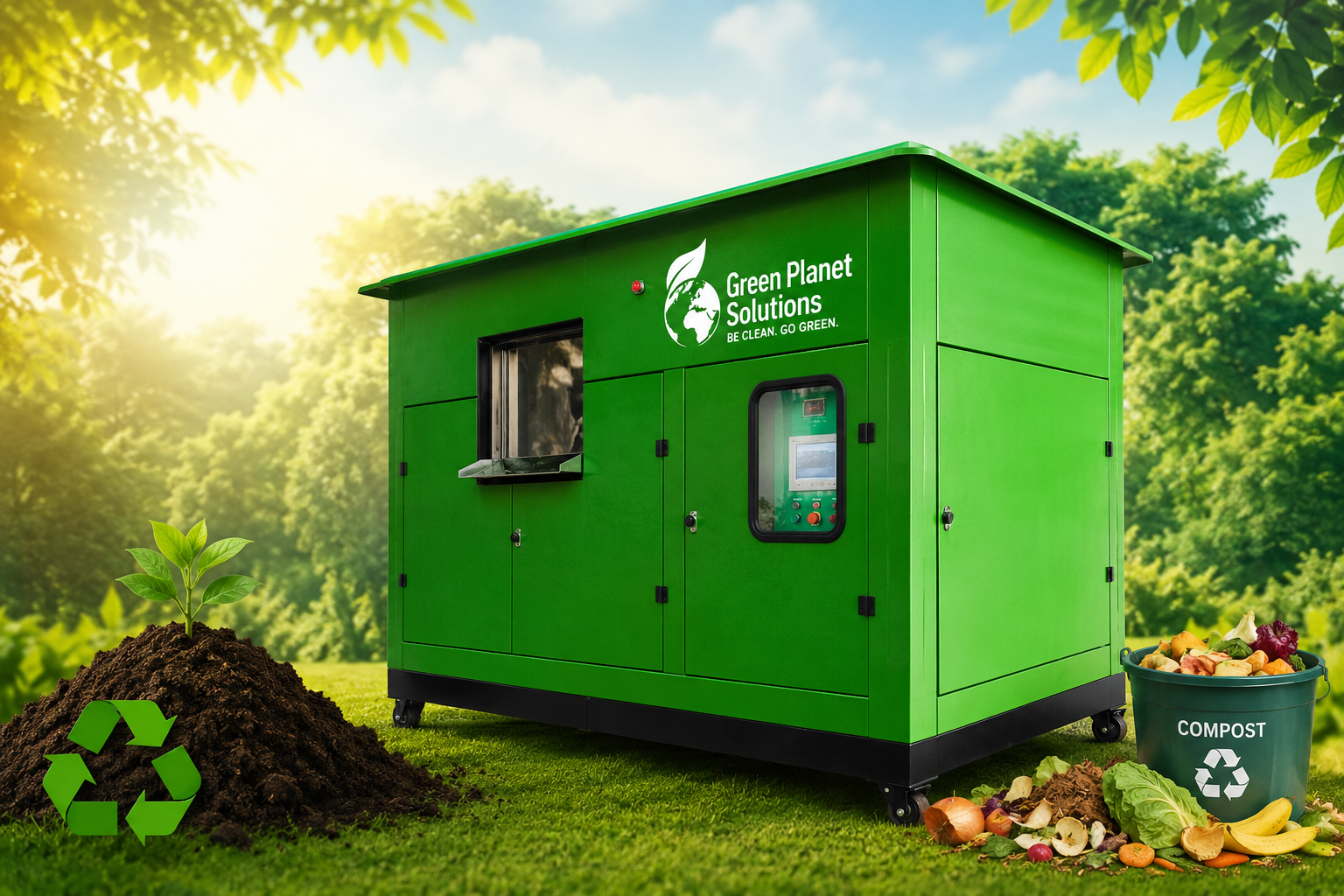
    After analyzing the waste generation pattern, Green Planet Solutions recommended installing an Organic Waste Converter (composting machine).

    Implementation Details: Green Planet Solutions

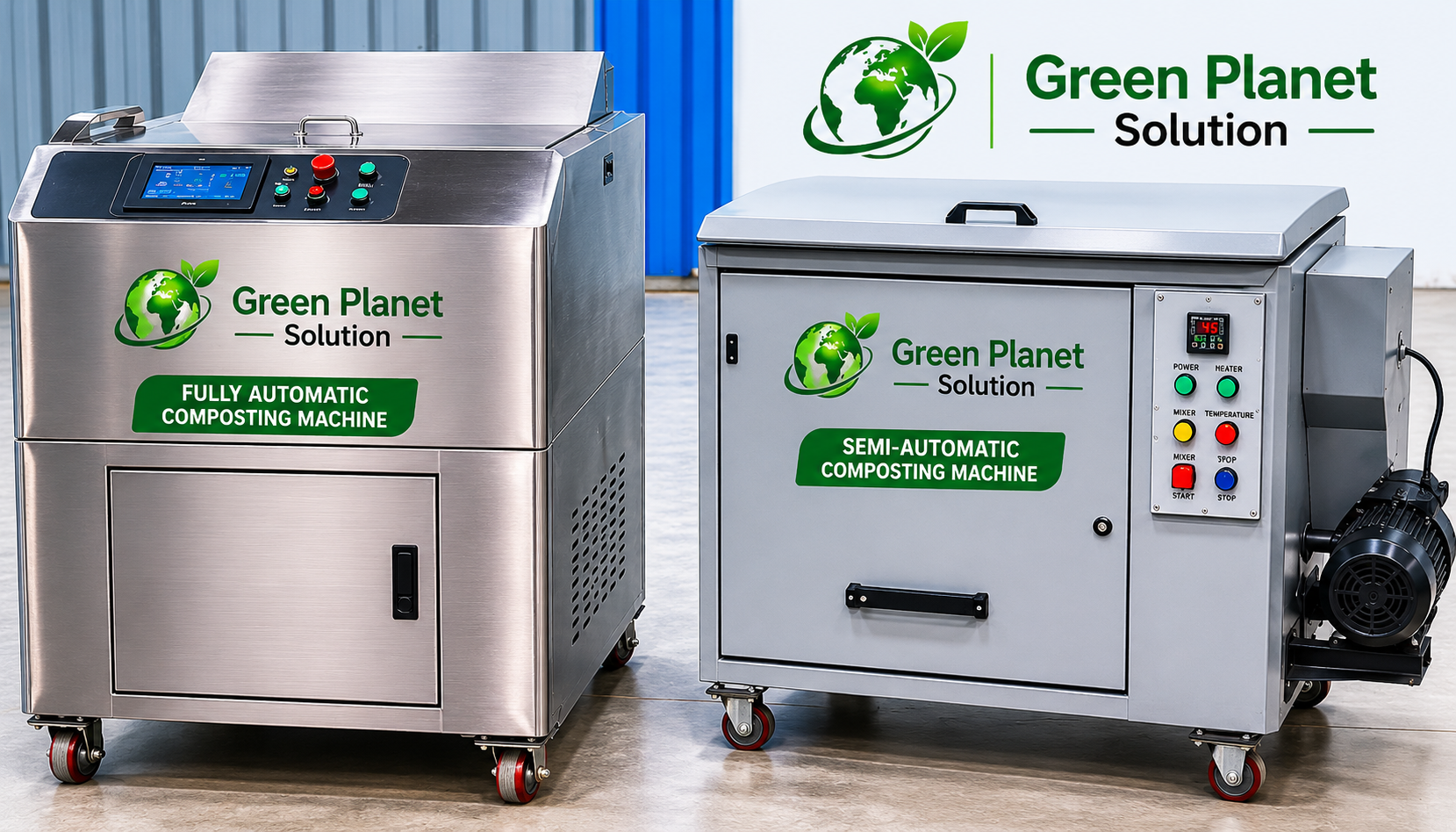
    • Fully automatic composting machine
    • Capacity of 200 kg per day
    • Installed within society premises
    • Easy to operate with minimal manpower

    Working Process:

    1. Daily collection of wet waste
    2. Feeding waste into the machine
    3. Processing using heat and microorganisms
    4. Conversion into semi-compost within 24 hours
    5. Final compost ready in a few days

    The Transformation: Waste to Value

    Within a short period, the society experienced a remarkable transformation.

    Key Outcomes:

    • 90% reduction in waste sent to landfill
    • Elimination of foul smell and pests
    • Cleaner and more hygienic environment
    • Reduced waste management costs
    • Production of organic compost

    Use of Compost:

    • Gardening and landscaping
    • Sale for additional income
    • Promoting sustainable living within the community

    Measurable Impact

    The results were not just visible but also measurable.

    Before vs After:

    • Waste problem: High → Controlled
    • Odour: Severe → Eliminated
    • Costs: Increasing → Reduced
    • Environmental impact: Negative → Positive

    Why Green Planet Solutions Stands Out

    Green Planet Solutions provided more than just a product—they delivered a complete waste management system.

    Their Approach Included:

    • Detailed site analysis
    • Customized solution design
    • Professional installation
    • Training and support
    • Regular maintenance guidance

    This ensured smooth implementation and long-term success.


    Conclusion: Turning Waste into Opportunity

    This success story proves that waste is not a problem—it is an opportunity when managed correctly. By adopting composting technology, societies and businesses can reduce costs, improve hygiene, and contribute to a greener environment.

    Final Takeaway:

    • Waste can be reduced at the source
    • Sustainable solutions are cost-effective
    • Composting is the future of waste management
  • 🌱 Top benefits of installing a Sewage Treatment Plant in societies

    🌱 Top benefits of installing a Sewage Treatment Plant in societies

    Water is life. And yet millions of litres of it go down the drain every single day in residential societies across India. Sewage Treatment Plants are changing that story. If your housing society hasn’t installed one yet here’s why it should be at the top of your agenda with Sewage Treatment Plants.

    A Sewage Treatment Plant treats wastewater so it can be safely reused. For gardening, flushing and more. Reducing dependence on freshwater sources with Sewage Treatment Plants.

    1. 💧 Water savings

    Treated water from a Sewage Treatment Plant can be reused for landscaping, car washing toilet flushing and even fire-fighting systems. A typical residential society can recycle up to 60–70% of its water consumption with Sewage Treatment Plants drastically reducing its freshwater demand and monthly utility bills.

    2. 📋 Compliance with government regulations

    In India the Central Pollution Control Board and state bodies mandate Sewage Treatment Plants for housing societies above a size. Installing one keeps your society compliant avoids penalties and positions it as a responsible community with Sewage Treatment Plants.

    3. 🌿 Reduced pollution

    Untreated sewage discharged into rivers, lakes or the ground contaminates drinking water sources and harms local ecosystems. A Sewage Treatment Plant ensures that wastewater is treated before release significantly reducing soil and water pollution in your neighbourhood with Sewage Treatment Plants.

    4. 💰 Long-term cost savings for residents

    Though the initial investment may seem high Sewage Treatment Plants pay for themselves over time. Lower municipal water bills, reduced dependence on water tankers and potential income from selling treated water to industries all contribute to significant long-term savings for every resident with Sewage Treatment Plants.

    5. 🏡 Better hygiene and a society

    Proper sewage treatment eliminates foul odours reduces the risk of disease outbreaks and keeps common areas clean. A society with a Sewage Treatment Plant is a place to live. A fact that directly impacts resident satisfaction and property values with Sewage Treatment Plants.

    6. 📈 Increased property value

    Modern homebuyers and investors are increasingly eco-conscious. A society equipped with a Sewage Treatment Plant signals infrastructure management. And that translates into higher resale and rental values for every flat in the complex with Sewage Treatment Plants.

    7. ♻️ Supporting a circular water economy

    India faces a water scarcity challenge. By treating and reusing wastewater locally residential societies become participants in building a circular water economy. Reducing the burden on municipal water supply systems and contributing to a more sustainable future for all with Sewage Treatment Plants.

    🌍

    Green Planet Solution

    Your partner in infrastructure

    At Green Planet Solution we help residential societies, corporates and institutions design, install and maintain high-performance Sewage Treatment Plants tailored to their specific needs. From assessment and regulatory compliance to after-sales support. We take care of it all so you can focus on building a greener community with Sewage Treatment Plants.

    Ready to make your society more sustainable, with Sewage Treatment Plants? Lets talk.

  • 🌱 Best Composting Machine for Apartments in India

    🌱 Best Composting Machine for Apartments in India

    Introduction

    With the rapid growth of urban living in India, apartments and housing societies have become the backbone of modern cities. However, along with this convenience comes a serious challenge—managing daily waste efficiently. A significant portion of this waste is organic or wet waste generated from kitchens, which often ends up in landfills, causing pollution, foul odors, and environmental damage. In this scenario, composting machine have emerged as a smart and sustainable solution, helping societies convert waste into valuable compost while maintaining cleanliness and hygiene.

    Understanding Composting Machines

    A composting machine, also known as an Organic Waste Converter (OWC), is designed to process kitchen waste and transform it into nutrient-rich compost through controlled biological processes. These machines use a combination of heat, aeration, and microbial activity to break down organic matter quickly and efficiently. Unlike traditional composting methods, which can take weeks or months, modern composting machines can produce compost within a much shorter time, making them highly suitable for apartment settings where space and time are limited.

    Why Composting Machines are Essential for Apartments

    Apartment complexes generate a substantial amount of wet waste daily, often ranging from small quantities in individual flats to large volumes in residential societies. Without proper waste management, this leads to sanitation issues, increased dependency on municipal services, and rising disposal costs. Composting machines address these challenges by reducing waste volume significantly and eliminating the need for external waste transportation. They also help in maintaining a cleaner environment within the premises and promote a culture of sustainability among residents.

    Features of the Best Composting Machine

    The best composting machines for apartments are designed to be efficient, compact, and user-friendly. They come equipped with advanced odor control systems, ensuring that the composting process remains hygienic and does not create discomfort for residents. These machines are typically energy-efficient and require minimal manual intervention, especially in fully automatic models. Their compact design allows them to fit into limited spaces, making them ideal for urban housing societies. Additionally, they are built to handle varying waste capacities, ensuring flexibility for both small and large apartment complexes.

    Popular Composting Machine Options in India

    In India, several reliable composting machine providers offer solutions tailored for apartment use. Companies like Green Planet Solutions are known for delivering customized composting systems with end-to-end support, including installation and maintenance. Other brands such as Bioneer, Reddonatura, and Earth Care Equipments have also established themselves in the market with durable and high-performance machines. These machines vary in capacity and automation level, allowing societies to choose the most suitable option based on their specific requirements.

    Choosing the Right Composting Machine

    Selecting the right composting machine for an apartment depends on several important factors. The first consideration is the amount of waste generated daily, as this determines the required capacity of the machine. Space availability is another key factor, as the machine should fit comfortably within the designated area without causing inconvenience. The level of automation also plays a crucial role, with fully automatic machines offering greater convenience and semi-automatic ones providing a more cost-effective alternative. Additionally, factors such as maintenance requirements, electricity consumption, and after-sales support should be carefully evaluated before making a decision.

    Cost of Composting Machines in India

    The price of composting machines in India varies depending on their capacity, features, and level of automation. Smaller units designed for individual households are relatively affordable, while larger machines suitable for apartment societies require a higher investment. Although the initial cost may seem significant, it is important to consider the long-term savings in waste management expenses and the environmental benefits they provide. Over time, composting machines prove to be a cost-effective solution that adds value to residential communities.

    Benefits of Installing Composting Machines

    The installation of composting machines in apartments offers multiple advantages. Environmentally, it reduces the burden on landfills and lowers the carbon footprint associated with waste transportation. Financially, it helps societies save on waste collection and disposal costs. Socially, it creates a cleaner and healthier living environment for residents. Moreover, the compost produced can be used for gardening or landscaping within the society, promoting a greener lifestyle and enhancing the overall appeal of the property.

    Real Impact in Urban India

    Many apartment societies across India have successfully adopted composting machines and transformed their waste management systems. These communities have not only reduced their waste output but also become more self-sufficient and environmentally responsible. Such initiatives demonstrate how small changes at the community level can lead to significant positive impacts on the environment.

    Conclusion

    In today’s world, where environmental concerns are becoming increasingly urgent, adopting sustainable waste management practices is no longer optional. Composting machines provide an effective and practical solution for apartments, enabling them to manage their waste responsibly while contributing to a cleaner and greener future. Investing in the right composting machine is a step towards sustainability, efficiency, and long-term benefits for both residents and the environment.

    For more Information :- https://www.thegreenplanetsolutions.com/index.html

  • Biogas Subsidy India 2026: Complete Guide

    Biogas Subsidy India 2026: Complete Guide

    Introduction

    With increasing fuel prices and growing environmental concerns, biogas plants are emerging as a reliable and sustainable energy solution in India. To encourage adoption, the Government of India offers subsidies and financial support to individuals, farmers, and businesses investing in biogas technology.

    This guide explains the available subsidies, eligibility criteria, and application process for biogas plants in India in 2026.


    Major Government Scheme for Biogas

    The primary initiative supporting biogas plants is the National Bioenergy Programme, implemented by the Ministry of New and Renewable Energy (MNRE). This program aims to promote clean energy generation through organic waste and reduce dependence on fossil fuels.

    The scheme covers a wide range of users, including households, farmers, and industries, supporting both small-scale and large-scale biogas plants.


    Subsidy for Small Biogas Plants (Household Level)

    Household plants receive financial assistance based on plant capacity and location. The subsidy helps reduce the initial installation cost, making it affordable for families.

    Additional incentives may be provided for components like slurry management systems and biogas-based applications. Special categories such as rural households and agricultural users often receive higher benefits.


    Subsidy for Medium and Large Biogas Plants

    For commercial and industrial applications, the government provides higher financial support. This includes projects such as bio-CNG plants, power generation units, and large waste-to-energy systems.

    Industries like hotels, dairy farms, food processing units, and municipal waste projects can benefit significantly from these subsidies. The financial support is often calculated based on plant capacity or energy output.


    Special Benefits for Priority Categories

    The government provides additional support to encourage inclusive development. Extra subsidies are available for:

    • Rural and agricultural users
    • Socially disadvantaged groups
    • Institutions such as gaushalas
    • Projects in specific regions requiring development support

    This ensures that sustainable energy solutions reach all sections of society.


    Other Supporting Government Initiatives

    Apart from direct subsidies, several initiatives promote the growth of biogas in India:

    GOBAR-Dhan Scheme focuses on converting organic waste into energy and organic manure, especially in rural areas.

    SATAT Initiative supports the production and sale of compressed biogas, creating income opportunities for plant owners.

    State-Level Programs provide additional incentives and support through local authorities, further reducing the cost of installation.


    Eligibility Criteria

    To qualify for a biogas subsidy, applicants must meet certain basic requirements:

    • Availability of organic waste such as kitchen waste or animal waste
    • Sufficient space for plant installation
    • Compliance with technical guidelines
    • Application through authorized agencies or approved providers

    How to Apply for Subsidy

    The process of applying for a subsidy is simple and structured:

    1. Assess your requirement and feasibility
    2. Contact an authorized biogas provider or agency
    3. Submit the application through the appropriate channel
    4. Site inspection and approval by authorities
    5. Installation of the biogas plant
    6. Verification and release of subsidy

    Working with an experienced company can make this process smooth and hassle-free.


    Benefits of Biogas Subsidy

    Government support makes biogas plants more accessible and financially viable. Key benefits include:

    • Reduced installation cost
    • Savings on LPG and electricity
    • Efficient waste management
    • Production of organic fertilizer
    • Environment-friendly energy solution

    Why 2026 is the Right Time

    India is strongly focusing on renewable energy and sustainable development. With rising fuel costs and increasing awareness about environmental protection, the demand for biogas solutions is growing rapidly.

    Government support, combined with long-term cost savings, makes this the ideal time to invest in a biogas plant.


    How Green Planet Solution Can Help

    Green Planet Solution provides end-to-end support for biogas plant installation. From selecting the right system to assisting with subsidy applications, the company ensures a smooth and efficient process.

    With expert guidance and reliable service, customers can maximize their benefits and transition to clean energy with confidence.


    Conclusion

    plants are a smart investment for both economic and environmental benefits. Government subsidies in 2026 make these systems more affordable and accessible than ever before.

    Adopting biogas is not just a step towards saving money, but also a contribution towards a cleaner and greener future.


    Call to Action

    Want to install a biogas plant with government subsidy?
    Contact Green Planet Solution today and take the first step towards sustainable energy.

    For More Knowledge:- https://thegreenplanetsolutions.com/blog/how-to-choose-the-right-biogas-plant-for-maximum-savings/

  • From Waste to Wealth: How Innovative Hotels Are Cutting Fuel Costs by 50%

    From Waste to Wealth: How Innovative Hotels Are Cutting Fuel Costs by 50%

    Imagine a world where your Hotels kitchen’s biggest headache—mountains of food waste—becomes your biggest financial asset.

    It sounds like a pipe dream, but across India, savvy hoteliers are turning their back on the “buy-burn-discard” cycle. They aren’t just “going green”; they’re going smart. By installing on-site biogas systems, these businesses are cutting their LPG dependence by half, turning organic scraps into high-quality cooking fuel.

    The LPG Trap: A Constant Battle with the Bottom Line

    If you run a commercial kitchen, you know the drill: global oil prices fluctuate, and your monthly overhead follows suit. You’re at the mercy of external suppliers and volatile markets. For many, fuel isn’t just an expense; it’s a leak in the bucket that threatens profitability every single month.

    But what if the solution wasn’t arriving on a delivery truck, but was already sitting in your bins?

    The “Aha!” Moment: Closing the Loop

    Every day, your kitchen generates peels, scraps, and leftovers. Usually, you pay someone to haul that waste away. You’re effectively paying twice: once for the food that wasn’t used, and again to get rid of it.

    Biogas technology flips the script. Through a natural decomposition process (anaerobic digestion), your organic waste is converted into methane-rich gas.

    • The Input: Yesterday’s potato peels and buffet leftovers.
    • The Output: Clean, blue-flame gas piped directly back into your kitchen.

    Why It’s a Strategic Power Move

    It’s easy to dismiss this as “just an environmental thing,” but the math tells a different story:

    • 50% Fuel Reduction: Many hotels report cutting their LPG consumption by up to half. That’s money straight back into your capital expenditure fund.
    • Waste Management on Autopilot: No more foul odors near the loading dock or high transportation fees for waste disposal.
    • A “Green” Edge: Today’s traveler isn’t just looking for a soft pillow; they’re looking for a conscience. Promoting a zero-waste kitchen is a massive branding win that builds genuine guest loyalty.

    Is It Worth the Investment?

    Yes, there is an initial setup cost. But unlike a new lobby carpet, a biogas plant actually pays you back. Between the fuel savings and the elimination of waste disposal fees, most systems see a healthy Return on Investment (ROI) within a few short years. After that? It’s essentially free energy.

    The Future of Hospitality is Circular

    The industry is shifting. The most successful hotels of the next decade won’t just be the most luxurious—they’ll be the most resource-independent. Whether you run a boutique heritage stay or a high-volume city hotel, if you have a kitchen, you have a fuel source.

    The question isn’t whether you can afford to switch to biogas—it’s how much longer you can afford to throw your fuel in the trash.

    For More Information:- https://thegreenplanetsolutions.com/blog/

  • 🌱 Why Choose Green Planet Solution for Composting Machines?

    🌱 Why Choose Green Planet Solution for Composting Machines?

    ❓ Where does your daily waste really go?

    Every day, homes, restaurants, and societies generate tons of food waste. Most of it ends up in landfills, causing pollution, foul smells, and harmful greenhouse gases like methane. According to United Nations Environment Programme, food waste is one of the major contributors to environmental damage globally.

    But what if your waste could become a resource instead of a problem?

    That’s where Green Planet Solution comes in.


    🌍 A Smarter Way to Manage Waste

    Modern waste management is all about handling waste at the source. With Green Planet Solution’s composting machines, you can convert organic waste into compost without sending it to dumping grounds.

    👉 Learn more about composting benefits from Environmental Protection Agency:
    https://www.epa.gov/recycle/composting-home

    This approach not only reduces pollution but also supports a circular economy.


    ⚙️ Simple, Automatic, and Hassle-Free

    Green Planet Solution machines are designed for ease of use. They are fully automatic, meaning:

    • No technical expertise required
    • Minimal manpower
    • Smooth daily operations

    This makes them ideal for:

    • Housing societies
    • Restaurants & hotels
    • Hospitals
    • Corporate offices

    ⏱️ Fast Composting That Saves Time

    Traditional composting can take weeks. But these machines convert waste into compost in just 24 hours.

    👉 Read more about composting processes here:
    https://www.nationalgeographic.com/environment/article/composting

    Faster processing means better efficiency, especially for businesses handling large volumes of waste.


    🌿 Odour-Free & Eco-Friendly Solution

    One major concern with waste management is smell and hygiene. These machines are built to be odour-free and clean, making them suitable even in urban environments.

    They also help:

    • Reduce landfill waste
    • Lower carbon emissions
    • Improve environmental sustainability

    👉 Learn about methane emissions from waste:
    https://www.unep.org/news-and-stories/story/how-food-waste-harms-climate


    💰 Cost-Effective in the Long Run

    Waste disposal is expensive—transportation, labor, and landfill charges add up.

    With Green Planet Solution, you can:

    • Cut transportation costs
    • Reduce waste handling expenses
    • Avoid government penalties

    👉 Solid waste management rules in India:
    https://cpcb.nic.in/uploads/MSW/SWM_2016.pdf


    🌾 Turn Waste into Valuable Compost

    Instead of throwing waste, you create nutrient-rich compost useful for:

    • Gardening
    • Landscaping
    • Agriculture

    👉 Benefits of compost in soil:
    https://www.fao.org/soils-portal/soil-management/management-of-some-problem-soils/organic-soils/en/

    This promotes organic farming and reduces chemical fertilizer use.


    🔧 Advanced Technology with Strong Support

    Green Planet Solution offers machines built with durable materials and smart technology.

    They also provide:

    • Installation support
    • Training
    • After-sales service

    👉 Explore their solutions:
    https://www.thegreenplanetsolutions.com


    🚀 Why Green Planet Solution Stands Out

    ✔ Fully automatic machines
    ✔ Fast composting (24 hours)
    ✔ Odour-free operation
    ✔ Cost-saving solution
    ✔ Eco-friendly approach
    ✔ Reliable support


    🌱 Final Thoughts

    Waste is not useless—it’s just unused potential.

    By choosing Green Planet Solution, you’re investing in a cleaner environment, smarter waste management, and a sustainable future.

  • 🌱 Why Composting Machines Make Waste Management Easy & Sustainable for the Future

    🌱 Why Composting Machines Make Waste Management Easy & Sustainable for the Future

    ❓ Is managing waste really that difficult?

    Every day, homes, restaurants, and societies generate large amounts of organic waste. Most of it is simply thrown away, ending up in landfills where it creates pollution, foul odors, and harmful gases. Managing this waste manually can feel complicated, time-consuming, and messy.

    👉 But what if waste management could be simple, fast, and completely hassle-free?

    That’s exactly what composting machines are designed to do.


    ♻️ What is a Composting Machine?

    A composting machine is an advanced solution that converts organic waste like food scraps, vegetable peels, and leftovers into nutrient-rich compost.

    Unlike traditional composting, which takes weeks or months, these machines automate the entire process and deliver results within hours or a few days.

    It’s a smart combination of technology and sustainability—making waste management easier than ever.


    ⚡ Why Composting Machines Make Waste Management Easy

    🛠️ Simple and User-Friendly

    You don’t need expert knowledge to use a composting machine. Just add organic waste, and the machine handles everything—from grinding to decomposition.

    ⏱️ Saves Time and Effort

    Traditional composting requires constant monitoring. Composting machines speed up the process and reduce manual effort, making them ideal for busy environments.

    🚫 No Odor, No Mess

    Modern machines are designed to control smell and prevent pests, ensuring a clean and hygienic experience.

    📍 On-Site Waste Management

    Instead of transporting waste elsewhere, composting machines allow you to process waste right where it is generated—saving cost and effort.


    🌍 How Composting Machines Support a Sustainable Future

    🌱 Reduces Landfill Waste

    A large portion of waste is organic. Composting machines reduce the amount sent to landfills, easing environmental pressure.

    🌬️ Lowers Pollution

    By processing waste locally, these machines prevent the release of harmful gases like methane, helping fight climate change.

    🔄 Promotes Circular Economy

    Waste is not wasted anymore—it is converted into useful compost that can be reused in gardens, farms, and landscaping.

    💚 Encourages Eco-Friendly Practices

    Using composting machines builds awareness and responsibility toward sustainable living in individuals and organizations.


    🏢 Perfect for Modern Needs

    Composting machines are highly suitable for:

    • Restaurants and hotels with high food waste
    • Housing societies and apartments
    • Corporate offices and campuses
    • Municipal and government projects

    They provide a practical solution for managing waste efficiently in today’s fast-paced and space-limited environments.


    📚 Related Topics You Can Explore


    ✅ Conclusion

    Composting machines are not just a convenience—they are a necessity for the future.

    They simplify waste management, save time and cost, reduce pollution, and promote sustainability—all in one solution.

    👉 In a world where waste is growing rapidly, composting machines turn a big problem into a simple, smart opportunity.

    Choosing this technology today means building a cleaner, greener, and more sustainable tomorrow. 🌱

  • 🌱 Why Composting is Important in Restaurants and Society

    🌱 Why Composting is Important in Restaurants and Society

    ❓ Where does your food waste really go?

    Every day, restaurants, homes, and societies generate a large amount of food waste. Most of it is thrown away without thinking. But this waste doesn’t disappear—it ends up in landfills, causing pollution, bad odors, and harmful gases.

    👉 What if this waste could be turned into something useful?

    That’s where composting becomes important.


    ♻️ What is Composting?

    Composting is a natural process that converts organic waste like food scraps, vegetable peels, and leftover meals into nutrient-rich compost.

    This compost can be used as a natural fertilizer to improve soil quality and plant growth.


    🍽️ Importance of Composting in Restaurants

    https://brownliving.in/cdn/shop/articles/composting-services-222290.jpg?v=1703200386
    https://oklininternational.com/app/uploads/2015/09/GG50-Side-angle.png
    https://m.media-amazon.com/images/I/81TdRwPNCBL._AC_UF1000%2C1000_QL80_.jpg

    Restaurants produce a high volume of food waste every day. Composting helps in many ways:

    1. Reduces Waste Disposal Costs

    Managing waste on-site reduces the cost of transportation and disposal.

    2. Builds a Strong Brand Image 🌿

    Eco-friendly practices attract environmentally conscious customers.

    3. Improves Hygiene

    Proper waste management prevents foul smells and pest problems.

    4. Supports Government Rules

    Many cities require bulk waste generators like restaurants to manage their organic waste responsibly.


    🏢 Importance of Composting in Society

    Housing societies also generate a large amount of kitchen waste daily. Composting plays a key role here:

    1. Reduces Landfill Waste 🚯

    Organic waste forms a major portion of total waste. Composting reduces pressure on landfills.

    2. Controls Pollution

    It prevents harmful gases like methane from being released into the environment.

    3. Keeps Surroundings Clean 🌍

    Proper waste handling improves hygiene and living conditions.

    4. Produces Useful Compost

    The compost can be used in gardens, reducing the need for chemical fertilizers.


    For more knowledge

    External Links

    ✅ Conclusion

    Composting is not just a method—it’s a responsibility.

    For restaurants, it saves money and builds a strong eco-friendly brand.
    For society, it creates a cleaner and healthier environment.

    👉 Small steps like composting can create a big impact on our future.

  • How India is Managing Organic Waste Through Government Policies

    How India is Managing Organic Waste Through Government Policies

    Introduction

    Have you ever wondered where all the food waste from our homes, restaurants, and markets actually goes?

    Every day, Indian cities generate tons of Organic waste like vegetable peels, leftover food, and garden waste. Unfortunately, much of this waste ends up in landfills where it creates pollution, bad odor, and harmful greenhouse gases.

    To solve this growing problem, the Government of India has introduced several policies and initiatives that focus on proper waste management, composting, and sustainable solutions. These initiatives aim to reduce landfill waste and encourage cities to manage organic waste more responsibly.


    Why Organic Waste Management Matters

    Organic waste makes up nearly half of the total municipal waste in India. When this waste is mixed with other garbage and dumped in landfills, it not only harms the environment but also wastes a valuable resource.

    If managed properly, organic waste can be converted into nutrient-rich compost that benefits agriculture, gardening, and landscaping.

    This is why the government is promoting waste segregation, composting, and decentralized waste processing across cities and towns.


    Solid Waste Management Rules 2016

    One of the most important policies introduced by the Government of India is the Solid Waste Management Rules 2016.

    These rules make it mandatory for households, hotels, institutions, and commercial establishments to separate waste at the source into wet waste and dry waste.

    The policy also encourages local processing of organic waste through composting and other sustainable methods. By managing waste closer to where it is generated, cities can significantly reduce the burden on landfills.


    Swachh Bharat Mission

    The Swachh Bharat Mission has played a huge role in spreading awareness about cleanliness and responsible waste disposal.

    Under this mission, cities are encouraged to improve sanitation and adopt better waste management systems. Many municipal corporations are now promoting community composting and decentralized waste solutions to manage organic waste effectively.


    Smart Cities Mission

    The Smart Cities Mission focuses on building modern and sustainable cities in India. Waste management is a key part of this initiative.

    Smart cities are now adopting innovative technologies for waste processing, including automated composting systems that can convert wet waste into compost within a short time.

    Such technologies help cities reduce transportation costs and manage waste more efficiently.


    Role of Sustainable Waste Solutions

    As waste generation continues to increase, traditional waste disposal methods are no longer enough. Cities need modern and practical solutions that can handle organic waste efficiently.

    This is where companies like Green Planet Solution are contributing by providing innovative composting machines that convert organic waste into compost quickly and safely.

    These machines can be installed in housing societies, hotels, temples, markets, and institutions, helping manage wet waste at the source while supporting the government’s vision of decentralized waste management.


    Conclusion

    India is moving toward a more sustainable future, and effective organic waste management plays a major role in that journey.

    Government initiatives such as the Solid Waste Management Rules 2016, Swachh Bharat Mission, and Smart Cities Mission are encouraging cities to adopt better waste management practices.

    However, achieving a cleaner and greener India requires collaboration between governments, businesses, and citizens. By adopting modern composting solutions and responsible waste practices, we can turn organic waste into a valuable resource and build a more sustainable environment for future generations.

  • How the Government of India Manages Organic Waste: Policies, Initiatives & Sustainable Solutions

    How the Government of India Manages Organic Waste: Policies, Initiatives & Sustainable Solutions

    Table of Contents

    1. Introduction
    2. What is Organic Waste?
    3. Organic Waste Problem in Indian Cities
    4. Government Policies for Organic Waste Management
    5. Key Government Initiatives in India
    6. Positive Impact of Government Waste Management Programs
    7. Role of Technology and Composting Machines
    8. How Green Planet Solution Supports Government Waste Management Goals
    9. Frequently Asked Questions (FAQ)
    10. Conclusion

    Introduction

    India generates millions of tons of waste every day, and nearly 50–60% of it is organic waste such as food waste, vegetable scraps, garden waste, and biodegradable materials. If not properly managed, this waste ends up in landfills, causing pollution, bad odors, and harmful greenhouse gas emissions.

    To tackle this challenge, the Government of India has introduced several policies and initiatives to promote sustainable organic waste management. These initiatives focus on segregation at source, composting, recycling, and decentralized waste processing.

    Proper organic waste management not only helps keep cities clean but also creates valuable compost that supports agriculture and environmental sustainability.


    What is Organic Waste?

    Organic waste refers to biodegradable waste that naturally decomposes. Common examples include:

    • Food leftovers
    • Fruit and vegetable peels
    • Garden waste and leaves
    • Agricultural residues
    • Kitchen waste from households and restaurants

    This type of waste can be converted into compost, manure, or biogas, making it a valuable resource instead of landfill garbage.


    Organic Waste Problem in Indian Cities

    Rapid urbanization has increased waste generation across India. Major cities produce thousands of tons of waste daily.

    Common challenges include:

    • Lack of waste segregation at source
    • Overflowing landfills
    • Limited composting infrastructure
    • Public awareness gaps

    Organic waste in landfills produces methane gas, which contributes significantly to climate change.


    Government Policies for Organic Waste Management

    The Government of India has implemented several policies to ensure proper waste handling.

    1. Solid Waste Management Rules 2016

    This policy made segregation of waste mandatory. Citizens must separate waste into:

    • Wet waste (organic waste)
    • Dry waste (recyclable waste)
    • Hazardous waste

    It also encourages composting and decentralized waste processing.

    2. Swachh Bharat Mission

    This nationwide campaign promotes cleanliness and scientific waste management.

    Key focus areas include:

    • Door-to-door waste collection
    • Waste segregation awareness
    • Composting infrastructure
    • Smart waste processing solutions

    3. Waste to Wealth Initiative

    The government encourages converting organic waste into valuable resources like compost, biogas, and energy.


    Key Government Initiatives

    Decentralized Composting

    Municipal corporations encourage composting within:

    • Housing societies
    • Hotels and restaurants
    • Markets and institutions

    This reduces transportation costs and landfill burden.

    Biogas Plants

    Organic waste is used to produce biogas for energy generation, helping reduce fossil fuel usage.

    Public Awareness Campaigns

    The government promotes campaigns encouraging citizens to:

    • Use green and blue dustbins
    • Reduce food waste
    • Compost organic waste locally

    Positive Impact of Government Waste Management Programs

    Government initiatives have already started showing positive results.

    Cleaner Cities

    Improved waste collection and segregation have helped many cities maintain better hygiene standards.

    Reduced Landfill Waste

    Organic waste processing reduces the amount of garbage reaching landfills.

    Environmental Protection

    Composting reduces methane emissions and supports sustainable agriculture.

    Employment Opportunities

    Waste management initiatives create jobs in recycling, composting, and waste processing industries.


    Role of Technology in Organic Waste Management

    Technology plays a crucial role in improving waste processing efficiency.

    Modern organic waste composting machines can convert food waste into compost within 24 hours. These machines are ideal for:

    • Housing societies
    • Hotels and restaurants
    • Corporate offices
    • Hospitals
    • Municipal corporations

    Using such systems significantly reduces waste transportation and landfill dependency.


    How Green Planet Solution Supports Government Waste Management Goals

    Companies like Green Planet Solution play an important role in supporting India’s waste management mission.

    Green Planet Solution provides advanced organic waste composting machines that help organizations process food waste efficiently.

    Key benefits include:

    • Rapid composting technology
    • Reduced landfill waste
    • Eco-friendly waste management
    • Support for government sustainability goals

    Their machines are widely used in societies, hotels, institutions, and commercial establishments, helping organizations convert waste into useful compost while contributing to a cleaner environment.


    Frequently Asked Questions (FAQ)

    1. Why is organic waste management important?

    Organic waste management reduces landfill pollution, produces compost, and protects the environment.

    2. What percentage of waste in India is organic?

    Around 50–60% of municipal waste in India is organic waste.

    3. What are the government rules for waste segregation?

    According to Solid Waste Management Rules 2016, waste must be separated into wet, dry, and hazardous waste.

    4. How can societies manage organic waste?

    Housing societies can install composting machines or biogas plants to process kitchen waste locally.

    5. Can organic waste be converted into compost?

    Yes. Organic waste can be converted into nutrient-rich compost that is useful for agriculture and gardening.


    Conclusion

    Organic waste management is a critical step toward building clean, sustainable, and environmentally responsible cities. The Government of India has introduced strong policies and initiatives to encourage waste segregation, composting, and waste-to-resource systems.

    However, successful waste management requires collaboration between government authorities, businesses, and citizens.

    With innovative technologies and solutions from companies like Green Planet Solution, organic waste can be efficiently processed and transformed into valuable resources, supporting India’s mission for a cleaner and greener future.