Tag: waste management

  • Government Regulations on Organic Waste Management in India

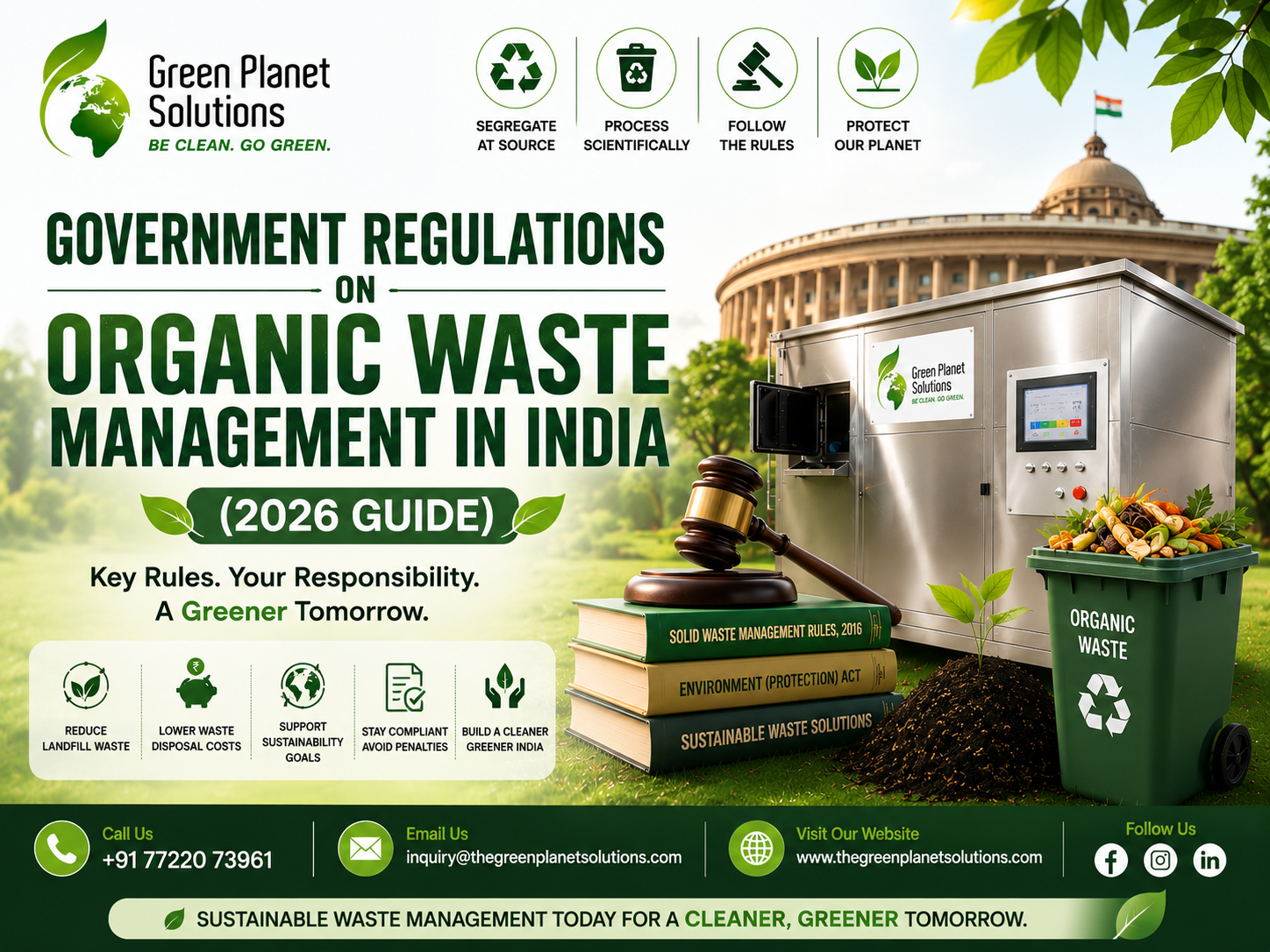
    Government Regulations on Organic Waste Management in India

    Understanding the Latest Rules for Responsible Organic Waste Disposal

    As India continues to urbanize and industrialize, the amount of organic waste generated by households, businesses, hotels, restaurants, hospitals, and institutions is increasing rapidly. Improper disposal of biodegradable waste leads to overflowing landfills, greenhouse gas emissions, and environmental pollution. To address these challenges, the Government of India has introduced regulations that encourage waste segregation, scientific treatment, and sustainable disposal methods. For businesses, understanding these regulations is essential to remain compliant while contributing to a cleaner and greener environment.


    Why Organic Waste Management Regulations Matter

    Organic waste accounts for a significant portion of municipal solid waste generated every day. When this waste is dumped in landfills, it decomposes anaerobically and releases methane—a harmful greenhouse gas. Government regulations focus on reducing landfill dependency, promoting waste segregation at source, encouraging recycling, and converting biodegradable waste into useful products such as compost and biogas.

    Following these regulations not only helps organizations avoid penalties but also improves environmental performance, supports sustainability goals, and strengthens corporate reputation.


    The Solid Waste Management Rules, 2016

    The Solid Waste Management (SWM) Rules, 2016, issued under the Environment (Protection) Act, remain the foundation of India’s waste management framework. These rules apply to households, commercial establishments, industries, educational institutions, healthcare facilities, and government organizations.

    Key requirements include:

    • Segregation of waste into biodegradable, recyclable, and domestic hazardous waste.
    • Scientific processing of biodegradable waste through composting or biomethanation.
    • Reduction of waste sent to landfills.
    • Proper storage, collection, and transportation of municipal solid waste.
    • Encouragement of decentralized waste management systems.

    Organizations generating large quantities of organic waste are encouraged to process waste at the source whenever possible.


    Mandatory Waste Segregation at Source

    One of the most important requirements is waste segregation before collection. Businesses must separate organic waste from recyclable and non-recyclable materials.

    Common biodegradable waste includes:

    • Food leftovers
    • Fruit and vegetable peels
    • Garden waste
    • Coffee grounds
    • Tea leaves
    • Flower waste

    Proper segregation improves compost quality and makes waste processing faster and more efficient.


    Bulk Waste Generators: Additional Responsibilities

    Hotels, restaurants, residential societies, educational institutions, hospitals, office campuses, shopping malls, and event venues are often classified as Bulk Waste Generators (BWGs) because they produce large quantities of waste daily.

    These organizations are expected to:

    • Segregate waste at the source.
    • Process biodegradable waste on-site whenever feasible.
    • Use composting or biogas technologies.
    • Reduce dependency on municipal waste collection systems.
    • Maintain proper waste handling practices.

    Installing a commercial composting machine helps bulk waste generators manage organic waste efficiently while complying with applicable regulations.


    The Importance of On-Site Composting

    Government authorities increasingly encourage decentralized waste management solutions. On-site composting reduces transportation requirements, lowers landfill waste, minimizes carbon emissions, and converts food waste into nutrient-rich compost that can be used for landscaping or gardening.

    Modern commercial composting machines make this process automated, hygienic, odor-controlled, and suitable for businesses of all sizes.


    Compliance Benefits for Businesses

    Complying with waste management regulations offers more than legal protection. Businesses also gain operational and environmental advantages such as:

    • Reduced waste disposal costs
    • Lower transportation expenses
    • Improved environmental performance
    • Better workplace hygiene
    • Enhanced ESG and sustainability reporting
    • Stronger corporate reputation
    • Increased customer trust

    Organizations demonstrating responsible waste management are increasingly viewed as environmentally responsible brands.


    Industries That Should Prioritize Compliance

    Several sectors generate substantial quantities of biodegradable waste and benefit significantly from on-site composting solutions, including:

    • Hotels and Resorts
    • Restaurants and Cafeterias
    • Apartment and Housing Societies
    • Hospitals and Healthcare Facilities
    • Educational Institutions
    • Corporate Offices
    • Food Processing Industries
    • Shopping Malls
    • Religious Places
    • Municipal Bodies

    These organizations can reduce operational costs while supporting India’s sustainability initiatives.


    How Commercial Composting Machines Support Compliance

    Commercial composting machines simplify organic waste management by converting biodegradable waste into compost within a short period under controlled conditions.

    Key advantages include:

    • Fast waste processing
    • Automated operation
    • Odor-control technology
    • Reduced landfill dependency
    • Lower waste transportation costs
    • High-quality compost production
    • Clean and hygienic operation
    • Easy integration into commercial facilities

    These systems help businesses meet regulatory expectations while improving operational efficiency.


    Best Practices for Staying Compliant

    To ensure compliance with organic waste management regulations, businesses should:

    • Segregate waste at the source.
    • Train employees on proper waste handling.
    • Install an on-site composting system where feasible.
    • Maintain equipment regularly.
    • Monitor daily waste generation.
    • Keep records of waste processing and disposal.
    • Conduct periodic internal audits.
    • Continuously improve waste reduction initiatives.

    A proactive approach helps organizations remain compliant while maximizing environmental benefits.


    The Future of Organic Waste Management in India

    India is moving toward a more sustainable and circular approach to waste management. With increasing urbanization, stricter enforcement, and growing environmental awareness, businesses are expected to adopt cleaner technologies that reduce landfill waste and recover valuable resources. Investing in on-site composting today not only supports regulatory compliance but also prepares organizations for future sustainability expectations.


    Conclusion

    Government regulations on organic waste management are driving businesses toward responsible and sustainable waste disposal practices. By adopting waste segregation, reducing landfill dependency, and implementing on-site composting solutions, organizations can meet compliance requirements while lowering costs and protecting the environment.

    Green Planet Solutions offers advanced commercial composting machines designed to help businesses manage organic waste efficiently, support environmental sustainability, and stay aligned with India’s evolving waste management regulations. Investing in smart composting technology today is a practical step toward a cleaner, greener, and more sustainable future.
  • Why Airports Should Invest in Composting Machines

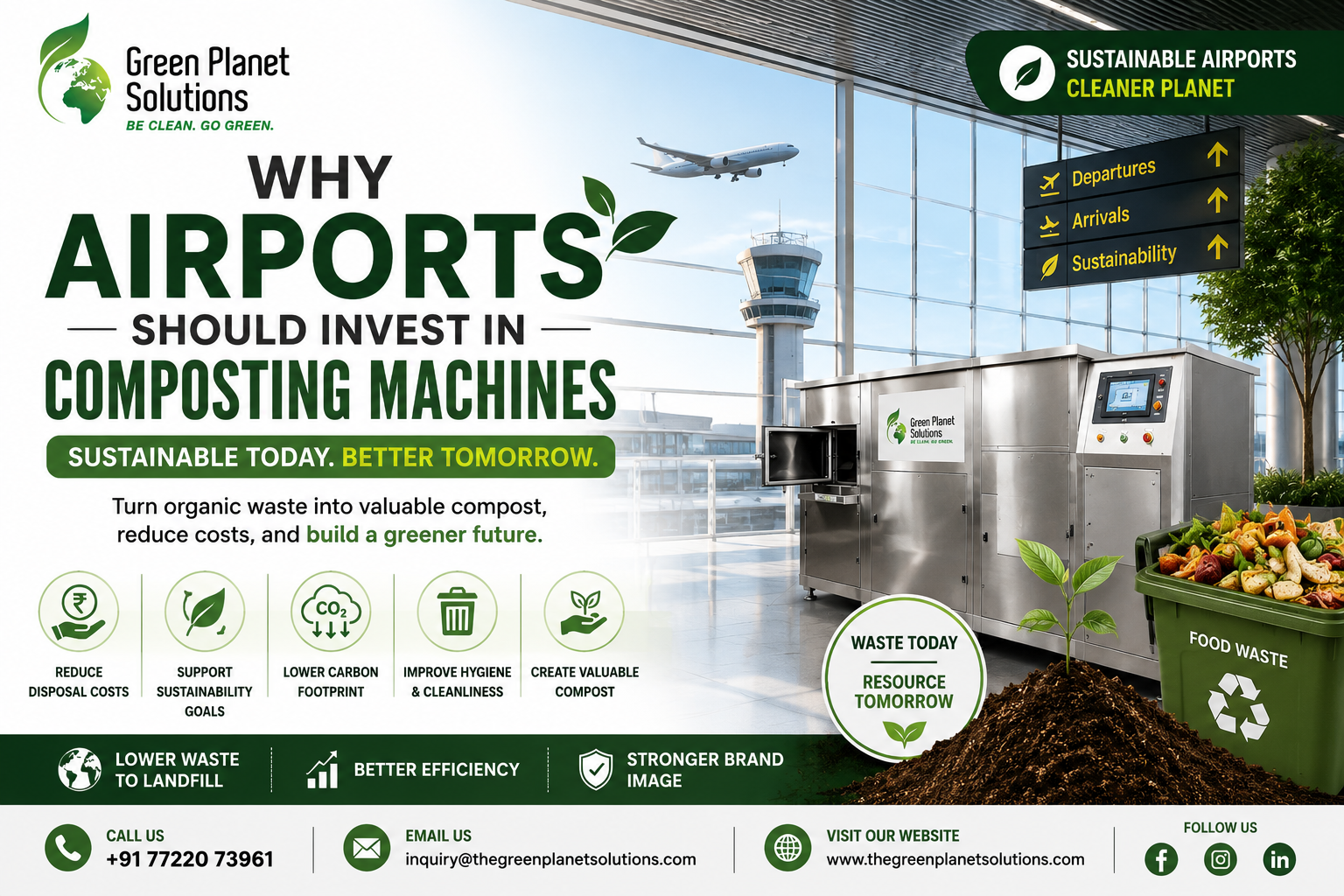
    Why Airports Should Invest in Composting Machines

    Introduction

    Airports are among the busiest public spaces in the world, serving thousands—or even millions—of passengers every year. With restaurants, cafés, airline lounges, food courts, and catering facilities operating around the clock, airports generate a significant amount of organic waste every day. Managing this waste efficiently is becoming increasingly important as environmental regulations tighten and sustainability expectations continue to rise. Instead of sending food waste to landfills, airports can adopt a smarter approach by investing in commercial composting machines.

    These systems convert organic waste into nutrient-rich compost on-site, reducing disposal costs, improving operational efficiency, and supporting long-term environmental goals. For airports aiming to become greener and more sustainable, composting is no longer just an option—it’s a strategic investment.


    The Growing Challenge of Organic Waste at Airports

    Airports produce a continuous stream of biodegradable waste from restaurants, airline catering kitchens, coffee shops, VIP lounges, and terminal food courts. Leftover meals, fruit and vegetable scraps, coffee grounds, paper napkins, and other organic materials often end up in landfill sites.

    Transporting this waste for disposal not only increases operating costs but also contributes to greenhouse gas emissions. As passenger traffic continues to grow, airports need smarter waste management systems that can handle large volumes of organic waste efficiently.


    What Is a Commercial Composting Machine?

    A commercial composting machine is an advanced waste management system that converts food and organic waste into nutrient-rich compost through a controlled biological process. The machine automatically manages temperature, moisture, and aeration, allowing waste to decompose quickly and hygienically.

    Instead of relying on traditional waste collection methods, airports can process organic waste directly on-site, reducing waste volume and creating useful compost for landscaping and green spaces.


    Reduce Waste Disposal Costs

    Waste collection and landfill fees represent a significant operational expense for airports. Large volumes of food waste require regular transportation and disposal, increasing both logistics and labour costs.

    A commercial composting machine can reduce organic waste volume by up to 90%, meaning fewer waste collection trips and lower disposal expenses. Over time, these savings can provide a strong return on investment while improving overall waste management efficiency.


    Support Airport Sustainability Goals using composting machines

    Many airports have committed to achieving ambitious environmental targets, including reducing carbon emissions and minimizing landfill waste.

    By installing composting machines, airports can:

    • Reduce organic waste sent to landfill
    • Lower methane emissions
    • Support circular economy initiatives
    • Improve environmental performance
    • Contribute to carbon reduction goals
    • Strengthen sustainability reporting

    Composting helps airports demonstrate their commitment to responsible environmental management while meeting the expectations of passengers, regulators, and stakeholders.


    Improve Airport Cleanliness and Hygiene using composting machines

    Organic waste stored for long periods can create unpleasant odours and attract pests, especially in busy food service areas.

    Commercial composting machines allow waste to be processed quickly, reducing the time organic materials remain in storage. Modern machines are equipped with odour-control systems, ensuring clean and hygienic operation without affecting airport environments.

    A cleaner waste management process also improves working conditions for airport staff and food service operators.


    Turn Waste into a Valuable Resource using composting machines

    Rather than treating food waste as a disposal problem, airports can convert it into nutrient-rich compost.

    The compost produced can be used for:

    • Airport gardens
    • Landscape maintenance
    • Green belts
    • Decorative plants
    • Tree plantations
    • Public green spaces around airport premises

    This supports sustainable landscaping while reducing the need for chemical fertilizers.


    Enhance Operational Efficiency using composting machines

    Modern composting machines are designed with automation and ease of use in mind.

    Features such as automatic mixing, moisture control, temperature monitoring, and touchscreen operation reduce manual handling and simplify waste management.

    Airport facility teams can process organic waste more efficiently while focusing on other critical operational responsibilities.


    Strengthen Brand Image

    Today’s travellers are increasingly aware of environmental issues and appreciate businesses that invest in sustainable practices.

    An airport that actively reduces waste, recycles organic materials, and promotes green initiatives enhances its reputation as an environmentally responsible organisation. These efforts can improve public perception while supporting international sustainability certifications and green airport initiatives.


    Why Choose Green Planet Solutions?

    Green Planet Solutions provides advanced commercial composting machines designed to meet the needs of high-volume facilities such as airports, transportation hubs, and large commercial campuses.

    Our Advantages

    • Fully automatic operation
    • Up to 90% waste volume reduction
    • Energy-efficient technology
    • Odour-control system
    • Durable stainless-steel construction
    • Low maintenance requirements
    • Multiple machine capacities
    • Professional installation
    • Reliable after-sales support

    Our customised composting solutions help airports efficiently manage organic waste while reducing costs and supporting long-term sustainability goals.


    Conclusion

    As airports continue to expand and passenger numbers increase, effective organic waste management has become more important than ever. Investing in a commercial composting machine allows airports to reduce waste disposal costs, improve hygiene, lower environmental impact, and convert food waste into a valuable resource.

    By adopting smart composting technology, airports can build more sustainable operations while demonstrating leadership in environmental responsibility.

    Ready to Make Your Airport More Sustainable?

    Partner with Green Planet Solutions to implement advanced composting solutions that reduce waste, save money, and create a cleaner, greener airport. Contact our team today to find the right composting machine for your facility.

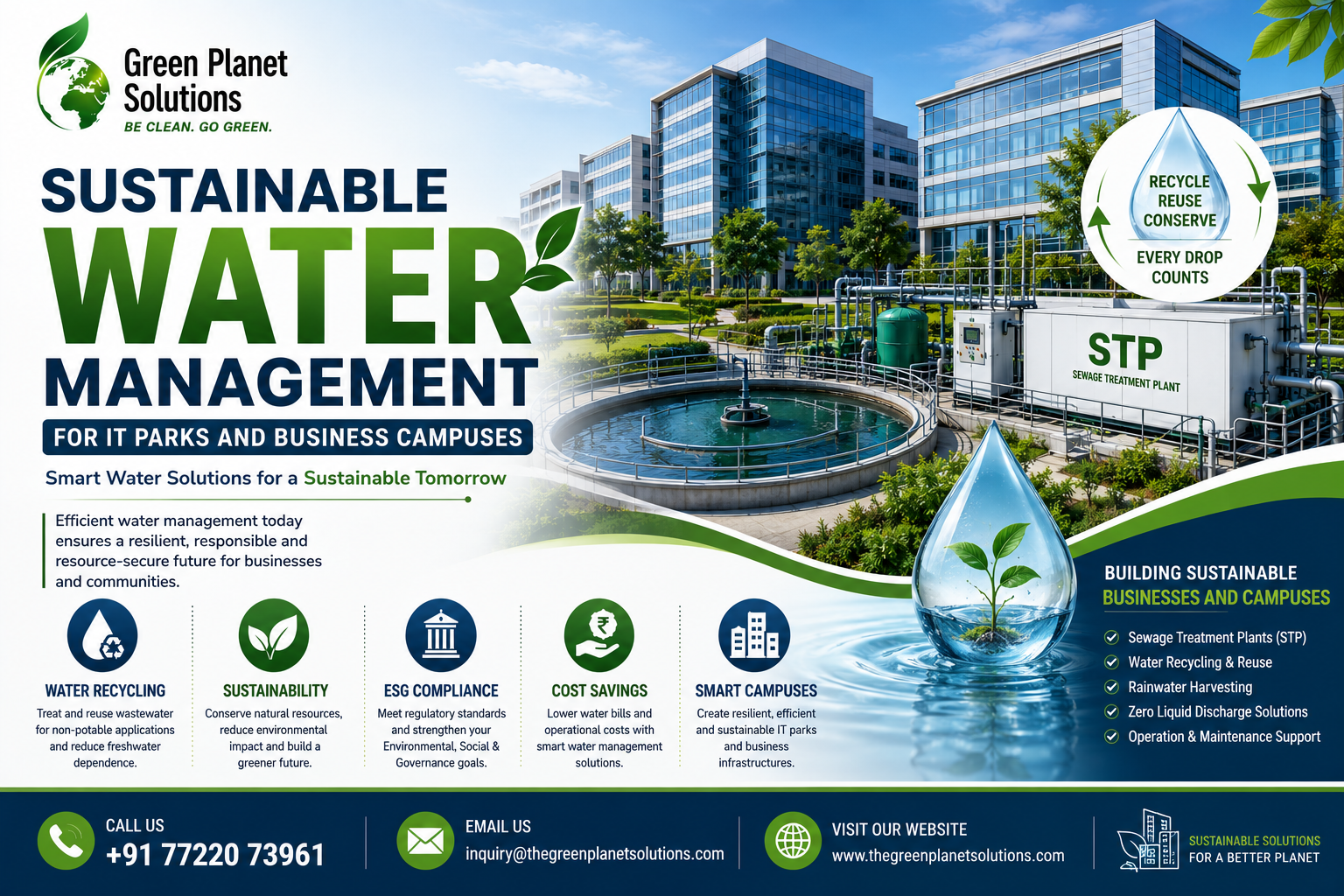
  • Sustainable Water Management for IT Parks and Business Campuses

    Sustainable Water Management for IT Parks and Business Campuses

    How Smart Water Solutions Help Commercial Campuses Reduce Costs, Conserve Resources, and Achieve Sustainability Goals

    As businesses continue to expand and urban infrastructure grows, IT parks and business campuses consume enormous amounts of water every day. From office buildings and cafeterias to cooling towers, landscaping, and sanitation facilities, water plays a critical role in daily operations. However, increasing water scarcity, rising utility costs, and stricter environmental regulations have made sustainable water management a necessity rather than a choice.

    Modern IT parks are now adopting intelligent water management solutions such as Sewage Treatment Plants (STPs), rainwater harvesting systems, water recycling technologies, and smart monitoring systems to reduce freshwater consumption while supporting long-term sustainability. These solutions not only conserve valuable water resources but also improve operational efficiency and strengthen corporate ESG commitments.


    What Is Sustainable Water Management?

    Sustainable water management is the process of using water responsibly while minimizing waste and maximizing reuse. It involves collecting, treating, recycling, and monitoring water to ensure that available resources are used efficiently without compromising future needs.

    For IT parks and commercial campuses, sustainable water management focuses on reducing freshwater dependency through wastewater treatment, rainwater harvesting, and efficient water distribution systems.


    Why IT Parks Need Sustainable Water Management

    A typical business campus supports thousands of employees every day, resulting in high water consumption for drinking, sanitation, food preparation, cooling systems, landscaping, and maintenance activities.

    Without proper water management, organizations often experience:

    • Rising water bills
    • Increased dependence on municipal water supply
    • Frequent tanker water requirements
    • Water shortages during peak summer months
    • Higher environmental impact
    • Difficulty meeting sustainability targets

    Implementing a comprehensive water management strategy helps businesses overcome these challenges while ensuring uninterrupted operations.


    The Role of Sewage Treatment Plants (STPs) of Water Management

    A Sewage Treatment Plant (STP) is one of the most effective solutions for sustainable water management. It collects wastewater generated within the campus, removes contaminants, and converts it into treated water suitable for non-potable applications.

    Instead of discharging wastewater into municipal drains, IT parks can recycle treated water for everyday operational needs, reducing dependence on freshwater resources.


    Applications of Recycled Water

    Water treated through an STP can be reused across multiple campus operations, including:

    • Landscape irrigation
    • Toilet flushing
    • Cooling tower makeup water
    • Floor and pavement cleaning
    • Vehicle washing
    • Construction activities
    • Firewater storage replenishment

    These applications help businesses significantly reduce freshwater consumption while maintaining operational efficiency.


    Benefits of Sustainable Water Management

    1. Reduced Water Costs

    Recycling treated wastewater lowers the demand for municipal water and private water tankers. Over time, this results in substantial savings on monthly utility expenses.


    2. Reliable Water Supply

    Water shortages can disrupt daily business operations. By treating and reusing wastewater, organizations create an additional water source that improves water security throughout the year.


    3. Environmental Protection

    Wastewater treatment prevents untreated sewage from entering rivers, lakes, and groundwater sources. This reduces pollution while protecting local ecosystems and biodiversity.


    4. Improved ESG Performance

    Environmental, Social, and Governance (ESG) reporting has become increasingly important for businesses. Sustainable water management demonstrates responsible resource utilization, strengthens corporate sustainability initiatives, and enhances stakeholder confidence.


    5. Regulatory Compliance

    Many commercial developments are required to comply with environmental regulations related to wastewater treatment and water reuse. Installing an STP helps organizations meet these requirements while avoiding penalties and operational risks.


    Rainwater Harvesting: A Valuable Addition

    Rainwater harvesting complements wastewater recycling by collecting and storing rainwater for future use. During the monsoon season, harvested rainwater can be used for landscaping, groundwater recharge, and other non-potable purposes.

    Combining rainwater harvesting with an STP creates a comprehensive water management system that maximizes resource efficiency.


    Smart Water Monitoring Technologies

    Modern IT parks are increasingly adopting digital technologies to improve water management.

    Smart monitoring systems provide:

    • Real-time water consumption data
    • Leak detection alerts
    • Water quality monitoring
    • Automated reporting
    • Equipment performance tracking
    • Predictive maintenance insights

    These technologies help facility managers optimize water usage while reducing operational costs.


    Economic Benefits for Businesses

    Investing in sustainable water management delivers long-term financial advantages.

    Businesses can benefit from:

    • Lower water procurement costs
    • Reduced wastewater disposal expenses
    • Lower maintenance costs
    • Increased operational efficiency
    • Improved return on investment
    • Enhanced property value

    These savings make sustainable infrastructure an economically sound investment.


    Supporting Green Building Certifications

    Sustainable water management also contributes to internationally recognized green building certifications such as LEED, IGBC, and GRIHA. Efficient wastewater treatment, water recycling, and rainwater harvesting earn valuable sustainability credits while improving the environmental performance of commercial buildings.

    Green-certified campuses are more attractive to investors, tenants, and environmentally conscious clients.


    Best Practices for Sustainable Water Management

    To maximize water efficiency, IT parks and business campuses should:

    • Install an efficient Sewage Treatment Plant (STP)
    • Reuse treated wastewater wherever possible
    • Implement rainwater harvesting systems
    • Monitor water consumption regularly
    • Repair leaks immediately
    • Use water-efficient fixtures
    • Conduct routine maintenance of treatment systems
    • Train facility management teams on water conservation practices

    Following these practices ensures long-term water security and operational efficiency.


    The Future of Water Management

    With growing concerns about climate change and water scarcity, businesses are increasingly investing in intelligent water management technologies. IoT-enabled sensors, AI-powered monitoring systems, automated treatment plants, and advanced recycling technologies are shaping the future of sustainable commercial infrastructure.

    Organizations that adopt these solutions today will be better prepared to manage resources responsibly while reducing operating costs and strengthening environmental performance.


    Conclusion

    Sustainable water management is no longer just an environmental initiative—it is a strategic business investment. For IT parks and business campuses, implementing solutions such as Sewage Treatment Plants, water recycling systems, rainwater harvesting, and smart monitoring technologies ensures reliable water availability, reduces operational expenses, and supports long-term sustainability goals.

    By treating wastewater as a valuable resource rather than a waste product, businesses can build resilient campuses that protect natural resources, enhance ESG performance, and create a healthier environment for employees and future generations.


  • How an STP Improves Water Security for Residential Communities

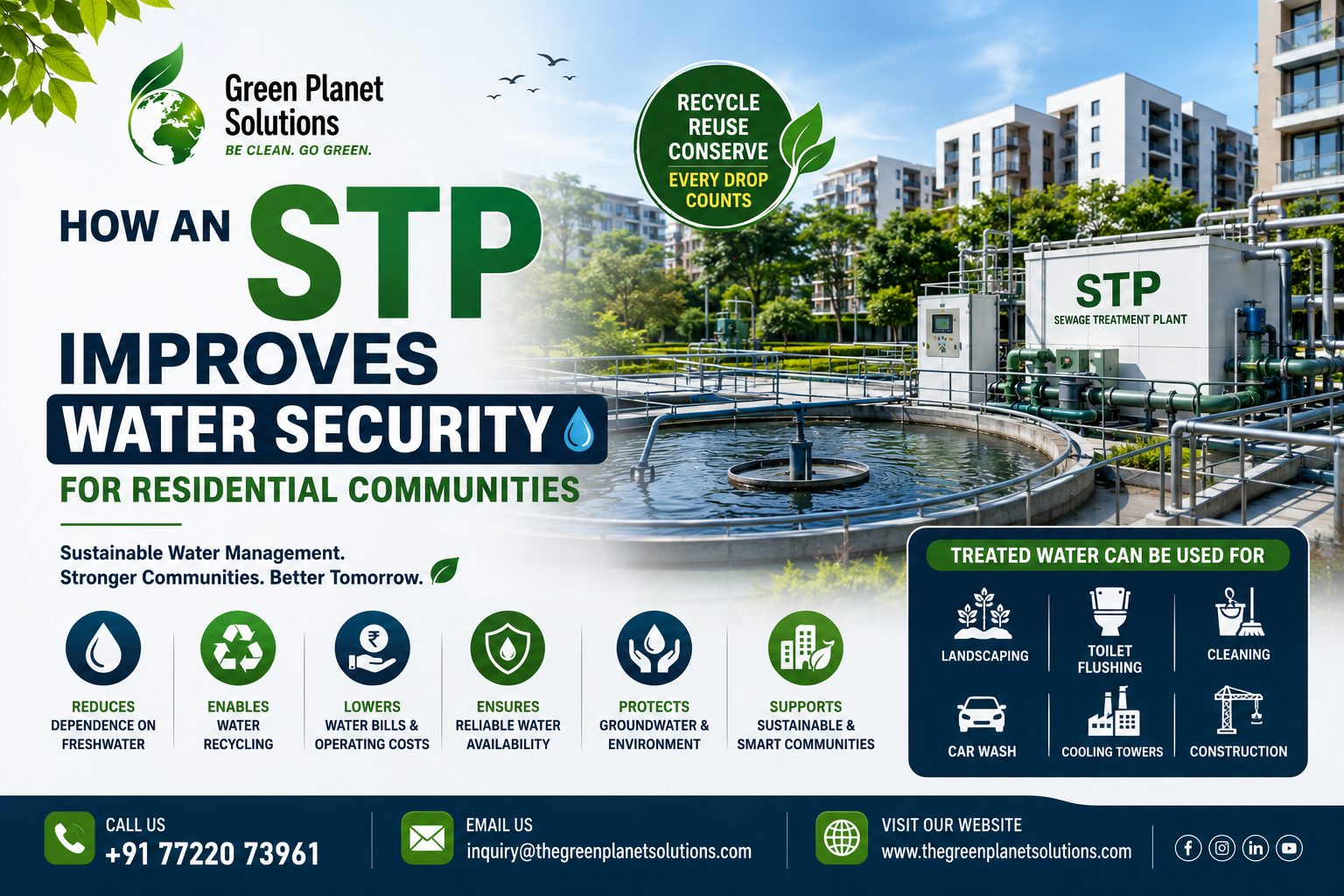
    How an STP Improves Water Security for Residential Communities

    Why Sewage Treatment Plants Are Essential for Sustainable Water Management in Modern Housing Societies

    Water is one of the most valuable natural resources, yet many cities are facing increasing water shortages due to rapid urbanization, population growth, and changing climate conditions. Residential apartments and housing societies consume thousands of liters of water every day for cooking, bathing, cleaning, and landscaping. As freshwater resources become more limited, communities must adopt smarter water management practices. One of the most effective solutions is installing a Sewage Treatment Plant (STP). An STP not only treats wastewater but also enables water reuse, helping residential communities improve water security while reducing dependence on external water sources.


    What Is Water Security?

    Water security means having a reliable and sustainable supply of clean water to meet the daily needs of people, businesses, and communities. For residential societies, water security involves ensuring there is enough water available throughout the year while reducing wastage and protecting natural water resources.

    By recycling wastewater, an STP creates an additional source of usable water, making communities more resilient during water shortages and reducing pressure on municipal water supplies.


    Understanding the Role of an STP

    A Sewage Treatment Plant is designed to collect, treat, and purify wastewater generated from residential buildings. Through a combination of physical, biological, and chemical treatment processes, contaminants are removed, producing treated water that can safely be reused for several non-potable applications.

    Instead of discharging wastewater into drains or relying entirely on municipal treatment facilities, residential societies can process wastewater on-site and convert it into a valuable resource.


    How an STP Enhances Water Security

    1. Reduces Dependence on Freshwater

    One of the biggest advantages of installing an STP is reducing the need for fresh water. Treated wastewater can be reused for landscaping, toilet flushing, vehicle washing, floor cleaning, and other daily activities.

    This significantly lowers the demand for municipal water and private water tankers, especially during periods of water scarcity.


    2. Supports Water Recycling

    Modern STPs allow residential communities to recycle a large percentage of the wastewater they generate every day. Rather than treating wastewater as a disposal problem, societies can transform it into a reusable resource.

    Water recycling creates a continuous supply of treated water for non-drinking purposes, helping conserve precious freshwater reserves.


    3. Reduces Water Bills

    Water scarcity often leads to higher water costs, especially for housing societies that rely on tanker water. By reusing treated water, residential communities can reduce freshwater consumption and lower monthly water expenses.

    Over time, these savings contribute to the return on investment in an STP system.


    4. Improves Emergency Water Availability

    Communities with wastewater recycling systems are better prepared to handle unexpected water shortages. During periods of restricted municipal water supply, treated water can continue to support essential activities such as gardening, cleaning, and flushing.

    This additional water source improves the overall resilience of the residential community.


    5. Protects Groundwater Resources

    Excessive extraction of groundwater can lower water tables and create long-term environmental challenges. By recycling wastewater, housing societies reduce their dependence on borewells and groundwater sources.

    This helps preserve groundwater for future generations while promoting responsible water use.


    Applications of Treated Water

    Water produced by an STP can be safely reused for various non-potable purposes, including:

    • Landscape irrigation
    • Garden watering
    • Toilet flushing
    • Washing common areas
    • Car washing
    • Cooling tower makeup water
    • Construction activities
    • Firewater storage replenishment

    These applications reduce freshwater demand without compromising daily operations.


    Environmental Benefits of STPs

    In addition to improving water security, Sewage Treatment Plants offer significant environmental benefits.

    These include:

    • Reduced wastewater pollution
    • Protection of rivers and lakes
    • Conservation of freshwater resources
    • Lower carbon footprint associated with water transportation
    • Reduced demand for groundwater extraction
    • Improved environmental sustainability

    By treating wastewater locally, communities contribute to cleaner ecosystems and healthier urban environments.


    Economic Benefits for Housing Societies Using STP

    Installing an STP is not only an environmental investment but also a financially beneficial decision.

    Some key economic advantages include:

    • Lower monthly water bills
    • Reduced dependence on expensive water tankers
    • Lower sewage disposal costs
    • Increased property value
    • Long-term operational savings
    • Better infrastructure sustainability

    As water prices continue to rise, these financial benefits become even more significant.


    Supporting Sustainable Communities

    Modern residential developments are increasingly adopting sustainable infrastructure to improve quality of life and reduce environmental impact. Along with rainwater harvesting, solar energy, and waste management systems, STPs play an important role in creating eco-friendly communities.

    Water recycling demonstrates responsible resource management while supporting national sustainability goals and green building initiatives.


    Choosing the Right STP for Your Community

    Selecting the right Sewage Treatment Plant depends on several factors, including:

    • Number of residents
    • Daily wastewater generation
    • Available installation space
    • Water reuse requirements
    • Energy efficiency
    • Ease of maintenance
    • Compliance with environmental regulations

    Working with an experienced STP solution provider ensures the system is properly designed, installed, and maintained for long-term performance.


    Maintaining an STP for Reliable Water Security

    Regular maintenance ensures consistent treatment efficiency and uninterrupted water reuse.

    Maintenance should include:

    • Routine equipment inspections
    • Pump and blower servicing
    • Cleaning filters and tanks
    • Monitoring treated water quality
    • Preventive maintenance schedules
    • Operator training

    A well-maintained STP continues to deliver reliable performance and long-term water savings.


    Conclusion

    As urban water demand continues to increase, residential communities must adopt sustainable solutions that ensure long-term water availability. A Sewage Treatment Plant is one of the most effective investments for improving water security, reducing freshwater consumption, and lowering operating costs.

    By recycling wastewater for everyday non-potable uses, housing societies can become more self-sufficient while protecting natural water resources and supporting environmental sustainability. Investing in a modern STP is not just about wastewater treatment—it is about building resilient, water-secure communities for the future.

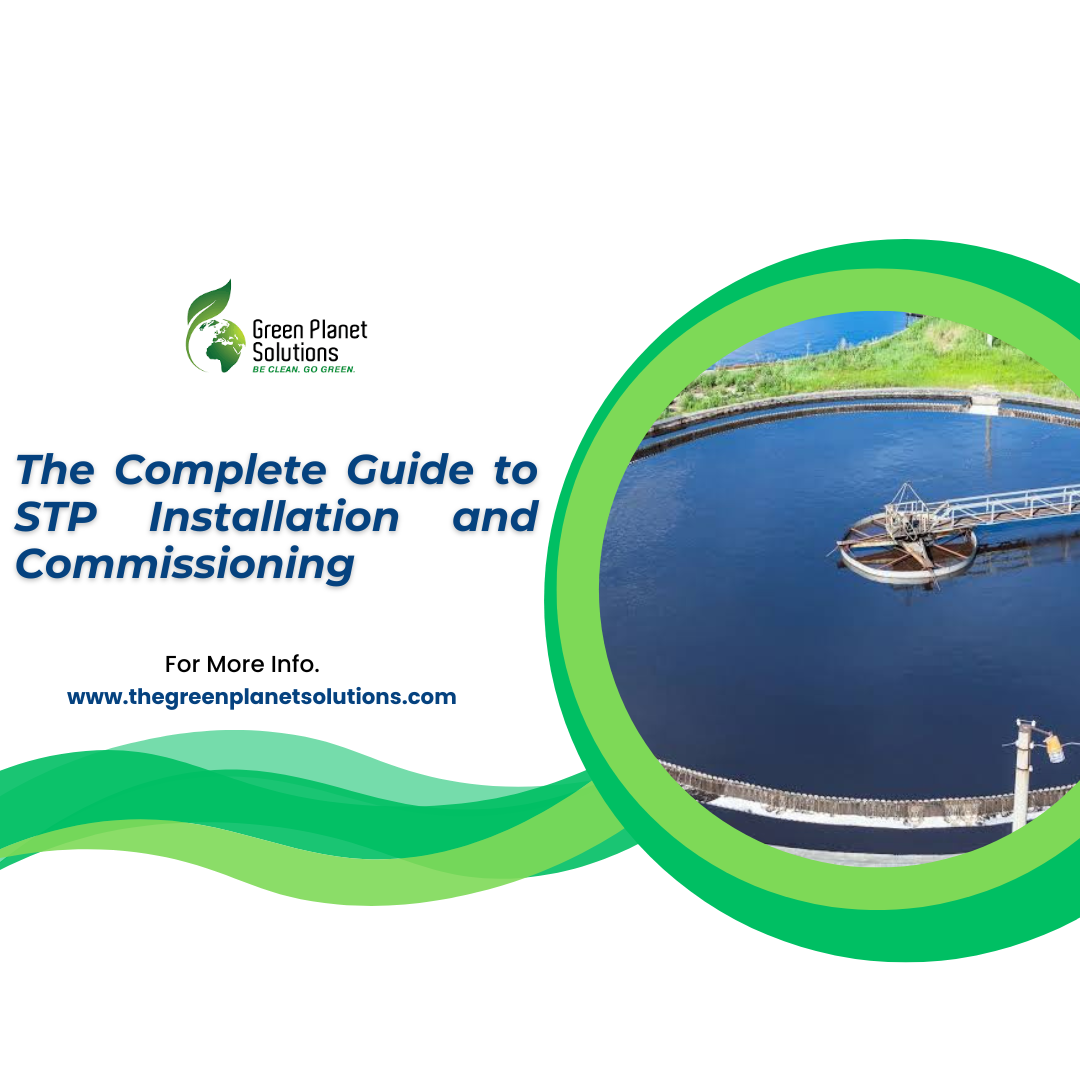
  • The Complete Guide to STP Installation and Commissioning

    The Complete Guide to STP Installation and Commissioning

    Everything You Need to Know About Planning, Installing, Testing, and Operating a Sewage Treatment Plant (STP)

    As water scarcity and environmental regulations become increasingly important, Sewage Treatment Plants (STPs) have become an essential part of modern infrastructure. Whether it’s a residential apartment, commercial complex, hotel, hospital, educational institution, or industrial facility, installing an STP helps treat wastewater efficiently while enabling water reuse and ensuring compliance with environmental standards.

    However, the success of an STP depends not only on selecting the right technology but also on proper installation and commissioning. A well-planned installation ensures long-term performance, lower maintenance costs, and consistent water quality. This guide explains every stage of STP installation and commissioning, helping you understand the complete process from planning to operation.


    What Is STP Installation and Commissioning?

    STP installation involves designing, constructing, and assembling all the mechanical, electrical, civil, and piping components of a Sewage Treatment Plant at the project site. Once the installation is complete, the commissioning process begins, where the system is tested, calibrated, and optimized to ensure it operates efficiently and produces treated water that meets environmental standards.

    Proper commissioning confirms that every component of the plant functions correctly before the system is handed over for regular operation.


    Step 1: Site Assessment and Planning of STP

    Every successful STP project begins with a detailed site survey. Engineers assess wastewater generation, available space, soil conditions, drainage systems, and future expansion requirements before finalizing the plant design.

    Important factors considered during planning include:

    • Daily sewage generation capacity
    • Available installation area
    • Population or occupancy
    • Water reuse requirements
    • Local environmental regulations
    • Utility connections
    • Future scalability

    Proper planning helps avoid costly modifications during installation.


    Step 2: Selecting the Right STP Technology

    Choosing the correct treatment technology is critical for achieving efficient wastewater treatment. The ideal system depends on wastewater characteristics, available space, operating budget, and treated water quality requirements.

    Popular STP technologies include:

    • MBBR (Moving Bed Biofilm Reactor) – Compact, efficient, and suitable for residential and commercial applications.
    • SBR (Sequencing Batch Reactor) – Offers excellent treatment performance with automated operation.
    • MBR (Membrane Bioreactor) – Produces high-quality treated water suitable for extensive reuse.
    • Conventional Activated Sludge Process (ASP) – Commonly used for large-scale wastewater treatment.

    Selecting the appropriate technology ensures better efficiency and lower operating costs.


    Step 3: Civil Construction

    Once the design is finalized, civil construction begins. This stage involves preparing the foundation and constructing tanks, equipment bases, drainage channels, and utility connections.

    Civil work typically includes:

    • Foundation construction
    • RCC treatment tanks
    • Equipment platforms
    • Underground piping
    • Cable trenches
    • Pump pits
    • Drainage arrangements

    Accurate civil work provides structural stability and ensures smooth equipment installation.


    Step 4: Mechanical and Electrical Installation

    After the civil work is completed, all mechanical and electrical equipment is installed according to the engineering design.

    This includes:

    • Pumps
    • Blowers
    • Aeration systems
    • Diffusers
    • Mixers
    • Piping systems
    • Valves
    • Motors
    • Control panels
    • Sensors
    • Electrical wiring

    Each component is carefully aligned and connected to ensure reliable plant operation.


    Step 5: Pipeline and Utility Connections

    The STP is then connected to the incoming sewage line, treated water outlet, sludge handling system, and utility services such as electricity and water supply.

    Engineers verify:

    • Leak-free piping
    • Proper flow direction
    • Valve operation
    • Pressure testing
    • Drainage connections

    Correct piping installation ensures uninterrupted wastewater treatment.


    Step 6: Testing and Commissioning

    Commissioning is one of the most important stages of the project. During this phase, engineers perform detailed inspections and operational tests before the plant is put into service.

    Commissioning activities include:

    • Mechanical equipment testing
    • Electrical system checks
    • Pump performance testing
    • Blower operation
    • Control panel calibration
    • Sensor verification
    • Leak testing
    • Flow balancing
    • Automation testing

    Once all systems operate correctly, biological treatment is initiated using beneficial microorganisms.


    Step 7: Biological Start-Up

    The biological process is the heart of every Sewage Treatment Plant. During commissioning, microbial cultures are introduced into the treatment tanks to begin breaking down organic matter naturally.

    Over the next few weeks, the microbial population stabilizes and treatment efficiency gradually improves until the system reaches its designed performance.

    Regular monitoring is essential during this phase to maintain:

    • pH levels
    • Dissolved oxygen
    • Sludge concentration
    • Temperature
    • Biological activity

    Step 8: Performance Testing

    Before project completion, treated water is tested to verify that it meets regulatory discharge or reuse standards.

    Water quality tests generally include:

    • Biological Oxygen Demand (BOD)
    • Chemical Oxygen Demand (COD)
    • Total Suspended Solids (TSS)
    • pH
    • Turbidity
    • Oil and Grease
    • Microbiological parameters

    Successful testing confirms that the STP is operating efficiently and safely.


    Step 9: Operator Training

    A well-installed STP still requires trained personnel for smooth operation. During handover, operators receive practical training covering:

    • Daily operation
    • Equipment monitoring
    • Preventive maintenance
    • Troubleshooting
    • Safety procedures
    • Water quality monitoring
    • Record keeping

    Proper training minimizes downtime and improves plant reliability.


    Step 10: Preventive Maintenance

    Even after commissioning, regular maintenance is essential for long-term performance.

    Recommended maintenance includes:

    • Cleaning filters and screens
    • Inspecting pumps and motors
    • Checking blower performance
    • Monitoring electrical systems
    • Calibrating sensors
    • Lubricating moving parts
    • Testing treated water quality

    Routine maintenance reduces repair costs and extends equipment life.


    Benefits of Professional STP Installation

    Working with experienced STP professionals offers several advantages:

    • Customized plant design
    • Faster installation
    • Compliance with environmental regulations
    • Reliable wastewater treatment
    • Reduced operational costs
    • Improved water reuse
    • Long equipment lifespan
    • Professional after-sales support

    A professionally installed STP delivers higher efficiency and greater return on investment.


    Common Installation Mistakes to Avoid

    Many operational issues arise due to poor planning or incorrect installation. Common mistakes include:

    • Incorrect plant sizing
    • Poor site selection
    • Inadequate civil construction
    • Improper pipe alignment
    • Skipping commissioning tests
    • Lack of operator training
    • Delayed preventive maintenance

    Avoiding these mistakes ensures smooth plant operation for many years.


    Conclusion

    Installing and commissioning a Sewage Treatment Plant is a critical investment in sustainable water management. From site assessment and technology selection to commissioning, operator training, and preventive maintenance, every step plays an important role in ensuring efficient wastewater treatment and long-term reliability.

    Whether you’re planning an STP for a residential apartment, commercial building, hotel, hospital, educational institution, or industrial facility, partnering with an experienced STP solution provider ensures a hassle-free installation and dependable performance. With proper planning and professional execution, an STP becomes a valuable asset that reduces water costs, supports environmental compliance, and contributes to a greener future.

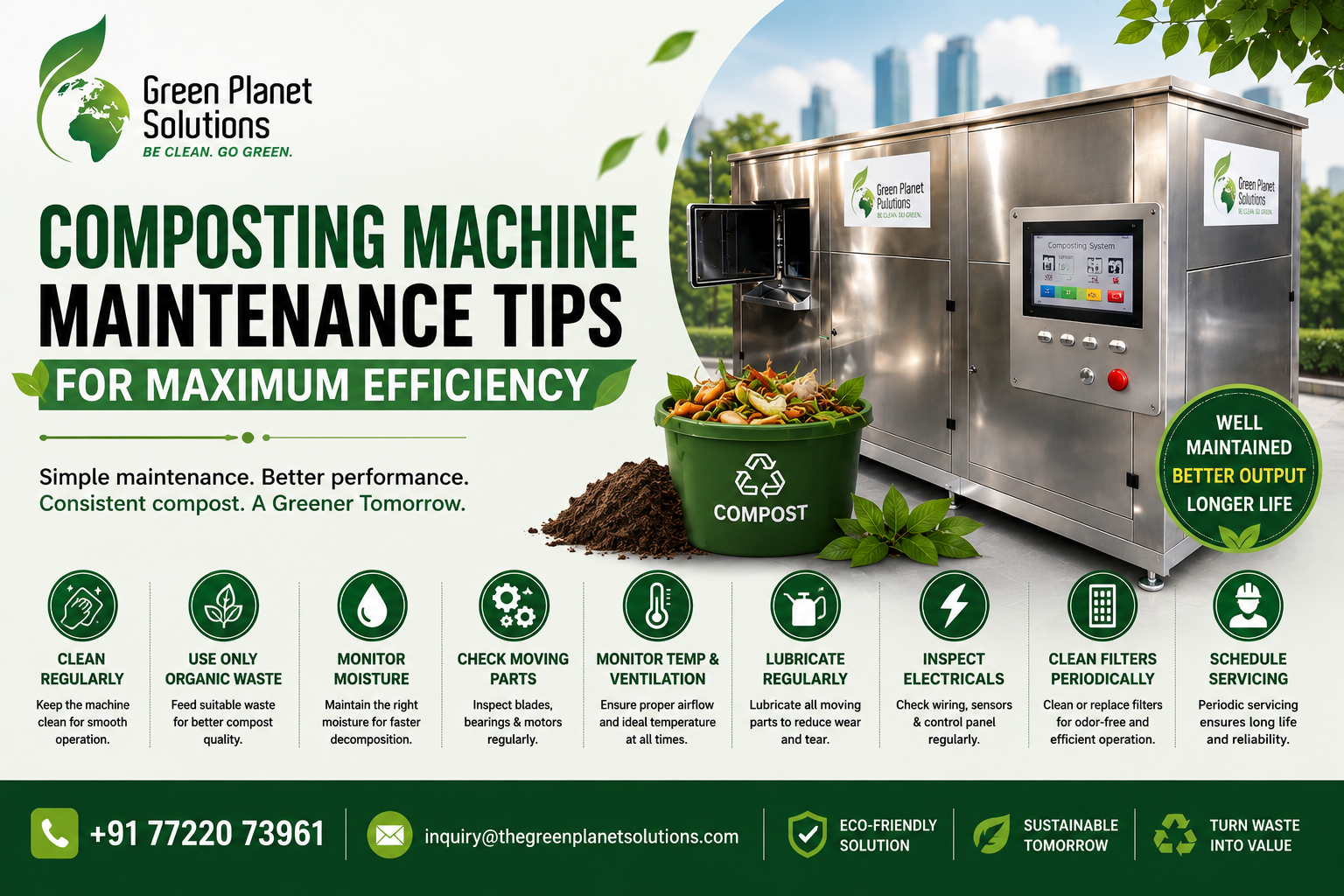
  • Composting Machine Maintenance Tips for Maximum Efficiency

    Composting Machine Maintenance Tips for Maximum Efficiency

    A Complete Guide to Keeping Your Composting Machine Running Smoothly and Delivering High-Quality Compost

    A composting machine is a smart investment for organizations looking to manage organic waste efficiently while supporting environmental sustainability. Whether installed in a housing society, hotel, restaurant, corporate campus, educational institution, or industrial facility, regular maintenance is essential to ensure optimal performance. Proper upkeep not only extends the lifespan of the machine but also improves compost quality, reduces operational costs, and minimizes unexpected downtime.

    In this guide, we’ll explore the best maintenance practices to keep your composting machine operating at maximum efficiency.


    Why Regular Maintenance Matters

    Like any industrial equipment, composting machines require routine care to perform at their best. A well-maintained machine processes organic waste faster, consumes less energy, prevents unpleasant odors, and reduces the chances of mechanical failures.

    Regular maintenance offers several benefits, including:

    • Improved composting efficiency
    • Longer machine lifespan
    • Lower maintenance and repair costs
    • Consistent production of high-quality compost
    • Reduced odor and pest issues
    • Better operational safety

    Preventive maintenance is always more cost-effective than emergency repairs.


    1. Clean the Machine Daily

    Food waste residues can accumulate inside the composting chamber over time, affecting the machine’s performance and hygiene. Cleaning the machine regularly helps prevent blockages, bacterial buildup, and unpleasant odors.

    After each operating cycle:

    • Remove leftover waste residues.
    • Clean the feeding chamber.
    • Wipe external surfaces.
    • Ensure drainage outlets are free from obstructions.

    Maintaining cleanliness also helps improve the efficiency of microbial decomposition.


    2. Feed Only Suitable Organic Waste

    One of the most common reasons for reduced composting performance is feeding inappropriate materials into the machine.

    Suitable materials include:

    • Fruit and vegetable waste
    • Leftover cooked food
    • Tea leaves and coffee grounds
    • Garden waste
    • Eggshells

    Avoid adding:

    • Plastic
    • Glass
    • Metal
    • Large bones
    • Chemicals
    • Non-biodegradable materials

    Segregating waste before feeding the machine significantly improves compost quality and reduces maintenance issues.


    3. Monitor Moisture Levels

    Maintaining the right moisture level is critical for efficient composting. Excess moisture can produce foul odors and slow decomposition, while insufficient moisture may prevent microorganisms from breaking down organic waste effectively.

    Operators should regularly inspect the compost and adjust moisture levels as needed to maintain an ideal composting environment.


    4. Inspect Mixing and Grinding Components

    The mixing blades, shredders, and grinding mechanisms play a crucial role in breaking down waste into smaller particles for faster composting.

    Regularly inspect these components for:

    • Wear and tear
    • Loose bolts
    • Damaged blades
    • Unusual vibrations

    Replacing worn components before they fail helps avoid costly repairs and ensures continuous operation.


    5. Check Temperature and Ventilation of composting machine

    Modern composting machines rely on controlled temperatures to accelerate the decomposition process. Proper ventilation is equally important to maintain oxygen levels for beneficial microorganisms.

    Operators should:

    • Monitor temperature readings
    • Ensure ventilation systems are functioning correctly
    • Keep air filters clean
    • Check exhaust systems regularly

    Maintaining the correct operating conditions helps produce odor-free, nutrient-rich compost.


    6. Lubricate Moving Parts

    Bearings, motors, chains, and other moving parts should be lubricated according to the manufacturer’s maintenance schedule.

    Proper lubrication:

    • Reduces friction
    • Prevents overheating
    • Minimizes component wear
    • Extends equipment life
    • Improves energy efficiency

    Always use the recommended lubricants specified by the manufacturer.


    7. Inspect Electrical Components

    Electrical systems control the machine’s automation, sensors, motors, and control panel.

    Regular inspections should include:

    • Checking wiring connections
    • Inspecting sensors
    • Testing emergency stop functions
    • Monitoring control panel alerts
    • Ensuring proper power supply

    Any electrical issue should be addressed immediately by a qualified technician.


    8. Replace Filters When Required of composting machine

    Air filters help control odor, improve airflow, and maintain a clean composting environment.

    Dirty filters can:

    • Restrict airflow
    • Increase odor
    • Reduce composting efficiency
    • Increase energy consumption

    Cleaning or replacing filters at recommended intervals keeps the system operating efficiently.


    9. Schedule Preventive Maintenance of composting machine

    Instead of waiting for problems to occur, establish a preventive maintenance schedule.

    Monthly inspections should include:

    • Mechanical components
    • Electrical systems
    • Temperature sensors
    • Ventilation units
    • Drainage systems
    • Compost chamber cleaning

    Routine servicing minimizes downtime and improves long-term reliability.


    10. Train Operators Properly

    Even the most advanced composting machine requires knowledgeable operators. Staff should be trained in:

    • Proper waste segregation
    • Safe machine operation
    • Routine cleaning
    • Basic troubleshooting
    • Emergency procedures

    Well-trained operators can quickly identify minor issues before they become major problems.


    Common Maintenance Mistakes to Avoid

    Many organizations unintentionally reduce the efficiency of their composting machines by making avoidable mistakes, such as:

    • Overloading the machine
    • Mixing non-biodegradable waste with organic waste
    • Ignoring warning indicators
    • Skipping routine cleaning
    • Delaying preventive maintenance
    • Using incorrect microbial cultures or additives

    Avoiding these mistakes helps ensure consistent performance and extends the equipment’s service life.


    The Long-Term Benefits of Proper Maintenance of composting machine

    Routine maintenance is more than just equipment care—it is an investment in operational efficiency and sustainability. A well-maintained composting machine delivers:

    • Faster waste processing
    • Lower operational costs
    • Reduced downtime
    • Better-quality compost
    • Improved environmental compliance
    • Greater return on investment

    Organizations that prioritize maintenance can maximize the value of their composting systems while supporting long-term sustainability goals.


    Conclusion

    A composting machine is a reliable solution for converting organic waste into valuable compost, but its performance depends on regular maintenance. Daily cleaning, proper waste segregation, moisture monitoring, routine inspections, and preventive servicing are all essential for keeping the system running efficiently.

    Whether you manage a residential society, hotel, restaurant, corporate office, educational institution, or industrial facility, following these maintenance practices will help you reduce operating costs, improve compost quality, and ensure years of trouble-free operation.

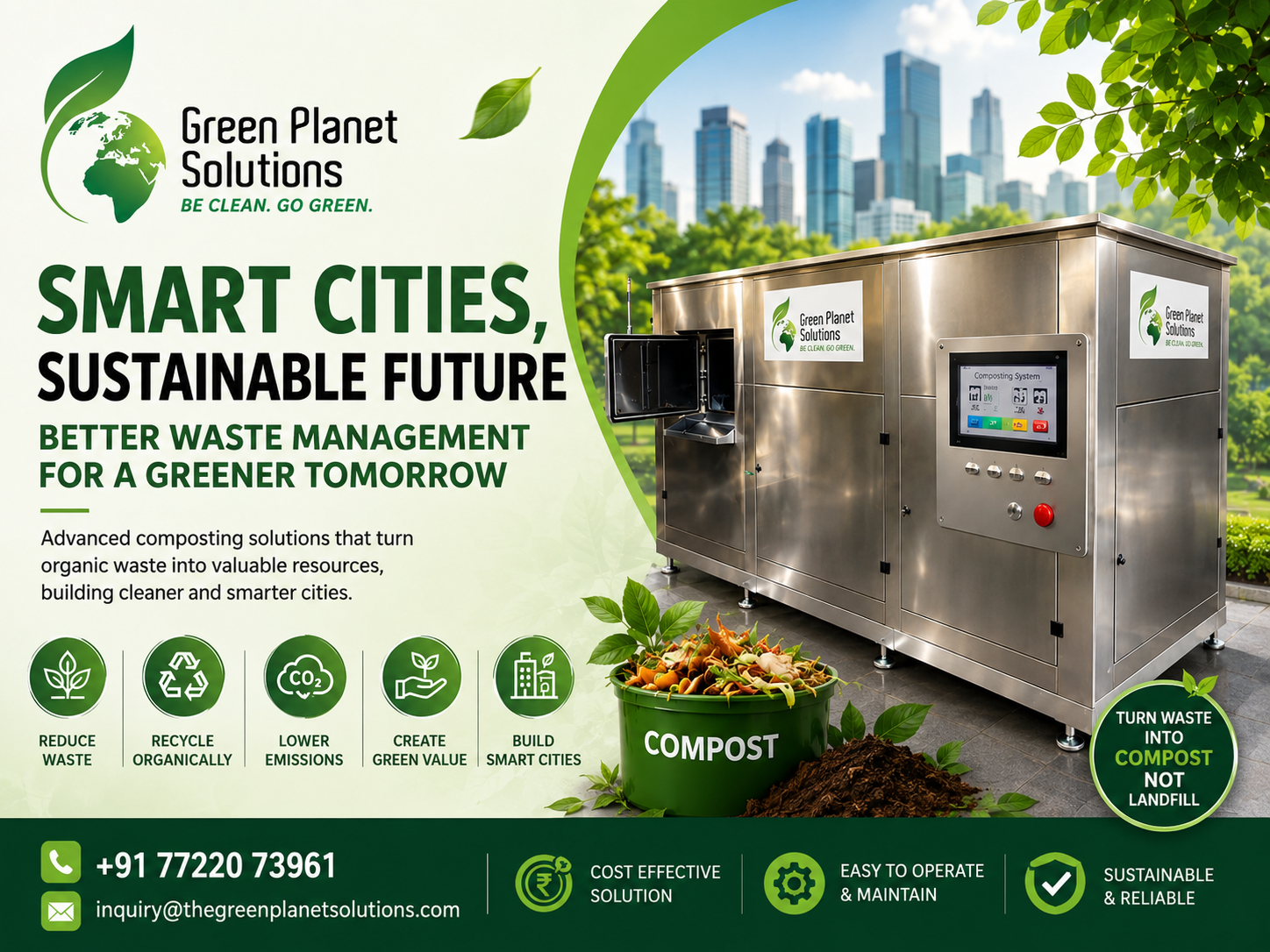
  • Smart Cities and the Future of Organic Waste Management

    Smart Cities and the Future of Organic Waste Management

    How Composting Technology is Building Cleaner, Greener, and More Sustainable Urban Communities

    As cities continue to grow, so does the challenge of managing the enormous amount of waste generated every day. According to urban development studies, organic waste—including food scraps, vegetable waste, garden waste, and biodegradable materials—accounts for nearly 50–60% of municipal solid waste in many Indian cities. When this waste is sent to landfills, it decomposes without oxygen and releases methane, a greenhouse gas that contributes significantly to climate change. For smart cities striving to become cleaner, healthier, and more sustainable, managing organic waste at its source is no longer an option—it’s a necessity.

    What is Organic Waste Management?

    Organic waste management is the process of collecting, treating, and converting biodegradable waste into valuable resources such as compost or biogas. Instead of transporting food waste to overcrowded landfills, modern composting systems recycle it into nutrient-rich compost that can be used in parks, gardens, landscaping projects, and agriculture.

    This approach not only reduces waste but also transforms a disposal problem into an environmental solution.

    Why Smart Cities Need Better Organic Waste Management

    Smart cities focus on using technology to improve the quality of life for residents while protecting the environment. Efficient waste management is one of the key pillars of every smart city because it directly impacts public health, cleanliness, and sustainability.

    By implementing decentralized organic waste management systems, cities can:

    • Reduce landfill dependency
    • Lower greenhouse gas emissions
    • Minimize transportation and waste collection costs
    • Produce eco-friendly compost for urban landscaping
    • Improve city cleanliness and hygiene
    • Support circular economy initiatives

    These benefits help municipalities meet sustainability goals while creating cleaner and more resilient urban environments.

    The Role of Composting Machines in Smart Cities

    Modern composting machines are transforming the way cities manage biodegradable waste. Unlike traditional compost pits that require large spaces and long processing times, automated composting machines convert food waste into compost within days using controlled temperature, aeration, and microbial activity.

    These machines are suitable for:

    • Residential housing societies
    • Hotels and restaurants
    • Corporate campuses
    • Educational institutions
    • Hospitals
    • Municipal parks
    • Shopping malls
    • Airports and railway stations

    By processing waste where it is generated, composting machines significantly reduce transportation costs and eliminate the need for large dumping sites.

    Environmental Benefits of Smart Composting

    Organic waste that reaches landfills generates methane and contaminates soil and groundwater over time. Composting offers a cleaner alternative by recycling waste into useful organic fertilizer.

    Some major environmental benefits include:

    • Reduced greenhouse gas emissions
    • Lower landfill waste volumes
    • Improved soil fertility
    • Reduced dependence on chemical fertilizers
    • Better urban greenery and landscaping
    • Conservation of natural resources

    This makes composting an essential component of climate-resilient city planning.

    Economic Advantages for Municipalities and Businesses

    Investing in composting technology also delivers long-term financial benefits. Local processing reduces waste transportation expenses, lowers landfill management costs, and creates valuable compost that can be used or sold.

    Organizations that install composting machines often benefit from:

    • Reduced waste disposal charges
    • Lower operational costs
    • Better compliance with environmental regulations
    • Enhanced sustainability credentials
    • Stronger ESG (Environmental, Social, and Governance) performance

    For businesses, these advantages can improve both operational efficiency and brand reputation.

    Supporting India’s Smart City Mission

    India’s Smart Cities Mission encourages the adoption of innovative technologies that improve urban infrastructure and environmental sustainability. Decentralized waste management aligns perfectly with this vision by promoting cleaner neighborhoods, efficient resource utilization, and responsible waste disposal.

    Many municipalities, residential communities, and commercial establishments are already adopting composting systems to comply with Solid Waste Management Rules and contribute to a cleaner urban ecosystem.

    The Future of Organic Waste Management

    The future of waste management lies in intelligent, decentralized, and technology-driven solutions. Emerging innovations such as IoT-enabled composting machines, AI-based waste monitoring, and real-time performance analytics will make organic waste processing even more efficient.

    As sustainability becomes a priority for governments, businesses, and communities, composting technology will play a central role in building smart cities that generate less waste, recycle more resources, and create healthier environments for future generations.

    Conclusion

    Smart cities are not just about digital infrastructure—they are about creating sustainable ecosystems where resources are used responsibly. Effective organic waste management is one of the most impactful ways to achieve this vision. By adopting modern composting machines and decentralized waste processing systems, cities can reduce landfill waste, cut carbon emissions, and transform everyday food waste into a valuable resource.

    Organizations, housing societies, municipalities, and businesses that invest in composting today are not only improving waste management but also contributing to a cleaner, greener, and more sustainable future.
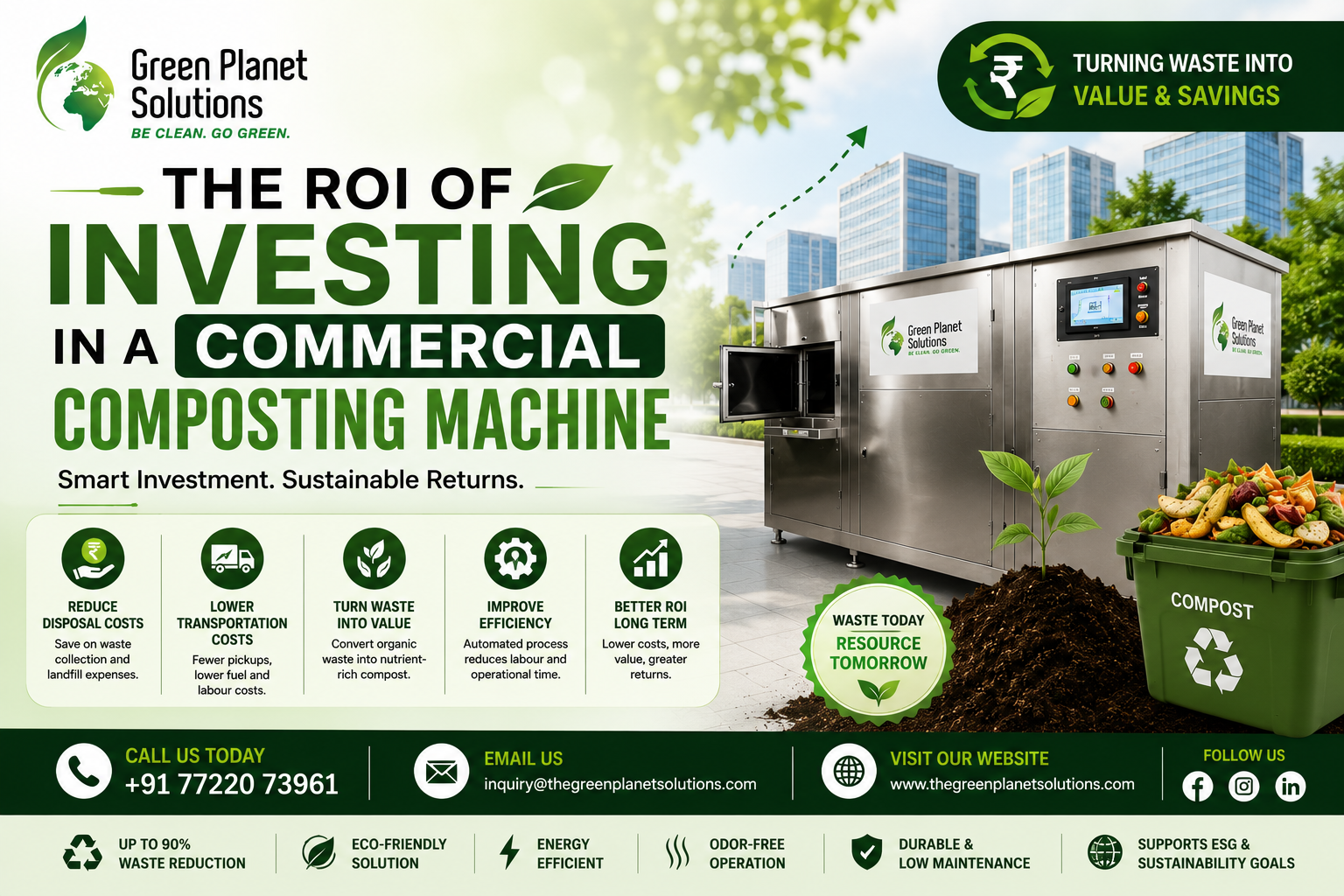
  • The ROI of Investing in a Commercial Composting Machine

    The ROI of Investing in a Commercial Composting Machine

    Introduction

    For many businesses, waste management is viewed as an unavoidable operational expense. Every day, hotels, restaurants, hospitals, corporate campuses, educational institutions, supermarkets, and food processing industries generate large amounts of organic waste, leading to recurring disposal costs and environmental challenges. However, investing in a commercial composting machine transforms waste management from a cost center into a valuable business asset.

    A commercial composting machine does much more than process organic waste—it reduces operational expenses, supports sustainability initiatives, improves workplace efficiency, and creates nutrient-rich compost that can be reused. This combination of financial savings and environmental benefits delivers a strong Return on Investment (ROI), making composting a smart long-term business decision.


    Understanding ROI in Commercial Composting Machine

    Return on Investment (ROI) measures the financial value gained from an investment compared to its cost. While a composting machine requires an initial investment, the long-term savings generated through reduced waste disposal, lower transportation costs, and improved operational efficiency often outweigh the purchase cost.

    Unlike many capital investments that take years to show measurable benefits, a commercial composting machine begins delivering savings from the first day it starts processing waste.


    Significantly Reduce Waste Disposal Costs using Composting Machine

    One of the biggest financial benefits of a commercial composting machine is the reduction in waste disposal expenses.

    Businesses that generate food and organic waste often spend a considerable amount on waste collection services and landfill charges. By processing organic waste on-site, businesses reduce the volume of waste by up to 90%, resulting in fewer waste collection trips and lower disposal fees.

    These recurring monthly savings contribute directly to a faster return on investment.


    Lower Transportation Expenses

    Transporting organic waste to disposal facilities requires fuel, labour, and logistics, all of which increase operational costs.

    With an on-site composting machine, businesses no longer need to transport large quantities of organic waste regularly. Reducing transportation not only saves money but also lowers carbon emissions associated with waste collection vehicles.

    This creates both financial and environmental value.


    Turn Organic Waste into Valuable Composting Machine

    Instead of paying to dispose of food waste, businesses can convert it into nutrient-rich compost.

    The compost produced can be used for:

    • Landscaping
    • Gardens
    • Parks
    • Green belts
    • Agricultural use
    • Tree plantations

    For hotels, corporate campuses, universities, and residential communities, this reduces the need to purchase chemical fertilizers while supporting sustainable landscaping practices.

    Waste becomes a useful resource rather than an expense.


    Improve Operational Efficiency using Composting Machine

    Modern commercial composting machines are designed for automation and ease of operation.

    Features such as automatic mixing, temperature control, moisture monitoring, and odour management minimise manual labour and simplify waste handling.

    Employees spend less time managing waste, allowing them to focus on more productive business activities. Increased efficiency translates into lower labour costs and smoother daily operations.


    Strengthen ESG and Sustainability Performance

    Environmental responsibility is becoming a key factor in business success. Customers, investors, and regulatory bodies increasingly expect organisations to implement sustainable practices.

    A commercial composting machine helps businesses:

    • Reduce landfill waste
    • Lower greenhouse gas emissions
    • Support circular economy initiatives
    • Improve ESG performance
    • Reduce carbon footprint
    • Demonstrate environmental leadership

    These sustainability achievements enhance corporate reputation and strengthen relationships with environmentally conscious customers and stakeholders.


    Future-Proof Your Business

    Waste disposal regulations and landfill costs continue to rise across the world. Businesses that invest in composting today are better prepared for future environmental regulations and changing waste management requirements.

    Installing a composting machine now protects businesses from increasing disposal costs while ensuring compliance with evolving sustainability standards.


    Industries That Benefit the Most Composting Machine

    Commercial composting machines provide excellent ROI across many sectors.

    Hotels and Resorts

    Process buffet leftovers and kitchen waste while producing compost for gardens and landscaping.

    Restaurants and Commercial Kitchens

    Reduce daily food waste disposal costs and maintain cleaner kitchen operations.

    Hospitals

    Manage biodegradable kitchen waste hygienically while supporting environmental initiatives.

    Corporate Campuses

    Improve sustainability performance and reduce waste management expenses.

    Schools and Universities

    Convert cafeteria waste into compost for campus landscaping and educational sustainability projects.

    Food Processing Industries

    Efficiently process production waste while reducing operational costs.


    Why Choose Green Planet Solutions?

    Green Planet Solutions provides advanced commercial composting machines designed to maximise business value and long-term savings.

    Our Advantages

    • Fully automatic operation
    • Up to 90% waste volume reduction
    • Energy-efficient technology
    • Fast composting process
    • Odour-free operation
    • Durable stainless-steel construction
    • Low maintenance requirements
    • Multiple machine capacities
    • Professional installation
    • Reliable after-sales support

    Our experienced team works closely with every customer to recommend the ideal composting solution based on waste generation and operational requirements.


    Measuring the Long-Term ROI using Composting Machine

    The return on investment extends beyond financial savings. Businesses also gain:

    • Lower monthly operating expenses
    • Reduced waste collection frequency
    • Improved workplace hygiene
    • Better environmental compliance
    • Enhanced corporate reputation
    • Stronger ESG performance
    • Increased sustainability credentials

    When these benefits are combined, the value of investing in a commercial composting machine continues to grow year after year.


    Conclusion

    Investing in a commercial composting machine is not simply purchasing equipment—it’s making a strategic investment in the future of your business. By reducing waste disposal costs, lowering transportation expenses, improving operational efficiency, and supporting sustainability goals, businesses achieve both financial and environmental returns.

    As organisations continue to seek smarter, greener, and more cost-effective waste management solutions, commercial composting has become one of the most valuable long-term investments available.

    Start Maximising Your ROI Today

    Partner with Green Planet Solutions to discover commercial composting machines that help your business reduce waste, save money, and build a more sustainable future. Contact our experts today to find the right composting solution for your organisation.

  • Why Airports Should Invest in Composting Machines

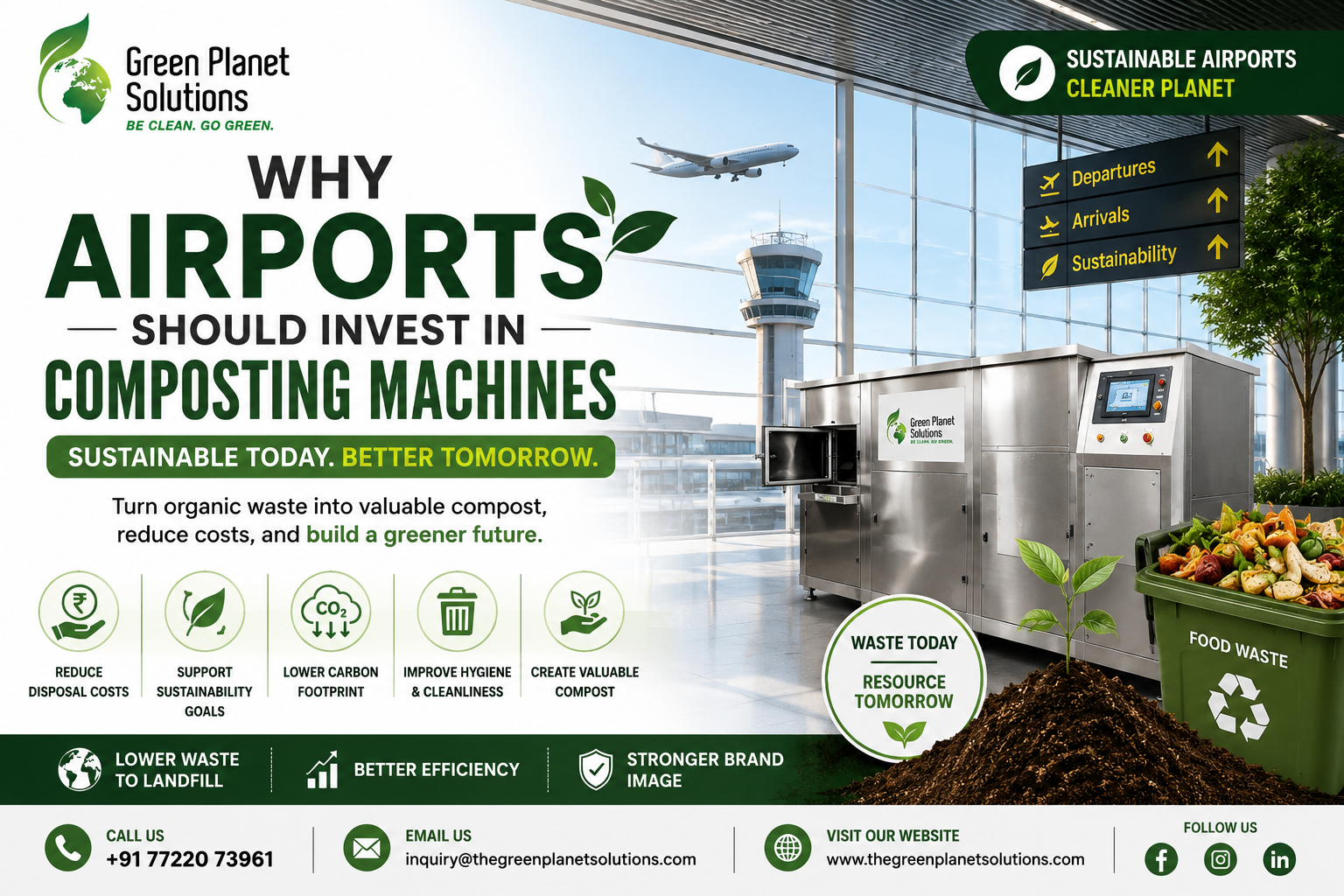
    Why Airports Should Invest in Composting Machines

    Introduction

    Airports are among the busiest public spaces in the world, serving thousands—or even millions—of passengers every year. With restaurants, cafés, airline lounges, food courts, and catering facilities operating around the clock, airports generate a significant amount of organic waste every day. Managing this waste efficiently is becoming increasingly important as environmental regulations tighten and sustainability expectations continue to rise. Instead of sending food waste to landfills, airports can adopt a smarter approach by investing in commercial composting machines.

    These systems convert organic waste into nutrient-rich compost on-site, reducing disposal costs, improving operational efficiency, and supporting long-term environmental goals. For airports aiming to become greener and more sustainable, composting is no longer just an option—it’s a strategic investment.


    The Growing Challenge of Organic Waste at Airports

    Airports produce a continuous stream of biodegradable waste from restaurants, airline catering kitchens, coffee shops, VIP lounges, and terminal food courts. Leftover meals, fruit and vegetable scraps, coffee grounds, paper napkins, and other organic materials often end up in landfill sites.

    Transporting this waste for disposal not only increases operating costs but also contributes to greenhouse gas emissions. As passenger traffic continues to grow, airports need smarter waste management systems that can handle large volumes of organic waste efficiently.


    What Is a Commercial Composting Machine?

    A commercial composting machine is an advanced waste management system that converts food and organic waste into nutrient-rich compost through a controlled biological process. The machine automatically manages temperature, moisture, and aeration, allowing waste to decompose quickly and hygienically.

    Instead of relying on traditional waste collection methods, airports can process organic waste directly on-site, reducing waste volume and creating useful compost for landscaping and green spaces.


    Reduce Waste Disposal Costs

    Waste collection and landfill fees represent a significant operational expense for airports. Large volumes of food waste require regular transportation and disposal, increasing both logistics and labour costs.

    A commercial composting machine can reduce organic waste volume by up to 90%, meaning fewer waste collection trips and lower disposal expenses. Over time, these savings can provide a strong return on investment while improving overall waste management efficiency.


    Support Airport Sustainability Goals using composting machines

    Many airports have committed to achieving ambitious environmental targets, including reducing carbon emissions and minimizing landfill waste.

    By installing composting machines, airports can:

    • Reduce organic waste sent to landfill
    • Lower methane emissions
    • Support circular economy initiatives
    • Improve environmental performance
    • Contribute to carbon reduction goals
    • Strengthen sustainability reporting

    Composting helps airports demonstrate their commitment to responsible environmental management while meeting the expectations of passengers, regulators, and stakeholders.


    Improve Airport Cleanliness and Hygiene using composting machines

    Organic waste stored for long periods can create unpleasant odours and attract pests, especially in busy food service areas.

    Commercial composting machines allow waste to be processed quickly, reducing the time organic materials remain in storage. Modern machines are equipped with odour-control systems, ensuring clean and hygienic operation without affecting airport environments.

    A cleaner waste management process also improves working conditions for airport staff and food service operators.


    Turn Waste into a Valuable Resource using composting machines

    Rather than treating food waste as a disposal problem, airports can convert it into nutrient-rich compost.

    The compost produced can be used for:

    • Airport gardens
    • Landscape maintenance
    • Green belts
    • Decorative plants
    • Tree plantations
    • Public green spaces around airport premises

    This supports sustainable landscaping while reducing the need for chemical fertilizers.


    Enhance Operational Efficiency using composting machines

    Modern composting machines are designed with automation and ease of use in mind.

    Features such as automatic mixing, moisture control, temperature monitoring, and touchscreen operation reduce manual handling and simplify waste management.

    Airport facility teams can process organic waste more efficiently while focusing on other critical operational responsibilities.


    Strengthen Brand Image

    Today’s travellers are increasingly aware of environmental issues and appreciate businesses that invest in sustainable practices.

    An airport that actively reduces waste, recycles organic materials, and promotes green initiatives enhances its reputation as an environmentally responsible organisation. These efforts can improve public perception while supporting international sustainability certifications and green airport initiatives.


    Why Choose Green Planet Solutions?

    Green Planet Solutions provides advanced commercial composting machines designed to meet the needs of high-volume facilities such as airports, transportation hubs, and large commercial campuses.

    Our Advantages

    • Fully automatic operation
    • Up to 90% waste volume reduction
    • Energy-efficient technology
    • Odour-control system
    • Durable stainless-steel construction
    • Low maintenance requirements
    • Multiple machine capacities
    • Professional installation
    • Reliable after-sales support

    Our customised composting solutions help airports efficiently manage organic waste while reducing costs and supporting long-term sustainability goals.


    Conclusion

    As airports continue to expand and passenger numbers increase, effective organic waste management has become more important than ever. Investing in a commercial composting machine allows airports to reduce waste disposal costs, improve hygiene, lower environmental impact, and convert food waste into a valuable resource.

    By adopting smart composting technology, airports can build more sustainable operations while demonstrating leadership in environmental responsibility.

    Ready to Make Your Airport More Sustainable?

    Partner with Green Planet Solutions to implement advanced composting solutions that reduce waste, save money, and create a cleaner, greener airport. Contact our team today to find the right composting machine for your facility.

  • Why Every Commercial Kitchen Needs an Organic Waste Converter

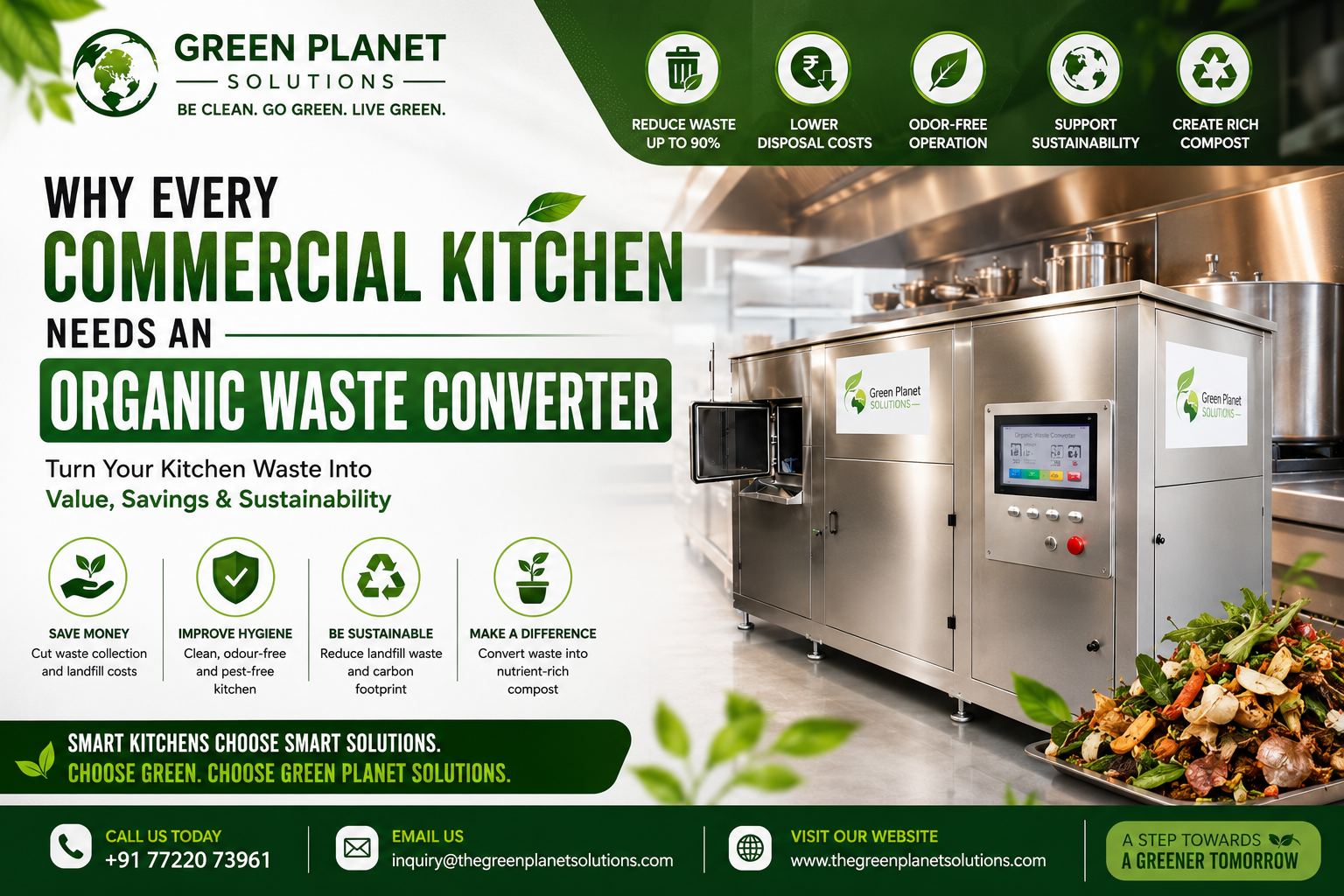
    Why Every Commercial Kitchen Needs an Organic Waste Converter

    Introduction

    Commercial kitchens are the heart of hotels, restaurants, cafeterias, hospitals, educational institutions, and food courts. While they prepare thousands of meals every day, they also generate significant amounts of organic waste, including vegetable peels, fruit scraps, leftover food, eggshells, coffee grounds, and expired ingredients. Managing this waste efficiently has become a major challenge as disposal costs rise and environmental regulations become stricter. Instead of treating organic waste as a burden, businesses can transform it into a valuable resource with an Organic Waste Converter (OWC). Investing in a commercial organic waste converter not only reduces waste disposal costs but also supports sustainability goals and creates a cleaner working environment.


    The Growing Challenge of Kitchen Waste

    Every commercial kitchen produces biodegradable waste throughout the day. Traditionally, this waste is collected and transported to landfills, where it decomposes and releases methane, a greenhouse gas that contributes significantly to climate change.

    Apart from environmental concerns, businesses also face increasing expenses related to waste collection, transportation, and landfill charges. As customer expectations for sustainable practices continue to grow, commercial kitchens need smarter waste management solutions.


    What Is an Organic Waste Converter?

    An Organic Waste Converter is an advanced composting system designed to process food and biodegradable waste directly at the source. Using controlled biological decomposition, the machine converts organic waste into nutrient-rich compost within a short period.

    Unlike traditional composting methods, modern organic waste converters automate the process by controlling temperature, aeration, and moisture, making waste management faster, cleaner, and more efficient.


    Reduce Waste Disposal Costs

    One of the biggest advantages of installing an organic waste converter is the significant reduction in waste disposal expenses.

    Instead of paying for frequent waste collection and landfill disposal, businesses can process organic waste on-site. Since the waste volume is reduced substantially during composting, fewer waste collection trips are required, resulting in lower transportation and disposal costs.

    Over time, these savings contribute to an excellent return on investment.


    Improve Kitchen Hygiene

    Food waste left in storage areas can quickly create unpleasant odours, attract pests, and increase the risk of bacterial growth.

    An organic waste converter helps commercial kitchens maintain a cleaner and more hygienic environment by processing waste immediately after collection. Modern machines are designed with odour-control systems, ensuring smooth operation without disrupting kitchen activities.

    A cleaner workspace improves staff comfort while supporting higher hygiene standards.


    Support Sustainability Goals

    Consumers increasingly prefer businesses that demonstrate environmental responsibility. Hotels, restaurants, and corporate cafeterias are adopting sustainable waste management practices to reduce their environmental impact and strengthen their brand image.

    By converting organic waste into compost instead of sending it to landfill, businesses can:

    • Reduce landfill waste
    • Lower greenhouse gas emissions
    • Support circular economy initiatives
    • Improve ESG performance
    • Reduce their carbon footprint

    An organic waste converter becomes an important part of a company’s sustainability strategy.


    Turn Waste into a Valuable Resource

    Food waste does not have to end its journey in a landfill. With an organic waste converter, kitchen waste is transformed into nutrient-rich compost that can be used for:

    • Gardens
    • Landscaping
    • Lawns
    • Parks
    • Tree plantations
    • Agricultural applications

    Instead of paying to dispose of waste, businesses create something beneficial for the environment.


    Increase Operational Efficiency

    Modern organic waste converters are designed for convenience and automation.

    Features such as automatic mixing, temperature monitoring, moisture control, and touchscreen operation simplify the composting process while reducing manual labour.

    Kitchen staff spend less time handling waste, allowing them to focus on food preparation and customer service.


    Ideal for Every Commercial Kitchen

    Organic waste converters are suitable for a wide range of food service businesses.

    Hotels and Resorts

    Process buffet leftovers and kitchen waste efficiently while producing compost for landscaping.

    Restaurants and Cafés

    Reduce daily food waste, improve cleanliness, and lower disposal costs.

    Hospitals

    Manage biodegradable kitchen waste safely while maintaining hygiene standards.

    Educational Institutions

    Convert cafeteria waste into compost for campus gardens and sustainability programs.

    Corporate Cafeterias

    Support ESG initiatives while reducing operational waste management expenses.

    Food Courts and Catering Companies

    Handle high volumes of organic waste efficiently during daily operations.


    Why Choose Green Planet Solutions?

    Green Planet Solutions offers advanced Organic Waste Converters designed to help commercial kitchens manage food waste efficiently and sustainably.

    Our Advantages

    • Fully automatic operation
    • Fast composting process
    • Up to 90% waste volume reduction
    • Energy-efficient technology
    • Odour-free operation
    • Durable stainless-steel construction
    • Low maintenance requirements
    • Multiple machine capacities
    • Professional installation
    • Dedicated after-sales support

    Our solutions are trusted by businesses across hospitality, healthcare, education, food processing, and commercial sectors.


    Long-Term Benefits for Your Business

    Installing an organic waste converter delivers benefits that go far beyond waste reduction.

    Businesses enjoy:

    • Lower operating costs
    • Cleaner kitchen environments
    • Reduced environmental impact
    • Improved sustainability credentials
    • Better compliance with waste management practices
    • Stronger brand reputation among environmentally conscious customers

    As waste disposal costs continue to rise, investing in an organic waste converter is a practical step toward long-term operational efficiency and sustainability.


    Conclusion

    Every commercial kitchen generates organic waste, but that waste doesn’t have to become an environmental or financial burden. An Organic Waste Converter transforms food waste into valuable compost while reducing disposal costs, improving hygiene, and supporting sustainability goals.

    For businesses looking to build a cleaner, greener, and more efficient operation, investing in an Organic Waste Converter is a smart decision that delivers lasting value.

    Ready to Transform Your Kitchen Waste?

    Partner with Green Planet Solutions and discover how our advanced Organic Waste Converters can help your commercial kitchen reduce waste, save money, and contribute to a more sustainable future. Contact our team today to find the right solution for your business.