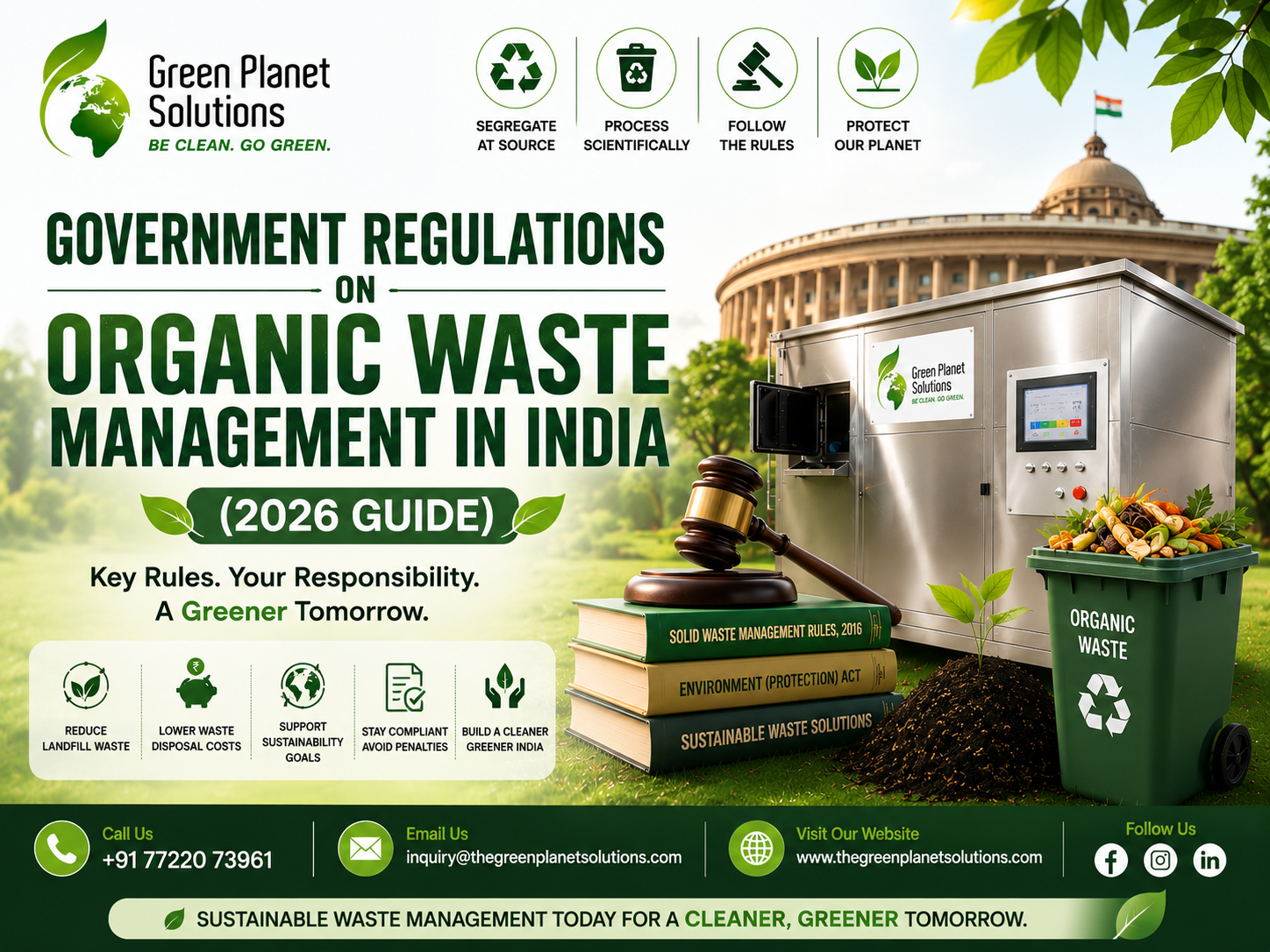
Understanding the Latest Rules for Responsible Organic Waste Disposal
As India continues to urbanize and industrialize, the amount of organic waste generated by households, businesses, hotels, restaurants, hospitals, and institutions is increasing rapidly. Improper disposal of biodegradable waste leads to overflowing landfills, greenhouse gas emissions, and environmental pollution. To address these challenges, the Government of India has introduced regulations that encourage waste segregation, scientific treatment, and sustainable disposal methods. For businesses, understanding these regulations is essential to remain compliant while contributing to a cleaner and greener environment.
Why Organic Waste Management Regulations Matter
Organic waste accounts for a significant portion of municipal solid waste generated every day. When this waste is dumped in landfills, it decomposes anaerobically and releases methane—a harmful greenhouse gas. Government regulations focus on reducing landfill dependency, promoting waste segregation at source, encouraging recycling, and converting biodegradable waste into useful products such as compost and biogas.
Following these regulations not only helps organizations avoid penalties but also improves environmental performance, supports sustainability goals, and strengthens corporate reputation.
The Solid Waste Management Rules, 2016
The Solid Waste Management (SWM) Rules, 2016, issued under the Environment (Protection) Act, remain the foundation of India’s waste management framework. These rules apply to households, commercial establishments, industries, educational institutions, healthcare facilities, and government organizations.
Key requirements include:
- Segregation of waste into biodegradable, recyclable, and domestic hazardous waste.
- Scientific processing of biodegradable waste through composting or biomethanation.
- Reduction of waste sent to landfills.
- Proper storage, collection, and transportation of municipal solid waste.
- Encouragement of decentralized waste management systems.
Organizations generating large quantities of organic waste are encouraged to process waste at the source whenever possible.
Mandatory Waste Segregation at Source
One of the most important requirements is waste segregation before collection. Businesses must separate organic waste from recyclable and non-recyclable materials.
Common biodegradable waste includes:
- Food leftovers
- Fruit and vegetable peels
- Garden waste
- Coffee grounds
- Tea leaves
- Flower waste
Proper segregation improves compost quality and makes waste processing faster and more efficient.
Bulk Waste Generators: Additional Responsibilities
Hotels, restaurants, residential societies, educational institutions, hospitals, office campuses, shopping malls, and event venues are often classified as Bulk Waste Generators (BWGs) because they produce large quantities of waste daily.
These organizations are expected to:
- Segregate waste at the source.
- Process biodegradable waste on-site whenever feasible.
- Use composting or biogas technologies.
- Reduce dependency on municipal waste collection systems.
- Maintain proper waste handling practices.
Installing a commercial composting machine helps bulk waste generators manage organic waste efficiently while complying with applicable regulations.
The Importance of On-Site Composting
Government authorities increasingly encourage decentralized waste management solutions. On-site composting reduces transportation requirements, lowers landfill waste, minimizes carbon emissions, and converts food waste into nutrient-rich compost that can be used for landscaping or gardening.
Modern commercial composting machines make this process automated, hygienic, odor-controlled, and suitable for businesses of all sizes.
Compliance Benefits for Businesses
Complying with waste management regulations offers more than legal protection. Businesses also gain operational and environmental advantages such as:
- Reduced waste disposal costs
- Lower transportation expenses
- Improved environmental performance
- Better workplace hygiene
- Enhanced ESG and sustainability reporting
- Stronger corporate reputation
- Increased customer trust
Organizations demonstrating responsible waste management are increasingly viewed as environmentally responsible brands.
Industries That Should Prioritize Compliance
Several sectors generate substantial quantities of biodegradable waste and benefit significantly from on-site composting solutions, including:
- Hotels and Resorts
- Restaurants and Cafeterias
- Apartment and Housing Societies
- Hospitals and Healthcare Facilities
- Educational Institutions
- Corporate Offices
- Food Processing Industries
- Shopping Malls
- Religious Places
- Municipal Bodies
These organizations can reduce operational costs while supporting India’s sustainability initiatives.
How Commercial Composting Machines Support Compliance
Commercial composting machines simplify organic waste management by converting biodegradable waste into compost within a short period under controlled conditions.
Key advantages include:
- Fast waste processing
- Automated operation
- Odor-control technology
- Reduced landfill dependency
- Lower waste transportation costs
- High-quality compost production
- Clean and hygienic operation
- Easy integration into commercial facilities
These systems help businesses meet regulatory expectations while improving operational efficiency.
Best Practices for Staying Compliant
To ensure compliance with organic waste management regulations, businesses should:
- Segregate waste at the source.
- Train employees on proper waste handling.
- Install an on-site composting system where feasible.
- Maintain equipment regularly.
- Monitor daily waste generation.
- Keep records of waste processing and disposal.
- Conduct periodic internal audits.
- Continuously improve waste reduction initiatives.
A proactive approach helps organizations remain compliant while maximizing environmental benefits.
The Future of Organic Waste Management in India
India is moving toward a more sustainable and circular approach to waste management. With increasing urbanization, stricter enforcement, and growing environmental awareness, businesses are expected to adopt cleaner technologies that reduce landfill waste and recover valuable resources. Investing in on-site composting today not only supports regulatory compliance but also prepares organizations for future sustainability expectations.
Conclusion
Government regulations on organic waste management are driving businesses toward responsible and sustainable waste disposal practices. By adopting waste segregation, reducing landfill dependency, and implementing on-site composting solutions, organizations can meet compliance requirements while lowering costs and protecting the environment.
Green Planet Solutions offers advanced commercial composting machines designed to help businesses manage organic waste efficiently, support environmental sustainability, and stay aligned with India’s evolving waste management regulations. Investing in smart composting technology today is a practical step toward a cleaner, greener, and more sustainable future.