Table Of Contents
- Introduction
- What Is Home Composting?
- Why Should You Start Composting at Home?
- What Do You Need to Set Up a Home Composting System?
- Step-by-Step Guide: How Do I Set Up a Home Composting System?
- Why Use an Organic Waste Composting Machine at Home?
- Common Mistakes to Avoid
- Frequently Asked Questions (FAQs)
- Conclusion
Introduction
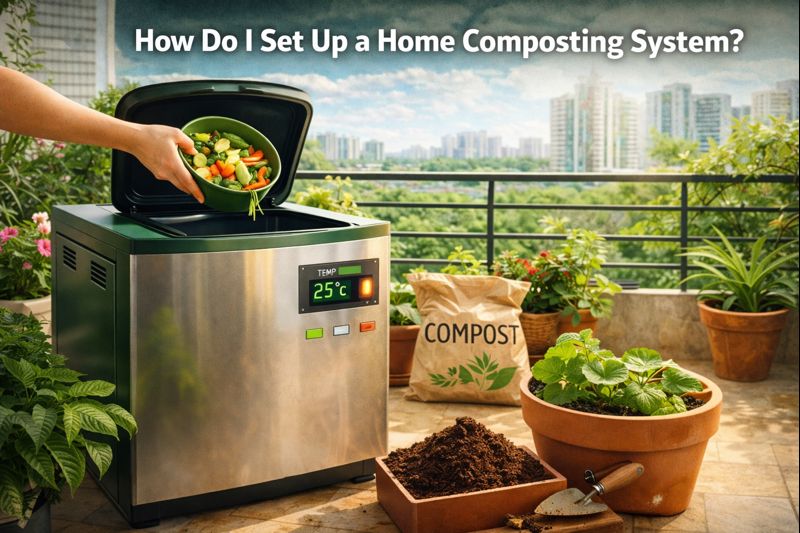
Setting up a home composting system is one of the easiest ways to reduce waste and protect our environment. Today, many houses are using an organic waste composting machine to turn kitchen waste into useful compost.
Because of growing waste problems in India, composting at home has become more important than before. Moreover, it helps to reduce garbage, saves money on fertilizers, and keeps your surroundings clean.
So, if you are wondering how do I set up a home composting system, this guide will walk you through everything step by step in a simple and easy way.
What Is Home Composting?
Home composting is the process of converting everyday organic waste—such as vegetable peels, fruit waste, and leftover food—into natural compost.
In other words, instead of throwing wet waste into dustbins, you reuse it to create something useful for plants and soil.
Why Should You Start Composting at Home?
Here are some clear and simple reasons:
- Reduces household wet waste by 60–70%
- Helps lower landfill waste and bad smells
- Produces natural fertilizer for plants
- Saves money on chemical fertilizers
- Supports a cleaner and greener environment
Because of these benefits, many Indian homes now prefer using an organic waste composting machine.
What Do You Need to Set Up a Home Composting System?
Before you begin, make sure you have the following:
✔️ Basic Requirements
- Organic waste (kitchen waste)
- Dry waste (dry leaves, sawdust, paper)
- Air circulation
- Moisture balance
- Composting container or machine
However, for faster and odor-free composting, a composting machine is highly recommended.
Step-by-Step Guide: How Do I Set Up a Home Composting System?
Step 1: Choose the Right Location
First of all, select a well-ventilated place like:
- Balcony
- Utility area
- Backyard
- Terrace
Make sure the place is dry and easily accessible.
Step 2: Select a Composting Method
You can choose from:
- Compost bins
- Compost pits
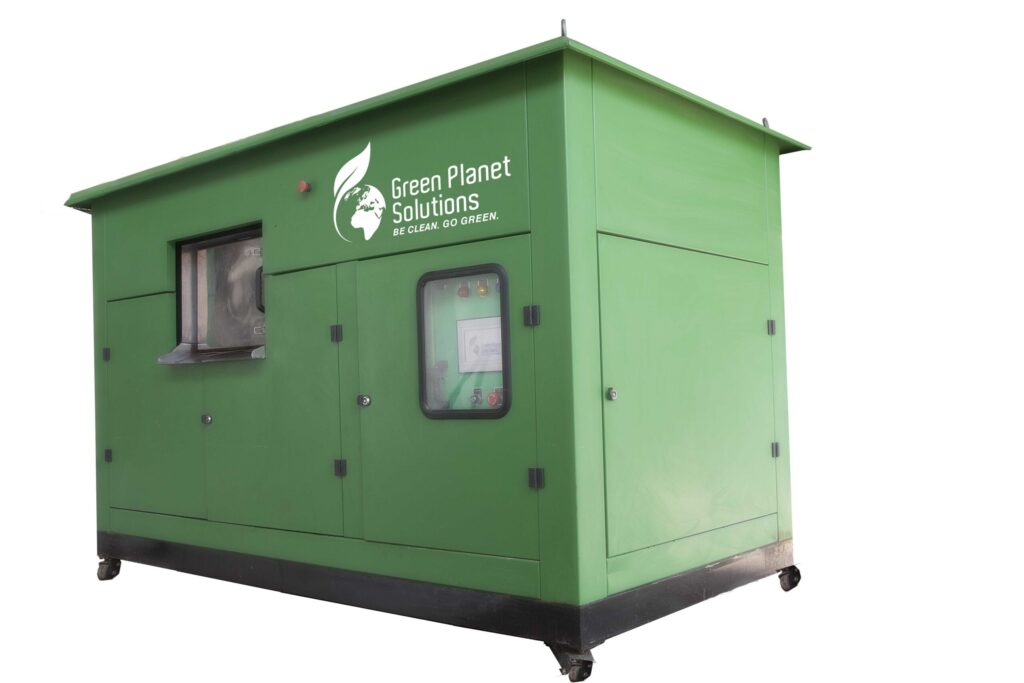
- Organic waste composting machine (best for homes & apartments)
Machines are cleaner, faster, and easier to manage.
Step 3: Segregate Waste Properly
Always separate:
- Wet waste: vegetable peels.
- Dry waste: leaves, paper.
- This step is very important for smooth composting.
Step 4: Add Waste in Layers
- Now, start composting:
- Add one layer of wet waste
- Cover it with a layer of dry waste
- Mix lightly
This balance helps avoid bad smell and speeds up composting.
Step 5: Maintain Moisture and Air
- Do not add too much water
- Stir or rotate waste every 2–3 days
- Ensure airflow
- Most organic waste composting machines do this automatically.
Step 6: Wait and Use Compost
- Within 15–30 days, you will get dark, soil-like compost.
- You can use it for:
- Home garden
- Potted plants
- Lawn soil
Why Use an Organic Waste Composting Machine at Home?
Using a composting machine makes the process easier and cleaner.
Benefits include:
- Faster composting
- No foul smell
- Less manual work
- Ideal for apartments
- Hygienic and safe
Because of this, many Indian families now prefer machines over traditional compost bins.
Common Mistakes to Avoid
- Adding plastic or metal waste
- Using too much water
- Not mixing waste regularly
- Skipping dry waste layers
Avoiding these mistakes ensures better compost quality.
Frequently Asked Questions (FAQs)
1. Can I compost in an apartment?
Yes, an organic waste composting machine is perfect for apartments.
2. Does composting smell bad?
No, when done properly, composting does not produce bad odor.
3. How long does composting take?
Usually 15–30 days with a composting machine.
4. What waste should not be added?
Avoid plastic, glass, meat, and oily food.
5. Is compost safe for plants?
Yes, compost is natural and very good for soil health.
Conclusion
Creating a composting system in your home is quite easy and very helpful. With the help of an organic waste composting machine, you can easily convert your daily kitchen waste into natural compost.
In addition to this, composting waste helps in reducing waste, conserving nature, and keeping your home clean. Therefore, start composting today and take a small step towards a green tomorrow.