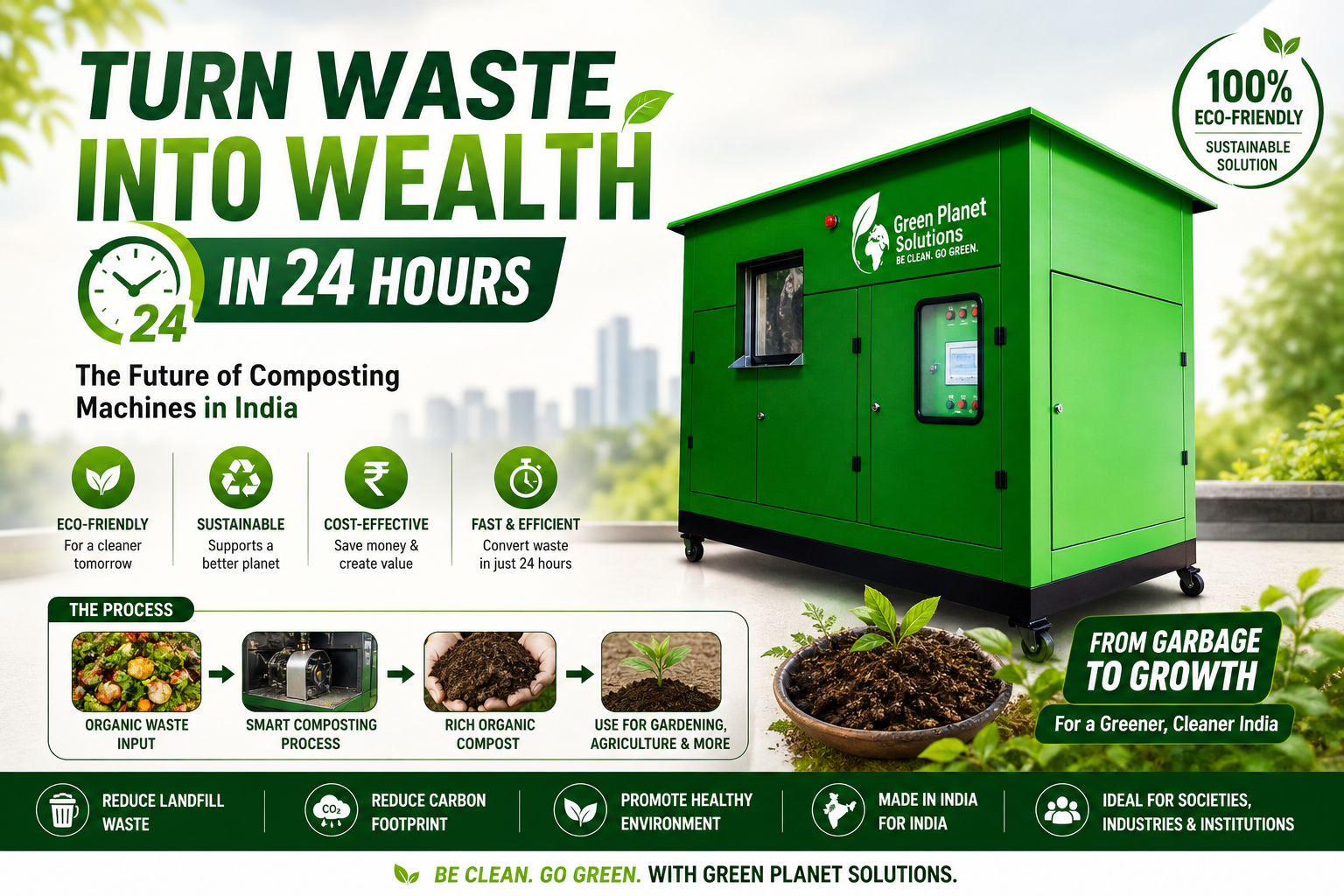
Introduction: India’s Growing Waste Problem
India generates millions of tons of organic waste every day from households, societies, hotels, and industries. Unfortunately, a large portion of this waste ends up in landfills, causing pollution, foul odor, and serious environmental issues. With increasing awareness about sustainability and government initiatives like Swachh Bharat Abhiyan, the need for efficient waste management solutions has never been greater. Composting Machines
This is where composting machines are revolutionizing the system—by converting waste into valuable compost within just 24 hours.
What is a Composting Machines?
A composting machine is an advanced waste management system designed to convert organic waste such as food scraps, garden waste, and biodegradable materials into nutrient-rich compost. Unlike traditional composting, which takes weeks or even months, modern machines use innovative technology to accelerate the process and deliver results in just one day.
How Does a Composting Machines Work?
The process is simple yet highly effective:
- Waste Collection: Organic waste is collected and fed into the machine.
- Segregation: Non-biodegradable materials are removed.
- Decomposition: The machine uses heat, microbes, and controlled conditions to break down waste quickly.
- Compost Output: Within 24 hours, the waste is converted into dry, odor-free compost.
This fast and automated process ensures efficiency without harming the environment.
Benefits of Composting Machines
1. Converts Waste into Wealth
Instead of dumping waste, it is transformed into valuable compost that can be used in gardening or sold for profit.
2. Reduces Landfill Burden
Composting machine significantly reduce the volume of waste sent to landfills, helping control pollution and greenhouse gas emissions.
3. Eco-Friendly Solution
These machines promote sustainable living by recycling organic waste and reducing environmental impact.
4. Odor-Free and Hygienic
Modern composting machine are designed to operate without producing foul smells, making them ideal for residential and commercial use.
5. Cost-Effective in the Long Run
Although there is an initial investment, it saves money on waste disposal and creates a potential revenue stream through compost sales.
Composting Machine vs Traditional Composting
| Feature | Composting Machine | Traditional Composting |
|---|---|---|
| Time Required | 24 Hours | 30–60 Days |
| Space Needed | Compact | Large Area |
| Odor Control | Odor-Free | Can Smell |
| Maintenance | Low | High |
| Efficiency | High | Moderate |
Clearly, composting machines offer a faster, cleaner, and more efficient solution.
Applications of Composting Machines
Composting machines are widely used in:
- Residential societies
- Hotels and restaurants
- Educational institutions
- Industrial units
- Municipal corporations
They are an ideal solution wherever organic waste is generated in large quantities.
Why Composting Machines Are the Future in India
India is rapidly moving towards sustainable development and smart city initiatives. Government regulations are also encouraging waste segregation and on-site waste processing. Composting machines align perfectly with these goals by offering a practical, scalable, and eco-friendly solution.
As awareness grows, more businesses and communities are adopting composting machines, making them a key part of India’s waste management future.
Conclusion: A Step Towards a Greener Tomorrow
Composting machines are not just a technology—they are a movement towards sustainability. By converting waste into valuable compost within 24 hours, they help reduce pollution, save costs, and create a cleaner environment.
If India aims to tackle its waste crisis effectively, adopting composting machines is no longer an option—it is a necessity.
Call to Action
Looking for a reliable composting solution?
Green Planet Solutions offers advanced composting machines designed for efficiency, durability, and eco-friendliness.
📞 Contact: +91 7722073961
📧 Email: inquiry@thegreenplanetsolutions.com
🌱 Be Clean. Go Green.