Introduction
In today’s rapidly growing world, waste management has become one of the biggest environmental challenges. Large amounts of food waste and organic waste are dumped into landfills every day, causing pollution and harming the environment. Composting is an eco-friendly solution that helps convert organic waste into nutrient-rich compost, reducing environmental damage and supporting sustainability.
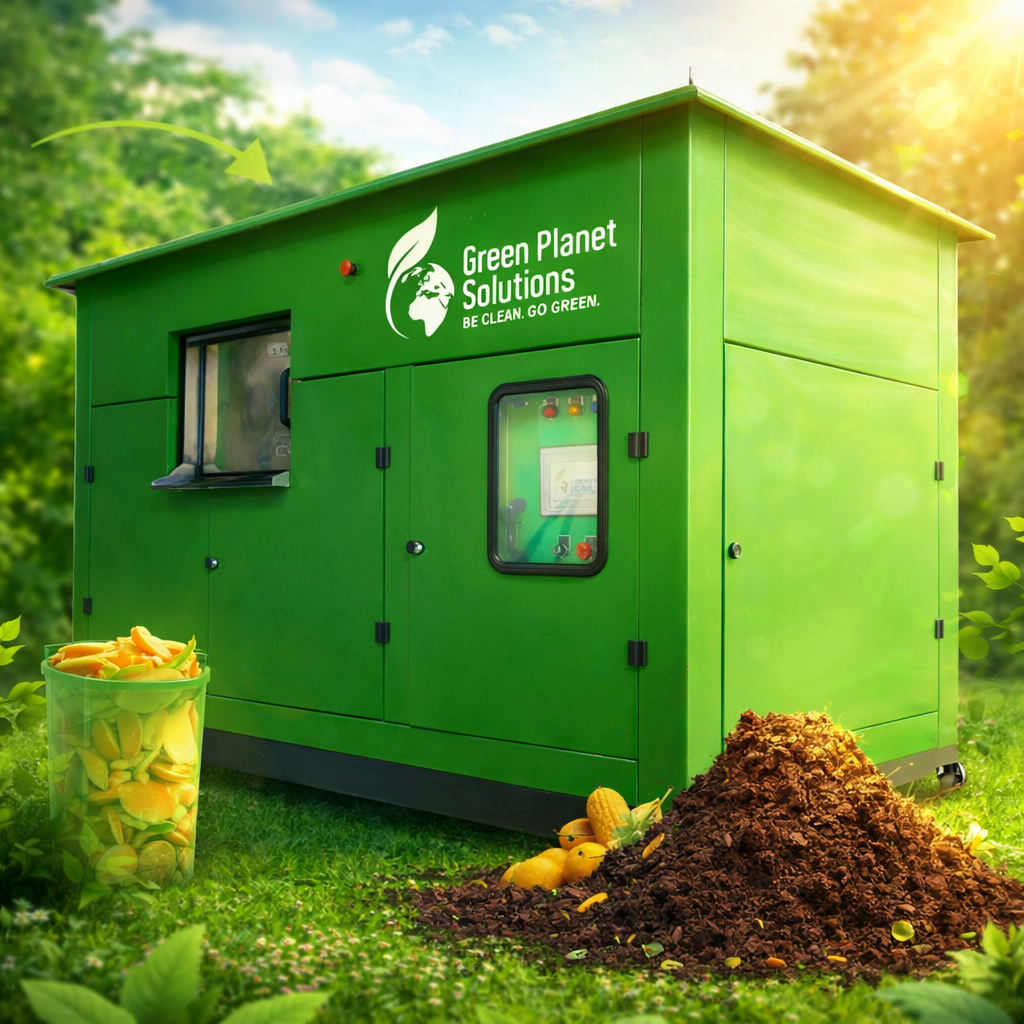
Modern composting machines make the composting process faster, cleaner, and more efficient for homes, apartments, hotels, industries, and commercial spaces.
What is Composting?
Composting is the natural process of decomposing organic waste such as food scraps, vegetable peels, garden waste, and biodegradable materials into useful compost. This compost acts as a natural fertilizer that improves soil quality and supports plant growth.
With advanced composting machines, organic waste can now be converted into compost quickly and hygienically without causing bad odors or pollution.
How Composting Supports Environmental Sustainability
1. Reduces Landfill Waste
A large percentage of daily waste consists of organic materials. When this waste is sent to landfills, it occupies huge space and releases harmful greenhouse gases like methane. Composting helps divert organic waste from landfills and reduces environmental pollution.
2. Lowers Greenhouse Gas Emissions
Organic waste decomposing in landfills produces methane gas, which contributes significantly to global warming. Composting reduces methane production and helps control climate change by managing waste naturally.
3. Produces Natural Fertilizer
Compost is rich in nutrients and acts as an organic fertilizer for plants and soil. It reduces the dependency on chemical fertilizers, which can damage the environment and reduce soil fertility over time.
4. Improves Soil Health
Compost enhances soil structure, increases water retention, and provides essential nutrients to plants. Healthy soil supports better agriculture and greener landscapes.
5. Encourages Sustainable Waste Management
Composting promotes responsible waste management practices in residential societies, hotels, restaurants, industries, schools, and commercial spaces. It supports a circular economy where waste is reused instead of discarded.
6. Saves Transportation and Disposal Costs
Managing organic waste at the source using composting machines reduces the need for waste transportation and landfill disposal. This helps businesses and municipalities save operational costs.
Benefits of Using Composting Machines
- Fast and efficient composting process
- Reduces bad odor and pests
- Eco-friendly waste disposal solution
- Suitable for apartments, hotels, industries, and institutions
- Produces high-quality compost
- Helps maintain clean surroundings
- Supports green initiatives and sustainability goals
Role of Composting Machines in Smart Cities
As cities continue to grow, waste generation also increases. Composting machines help smart cities manage organic waste efficiently while reducing pollution and landfill dependency. They contribute to cleaner environments and sustainable urban development.
Conclusion
Composting is an essential step toward environmental sustainability. It helps reduce waste, lowers pollution, improves soil health, and promotes eco-friendly living. With modern composting machines, businesses and communities can efficiently manage organic waste while contributing to a greener and healthier future.
Adopting composting solutions today can create a cleaner environment for future generations.
Frequently Asked Questions (FAQs)
Q1. What is a composting machine?
A composting machine is equipment designed to convert organic waste into compost quickly and efficiently through controlled decomposition.
Q2. What type of waste can be composted?
Food waste, vegetable peels, fruit waste, garden waste, and other biodegradable materials can be composted.
Q3. How does composting help the environment?
Composting reduces landfill waste, lowers greenhouse gas emissions, improves soil quality, and promotes sustainable waste management.
Q4. Who can use composting machines?
Composting machines are suitable for apartments, hotels, restaurants, industries, schools, hospitals, and commercial spaces.
Q5. Is compost produced by composting machines useful?
Yes, the compost produced is nutrient-rich and can be used as an organic fertilizer for plants, gardens, and agriculture.
Q6. Why are composting machines important for businesses?
They help businesses manage waste responsibly, reduce disposal costs, maintain hygiene, and support environmental sustainability goals.