Introduction
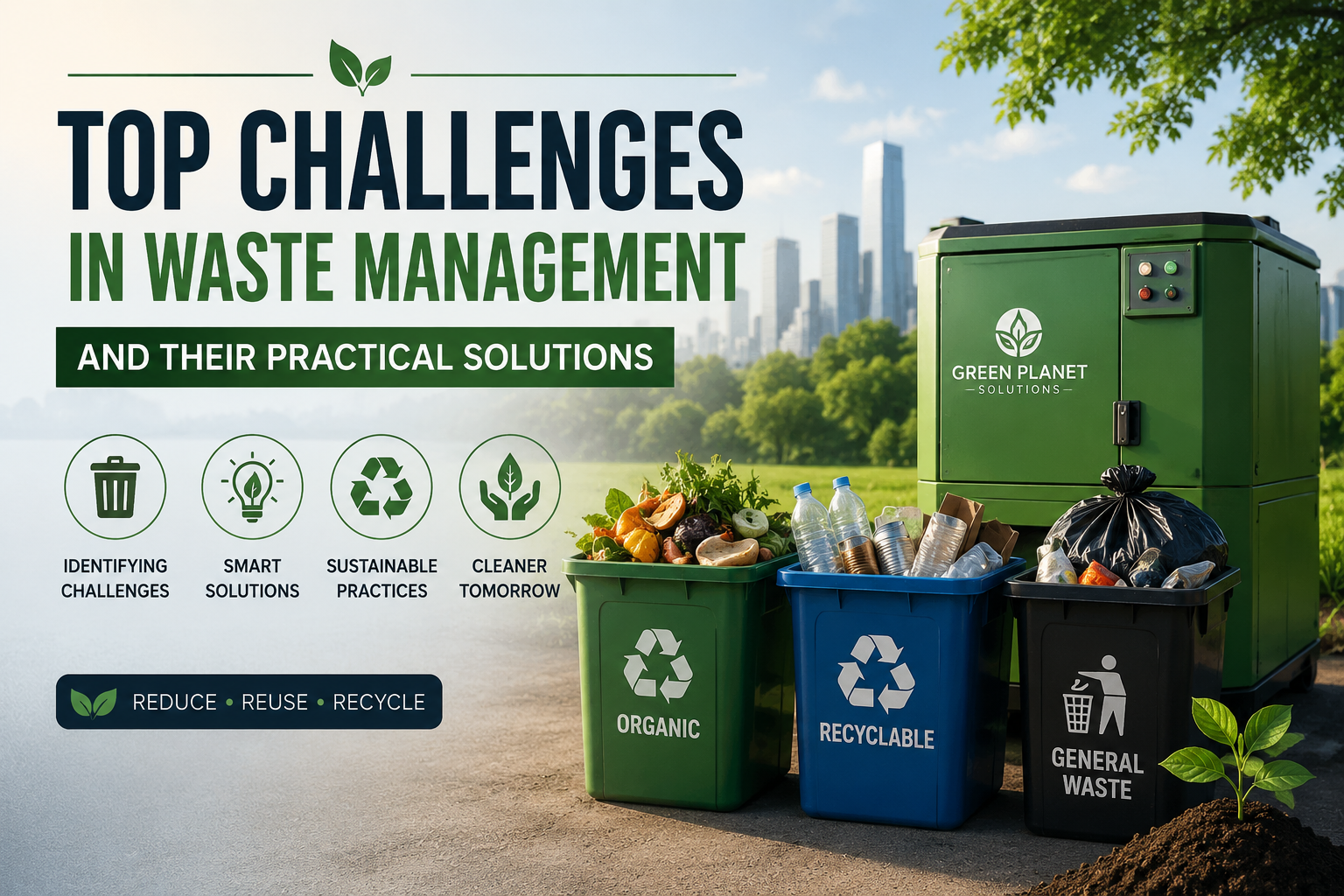
Waste management has become one of the most pressing environmental concerns in today’s rapidly urbanizing world. With growing populations, increased consumption, and expanding industries, the volume of waste generated is rising every year. Improper waste disposal not only harms the environment but also affects public health and economic sustainability. To build cleaner and greener communities, it is essential to understand the major challenges in waste management and adopt practical solutions that create long-term impact.
1. Lack of Waste Segregation at Source
One of the biggest challenges in waste management is the failure to separate waste at the point of generation. Many households, offices, and commercial establishments dispose of wet waste, dry waste, and hazardous waste together, making recycling and treatment difficult.
Practical Solution
Creating awareness about waste segregation is the first step toward effective waste management. Separate bins for biodegradable, recyclable, and hazardous waste should be installed in homes, offices, schools, and public places. Proper segregation helps increase recycling rates and reduces the burden on landfills.
2. Growing Volume of Organic Waste
Food waste from homes, hotels, restaurants, and institutions contributes significantly to municipal waste. When organic waste is dumped in landfills, it decomposes anaerobically and releases methane, a harmful greenhouse gas.
Practical Solution
Installing organic waste composting machines can transform food and garden waste into nutrient-rich compost within a short period. This not only reduces landfill waste but also produces a valuable resource that can be used in gardening, landscaping, and agriculture.
3. Dependence on Landfills
Many cities still rely heavily on landfills for waste disposal. As waste generation increases, landfills become overcrowded, leading to environmental pollution, foul odors, and groundwater contamination.
Practical Solution
Decentralized waste management systems can significantly reduce landfill dependency. Recycling, composting, and waste-to-resource initiatives help process waste locally and minimize the amount sent to landfills.
4. Low Recycling Rates
Although recyclable materials such as paper, plastic, glass, and metal have economic value, a large portion still ends up in landfills due to poor collection systems and lack of public participation.
Practical Solution
Organizations and municipalities should establish efficient recycling programs and encourage responsible disposal practices. Awareness campaigns and partnerships with recycling agencies can help recover valuable materials and support a circular economy.
5. Limited Public Awareness
Many people are unaware of the environmental impact of improper waste disposal. Without sufficient knowledge, individuals and organizations often overlook sustainable waste management practices.
Practical Solution
Regular awareness programs, workshops, community drives, and educational campaigns can encourage responsible waste handling. Schools, colleges, housing societies, and businesses should actively promote environmental education and sustainability initiatives.
6. High Waste Management Costs
Collecting, transporting, and processing waste requires significant financial resources. Inefficient systems can increase operational expenses for municipalities and businesses.
Practical Solution
Adopting modern waste management technologies such as composting machines and smart waste collection systems can reduce transportation costs and improve operational efficiency. Processing waste at the source also lowers long-term expenses.
7. Managing Waste in Commercial Establishments
Hotels, restaurants, hospitals, and corporate offices generate large quantities of waste daily. Managing this waste effectively while complying with environmental regulations can be challenging.
Practical Solution
Businesses should implement customized waste management strategies that include waste audits, segregation systems, composting solutions, and recycling programs. Sustainable practices not only improve environmental performance but also enhance brand reputation.
Conclusion
Waste management is no longer just an environmental responsibility—it is a necessity for sustainable development. Challenges such as poor segregation, increasing organic waste, landfill dependency, and low recycling rates can be effectively addressed through awareness, technology, and responsible practices. By adopting practical waste management solutions, individuals, businesses, and communities can contribute to a cleaner environment and a more sustainable future.
At Green Planet Solutions, we are committed to helping organizations manage waste efficiently through innovative and eco-friendly waste management solutions. Together, we can turn waste into a valuable resource and build a greener tomorrow.