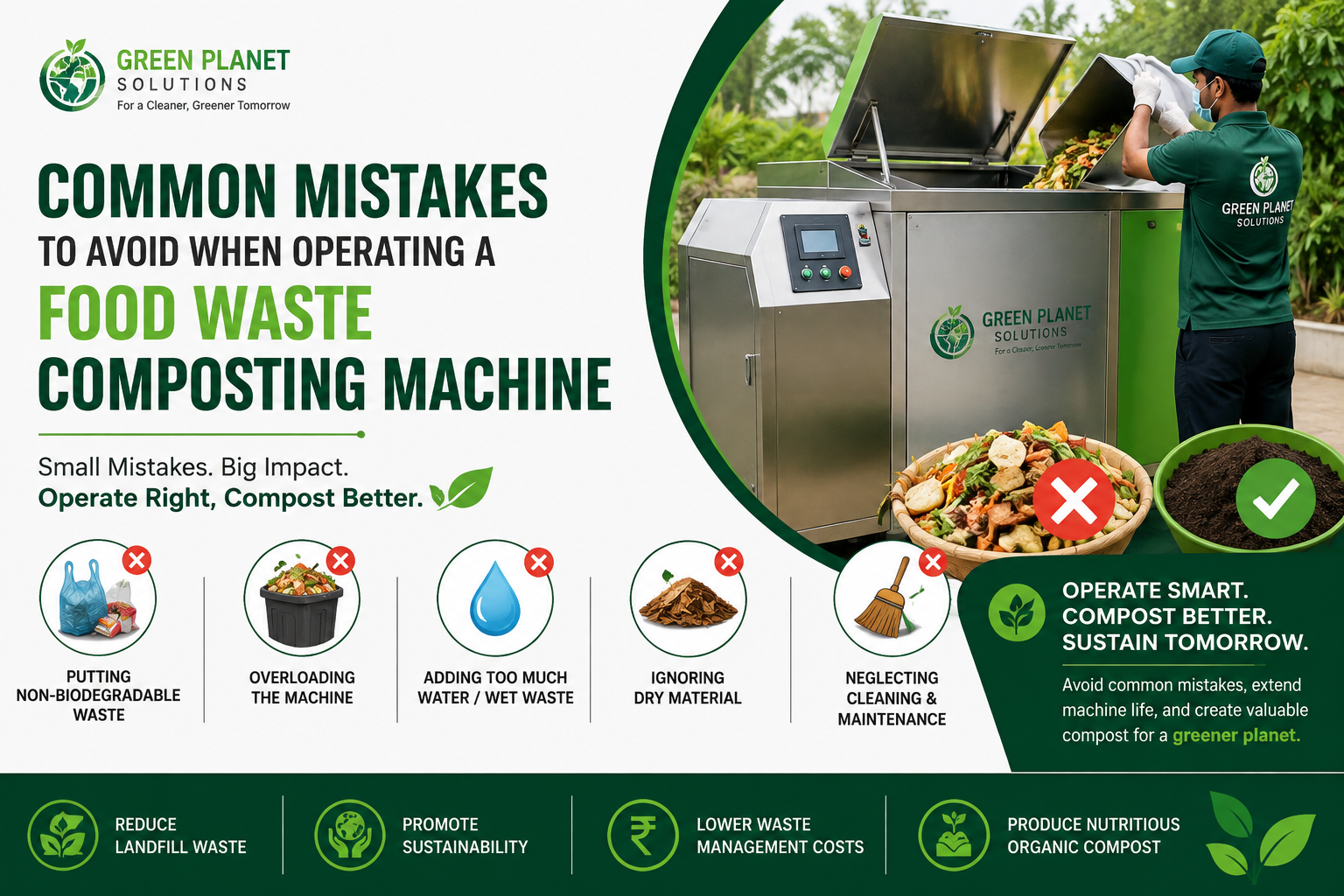
Food waste composting machines are becoming an important part of sustainable waste management for housing societies, hotels, restaurants, commercial kitchens, institutions, and other organizations. These machines help convert organic waste into compost while reducing the amount of waste sent to landfills. However, simply installing a composting machine is not enough. Proper operation, waste segregation, regular monitoring, and timely servicing are essential for achieving the best results.
Many common operational problems occur because of small mistakes that can easily be avoided. Understanding these mistakes can help improve machine performance, reduce maintenance requirements, and produce better-quality compost.
1. Not Segregating Waste Properly
One of the biggest mistakes is putting mixed waste into the composting machine. Food waste may contain plastic wrappers, bottles, metal items, glass, rubber, foil, and other non-biodegradable materials. These materials do not decompose and can affect the working of the machine.
Proper waste segregation should always be done before feeding waste into the machine. Only suitable biodegradable waste should be processed. A well-planned segregation system also helps protect the machine and improves the quality of the final compost.
2. Overloading the Composting Machine
Every composting machine is designed to handle a specific amount of organic waste per day. Adding more waste than the recommended capacity can affect the composting process and put unnecessary pressure on the machine.
Overloading may lead to poor mixing, excess moisture, unpleasant odours, and incomplete processing. Organizations should select the right machine capacity according to their daily food waste generation and avoid exceeding the recommended loading limit.
3. Adding Too Much Water or Wet Waste
Food waste naturally contains moisture, but excessive water can create problems during composting. Very wet waste can make the material sticky and reduce proper aeration inside the machine.
It is important to maintain the right moisture balance. Depending on the type of machine and waste, suitable dry material or bulking agents may be required. Following the manufacturer’s operating guidelines can help maintain the correct balance.
4. Ignoring the Importance of Dry Material
Some users add only wet kitchen waste to the composting machine without maintaining the proper balance of organic materials. This can result in excess moisture and poor compost quality.
Dry organic material can help improve the texture and balance of the waste. Using the recommended bulking material in the correct quantity supports better airflow and helps create suitable conditions for the composting process.
5. Not Following the Recommended Operating Procedure
Every food waste composting machine may have specific operating instructions. Ignoring these instructions can lead to operational problems and reduce the efficiency of the system.
Staff members responsible for operating the machine should receive proper training. They should understand what type of waste can be added, how much waste should be loaded, how to operate the controls, and how to handle the output material safely.
6. Neglecting Regular Cleaning
Like any other waste management equipment, a composting machine requires regular cleaning. If waste residues are allowed to accumulate, they may cause hygiene issues, unpleasant smells, and operational difficulties.
Regular cleaning of the machine and surrounding area helps maintain a hygienic environment. It also makes it easier to identify any unusual issues before they become major maintenance problems.
7. Skipping Regular Servicing and Maintenance
Many organizations only contact a service provider after the machine develops a problem. Preventive maintenance is much more effective than waiting for a breakdown.
Regular servicing helps check important components, identify wear and tear, and ensure that the machine continues to operate efficiently. Timely maintenance can also improve the life of the equipment and reduce unexpected downtime.
8. Using the Machine Without Trained Staff
A composting machine may be easy to operate, but the person handling it should still understand the basic process. Improper operation can affect both the machine and the quality of the compost.
Providing basic training to housekeeping staff, facility managers, or machine operators can make a significant difference. A trained operator is more likely to identify problems early and follow the correct waste-loading procedure.
9. Ignoring Unusual Smells or Changes in Performance
Bad odours, unusual sounds, poor-quality output, or changes in processing performance should not be ignored. These signs may indicate problems such as incorrect waste segregation, excess moisture, overloading, or the need for maintenance.
Early attention can prevent small issues from becoming major problems. Regular monitoring is therefore an important part of successful composting machine operation.
10. Treating Composting as Only a Machine-Based Process
A composting machine is an effective solution, but successful waste management also requires participation from the people generating the waste. Residents, kitchen staff, employees, and housekeeping teams all have a role to play.
Creating awareness about waste segregation and proper disposal can significantly improve the overall effectiveness of the composting system. Sustainable waste management works best when technology and responsible behaviour work together.
Conclusion
Operating a food waste composting machine correctly is essential for achieving efficient and sustainable waste management. Simple practices such as proper waste segregation, avoiding overloading, maintaining the right moisture balance, regular cleaning, trained operation, and timely servicing can make a major difference.
For housing societies, hotels, restaurants, and commercial establishments, a well-maintained composting machine can help manage organic waste responsibly and reduce dependence on landfills. By avoiding these common mistakes, organizations can ensure smoother machine operation and contribute to a cleaner, greener, and more sustainable future. 🌱♻️