Tag: Food Waste Composting

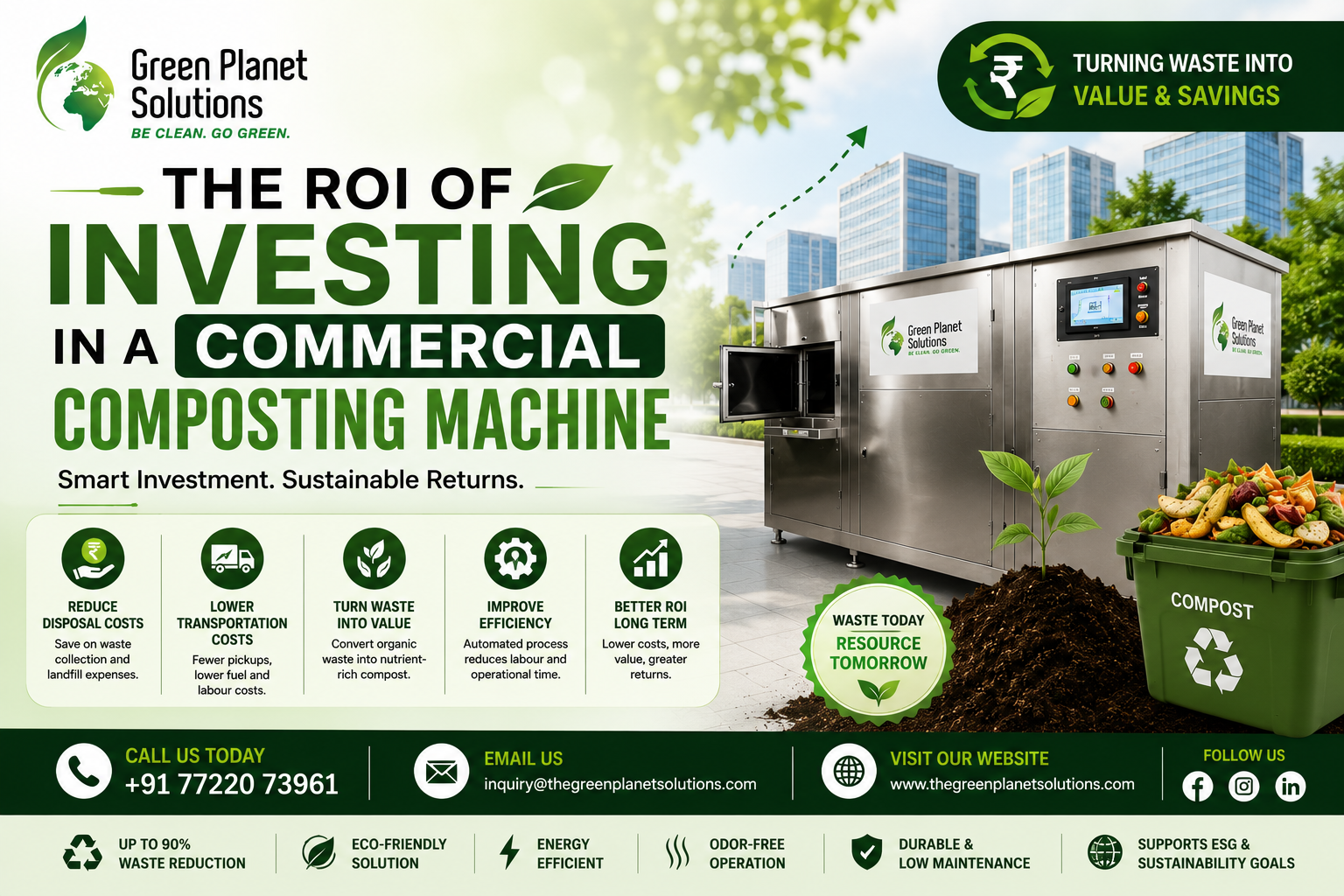
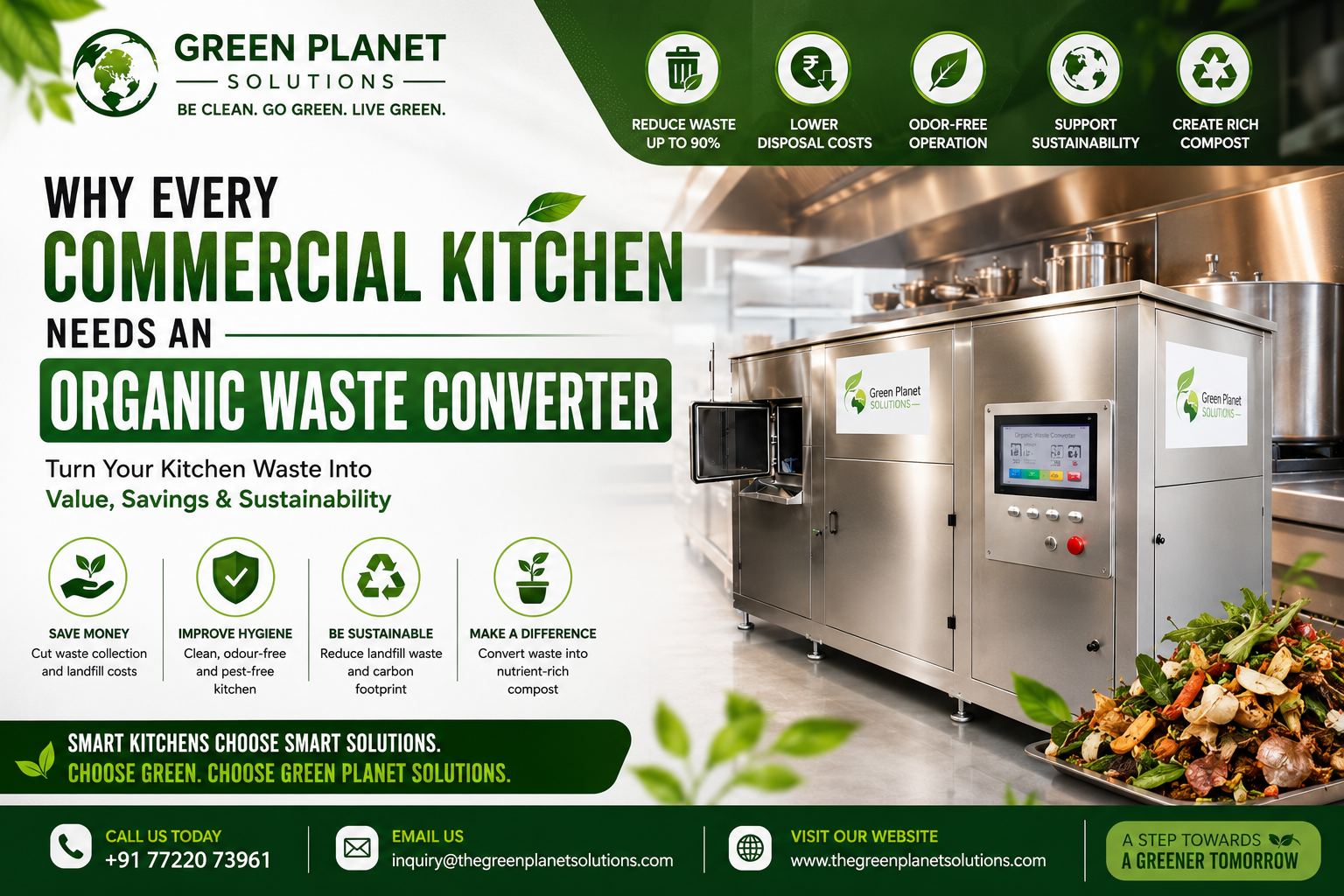
  • Composting Machine: Why Every Business Should Invest in 2026

    Composting Machine: Why Every Business Should Invest in 2026


    💡 Introduction

    In 2026, sustainability is no longer an option—it’s a necessity. With increasing environmental regulations and rising waste management costs, businesses are under pressure to adopt smarter and greener solutions. One such powerful solution is the composting machine, which transforms organic waste into valuable compost. Investing in a composting machine not only helps businesses reduce waste but also creates long-term financial and environmental benefits.


    ♻️ 1. Reduce Waste Disposal Costs

    Businesses like hotels, restaurants, housing societies, and food industries generate a significant amount of organic waste daily. Managing this waste through traditional disposal methods can be expensive. A composting helps convert waste on-site, reducing transportation and landfill costs, ultimately saving money.


    🌿 2. Promote Sustainability & Brand Image

    Modern consumers prefer businesses that care about the environment. By investing in a composting machines, companies can showcase their commitment to sustainability. This not only improves brand reputation but also attracts eco-conscious customers and partners.


    ⚙️ 3. Easy Waste Management Solution

    Composting machines are designed to be user-friendly and efficient. They automate the process of converting waste into compost, requiring minimal manual effort. This makes waste management simple, clean, and hassle-free for businesses of all sizes.


    🌱 4. Generate Useful By-Products using Composting Machine

    Instead of treating waste as a problem, composting turn it into an asset. The output compost can be used for gardening, landscaping, or even sold as an organic fertilizer, creating an additional revenue stream.


    📊 5. Compliance with Government Regulations

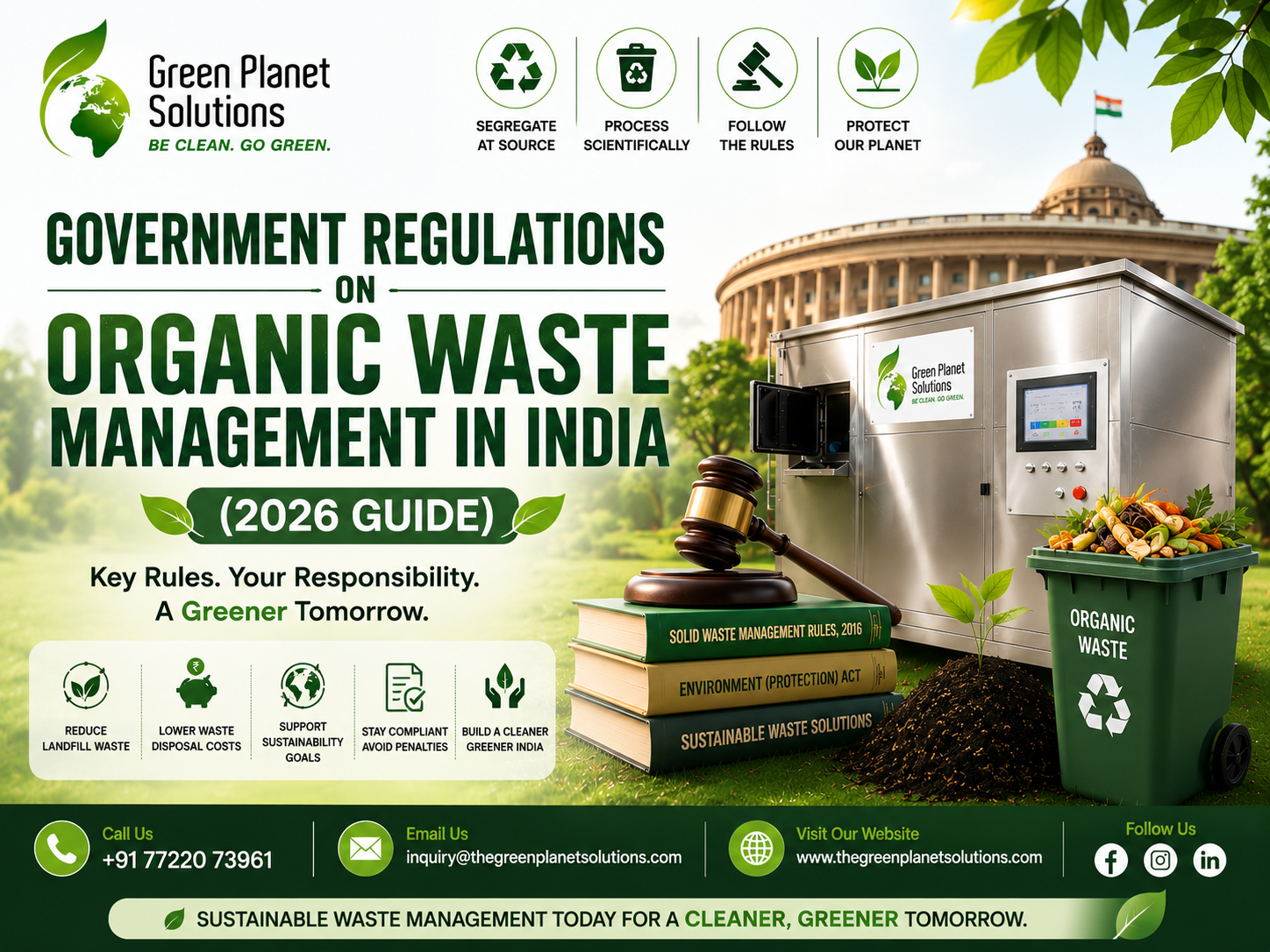
    Governments are increasingly enforcing strict waste management rules. Installing a composting helps businesses comply with these regulations, avoiding penalties and legal issues while contributing to a cleaner environment.


    💰 6. Long-Term Cost Efficiency using Composting Machine

    Although the initial investment may seem high, composting provide long-term savings. Reduced waste handling costs, potential revenue from compost, and improved operational efficiency make it a smart financial decision.


    🚀 7. Future-Proof Your Business using Composting Machine

    Sustainability trends are shaping the future of industries. Businesses that adopt eco-friendly technologies like composting machines today will stay ahead of competitors and be better prepared for future environmental policies.


    Conclusion

    A composting machine is not just a waste management tool—it’s a strategic investment for businesses in 2026. It helps reduce costs, enhances brand value, ensures compliance, and contributes to a greener planet.

    🌍 The future belongs to businesses that turn waste into opportunity.

  • Common Mistakes to Avoid While Using a Composting Machine

    Common Mistakes to Avoid While Using a Composting Machine

    📝 Introduction

    Composting machine are revolutionizing waste management by turning organic waste into valuable compost quickly and efficiently. However, many users fail to get the desired results due to common operational mistakes. Whether you are a business, housing society, or institution, avoiding these errors can help you improve efficiency, reduce maintenance costs, and produce high-quality compost. In this blog, we will explore the most common mistakes and how to avoid them.


    1. Adding Non-Biodegradable Waste in Composting Machine

    One of the most common mistakes is adding plastic, metal, or glass into the composting machine. Composting machines are designed to process only organic waste such as food scraps, vegetable peels, and garden waste. Non-biodegradable materials can damage the machine and contaminate the compost. Always ensure proper waste segregation before feeding the machine.


    ⚖️ 2. Incorrect Waste Ratio (Wet vs Dry Waste) on Composting Machine

    Maintaining the right balance between wet and dry waste is crucial. Too much wet waste can lead to foul odor and slow composting, while too much dry waste can reduce microbial activity. A balanced ratio (usually 60% wet and 40% dry waste) helps maintain optimal composting conditions and ensures faster results.


    🌡️ 3. Ignoring Temperature and Moisture Levels

    Temperature and moisture play a key role in composting. If the compost is too dry, decomposition slows down. If it is too wet, it can become smelly and anaerobic. Regularly monitor moisture levels and maintain proper aeration to keep the composting process active and efficient.


    🛠️ 4. Lack of Regular Maintenance of Composting Machine

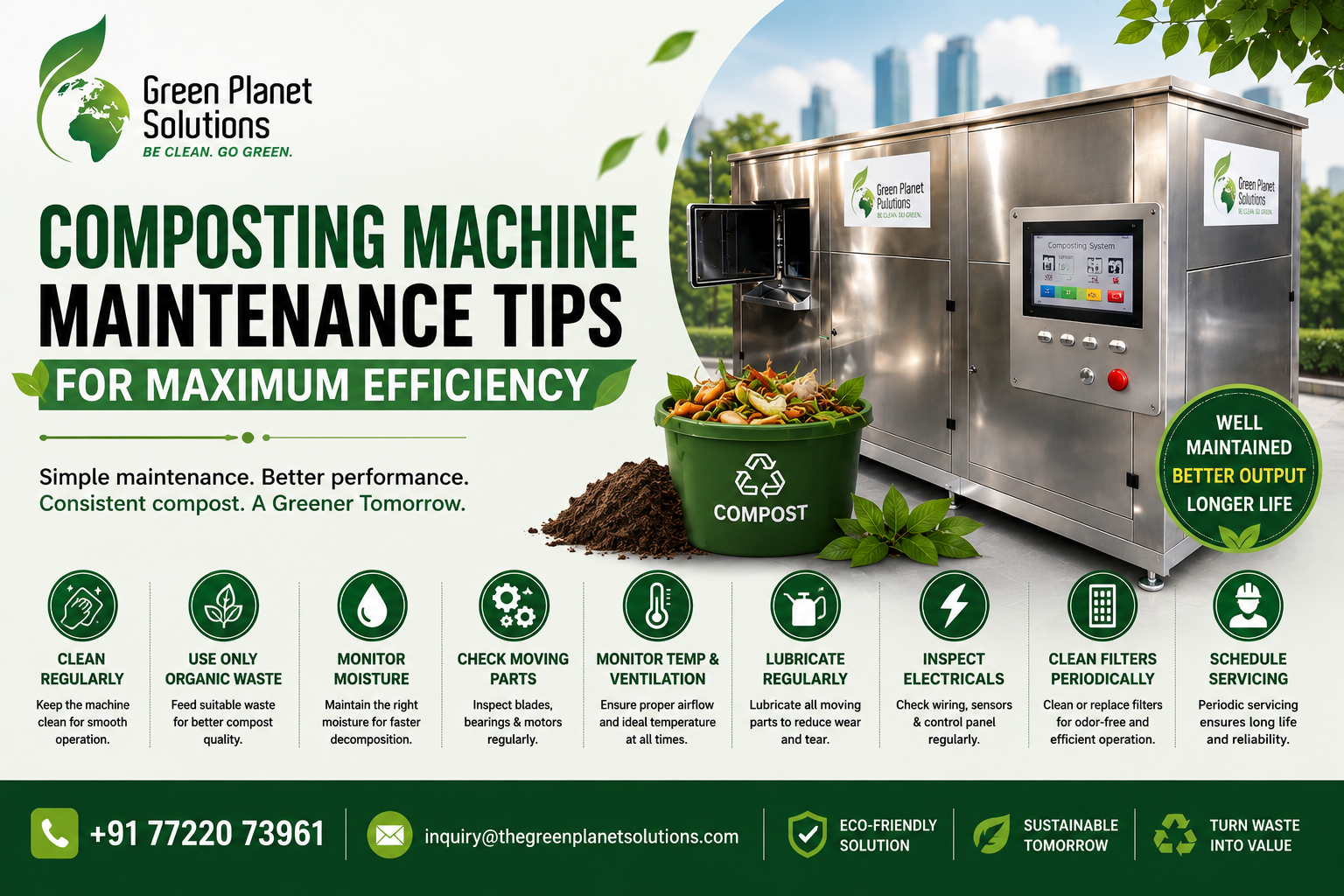
    Many users neglect routine maintenance, which can lead to machine breakdowns and reduced efficiency. Cleaning the machine, checking moving parts, and ensuring proper functioning of components are essential for long-term performance. Regular servicing can prevent costly repairs.

    composting machine

    5. Overloading the Composting Machine

    Overfeeding the composting machine beyond its capacity can disrupt the composting process. It may lead to incomplete decomposition and strain on the machine. Always follow the recommended capacity guidelines provided by the manufacturer.


    🌬️ 6. Poor Aeration

    Composting requires oxygen for proper microbial activity. Lack of aeration can result in bad odor and slow composting. Ensure that the machine allows proper airflow or is mixed regularly to maintain aerobic conditions.


    🧪 7. Not Using Microbial Culture Properly

    Microbial culture or composting agents are essential to speed up the decomposition process. Skipping or incorrectly using them can delay compost formation. Always use the recommended quantity for best results.


    🚫 8. Ignoring Odor Issues

    Bad odor is often a sign of improper composting. Instead of ignoring it, identify the root cause—such as excess moisture, poor aeration, or incorrect waste ratio—and fix it immediately to maintain hygiene.


    🌍 Conclusion

    Using a composting machine is a smart and sustainable way to manage organic waste, but only when used correctly. By avoiding these common mistakes, you can improve efficiency, reduce operational issues, and produce high-quality compost consistently. Proper usage not only benefits your organization but also contributes to a cleaner and greener environment.


    📞 Call to Action

    Looking for reliable composting solutions?
    Green Planet Solutions offers advanced composting machines along with complete support and consultation.

    📱 +91 7722073961
    📧 inquiry@thegreenplanetsolutions.com

  • Can a Composting Machine Turn Waste into Profit?

    Can a Composting Machine Turn Waste into Profit?

    🌿 Introduction: Waste is Not Waste Anymore

    In today’s world, waste management is no longer just about disposal—it’s about transformation. With increasing environmental concerns and stricter regulations, businesses and residential societies are now looking for smarter solutions. One such innovation is the composting machine, which has the power to convert organic waste into valuable compost. But the real question is—can it actually generate profit? The answer is yes.


    ♻️ What is a Composting Machine?

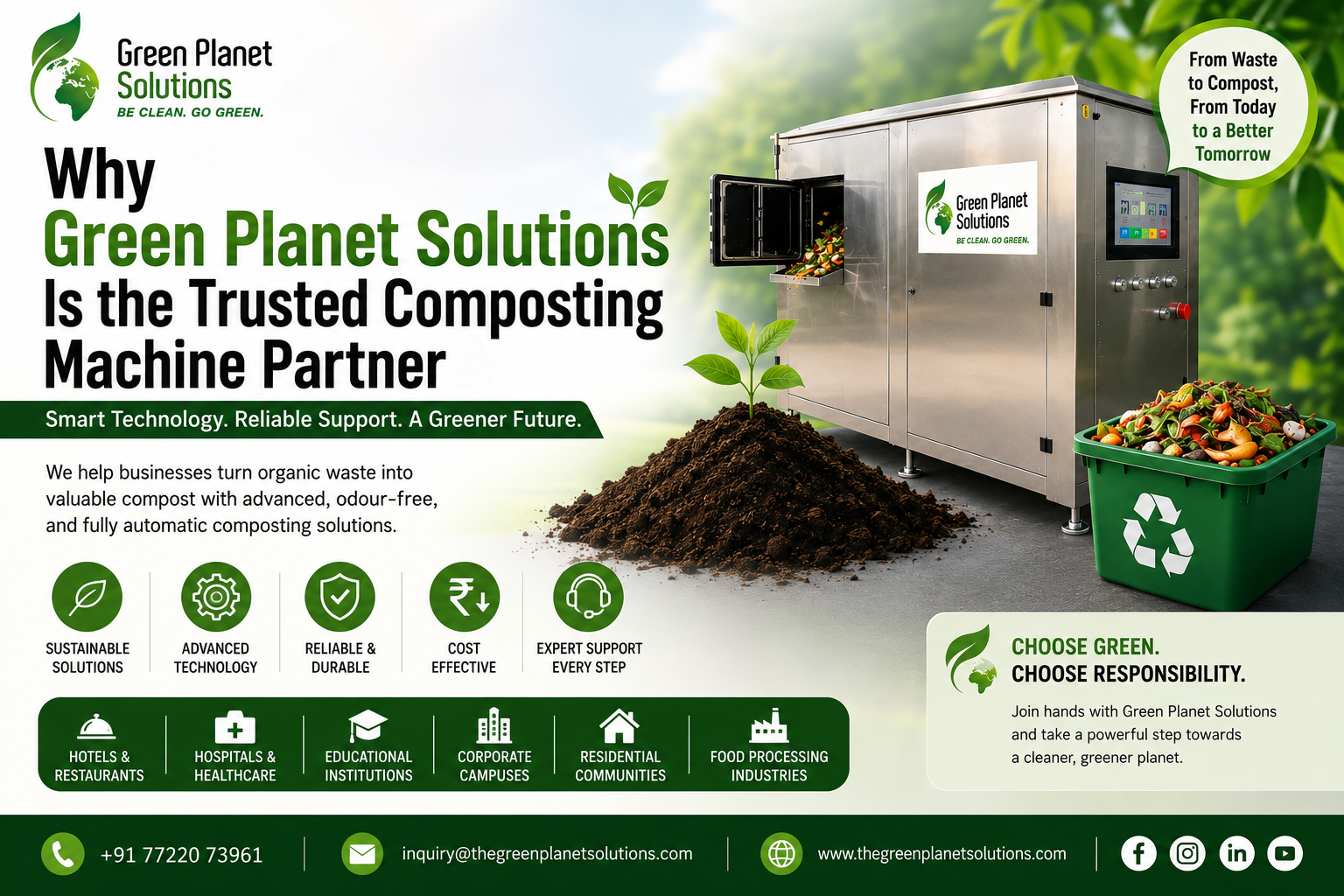
    A composting machine is a device that converts organic waste such as food scraps, vegetable peels, and garden waste into nutrient-rich compost within a short time. Unlike traditional composting methods that take weeks or months, modern machines can complete the process in 24–48 hours, making them efficient and practical for daily use.


    💰 How Composting Machine Generate Profit

    1. Reduction in Waste Disposal Costs using Composting Machine

    Organizations spend a significant amount on waste collection, transportation, and landfill dumping. By installing a composting machine, these costs can be drastically reduced or even eliminated. This direct saving itself becomes a form of profit.


    2. Revenue from Compost Sales

    The compost produced is rich in nutrients and highly valuable for gardening, agriculture, and landscaping. Businesses and societies can sell this compost to:

    • Farmers
    • Garden centers
    • Landscaping companies

    This creates an additional revenue stream from what was once considered waste.

    composting machine

    3. Government Incentives & Compliance Benefits

    In India, waste management rules encourage segregation and composting of wet waste. Many local authorities offer:

    • Subsidies
    • Tax benefits
    • Reduced penalties

    By adopting composting machines, organizations not only comply with regulations but also save money and gain financial advantages.


    4. Brand Value & Sustainability Marketing

    Today’s consumers prefer environmentally responsible brands. Businesses that adopt composting:

    • Improve their brand image
    • Attract eco-conscious customers
    • Gain a competitive advantage

    This indirect benefit can lead to increased sales and long-term profitability.


    5. Low Maintenance, High Returns

    Modern composting machines are designed for ease of use with minimal manpower. Once installed, operational costs are relatively low compared to the long-term savings and earnings, making it a high-return investment.


    🏢 Who Can Benefit the Most?

    Composting are ideal for:

    • Hotels & Restaurants
    • Housing Societies
    • Corporate Offices
    • Educational Institutions
    • Municipal Corporations

    Any place generating organic waste daily can convert it into profit.


    🌍 Environmental Impact = Financial Value

    By reducing landfill waste and lowering carbon emissions, composting machines contribute to a cleaner environment. This not only fulfills social responsibility but also reduces long-term environmental costs, which indirectly supports financial sustainability.


    🚀 Conclusion: From Waste to Wealth Using Composting Machine

    A composting machine is not just a waste management tool—it is a smart investment. By reducing costs, generating revenue, and enhancing brand value, it proves that waste can indeed be turned into profit.

    Businesses and societies that adopt this technology today are not only saving money but also building a sustainable future.


    🌱 How Green Planet Solutions Can Help

    At Green Planet Solutions, we provide advanced composting machines designed to maximize efficiency and profitability. Our solutions help you convert your daily waste into valuable compost while ensuring compliance with environmental regulations.

    📞 Contact Us: +91 7722073961
    📧 inquiry@thegreenplanetsolutions.com

  • Convert Food Waste into Fuel: Save Lakhs Every Year

    Convert Food Waste into Fuel: Save Lakhs Every Year

    Turn Daily Waste into a Profitable Energy Source

    In today’s commercial world, businesses like hotels, restaurants, hostels, and food processing units generate a large amount of food waste every day. Most of this waste is either dumped or sent for disposal, leading to increased costs and environmental damage. However, with the help of commercial biogas technology, this waste can be converted into a valuable energy source. Instead of treating waste as a burden, businesses can now Fuel transform it into an opportunity for savings and sustainability.


    How Biogas Plants Transform Waste into Fuel

    A commercial biogas plant uses an anaerobic digestion process where organic waste is broken down in the absence of oxygen. This process produces biogas, which can be used as a direct replacement for LPG in cooking or heating. The system is simple, efficient, and operates continuously as long as waste is supplied. This means businesses can generate their own fuel daily, reducing dependency on external energy sources.


    Reduce Fuel Costs and Increase Savings

    One of the biggest advantages of installing a biogas plant is the reduction in fuel expenses. Businesses that rely heavily on LPG or other fuels can significantly cut down their monthly costs. Over time, these savings add up, allowing companies to recover their investment and start generating profit. Many businesses report saving lakhs annually after switching to biogas systems.


    Eliminate Waste Disposal Expenses Of Fuel

    Food waste disposal is a hidden cost that many businesses overlook. From collection to transportation, it requires both time and money. A biogas plant eliminates this problem by processing waste on-site. This not only reduces operational costs but also ensures compliance with waste management regulations, making the business more efficient and responsible.


    Generate Additional Income from Organic Fertilizer

    Along with biogas, the plant produces a nutrient-rich slurry that can be used as organic fertilizer. Businesses can use it for landscaping or agriculture, or even sell it as an additional revenue stream. This creates a circular system where waste is converted into both energy and valuable by-products.


    Government Support and Faster ROI

    The Indian government is actively promoting waste-to-energy solutions through subsidies and schemes. Businesses investing in biogas plants can benefit from financial support, reducing the initial setup cost. This leads to a faster return on investment and makes the technology more accessible for small and medium enterprises.


    Build a Sustainable and Responsible Brand

    Adopting biogas technology not only improves financial performance but also strengthens a company’s brand image. Customers today prefer businesses that care about the environment. By reducing carbon emissions and promoting sustainability, companies can enhance their reputation and align with ESG goals.


    Conclusion: A Smart Investment for the Future

    Converting food waste into fuel is no longer just an environmental initiative—it is a strategic business decision. With reduced costs, additional income opportunities, and long-term sustainability benefits, commercial biogas plants offer a complete solution. Businesses that take this step today are not only saving lakhs every year but also leading the way toward a greener and more profitable future.

  • Turning Waste into Wealth: A Green Transformation by Green Planet Solutions

    Turning Waste into Wealth: A Green Transformation by Green Planet Solutions


    Introduction

    Waste management has become a major challenge for urban societies and businesses in India. Increasing population, daily waste generation, and limited disposal systems have created serious environmental and hygiene issues. This success story highlights how Green Planet Solutions transformed a waste problem into a sustainable and profitable solution.


    The Problem: Rising Waste Crisis

    A residential society was facing continuous issues due to unmanaged wet waste.

    Key Challenges:

    • Daily generation of 150–200 kg wet waste
    • Overflowing garbage bins
    • Foul smell and pest infestation
    • High dependency on municipal collection
    • Increasing complaints from residents

    Despite regular waste collection, the situation kept getting worse, affecting both hygiene and living standards.


    The Need for a Sustainable Solution by Green Planet Solutions

    The society realized that traditional waste disposal methods were not enough.

    They needed a solution that could:

    • Manage waste at the source
    • Reduce environmental impact
    • Comply with government regulations
    • Lower long-term costs
    • Provide a permanent and scalable system

    This is when Green Planet Solutions stepped in with a smart and efficient approach.


    The Solution: Composting Machine Installation by Green Planet Solutions

    After analyzing the waste generation pattern, Green Planet Solutions recommended installing an Organic Waste Converter (composting machine).

    Implementation Details: Green Planet Solutions

    • Fully automatic composting machine
    • Capacity of 200 kg per day
    • Installed within society premises
    • Easy to operate with minimal manpower

    Working Process:

    1. Daily collection of wet waste
    2. Feeding waste into the machine
    3. Processing using heat and microorganisms
    4. Conversion into semi-compost within 24 hours
    5. Final compost ready in a few days

    The Transformation: Waste to Value

    Within a short period, the society experienced a remarkable transformation.

    Key Outcomes:

    • 90% reduction in waste sent to landfill
    • Elimination of foul smell and pests
    • Cleaner and more hygienic environment
    • Reduced waste management costs
    • Production of organic compost

    Use of Compost:

    • Gardening and landscaping
    • Sale for additional income
    • Promoting sustainable living within the community

    Measurable Impact

    The results were not just visible but also measurable.

    Before vs After:

    • Waste problem: High → Controlled
    • Odour: Severe → Eliminated
    • Costs: Increasing → Reduced
    • Environmental impact: Negative → Positive

    Why Green Planet Solutions Stands Out

    Green Planet Solutions provided more than just a product—they delivered a complete waste management system.

    Their Approach Included:

    • Detailed site analysis
    • Customized solution design
    • Professional installation
    • Training and support
    • Regular maintenance guidance

    This ensured smooth implementation and long-term success.


    Conclusion: Turning Waste into Opportunity

    This success story proves that waste is not a problem—it is an opportunity when managed correctly. By adopting composting technology, societies and businesses can reduce costs, improve hygiene, and contribute to a greener environment.

    Final Takeaway:

    • Waste can be reduced at the source
    • Sustainable solutions are cost-effective
    • Composting is the future of waste management
  • How STP Helps Solve Urban Water Crisis in India

    How STP Helps Solve Urban Water Crisis in India

    India is facing a serious urban water crisis. Rapid urbanization, population growth, and excessive dependence on groundwater have created a situation where cities struggle to meet daily water demands. In many areas, people rely heavily on water tankers, leading to rising costs and uncertainty. This is where Sewage Treatment Plants (STPs) play a crucial role in transforming the future of water management.


    Understanding the Urban Water Crisis

    Urban cities generate massive amounts of wastewater every day, but unfortunately, a large portion of it goes untreated. At the same time, fresh water sources are depleting. This imbalance is one of the biggest reasons behind water scarcity in India. Instead of letting wastewater go to waste, treating and reusing it can significantly reduce the pressure on natural resources.


    How STP Provides a Sustainable Solution

    1. Water Recycling & Reuse

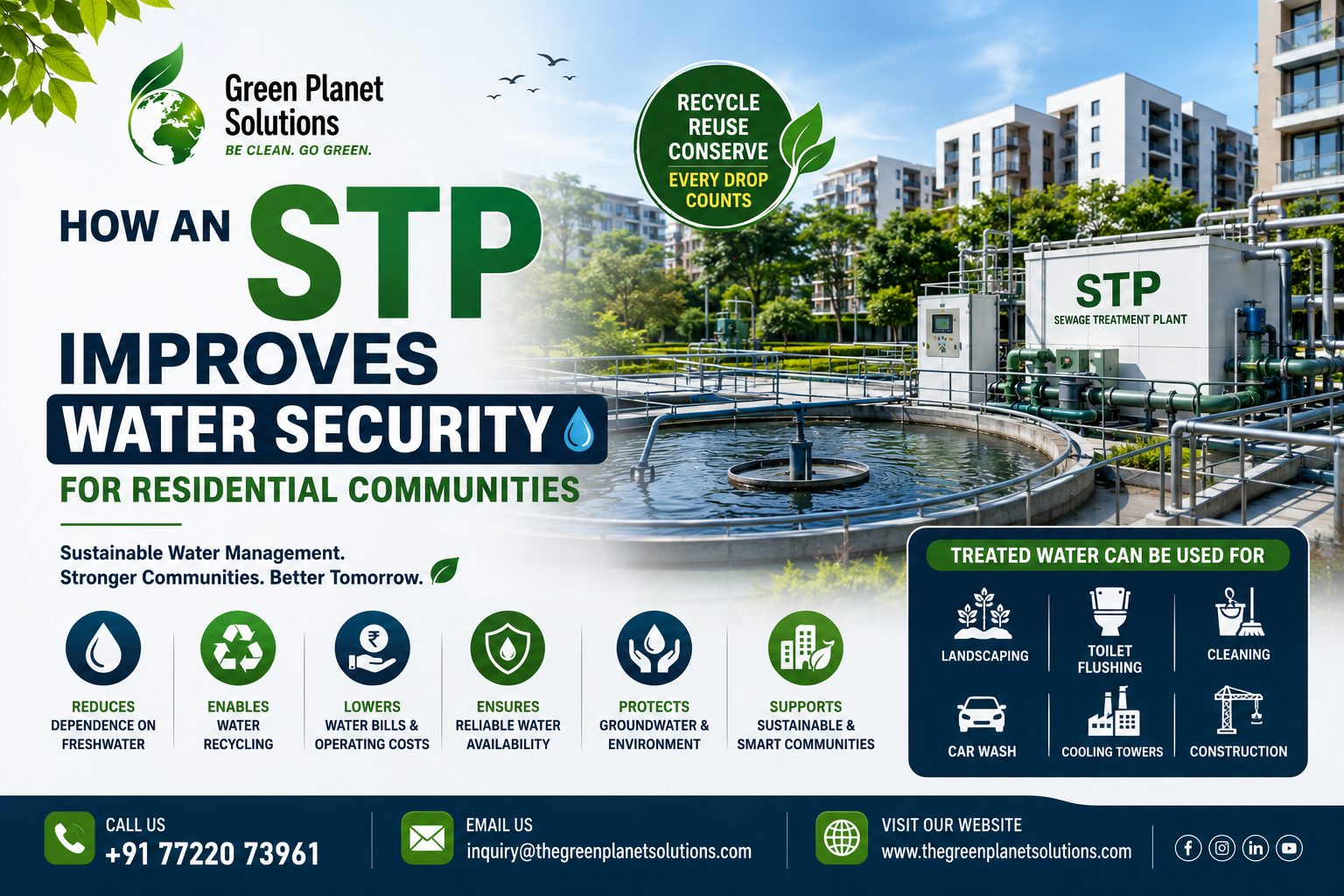
    STPs treat wastewater and make it reusable for purposes like gardening, flushing, and cleaning. This reduces the need for fresh water and helps conserve valuable resources.

    2. Reduces Dependency on Tankers

    Residential societies and commercial buildings that install STPs can reuse treated water internally, minimizing their reliance on expensive water tankers.

    3. Protects Groundwater Resources

    By reusing treated water, STPs reduce the excessive extraction of groundwater, helping maintain ecological balance.

    4. Supports Smart City Development

    Modern urban planning focuses on sustainability. STPs play a key role in building smart and eco-friendly cities by ensuring efficient water management.

    5. Environmental Protection

    Untreated sewage can harm rivers and ecosystems. STPs prevent pollution by treating wastewater before releasing or reusing it.


    Why STP is the Future of Urban Water Crisis

    With increasing water scarcity, governments and environmental bodies are encouraging the installation of sewage treatment systems in residential and commercial spaces. In many cities, it is becoming mandatory for large societies to have an STP installed. This shift highlights how essential wastewater treatment is for a sustainable future.


    How Green Planet Solution Can Help

    At Green Planet Solution, we understand the growing challenges of water scarcity in urban areas. Our advanced and cost-effective Sewage Treatment Plant solutions are designed to help residential societies, commercial properties, and industries efficiently manage wastewater.

    We focus on:

    • Customized STP solutions based on your needs
    • Advanced technology for maximum efficiency
    • Cost-saving and eco-friendly systems
    • Reliable support and maintenance services

    By choosing Green Planet Solution, you are not just installing an STP—you are contributing to a sustainable and water-secure future.


    Conclusion

    The urban water crisis in India is a growing concern, but solutions like STPs offer a practical and sustainable way forward. By treating and reusing wastewater, we can reduce dependency on fresh water, cut costs, and protect the environment. Investing in an STP today is not just a smart decision—it is a necessary step toward securing tomorrow’s water needs.

  • Facing Water Shortage? How STP Can Be Your Long-Term Solution

    Facing Water Shortage? How STP Can Be Your Long-Term Solution

    Introduction

    Water Shortage has become one of the biggest challenges in urban areas today. With increasing population, rapid urbanization, and unpredictable climate conditions, the demand for water is rising while the supply is shrinking. Residential societies and commercial buildings are heavily dependent on tankers and municipal water, which is not only expensive but also unreliable. To overcome this challenge, adopting sustainable solutions like Sewage Treatment Plants (STPs) is becoming essential.


    The Problem of Water Shortage

    Many cities are facing severe water shortages due to declining groundwater levels and irregular rainfall. People often struggle with limited water supply, leading to inconvenience in daily life. Additionally, the rising cost of tanker water puts financial pressure on housing societies. If this continues, water scarcity will become even more critical in the coming years.


    What is an STP?

    A Sewage Treatment Plant (STP) is a system designed to treat wastewater generated from households and buildings. It collects water from bathrooms, kitchens, and toilets, treats it using advanced processes, and makes it reusable for non-drinking purposes. This helps in reducing water wastage and promotes efficient water management.


    How STP Acts as a Long-Term Solution

    STPs provide a sustainable way to tackle water shortages by recycling wastewater and reducing dependency on external water sources. Treated water can be reused for activities like gardening, toilet flushing, and cleaning. This significantly reduces the demand for fresh water and ensures a continuous water supply within the society.


    Cost and Environmental Benefits

    Installing an STP not only saves water but also reduces expenses in the long run. Societies can cut down tanker costs and lower their monthly water bills. Moreover, STPs help in reducing environmental pollution by treating sewage before it is released, contributing to a cleaner and greener environment.


    Future Importance of STPs

    With growing awareness and stricter government regulations, STPs are becoming a necessity rather than an option. Builders and developers are now focusing on sustainable infrastructure, and having an STP increases the value and credibility of a property. It ensures long-term water security and aligns with eco-friendly living practices.


    Conclusion

    Water shortage is a serious issue, but it can be effectively managed with the right approach. A Sewage Treatment Plant offers a practical and long-term solution by converting wastewater into a reusable resource. Investing in an STP today not only solves current water problems but also secures a sustainable future for the next generation.

  • 🌱 Top benefits of installing a Sewage Treatment Plant in societies

    🌱 Top benefits of installing a Sewage Treatment Plant in societies

    Water is life. And yet millions of litres of it go down the drain every single day in residential societies across India. Sewage Treatment Plants are changing that story. If your housing society hasn’t installed one yet here’s why it should be at the top of your agenda with Sewage Treatment Plants.

    A Sewage Treatment Plant treats wastewater so it can be safely reused. For gardening, flushing and more. Reducing dependence on freshwater sources with Sewage Treatment Plants.

    1. 💧 Water savings

    Treated water from a Sewage Treatment Plant can be reused for landscaping, car washing toilet flushing and even fire-fighting systems. A typical residential society can recycle up to 60–70% of its water consumption with Sewage Treatment Plants drastically reducing its freshwater demand and monthly utility bills.

    2. 📋 Compliance with government regulations

    In India the Central Pollution Control Board and state bodies mandate Sewage Treatment Plants for housing societies above a size. Installing one keeps your society compliant avoids penalties and positions it as a responsible community with Sewage Treatment Plants.

    3. 🌿 Reduced pollution

    Untreated sewage discharged into rivers, lakes or the ground contaminates drinking water sources and harms local ecosystems. A Sewage Treatment Plant ensures that wastewater is treated before release significantly reducing soil and water pollution in your neighbourhood with Sewage Treatment Plants.

    4. 💰 Long-term cost savings for residents

    Though the initial investment may seem high Sewage Treatment Plants pay for themselves over time. Lower municipal water bills, reduced dependence on water tankers and potential income from selling treated water to industries all contribute to significant long-term savings for every resident with Sewage Treatment Plants.

    5. 🏡 Better hygiene and a society

    Proper sewage treatment eliminates foul odours reduces the risk of disease outbreaks and keeps common areas clean. A society with a Sewage Treatment Plant is a place to live. A fact that directly impacts resident satisfaction and property values with Sewage Treatment Plants.

    6. 📈 Increased property value

    Modern homebuyers and investors are increasingly eco-conscious. A society equipped with a Sewage Treatment Plant signals infrastructure management. And that translates into higher resale and rental values for every flat in the complex with Sewage Treatment Plants.

    7. ♻️ Supporting a circular water economy

    India faces a water scarcity challenge. By treating and reusing wastewater locally residential societies become participants in building a circular water economy. Reducing the burden on municipal water supply systems and contributing to a more sustainable future for all with Sewage Treatment Plants.

    🌍

    Green Planet Solution

    Your partner in infrastructure

    At Green Planet Solution we help residential societies, corporates and institutions design, install and maintain high-performance Sewage Treatment Plants tailored to their specific needs. From assessment and regulatory compliance to after-sales support. We take care of it all so you can focus on building a greener community with Sewage Treatment Plants.

    Ready to make your society more sustainable, with Sewage Treatment Plants? Lets talk.

  • 🌱 Best Composting Machine for Apartments in India

    🌱 Best Composting Machine for Apartments in India

    Introduction

    With the rapid growth of urban living in India, apartments and housing societies have become the backbone of modern cities. However, along with this convenience comes a serious challenge—managing daily waste efficiently. A significant portion of this waste is organic or wet waste generated from kitchens, which often ends up in landfills, causing pollution, foul odors, and environmental damage. In this scenario, composting machine have emerged as a smart and sustainable solution, helping societies convert waste into valuable compost while maintaining cleanliness and hygiene.

    Understanding Composting Machines

    A composting machine, also known as an Organic Waste Converter (OWC), is designed to process kitchen waste and transform it into nutrient-rich compost through controlled biological processes. These machines use a combination of heat, aeration, and microbial activity to break down organic matter quickly and efficiently. Unlike traditional composting methods, which can take weeks or months, modern composting machines can produce compost within a much shorter time, making them highly suitable for apartment settings where space and time are limited.

    Why Composting Machines are Essential for Apartments

    Apartment complexes generate a substantial amount of wet waste daily, often ranging from small quantities in individual flats to large volumes in residential societies. Without proper waste management, this leads to sanitation issues, increased dependency on municipal services, and rising disposal costs. Composting machines address these challenges by reducing waste volume significantly and eliminating the need for external waste transportation. They also help in maintaining a cleaner environment within the premises and promote a culture of sustainability among residents.

    Features of the Best Composting Machine

    The best composting machines for apartments are designed to be efficient, compact, and user-friendly. They come equipped with advanced odor control systems, ensuring that the composting process remains hygienic and does not create discomfort for residents. These machines are typically energy-efficient and require minimal manual intervention, especially in fully automatic models. Their compact design allows them to fit into limited spaces, making them ideal for urban housing societies. Additionally, they are built to handle varying waste capacities, ensuring flexibility for both small and large apartment complexes.

    Popular Composting Machine Options in India

    In India, several reliable composting machine providers offer solutions tailored for apartment use. Companies like Green Planet Solutions are known for delivering customized composting systems with end-to-end support, including installation and maintenance. Other brands such as Bioneer, Reddonatura, and Earth Care Equipments have also established themselves in the market with durable and high-performance machines. These machines vary in capacity and automation level, allowing societies to choose the most suitable option based on their specific requirements.

    Choosing the Right Composting Machine

    Selecting the right composting machine for an apartment depends on several important factors. The first consideration is the amount of waste generated daily, as this determines the required capacity of the machine. Space availability is another key factor, as the machine should fit comfortably within the designated area without causing inconvenience. The level of automation also plays a crucial role, with fully automatic machines offering greater convenience and semi-automatic ones providing a more cost-effective alternative. Additionally, factors such as maintenance requirements, electricity consumption, and after-sales support should be carefully evaluated before making a decision.

    Cost of Composting Machines in India

    The price of composting machines in India varies depending on their capacity, features, and level of automation. Smaller units designed for individual households are relatively affordable, while larger machines suitable for apartment societies require a higher investment. Although the initial cost may seem significant, it is important to consider the long-term savings in waste management expenses and the environmental benefits they provide. Over time, composting machines prove to be a cost-effective solution that adds value to residential communities.

    Benefits of Installing Composting Machines

    The installation of composting machines in apartments offers multiple advantages. Environmentally, it reduces the burden on landfills and lowers the carbon footprint associated with waste transportation. Financially, it helps societies save on waste collection and disposal costs. Socially, it creates a cleaner and healthier living environment for residents. Moreover, the compost produced can be used for gardening or landscaping within the society, promoting a greener lifestyle and enhancing the overall appeal of the property.

    Real Impact in Urban India

    Many apartment societies across India have successfully adopted composting machines and transformed their waste management systems. These communities have not only reduced their waste output but also become more self-sufficient and environmentally responsible. Such initiatives demonstrate how small changes at the community level can lead to significant positive impacts on the environment.

    Conclusion

    In today’s world, where environmental concerns are becoming increasingly urgent, adopting sustainable waste management practices is no longer optional. Composting machines provide an effective and practical solution for apartments, enabling them to manage their waste responsibly while contributing to a cleaner and greener future. Investing in the right composting machine is a step towards sustainability, efficiency, and long-term benefits for both residents and the environment.

    For more Information :- https://www.thegreenplanetsolutions.com/index.html

  • Biogas: The Game-Changer for India’s Energy Crisis

    Biogas: The Game-Changer for India’s Energy Crisis

    India is at a critical stage where rising energy demand, increasing fuel prices, and environmental concerns are pushing the country to rethink its energy sources. In this transition, biogas is emerging not just as an alternative, but as a powerful and sustainable solution that can transform India’s energy landscape. With abundant organic waste, a strong agricultural base, and a growing need for clean energy, biogas has the potential to become a cornerstone of India’s future.

    Biogas is produced through the decomposition of organic materials such as food waste, agricultural residue, animal dung, and industrial waste in the absence of oxygen. This process generates a clean and renewable gas that can be used for cooking, electricity generation, and even as a fuel for vehicles. Unlike fossil fuels, biogas is sustainable, locally available, and environmentally friendly, making it highly suitable for a country like India.

    One of the biggest advantages of biogas in India is the availability of raw materials. With millions of tons of organic waste generated daily from households, farms, hotels, and food industries, India has an almost unlimited supply of feedstock for biogas production. Instead of letting this waste decompose in landfills and release harmful greenhouse gases, it can be efficiently converted into useful energy. This not only solves waste management problems but also creates a circular economy where waste becomes a valuable resource.

    Biogas also plays a crucial role in reducing dependence on imported fuels like LPG and crude oil. India spends a significant portion of its resources on fuel imports, which affects the economy and increases vulnerability to global price fluctuations. By adopting biogas at a larger scale, businesses and households can reduce their reliance on traditional fuels, leading to cost savings and improved energy security. For industries such as hotels, hostels, and food processing units, biogas can significantly cut operational expenses.

    Another important factor is environmental sustainability. Biogas is a clean fuel that produces fewer emissions compared to conventional fuels. It helps in reducing carbon footprints, controlling pollution, and promoting a greener environment. Additionally, the by-product of biogas production, known as slurry, is an excellent organic fertilizer. This supports sustainable agriculture by reducing the need for chemical fertilizers and improving soil health.

    Rural development is another area where biogas can make a huge impact. In many villages, access to reliable energy is still a challenge. There plants can provide a decentralized energy solution, enabling rural households to cook efficiently and even generate electricity. This improves living standards, reduces indoor air pollution caused by traditional cooking methods, and creates local employment opportunities in plant installation, maintenance, and operations.

    The Indian government has already recognized the potential of biogas and is promoting it through initiatives like the SATAT (Sustainable Alternative Towards Affordable Transportation) scheme. These policies aim to encourage the production and use of compressed biogas (CBG) as a transport fuel. With increasing support, subsidies, and awareness, the adoption of biogas is expected to grow rapidly in the coming years.

    However, to fully realize the potential of bio plant, awareness and implementation at the grassroots level are essential. Many businesses and households are still unaware of its long-term benefits. Proper education, financial support, and technological advancements are needed to make more accessible and efficient.

    In conclusion, biogas is not just an alternative energy source; it is a necessity for India’s sustainable future. It addresses multiple challenges at once, including waste management, energy security, environmental protection, and rural development. As India moves towards a cleaner and greener economy, biogas stands out as a practical and impactful solution. The future of India lies in smart, sustainable choices, and biogas is undoubtedly one of them.

    Read This Article :- https://thegreenplanetsolutions.com/blog/top-7-benefits-of-installing-a-biogas-plant-for-your-business/