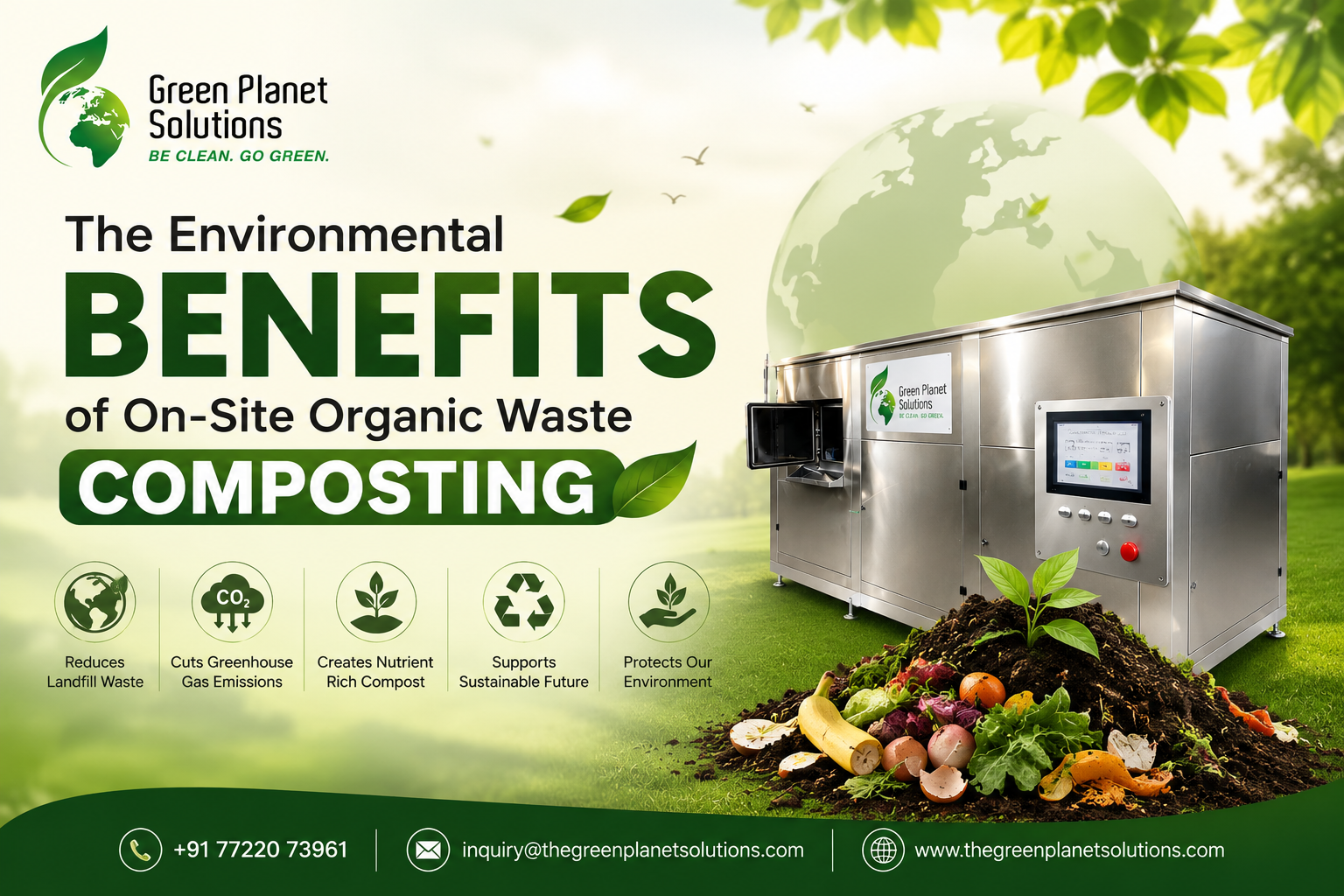
Turn Organic Waste into a Sustainable Resource
Every day, businesses such as hotels, restaurants, apartment complexes, hospitals, educational institutions, and food processing units generate large amounts of organic waste. Traditionally, this waste is transported to landfills, where it decomposes and releases harmful greenhouse gases. On-site organic waste composting offers a smarter and more sustainable alternative by converting food and garden waste into nutrient-rich compost at the source. This not only reduces environmental pollution but also helps organizations build a greener and more responsible future.
What Is On-Site Organic Waste Composting?
On-site organic waste composting is the process of converting biodegradable waste into natural compost at the location where it is generated. Modern commercial composting machines make this process faster, cleaner, and more efficient. Instead of sending waste to landfills, businesses can recycle organic materials into valuable compost that can be used for landscaping, gardens, agriculture, and green spaces.
Reduces Landfill Organic Waste
One of the biggest environmental benefits of on-site composting is the significant reduction in landfill waste. Organic waste makes up a large percentage of municipal solid waste. When this waste is diverted from landfills and processed on-site, it decreases the pressure on waste management systems and extends the lifespan of landfill sites. This also reduces transportation requirements, lowering fuel consumption and associated emissions.
Cuts Greenhouse Gas Emissions
Organic waste decomposing in landfills produces methane, a greenhouse gas that is far more potent than carbon dioxide in contributing to climate change. On-site composting helps prevent methane generation by processing waste under controlled aerobic conditions. This significantly reduces greenhouse gas emissions and supports global efforts to combat climate change while helping organizations achieve their sustainability goals.
Creates Nutrient-Rich Compost
Instead of becoming an environmental burden, organic waste is transformed into a valuable resource. The compost produced through on-site composting is rich in nutrients and improves soil fertility, enhances water retention, and supports healthy plant growth. Businesses can use this compost in gardens, landscaping projects, or agricultural applications, reducing the need for chemical fertilizers.
Supports Sustainable Organic Waste Management
On-site composting promotes the principles of a circular economy by converting waste into a reusable product. It encourages responsible resource management and minimizes environmental impact. Organizations adopting composting systems demonstrate their commitment to sustainability while improving their environmental performance and corporate social responsibility initiatives.
Reduces Transportation Pollution
Transporting organic waste to distant disposal sites requires trucks, fuel, and manpower, all of which contribute to carbon emissions and traffic congestion. By composting waste at the source, businesses eliminate the need for frequent waste transportation. This not only lowers operational costs but also reduces air pollution and overall carbon footprint.
Improves Hygiene and Odor Control
Modern commercial composting machines are designed with advanced odor-control systems and enclosed processing technology. This helps maintain a clean, hygienic environment by reducing foul smells, preventing pest infestations, and minimizing waste accumulation. The result is a safer and healthier workplace for employees, customers, and nearby communities.
Conserves Natural Resources
Composting returns valuable nutrients to the soil naturally, reducing dependence on synthetic fertilizers and conserving natural resources. Healthier soil improves plant productivity, enhances biodiversity, and supports sustainable landscaping practices. Over time, this contributes to healthier ecosystems and more resilient green spaces.
Helps Achieve ESG and Sustainability Goals
Environmental, Social, and Governance (ESG) initiatives have become a priority for modern businesses. Installing an on-site composting machine demonstrates a commitment to environmental responsibility by reducing waste, lowering carbon emissions, and promoting sustainable operations. It also strengthens a company’s reputation among customers, investors, and regulatory authorities.
Ideal for Multiple Industries
On-site composting is suitable for a wide range of industries, including:
- Hotels and Resorts
- Restaurants and Cafeterias
- Apartment and Housing Societies
- Hospitals and Healthcare Facilities
- Educational Institutions
- Corporate Offices
- Food Processing Industries
- Municipal Bodies
- Shopping Malls
- Religious Places
These organizations can efficiently manage organic waste while contributing to environmental conservation.
Conclusion
On-site organic waste composting is more than just a waste management solution—it’s an investment in a cleaner, healthier, and more sustainable future. By reducing landfill waste, cutting greenhouse gas emissions, producing nutrient-rich compost, and supporting circular economy practices, businesses can make a lasting positive impact on the environment. With advanced commercial composting machines from Green Planet Solutions, organizations can transform organic waste into a valuable resource while reducing operational costs and meeting sustainability goals.
Make the shift toward smarter waste management today. Together, we can create a cleaner, greener future. 🌱♻️