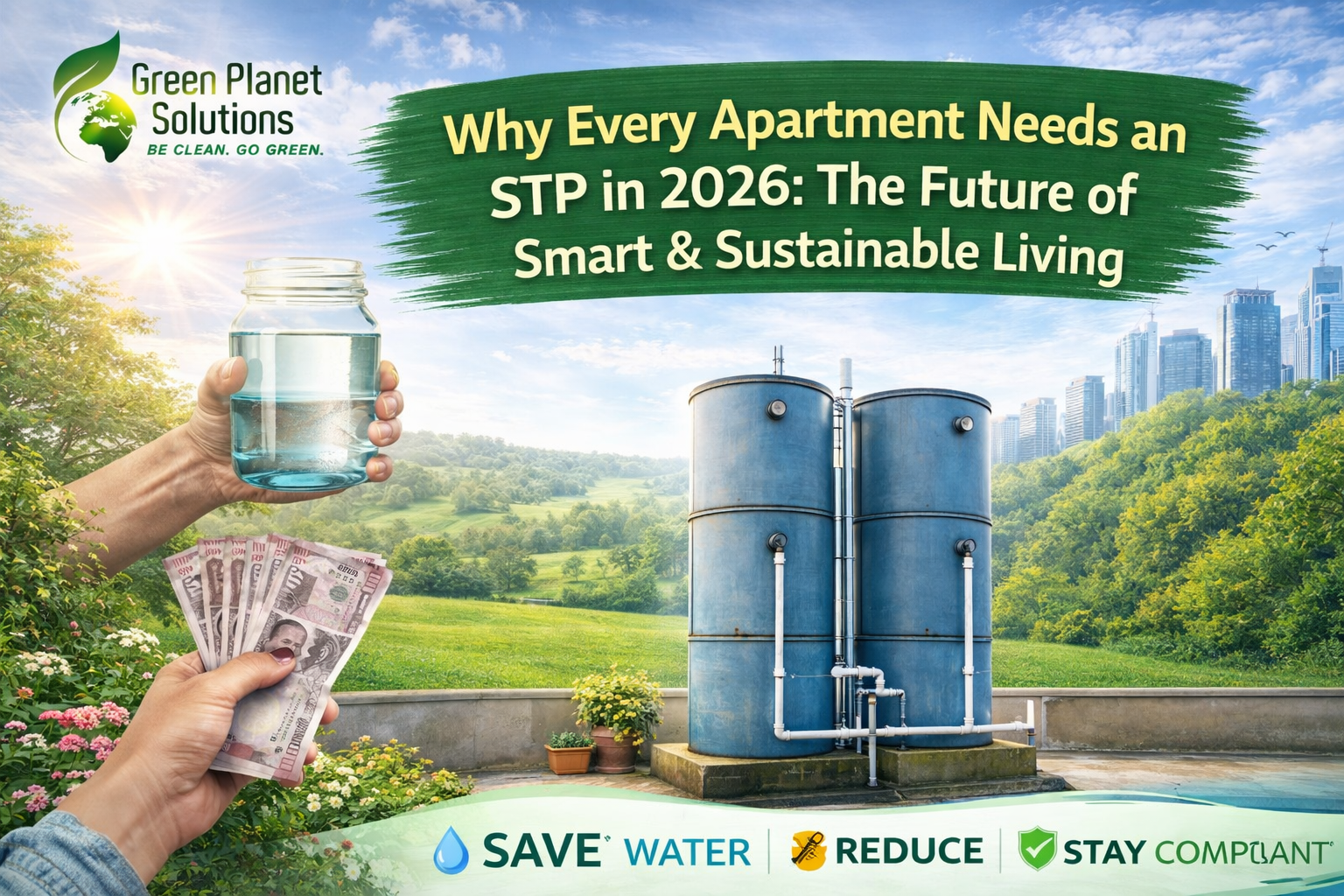
As urbanization continues to accelerate in India, the demand for water and the generation of wastewater have increased significantly, making wastewater management one of the most critical challenges for modern residential societies. In 2026, installing a Sewage Treatment Plant (STP) is no longer just a regulatory requirement but a necessity for apartments that aim to be sustainable, cost-efficient, and future-ready. Every apartment generates a large volume of wastewater daily from kitchens, bathrooms, laundry, and cleaning activities, and without proper treatment, this sewage often ends up polluting natural water bodies, contaminating groundwater, and creating serious environmental and health hazards. With natural resources already under pressure and water scarcity becoming a reality in many cities, the need to treat and reuse wastewater has become more important than ever.
One of the most compelling reasons for installing an STP in apartments is the growing issue of water scarcity, which is affecting urban areas across the country and forcing residential societies to depend heavily on tanker water for their daily needs. This dependency not only increases operational costs but also creates uncertainty in water availability, especially during peak summer seasons when demand is high. By installing an STP, apartments can treat wastewater and reuse it for non-potable purposes such as gardening, flushing, and cleaning, significantly reducing the consumption of freshwater and lowering overall expenses. This not only ensures a more reliable water supply but also contributes to long-term financial savings, making it a smart investment for housing societies.
In addition to water conservation, government regulations have become increasingly strict regarding wastewater management, with many municipal authorities and pollution control boards making it mandatory for large residential complexes to install sewage treatment systems. Apartments that fail to comply with these regulations may face penalties, legal complications, or restrictions, making it essential to adopt proper sewage treatment solutions. Installing an STP ensures that the apartment remains compliant with environmental norms and avoids any future risks, while also demonstrating a commitment to responsible and sustainable living. As regulations continue to evolve in 2026, having an STP is not just beneficial but essential for legal and operational security.
From a financial perspective, an STP offers long-term benefits that outweigh its initial installation cost, as it helps reduce dependency on external water sources, lowers water bills, and minimizes maintenance expenses associated with water procurement. Over time, the savings generated through water reuse can significantly offset the investment, while also increasing the overall value of the property. In today’s competitive real estate market, buyers and tenants are increasingly looking for eco-friendly and cost-efficient housing options, and apartments equipped with STPs have a clear advantage in attracting such demand. This makes an STP not only an environmental solution but also a strategic investment that enhances the market appeal of residential properties.
Modern advancements in sewage treatment technology have made STPs more compact, efficient, and easy to maintain, allowing them to be installed even in apartments with limited space. Technologies such as MBBR, SBR, and MBR have improved the efficiency of wastewater treatment while reducing operational complexity, making it easier for societies to manage their systems without requiring extensive technical expertise. These systems are designed to deliver high-quality treated water that is safe for reuse, ensuring both performance and reliability in urban environments where space and efficiency are critical factors.
Beyond economic and regulatory benefits, installing an STP plays a vital role in protecting the environment by reducing pollution, conserving freshwater resources, and minimizing the ecological footprint of residential societies. Untreated sewage is one of the major contributors to water pollution, and by treating wastewater at the source, apartments can significantly reduce their impact on natural ecosystems while promoting cleaner and healthier surroundings. Additionally, proper sewage treatment helps maintain hygiene within the society by eliminating harmful contaminants and preventing the spread of diseases, thereby improving the overall quality of life for residents.
In conclusion, the importance of Sewage Treatment Plants in apartments has grown significantly in 2026, driven by the combined challenges of water scarcity, environmental concerns, regulatory requirements, and rising costs. Apartments that invest in STPs are not only ensuring compliance but also securing long-term savings, enhancing property value, and contributing to a sustainable future. The question is no longer whether an apartment should install an STP, but whether it can afford to ignore such a critical component of modern infrastructure, as the future of urban living depends on responsible water management and sustainable practices.
Leave a Reply