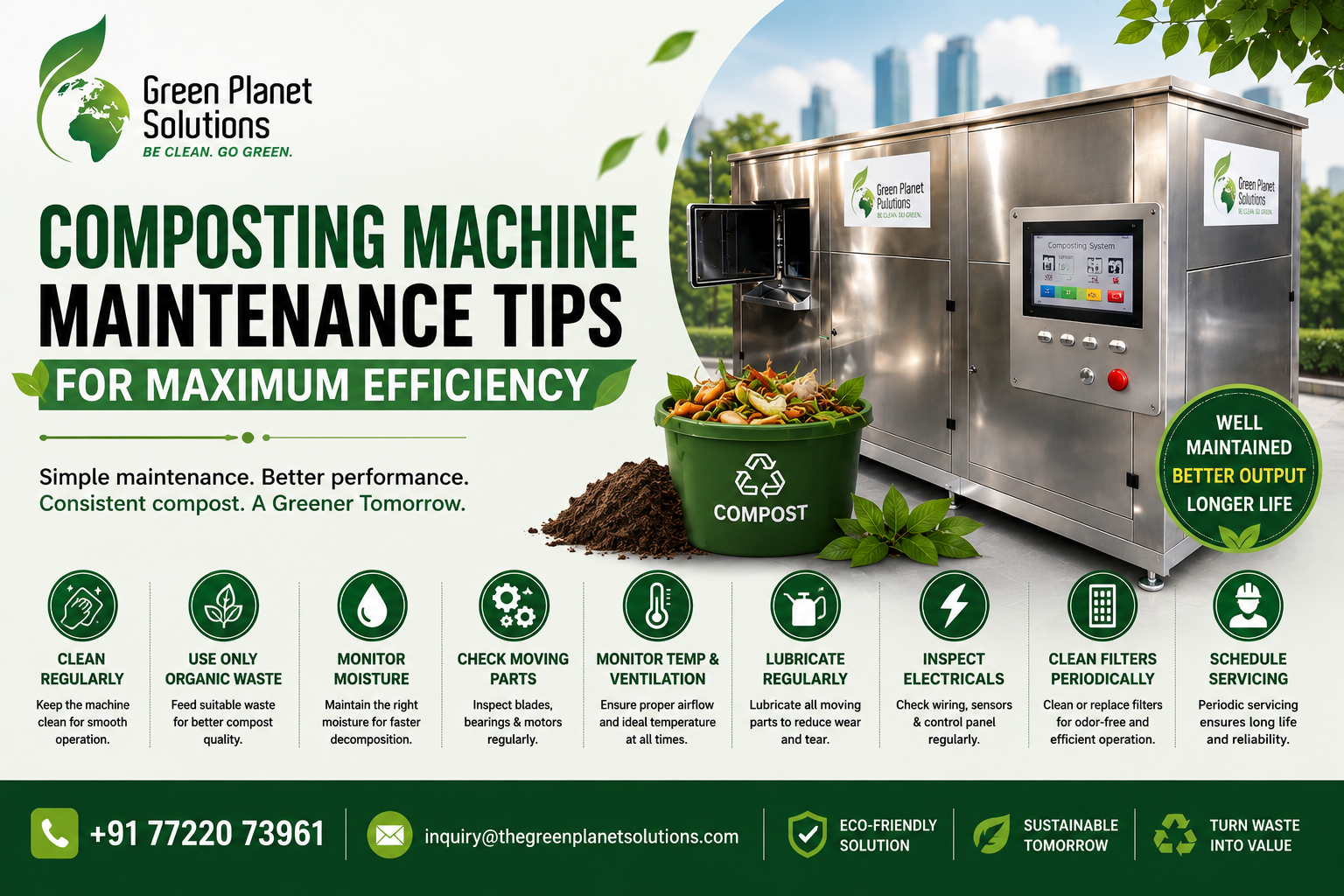
A Complete Guide to Keeping Your Composting Machine Running Smoothly and Delivering High-Quality Compost
A composting machine is a smart investment for organizations looking to manage organic waste efficiently while supporting environmental sustainability. Whether installed in a housing society, hotel, restaurant, corporate campus, educational institution, or industrial facility, regular maintenance is essential to ensure optimal performance. Proper upkeep not only extends the lifespan of the machine but also improves compost quality, reduces operational costs, and minimizes unexpected downtime.
In this guide, we’ll explore the best maintenance practices to keep your composting machine operating at maximum efficiency.
Why Regular Maintenance Matters
Like any industrial equipment, composting machines require routine care to perform at their best. A well-maintained machine processes organic waste faster, consumes less energy, prevents unpleasant odors, and reduces the chances of mechanical failures.
Regular maintenance offers several benefits, including:
- Improved composting efficiency
- Longer machine lifespan
- Lower maintenance and repair costs
- Consistent production of high-quality compost
- Reduced odor and pest issues
- Better operational safety
Preventive maintenance is always more cost-effective than emergency repairs.
1. Clean the Machine Daily
Food waste residues can accumulate inside the composting chamber over time, affecting the machine’s performance and hygiene. Cleaning the machine regularly helps prevent blockages, bacterial buildup, and unpleasant odors.
After each operating cycle:
- Remove leftover waste residues.
- Clean the feeding chamber.
- Wipe external surfaces.
- Ensure drainage outlets are free from obstructions.
Maintaining cleanliness also helps improve the efficiency of microbial decomposition.
2. Feed Only Suitable Organic Waste
One of the most common reasons for reduced composting performance is feeding inappropriate materials into the machine.
Suitable materials include:
- Fruit and vegetable waste
- Leftover cooked food
- Tea leaves and coffee grounds
- Garden waste
- Eggshells
Avoid adding:
- Plastic
- Glass
- Metal
- Large bones
- Chemicals
- Non-biodegradable materials
Segregating waste before feeding the machine significantly improves compost quality and reduces maintenance issues.
3. Monitor Moisture Levels
Maintaining the right moisture level is critical for efficient composting. Excess moisture can produce foul odors and slow decomposition, while insufficient moisture may prevent microorganisms from breaking down organic waste effectively.
Operators should regularly inspect the compost and adjust moisture levels as needed to maintain an ideal composting environment.
4. Inspect Mixing and Grinding Components
The mixing blades, shredders, and grinding mechanisms play a crucial role in breaking down waste into smaller particles for faster composting.
Regularly inspect these components for:
- Wear and tear
- Loose bolts
- Damaged blades
- Unusual vibrations
Replacing worn components before they fail helps avoid costly repairs and ensures continuous operation.
5. Check Temperature and Ventilation of composting machine
Modern composting machines rely on controlled temperatures to accelerate the decomposition process. Proper ventilation is equally important to maintain oxygen levels for beneficial microorganisms.
Operators should:
- Monitor temperature readings
- Ensure ventilation systems are functioning correctly
- Keep air filters clean
- Check exhaust systems regularly
Maintaining the correct operating conditions helps produce odor-free, nutrient-rich compost.
6. Lubricate Moving Parts
Bearings, motors, chains, and other moving parts should be lubricated according to the manufacturer’s maintenance schedule.
Proper lubrication:
- Reduces friction
- Prevents overheating
- Minimizes component wear
- Extends equipment life
- Improves energy efficiency
Always use the recommended lubricants specified by the manufacturer.
7. Inspect Electrical Components
Electrical systems control the machine’s automation, sensors, motors, and control panel.
Regular inspections should include:
- Checking wiring connections
- Inspecting sensors
- Testing emergency stop functions
- Monitoring control panel alerts
- Ensuring proper power supply
Any electrical issue should be addressed immediately by a qualified technician.
8. Replace Filters When Required of composting machine
Air filters help control odor, improve airflow, and maintain a clean composting environment.
Dirty filters can:
- Restrict airflow
- Increase odor
- Reduce composting efficiency
- Increase energy consumption
Cleaning or replacing filters at recommended intervals keeps the system operating efficiently.
9. Schedule Preventive Maintenance of composting machine
Instead of waiting for problems to occur, establish a preventive maintenance schedule.
Monthly inspections should include:
- Mechanical components
- Electrical systems
- Temperature sensors
- Ventilation units
- Drainage systems
- Compost chamber cleaning
Routine servicing minimizes downtime and improves long-term reliability.
10. Train Operators Properly
Even the most advanced composting machine requires knowledgeable operators. Staff should be trained in:
- Proper waste segregation
- Safe machine operation
- Routine cleaning
- Basic troubleshooting
- Emergency procedures
Well-trained operators can quickly identify minor issues before they become major problems.
Common Maintenance Mistakes to Avoid
Many organizations unintentionally reduce the efficiency of their composting machines by making avoidable mistakes, such as:
- Overloading the machine
- Mixing non-biodegradable waste with organic waste
- Ignoring warning indicators
- Skipping routine cleaning
- Delaying preventive maintenance
- Using incorrect microbial cultures or additives
Avoiding these mistakes helps ensure consistent performance and extends the equipment’s service life.
The Long-Term Benefits of Proper Maintenance of composting machine
Routine maintenance is more than just equipment care—it is an investment in operational efficiency and sustainability. A well-maintained composting machine delivers:
- Faster waste processing
- Lower operational costs
- Reduced downtime
- Better-quality compost
- Improved environmental compliance
- Greater return on investment
Organizations that prioritize maintenance can maximize the value of their composting systems while supporting long-term sustainability goals.
Conclusion
A composting machine is a reliable solution for converting organic waste into valuable compost, but its performance depends on regular maintenance. Daily cleaning, proper waste segregation, moisture monitoring, routine inspections, and preventive servicing are all essential for keeping the system running efficiently.
Whether you manage a residential society, hotel, restaurant, corporate office, educational institution, or industrial facility, following these maintenance practices will help you reduce operating costs, improve compost quality, and ensure years of trouble-free operation.
Leave a Reply