Introduction
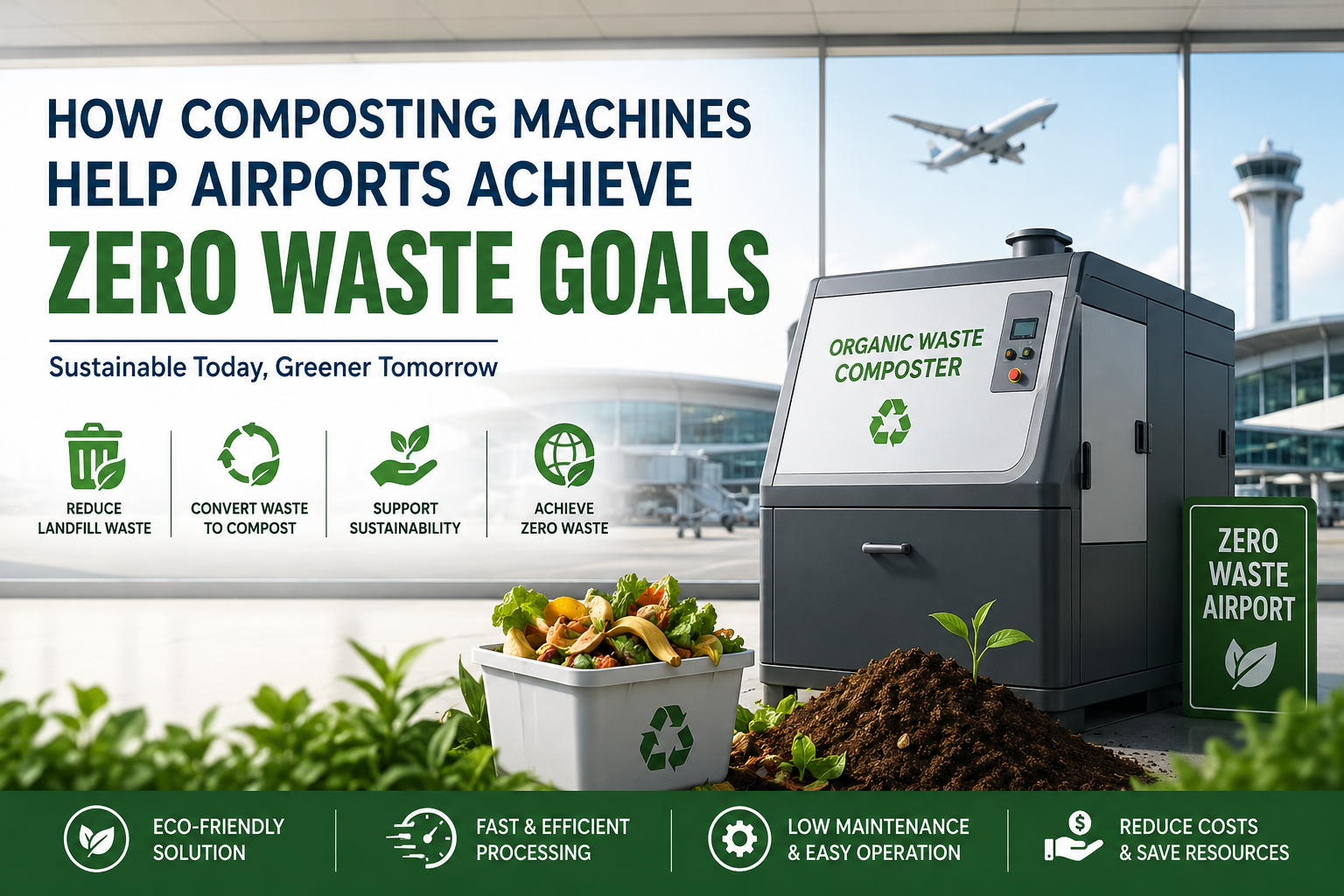
Modern airports are among the busiest public infrastructures in the world, handling thousands of passengers every day. Along with passenger movement comes a massive amount of waste generation from food courts, airline catering services, lounges, restaurants, gardens, and terminal operations. Managing this waste efficiently has become a major challenge for airports aiming to build sustainable and eco-friendly operations. Composting machines are now emerging as an effective solution that helps airports reduce landfill waste and move toward zero waste goals.
Growing Waste Challenges at Airports
Airports generate large quantities of organic waste every single day. Food leftovers, fruit peels, biodegradable packaging, and garden waste are commonly produced in terminals and airport facilities. Traditional waste disposal methods often lead to overflowing landfills, unpleasant odors, increased transportation costs, and environmental pollution.
As environmental regulations become stricter and sustainability becomes a global priority, airports are actively searching for smarter waste management solutions that can reduce environmental impact while improving operational efficiency.
What Are Composting Machines?
Composting machines are advanced waste management systems designed to convert organic waste into nutrient-rich compost within a short period of time. These machines use controlled temperature, microorganisms, and automated processing to decompose food and biodegradable waste efficiently.
Unlike traditional composting methods that may take months, modern composting machines can process waste within 24 hours while maintaining hygiene and odor control. This makes them highly suitable for high-traffic environments like airports.
How Composting Machines Support Zero Waste Goals
1. Reducing Landfill Dependency
One of the biggest advantages of composting machines is their ability to divert organic waste away from landfills. Airports can process food waste directly on-site, significantly reducing the amount of waste sent for disposal.
This helps minimize:
- Landfill usage
- Waste transportation costs
- Environmental pollution
2. Managing Food Waste Efficiently using Composting Machines
Airports contain multiple food courts, restaurants, lounges, and airline kitchens that generate large volumes of food waste daily. Composting machines provide a fast and efficient way to manage this waste without creating hygiene issues.
The machines can handle:
- Leftover food
- Vegetable waste
- Fruit peels
- Coffee grounds
- Biodegradable waste
3. Supporting Sustainable Airport Operations
Sustainability is becoming a key focus area for modern airports worldwide. Composting machines help airports achieve environmental targets by reducing carbon emissions and promoting green waste management practices.
This improves the airport’s:
- Environmental image
- Sustainability performance
- ESG compliance
- Green certification opportunities
4. Producing Useful Organic Composting Machines
The compost generated from organic waste can be reused for airport landscaping and gardening purposes. Airports with green spaces and decorative gardens can utilize the compost as a natural fertilizer, creating a circular waste management system.
This promotes:
- Resource recycling
- Sustainable landscaping
- Reduced fertilizer expenses
Benefits of Composting Machines for Airports
Eco-Friendly Waste Management
Composting machines reduce harmful methane emissions produced by landfill waste and support environmentally responsible operations.
Odor and Hygiene Control
Modern composting systems are designed with odor-control technology, making them suitable for public spaces like airports.
Faster Waste Processing
Advanced composting machines can process large quantities of waste quickly, ensuring efficient daily operations.
Cost Savings
Reduced transportation and landfill disposal costs help airports save money in the long run.
Enhanced Brand Reputation
Airports adopting sustainable technologies strengthen their reputation as environmentally conscious organizations.
The Future of Green Airports
As global aviation continues to grow, airports must adopt innovative waste management practices to reduce their environmental footprint. Composting machines are playing a crucial role in helping airports transition toward greener and smarter operations.
By converting organic waste into valuable compost, airports can create a cleaner environment, reduce operational waste, and move closer to achieving zero waste goals. Sustainable waste management is no longer just an option — it is becoming an essential part of the future of aviation infrastructure.
Conclusion
Composting machines are transforming airport waste management by offering an efficient, eco-friendly, and cost-effective solution for handling organic waste. From reducing landfill dependency to supporting sustainability initiatives, these machines help airports achieve their zero waste goals while creating a cleaner and greener future.
As airports continue investing in sustainable infrastructure, composting technology will remain a key driver in building environmentally responsible aviation ecosystems.