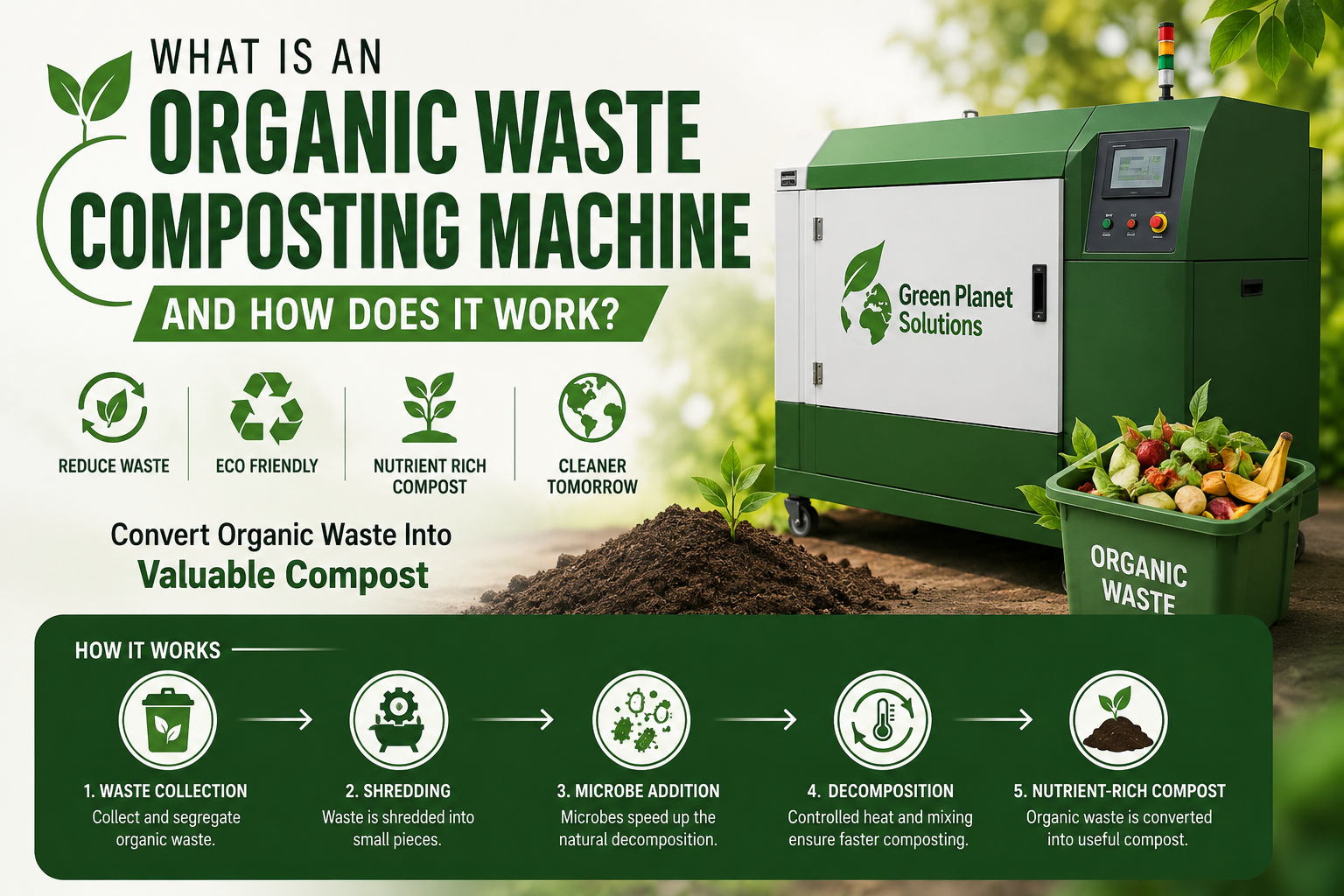
With the increasing amount of food and organic waste generated daily, effective waste management has become essential for maintaining a cleaner and greener environment. Organic waste composting machines are modern solutions designed to convert food waste, garden waste, and biodegradable materials into nutrient-rich compost quickly and efficiently. These machines are widely used in housing societies, hotels, restaurants, industries, schools, and commercial spaces to reduce landfill waste and promote sustainable living.
What Is an Organic Waste Composting Machine?
An organic waste composting machine is an advanced waste management system that processes biodegradable waste and transforms it into natural compost. The machine uses controlled temperature, moisture, and microbial activity to accelerate the decomposition process. Unlike traditional composting methods that take several weeks or months, composting machines can convert waste into compost within 24 hours to a few days.
Types of Waste Processed by Organic Waste Composting Machines
Organic waste composting machines can process various biodegradable materials, including:
- Food waste
- Vegetable and fruit peels
- Garden waste and dry leaves
- Hotel and restaurant waste
- Agricultural waste
- Canteen and kitchen waste
These machines help reduce the burden on landfills and minimize environmental pollution.
How Does an Organic Waste Composting Machine Work?
1. Waste Collection and Segregation
The process begins with collecting organic waste separately from plastic, metal, or non-biodegradable materials. Proper segregation ensures better compost quality and machine efficiency.
2. Shredding of Waste
The collected waste is shredded into smaller pieces to speed up the decomposition process. Smaller particles allow microbes to break down the waste more efficiently.
3. Mixing with Microbes or Composting Agents
Special microbes or composting powders are added to the waste. These microorganisms help decompose organic matter naturally and eliminate foul odors.
4. Heating and Decomposition
Inside the machine, controlled heat and airflow maintain the ideal environment for rapid decomposition. The machine continuously rotates or mixes the waste to ensure uniform processing.
5. Conversion into Compost
Within a short period, the waste transforms into dry, nutrient-rich compost that can be used as organic fertilizer for plants, gardens, and agriculture.
Benefits of Using an Organic Waste Composting Machine
Reduces Landfill Waste
Composting machines significantly reduce the amount of waste sent to landfills, helping decrease environmental pollution.
Eco-Friendly Organic Waste Management
These machines support sustainable waste disposal and contribute to a cleaner environment.
Produces Organic Fertilizer
The compost produced is rich in nutrients and improves soil quality naturally without harmful chemicals.
Eliminates Bad Odor and Pests
Modern composting machines are designed to minimize foul smell and prevent insects or pests around waste storage areas.
Saves Waste Transportation Costs
On-site composting reduces the need for waste collection and transportation, saving operational costs for businesses and societies.
Applications of Organic Waste Composting Machines
waste composting machines are widely used in:
- Residential societies
- Hotels and restaurants
- Hospitals and institutions
- Shopping malls
- Food industries
- Municipal corporations
- Educational campuses
Why Choose Green Planet Solutions?
Green Planet Solutions provides advanced and reliable organic waste composting machines designed for efficient and eco-friendly waste management. With years of experience and innovative technology, the company helps businesses and communities reduce waste and build a sustainable future.
Conclusion
Organic waste composting machines are transforming the way we manage biodegradable waste. By converting food and organic waste into useful compost, these machines help reduce pollution, support sustainable living, and create a cleaner environment. Investing in a composting machine is a smart step toward responsible waste management and a greener future.