Introduction
Have you ever wondered where all the food waste from our homes, restaurants, and markets actually goes?
Every day, Indian cities generate tons of Organic waste like vegetable peels, leftover food, and garden waste. Unfortunately, much of this waste ends up in landfills where it creates pollution, bad odor, and harmful greenhouse gases.
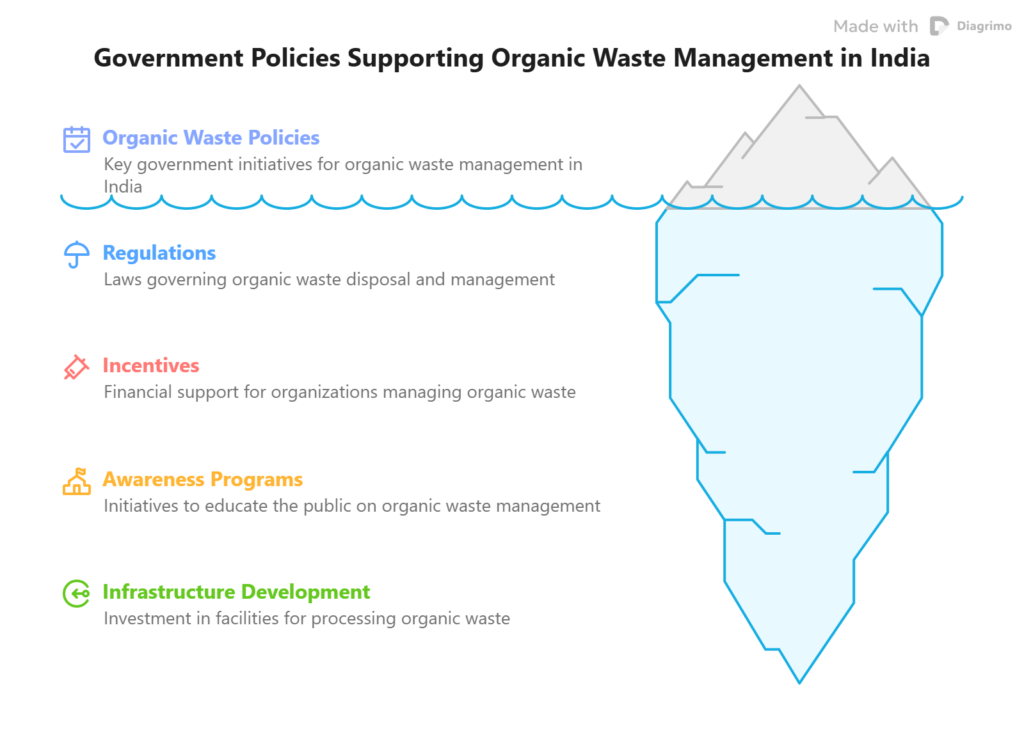
To solve this growing problem, the Government of India has introduced several policies and initiatives that focus on proper waste management, composting, and sustainable solutions. These initiatives aim to reduce landfill waste and encourage cities to manage organic waste more responsibly.
Why Organic Waste Management Matters
Organic waste makes up nearly half of the total municipal waste in India. When this waste is mixed with other garbage and dumped in landfills, it not only harms the environment but also wastes a valuable resource.
If managed properly, organic waste can be converted into nutrient-rich compost that benefits agriculture, gardening, and landscaping.
This is why the government is promoting waste segregation, composting, and decentralized waste processing across cities and towns.
Solid Waste Management Rules 2016
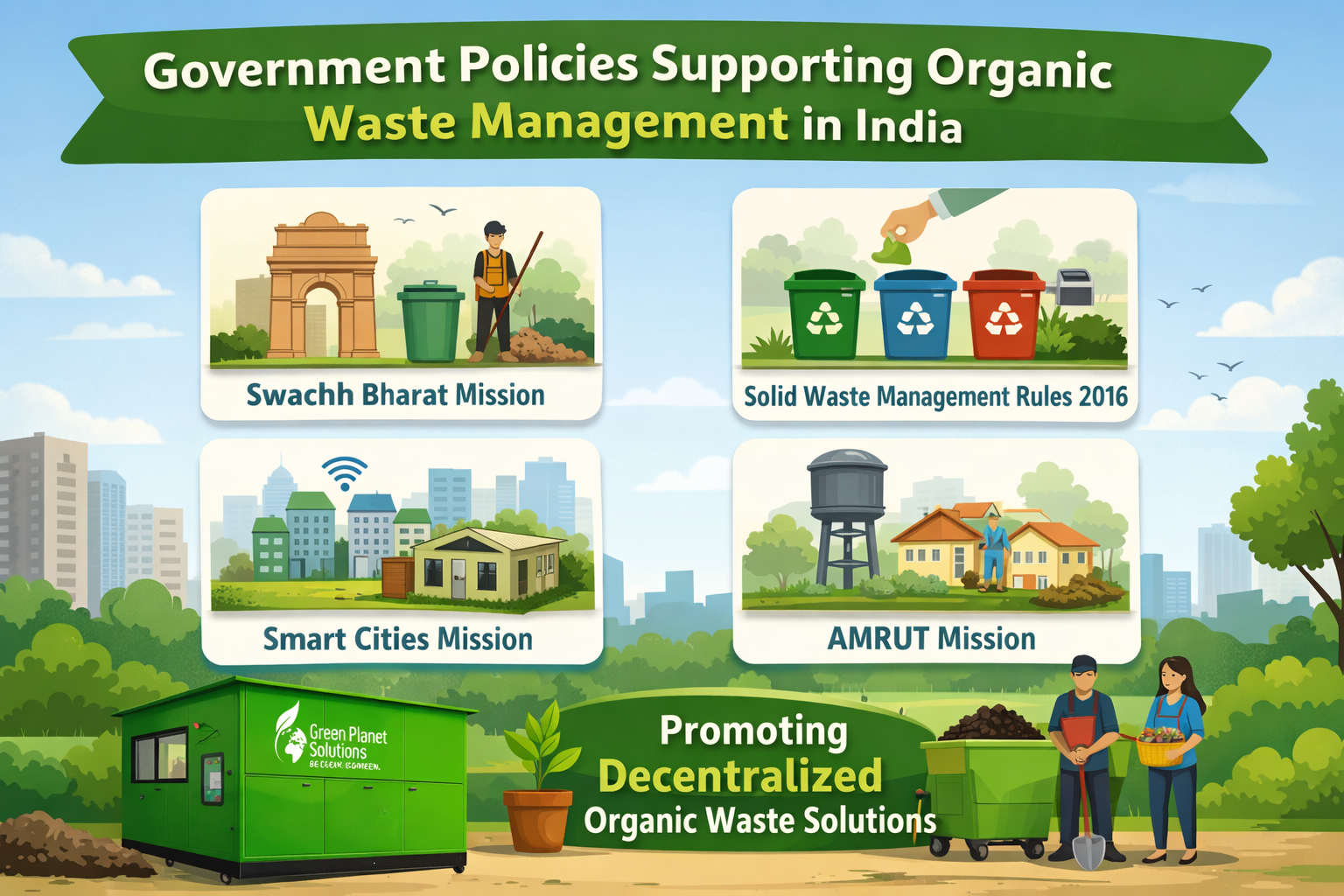
One of the most important policies introduced by the Government of India is the Solid Waste Management Rules 2016.
These rules make it mandatory for households, hotels, institutions, and commercial establishments to separate waste at the source into wet waste and dry waste.
The policy also encourages local processing of organic waste through composting and other sustainable methods. By managing waste closer to where it is generated, cities can significantly reduce the burden on landfills.
Swachh Bharat Mission
The Swachh Bharat Mission has played a huge role in spreading awareness about cleanliness and responsible waste disposal.
Under this mission, cities are encouraged to improve sanitation and adopt better waste management systems. Many municipal corporations are now promoting community composting and decentralized waste solutions to manage organic waste effectively.
Smart Cities Mission
The Smart Cities Mission focuses on building modern and sustainable cities in India. Waste management is a key part of this initiative.
Smart cities are now adopting innovative technologies for waste processing, including automated composting systems that can convert wet waste into compost within a short time.
Such technologies help cities reduce transportation costs and manage waste more efficiently.
Role of Sustainable Waste Solutions
As waste generation continues to increase, traditional waste disposal methods are no longer enough. Cities need modern and practical solutions that can handle organic waste efficiently.
This is where companies like Green Planet Solution are contributing by providing innovative composting machines that convert organic waste into compost quickly and safely.
These machines can be installed in housing societies, hotels, temples, markets, and institutions, helping manage wet waste at the source while supporting the government’s vision of decentralized waste management.
Conclusion
India is moving toward a more sustainable future, and effective organic waste management plays a major role in that journey.
Government initiatives such as the Solid Waste Management Rules 2016, Swachh Bharat Mission, and Smart Cities Mission are encouraging cities to adopt better waste management practices.
However, achieving a cleaner and greener India requires collaboration between governments, businesses, and citizens. By adopting modern composting solutions and responsible waste practices, we can turn organic waste into a valuable resource and build a more sustainable environment for future generations.
Leave a Reply