Table of Contents
- Introduction
- What is Organic Waste?
- Organic Waste Problem in Indian Cities
- Government Policies for Organic Waste Management
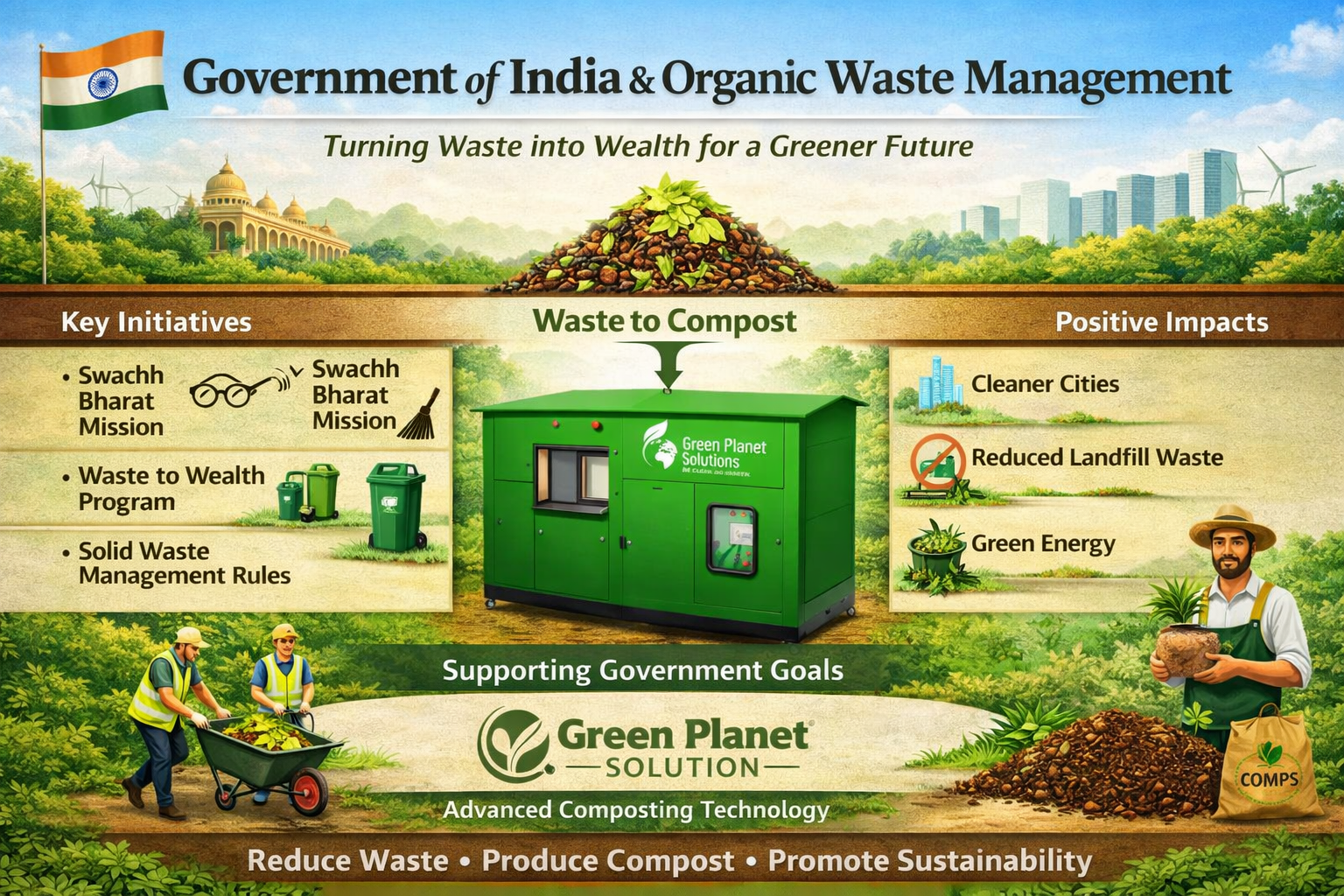
- Key Government Initiatives in India
- Positive Impact of Government Waste Management Programs
- Role of Technology and Composting Machines
- How Green Planet Solution Supports Government Waste Management Goals
- Frequently Asked Questions (FAQ)
- Conclusion
Introduction
India generates millions of tons of waste every day, and nearly 50–60% of it is organic waste such as food waste, vegetable scraps, garden waste, and biodegradable materials. If not properly managed, this waste ends up in landfills, causing pollution, bad odors, and harmful greenhouse gas emissions.
To tackle this challenge, the Government of India has introduced several policies and initiatives to promote sustainable organic waste management. These initiatives focus on segregation at source, composting, recycling, and decentralized waste processing.
Proper organic waste management not only helps keep cities clean but also creates valuable compost that supports agriculture and environmental sustainability.
What is Organic Waste?
Organic waste refers to biodegradable waste that naturally decomposes. Common examples include:
- Food leftovers
- Fruit and vegetable peels
- Garden waste and leaves
- Agricultural residues
- Kitchen waste from households and restaurants
This type of waste can be converted into compost, manure, or biogas, making it a valuable resource instead of landfill garbage.
Organic Waste Problem in Indian Cities
Rapid urbanization has increased waste generation across India. Major cities produce thousands of tons of waste daily.
Common challenges include:
- Lack of waste segregation at source
- Overflowing landfills
- Limited composting infrastructure
- Public awareness gaps
Organic waste in landfills produces methane gas, which contributes significantly to climate change.
Government Policies for Organic Waste Management
The Government of India has implemented several policies to ensure proper waste handling.
1. Solid Waste Management Rules 2016
This policy made segregation of waste mandatory. Citizens must separate waste into:
- Wet waste (organic waste)
- Dry waste (recyclable waste)
- Hazardous waste
It also encourages composting and decentralized waste processing.
2. Swachh Bharat Mission
This nationwide campaign promotes cleanliness and scientific waste management.
Key focus areas include:
- Door-to-door waste collection
- Waste segregation awareness
- Composting infrastructure
- Smart waste processing solutions
3. Waste to Wealth Initiative
The government encourages converting organic waste into valuable resources like compost, biogas, and energy.
Key Government Initiatives
Decentralized Composting
Municipal corporations encourage composting within:
- Housing societies
- Hotels and restaurants
- Markets and institutions
This reduces transportation costs and landfill burden.
Biogas Plants
Organic waste is used to produce biogas for energy generation, helping reduce fossil fuel usage.
Public Awareness Campaigns
The government promotes campaigns encouraging citizens to:
- Use green and blue dustbins
- Reduce food waste
- Compost organic waste locally
Positive Impact of Government Waste Management Programs
Government initiatives have already started showing positive results.
Cleaner Cities
Improved waste collection and segregation have helped many cities maintain better hygiene standards.
Reduced Landfill Waste
Organic waste processing reduces the amount of garbage reaching landfills.
Environmental Protection
Composting reduces methane emissions and supports sustainable agriculture.
Employment Opportunities
Waste management initiatives create jobs in recycling, composting, and waste processing industries.
Role of Technology in Organic Waste Management
Technology plays a crucial role in improving waste processing efficiency.
Modern organic waste composting machines can convert food waste into compost within 24 hours. These machines are ideal for:
- Housing societies
- Hotels and restaurants
- Corporate offices
- Hospitals
- Municipal corporations
Using such systems significantly reduces waste transportation and landfill dependency.
How Green Planet Solution Supports Government Waste Management Goals
Companies like Green Planet Solution play an important role in supporting India’s waste management mission.
Green Planet Solution provides advanced organic waste composting machines that help organizations process food waste efficiently.
Key benefits include:
- Rapid composting technology
- Reduced landfill waste
- Eco-friendly waste management
- Support for government sustainability goals
Their machines are widely used in societies, hotels, institutions, and commercial establishments, helping organizations convert waste into useful compost while contributing to a cleaner environment.
Frequently Asked Questions (FAQ)
1. Why is organic waste management important?
Organic waste management reduces landfill pollution, produces compost, and protects the environment.
2. What percentage of waste in India is organic?
Around 50–60% of municipal waste in India is organic waste.
3. What are the government rules for waste segregation?
According to Solid Waste Management Rules 2016, waste must be separated into wet, dry, and hazardous waste.
4. How can societies manage organic waste?
Housing societies can install composting machines or biogas plants to process kitchen waste locally.
5. Can organic waste be converted into compost?
Yes. Organic waste can be converted into nutrient-rich compost that is useful for agriculture and gardening.
Conclusion
Organic waste management is a critical step toward building clean, sustainable, and environmentally responsible cities. The Government of India has introduced strong policies and initiatives to encourage waste segregation, composting, and waste-to-resource systems.
However, successful waste management requires collaboration between government authorities, businesses, and citizens.
With innovative technologies and solutions from companies like Green Planet Solution, organic waste can be efficiently processed and transformed into valuable resources, supporting India’s mission for a cleaner and greener future.
Leave a Reply