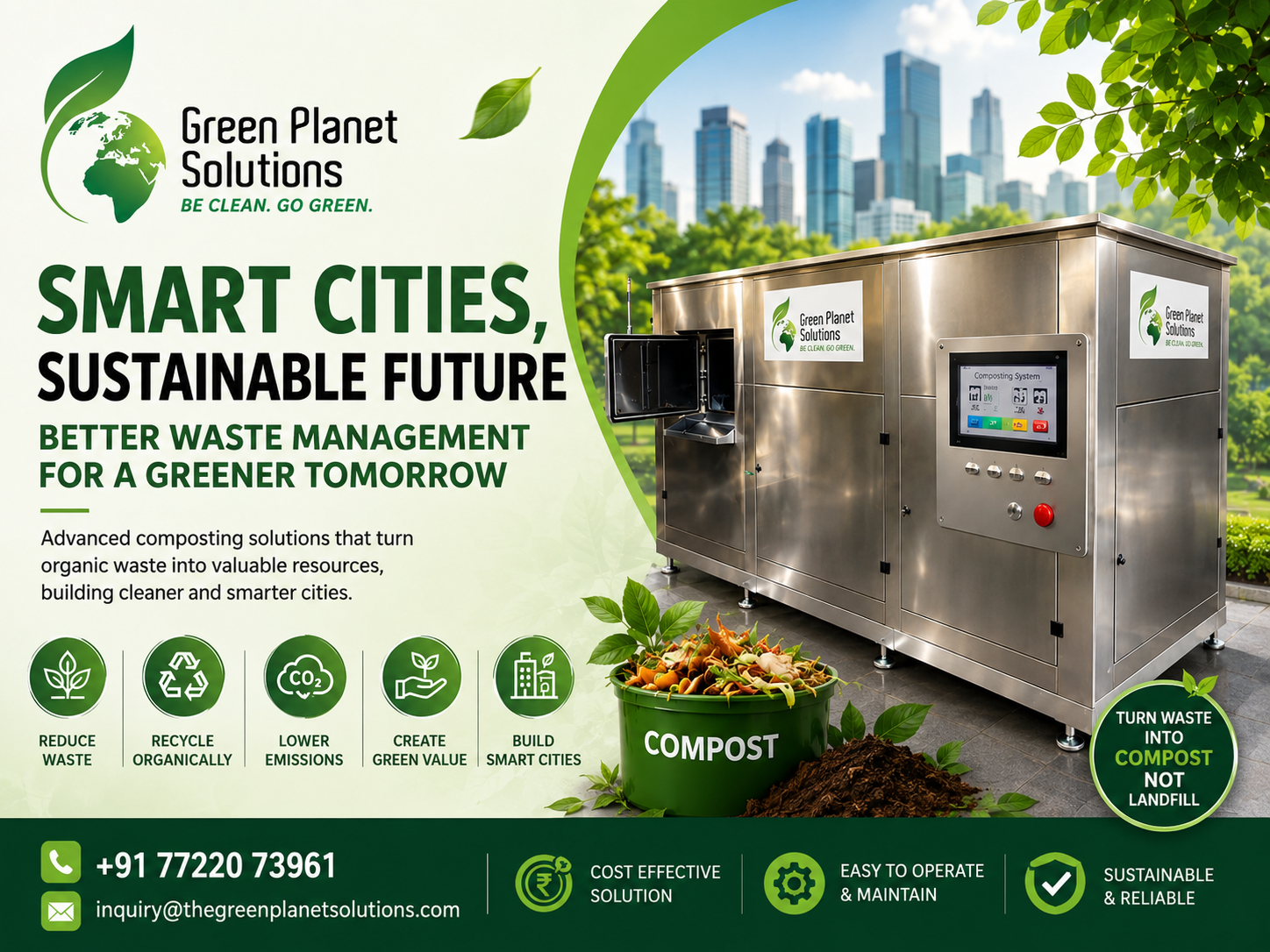
How Composting Technology is Building Cleaner, Greener, and More Sustainable Urban Communities
As cities continue to grow, so does the challenge of managing the enormous amount of waste generated every day. According to urban development studies, organic waste—including food scraps, vegetable waste, garden waste, and biodegradable materials—accounts for nearly 50–60% of municipal solid waste in many Indian cities. When this waste is sent to landfills, it decomposes without oxygen and releases methane, a greenhouse gas that contributes significantly to climate change. For smart cities striving to become cleaner, healthier, and more sustainable, managing organic waste at its source is no longer an option—it’s a necessity.
What is Organic Waste Management?
Organic waste management is the process of collecting, treating, and converting biodegradable waste into valuable resources such as compost or biogas. Instead of transporting food waste to overcrowded landfills, modern composting systems recycle it into nutrient-rich compost that can be used in parks, gardens, landscaping projects, and agriculture.
This approach not only reduces waste but also transforms a disposal problem into an environmental solution.
Why Smart Cities Need Better Organic Waste Management
Smart cities focus on using technology to improve the quality of life for residents while protecting the environment. Efficient waste management is one of the key pillars of every smart city because it directly impacts public health, cleanliness, and sustainability.
By implementing decentralized organic waste management systems, cities can:
- Reduce landfill dependency
- Lower greenhouse gas emissions
- Minimize transportation and waste collection costs
- Produce eco-friendly compost for urban landscaping
- Improve city cleanliness and hygiene
- Support circular economy initiatives
These benefits help municipalities meet sustainability goals while creating cleaner and more resilient urban environments.
The Role of Composting Machines in Smart Cities
Modern composting machines are transforming the way cities manage biodegradable waste. Unlike traditional compost pits that require large spaces and long processing times, automated composting machines convert food waste into compost within days using controlled temperature, aeration, and microbial activity.
These machines are suitable for:
- Residential housing societies
- Hotels and restaurants
- Corporate campuses
- Educational institutions
- Hospitals
- Municipal parks
- Shopping malls
- Airports and railway stations
By processing waste where it is generated, composting machines significantly reduce transportation costs and eliminate the need for large dumping sites.
Environmental Benefits of Smart Composting
Organic waste that reaches landfills generates methane and contaminates soil and groundwater over time. Composting offers a cleaner alternative by recycling waste into useful organic fertilizer.
Some major environmental benefits include:
- Reduced greenhouse gas emissions
- Lower landfill waste volumes
- Improved soil fertility
- Reduced dependence on chemical fertilizers
- Better urban greenery and landscaping
- Conservation of natural resources
This makes composting an essential component of climate-resilient city planning.
Economic Advantages for Municipalities and Businesses
Investing in composting technology also delivers long-term financial benefits. Local processing reduces waste transportation expenses, lowers landfill management costs, and creates valuable compost that can be used or sold.
Organizations that install composting machines often benefit from:
- Reduced waste disposal charges
- Lower operational costs
- Better compliance with environmental regulations
- Enhanced sustainability credentials
- Stronger ESG (Environmental, Social, and Governance) performance
For businesses, these advantages can improve both operational efficiency and brand reputation.
Supporting India’s Smart City Mission
India’s Smart Cities Mission encourages the adoption of innovative technologies that improve urban infrastructure and environmental sustainability. Decentralized waste management aligns perfectly with this vision by promoting cleaner neighborhoods, efficient resource utilization, and responsible waste disposal.
Many municipalities, residential communities, and commercial establishments are already adopting composting systems to comply with Solid Waste Management Rules and contribute to a cleaner urban ecosystem.
The Future of Organic Waste Management
The future of waste management lies in intelligent, decentralized, and technology-driven solutions. Emerging innovations such as IoT-enabled composting machines, AI-based waste monitoring, and real-time performance analytics will make organic waste processing even more efficient.
As sustainability becomes a priority for governments, businesses, and communities, composting technology will play a central role in building smart cities that generate less waste, recycle more resources, and create healthier environments for future generations.
Conclusion
Smart cities are not just about digital infrastructure—they are about creating sustainable ecosystems where resources are used responsibly. Effective organic waste management is one of the most impactful ways to achieve this vision. By adopting modern composting machines and decentralized waste processing systems, cities can reduce landfill waste, cut carbon emissions, and transform everyday food waste into a valuable resource.
Organizations, housing societies, municipalities, and businesses that invest in composting today are not only improving waste management but also contributing to a cleaner, greener, and more sustainable future.
Leave a Reply