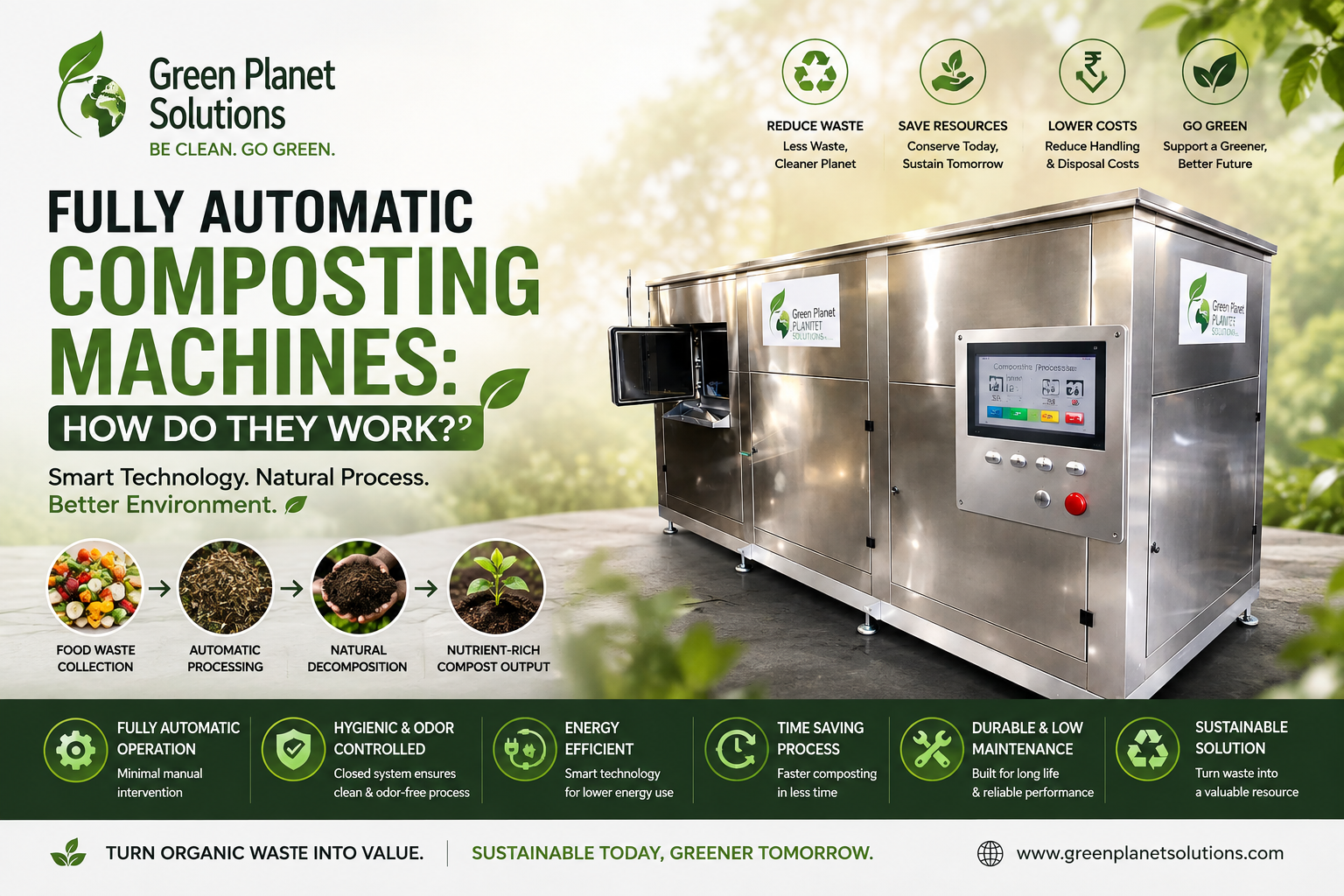
A Simple Guide to Turning Organic Waste into Compost with Automated Technology
Managing food and organic waste has become a growing challenge for hotels, restaurants, shopping malls, hospitals, residential communities, institutions, and commercial facilities. Sending this waste to landfills takes up valuable space, increases transportation requirements, and can create unpleasant odors and environmental concerns. A fully automatic composting machine offers a smarter approach. It processes organic waste on-site and accelerates the natural composting process with controlled temperature, moisture, airflow, and mixing. The result is partially or fully stabilized compost-like organic material, depending on the machine and process used.

What Is a Fully Automatic Composting Machine?
A fully automatic composting machine is an enclosed system designed to process biodegradable waste with minimal manual intervention.
Food scraps, vegetable and fruit waste, and other suitable organic materials are loaded into the machine. Automated systems then control important operating conditions to support microbial decomposition.
Unlike traditional open composting, the process takes place inside a controlled environment, making it easier to manage space, hygiene, odors, and day-to-day operations.
How Does a Fully Automatic Composting Machine Work?
The exact process varies depending on the machine design, but most systems follow a series of basic steps.
Step 1: Organic Waste Is Collected
The process begins with collecting suitable biodegradable waste from kitchens, restaurants, cafeterias, food courts, or other waste-generating areas.
Waste should ideally be separated at the source to prevent plastic, glass, metal, and other non-biodegradable materials from entering the composting system.
Step 2: Waste Is Loaded into the Composting Machine
The segregated organic waste is placed into the machine through its designated loading chamber.
Depending on the equipment design and capacity, the machine can handle different quantities of organic waste per day. Selecting the appropriate capacity is important to avoid overloading and maintain consistent performance.
Step 3: Shredding and Mixing
Some composting systems use a shredding or grinding mechanism to reduce the size of organic waste.
Smaller particles provide a more uniform material and can help microorganisms access the organic matter more easily.
The waste may then be mixed to create a more consistent composting environment.
Step 4: Controlled Decomposition
This is the main stage of the process.
Microorganisms naturally break down organic matter. The machine helps create favorable conditions by controlling factors such as temperature, moisture, airflow, and mixing.
Some systems use automated heating or aeration to maintain appropriate conditions, depending on their design.
Step 5: Moisture and Temperature Management
Moisture and temperature have a direct influence on biological decomposition.
Too much moisture can affect airflow, while insufficient moisture can slow microbial activity. Similarly, temperature changes can influence the rate and consistency of decomposition.
Automated monitoring and control help maintain suitable conditions during the process.
Step 6: Odor Management
One of the common concerns with food waste is unpleasant odor.
Enclosed composting machines can incorporate ventilation and odor-control systems to help manage emissions from the process. Proper waste segregation, loading practices, airflow, and regular maintenance are also important for effective odor management.
Step 7: Compost Output
After the processing cycle, the organic material is removed from the machine.
Depending on the technology and process duration, the output may require curing, maturation, screening, or further processing before it is used as finished compost.
The final material can be useful for landscaping, gardening, soil improvement, or other appropriate applications, subject to its quality and local requirements.
What Makes the Composting Machine “Fully Automatic”?
The main advantage of automation is reduced manual involvement.
Depending on the model, automated features may include:
- Automatic mixing
- Temperature monitoring
- Automated heating
- Moisture management
- Airflow or aeration control
- Programmable processing cycles
- Touchscreen controls
- Safety alerts
- Automatic operating sequences
These features allow operators to monitor the process rather than manually manage every stage.
Benefits of Fully Automatic Composting Machine
1. Reduces Organic Waste Sent to Landfills
Processing organic waste on-site can significantly reduce the amount of biodegradable material that needs to be transported for disposal.
2. Saves Space
Because the process takes place inside an enclosed machine, it can be suitable for facilities where traditional composting requires too much space.
3. Reduces Manual Work
Automation reduces the need for continuous manual handling and monitoring, making daily waste management easier for facility teams.
4. Helps Control Odors
Enclosed processing and appropriate odor-control systems can make organic waste management more suitable for commercial environments.
5. Supports Sustainability Goals
Converting organic waste into a useful resource supports circular economy practices and can contribute to an organization’s broader sustainability objectives.
6. Creates a Useful Organic Resource
Instead of treating food waste simply as something to throw away, composting allows businesses to recover value from biodegradable material.
Where Can Fully Automatic Composting Machine Be Used?
These machines can be suitable for many waste-generating facilities, including:
- Hotels and Resorts
- Restaurants and Cafés
- Shopping Malls and Food Courts
- Hospitals
- Residential Communities
- Corporate Offices
- Universities and Schools
- Industrial Canteens
- Food Processing Facilities
- Municipal and Institutional Projects
The right machine depends on the quantity and type of organic waste generated at the facility.
How to Choose the Right Composting Machine
Before purchasing a composting machine, businesses should consider more than just the machine’s capacity.
Important factors include:
Waste Quantity
Estimate the average amount of organic waste generated per day rather than selecting equipment based only on occasional peak volumes.
Type of Organic Waste
Understand whether the waste consists mainly of cooked food, vegetable scraps, fruit waste, garden waste, or a combination of materials.
Available Space
Consider the machine’s dimensions, loading area, output area, electrical requirements, and space needed for maintenance.
Processing Time
Different technologies and machines have different processing cycles. Understand the expected output and whether additional curing or maturation is required.
Energy Consumption
Compare power requirements and operating costs before making a decision.
Maintenance and After-Sales Support
Reliable technical support, spare parts availability, operator training, and preventive maintenance can make a significant difference over the machine’s operating life.
Why Businesses Are Moving Toward On-Site Composting
For businesses that generate organic waste every day, transporting waste away from the facility is not always the most efficient long-term solution.
On-site composting brings waste processing closer to the point of generation. This can reduce waste transportation requirements while giving organizations greater control over their organic waste management.
It also provides a visible sustainability initiative that can support environmental programs and corporate responsibility efforts.
Why Choose Green Planet Solutions?
Green Planet Solutions provides commercial composting solutions designed for organizations looking for efficient and sustainable organic waste management.
Our composting machines are designed with automation, controlled processing, durable construction, and practical operation in mind. We work with businesses across different sectors to identify suitable composting solutions based on their waste quantity, application, available space, and operational requirements.
From equipment selection to installation and support, Green Planet Solutions helps businesses take a practical step toward responsible organic waste management.
Conclusion
Fully automatic composting machines are changing the way businesses manage organic waste. By combining controlled biological decomposition with automation, these systems make it easier to process food waste on-site while reducing landfill dependency and supporting sustainability.
The key is choosing a machine that matches your waste quantity, waste type, space, processing requirements, and operating goals.
For businesses looking to turn organic waste into a useful resource, a well-designed composting system can be an important part of a cleaner and more sustainable waste management strategy.
Turn Organic Waste into a Sustainable Resource
With the right technology and responsible waste segregation, businesses can reduce waste, improve operational efficiency, and move closer to a cleaner, greener future with Green Planet Solutions.
Leave a Reply