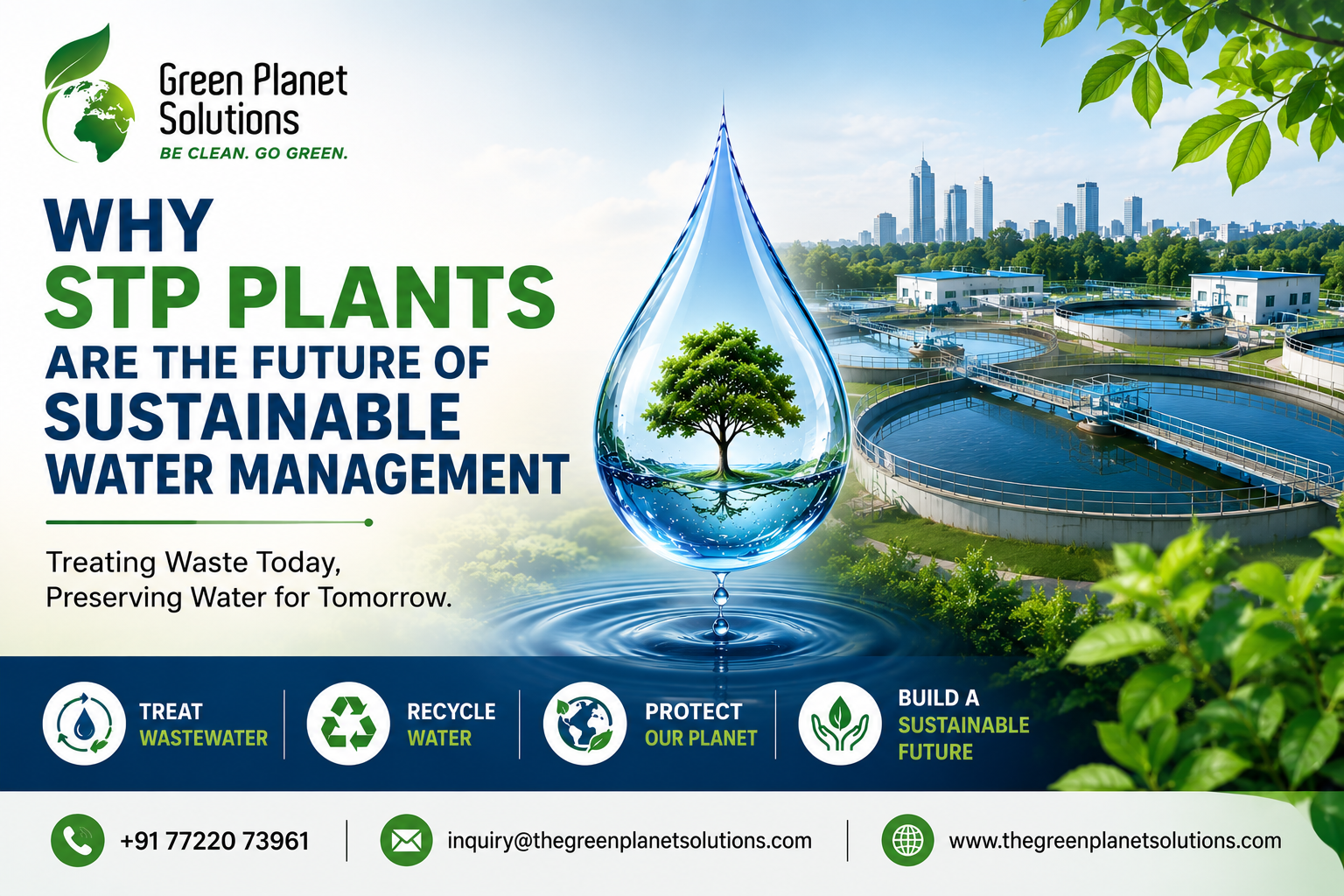
Introduction: The Growing Need for Water Conservation and Water Management
Water is one of the most valuable resources on our planet, yet increasing urbanization, industrial growth, and population expansion are placing tremendous pressure on freshwater sources. As water scarcity becomes a global concern, sustainable water management has become essential for protecting our environment and ensuring water availability for future generations.
Sewage Treatment Plants (STPs) have emerged as one of the most effective solutions for managing wastewater and conserving water. By treating and reusing wastewater, STP plants help communities, industries, and businesses reduce water consumption and create a more sustainable future.
Understanding STP Plants
A Sewage Treatment Plant is a system designed to collect, treat, and purify wastewater generated from residential, commercial, and industrial areas. The treatment process removes harmful contaminants, suspended particles, and pollutants, making the water safe for reuse in various applications.
Modern STP systems use advanced technologies to ensure efficient wastewater treatment while minimizing environmental impact.
Why Water Management Matters Today
The demand for clean water is increasing rapidly, while freshwater resources continue to decline. Groundwater depletion, pollution, and climate change have created serious challenges for cities and industries worldwide.
Without proper wastewater treatment, untreated sewage can contaminate rivers, lakes, and groundwater, causing health risks and environmental damage. Sustainable water management helps address these challenges by promoting water recycling and responsible water usage.
How STP Plants Support Sustainable Water Management
STP plants play a crucial role in conserving water resources. Instead of allowing wastewater to pollute the environment, these systems treat and recycle water for non-potable uses such as:
- Gardening and landscaping
- Toilet flushing
- Industrial cooling processes
- Construction activities
- Agricultural irrigation
This reduces dependence on freshwater sources and promotes water conservation.
Major Benefits of STP Plants
1. Water Conservation
STP plants recycle wastewater and make it available for reuse. This significantly reduces freshwater consumption and helps preserve natural water resources.
2. Environmental Protection
Proper wastewater treatment prevents pollution of rivers, lakes, and groundwater. It helps maintain ecological balance and protects biodiversity.
3. Cost Savings
Organizations can reduce their water procurement costs by reusing treated water for various applications.
4. Regulatory Compliance
Government regulations increasingly require industries and commercial buildings to install wastewater treatment systems. STPs help organizations comply with environmental standards.
5. Sustainable Development
STP plants support green buildings, smart cities, and sustainable infrastructure projects by promoting efficient water management.
Why STP Plants Are the Future
As cities continue to grow and water resources become more limited, wastewater treatment and water recycling will become essential rather than optional. Future urban developments, residential communities, hospitals, hotels, and industries will increasingly depend on STP plants to meet their water requirements sustainably.
Modern STP technologies are becoming more energy-efficient, automated, and environmentally friendly, making them ideal solutions for future water management.
Green Planet Solutions: Driving Sustainable Water Management
Green Planet Solutions provides advanced STP solutions designed to meet the growing demand for efficient wastewater treatment and water recycling. Our systems help organizations reduce water consumption, protect the environment, and build sustainable communities.
Our STP solutions offer:
- High treatment efficiency
- Water recycling capabilities
- Low operational costs
- Environment-friendly operation
- Long-term sustainability benefits
Conclusion
Sustainable water management is essential for protecting our future, and STP plants are at the center of this transformation. By treating wastewater and promoting water reuse, these systems help conserve water, reduce pollution, and support environmental sustainability.
As the world moves toward smarter and greener infrastructure, STP plants will continue to play a vital role in securing clean water for future generations. Investing in STP technology today is an investment in a sustainable tomorrow.