Introduction
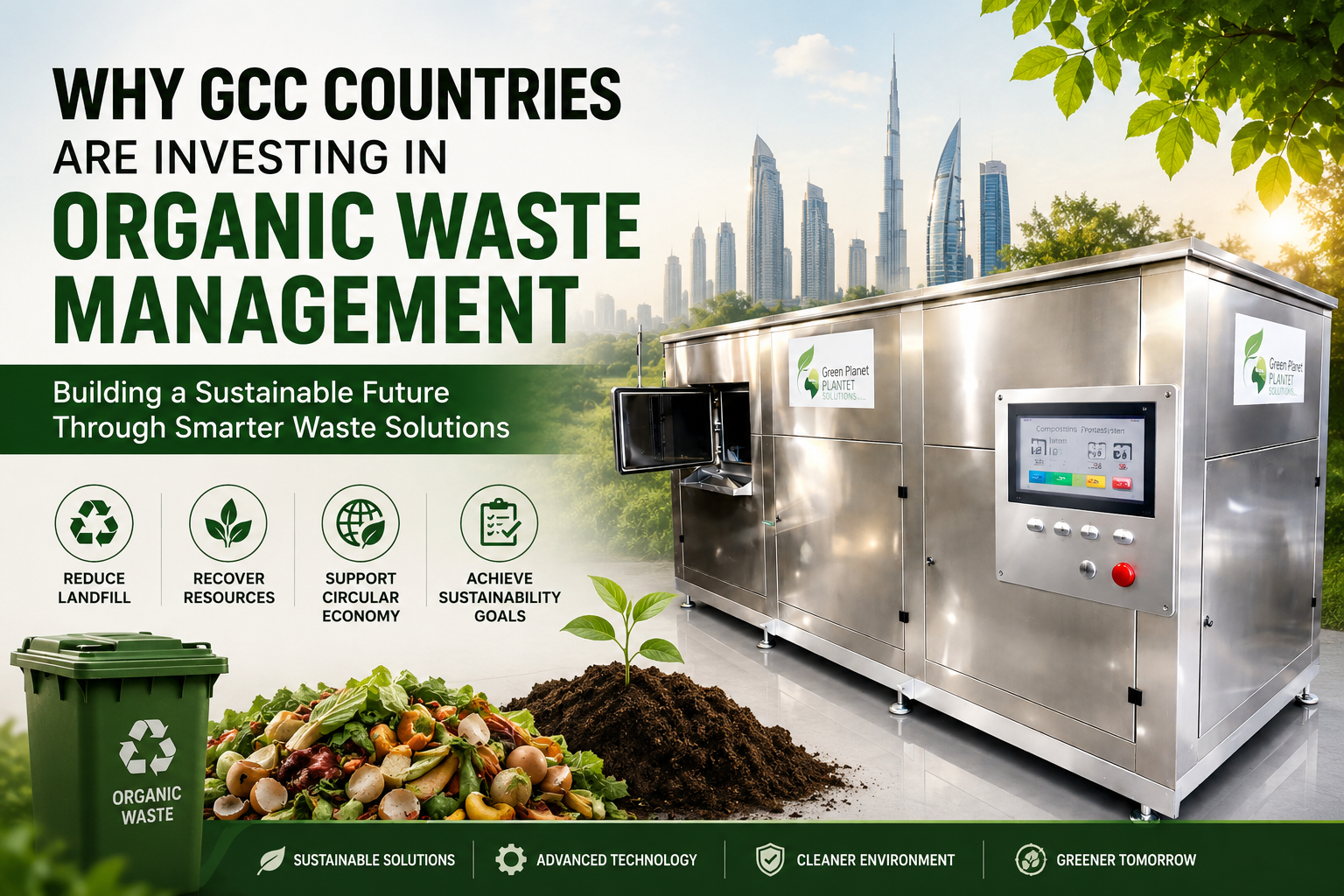
The Gulf Cooperation Council (GCC) countries, including Saudi Arabia, the United Arab Emirates, Qatar, Kuwait, Oman, and Bahrain, are rapidly investing in organic waste management solutions. Rising urbanization, increasing food waste, sustainability goals, and environmental regulations have encouraged governments and businesses to adopt modern waste management technologies. From composting machines to biogas plants, GCC nations are transforming waste into valuable resources while building a greener future.
Growing Waste Generation in GCC Countries
Rapid population growth, urban development, and expanding hospitality sectors have significantly increased waste generation across the GCC region. Cities such as Dubai, Riyadh, Doha, and Abu Dhabi produce thousands of tons of municipal waste every day, with a large percentage consisting of food and organic waste.
Hotels, restaurants, shopping malls, residential communities, and commercial establishments contribute heavily to organic waste generation. Managing this waste through traditional landfill methods is becoming increasingly expensive and environmentally challenging.
Government Sustainability Initiatives
Many GCC countries have introduced ambitious sustainability programs and environmental strategies to reduce landfill dependency. These initiatives focus on waste reduction, recycling, renewable energy, and circular economy practices.
For example:
- Saudi Arabia’s Vision 2030 emphasizes environmental sustainability.
- UAE’s Net Zero 2050 strategy encourages waste reduction.
- Qatar’s National Vision 2030 promotes sustainable waste management.
- Oman and Bahrain are investing in recycling and resource recovery projects.
These policies are encouraging industries and municipalities to adopt advanced organic waste treatment technologies.
Reducing Landfill Dependence
Landfills occupy valuable land resources and contribute to environmental pollution. Organic waste decomposes in landfills and produces methane gas, a greenhouse gas that significantly impacts climate change.
By investing in composting machines and organic waste converters, GCC countries can reduce the amount of waste sent to landfills. This helps lower transportation costs, decrease landfill expansion requirements, and improve overall environmental performance.
Food Waste Challenges in the Hospitality Industry
The GCC region has one of the world’s largest hospitality and tourism industries. Luxury hotels, restaurants, catering businesses, and shopping malls generate substantial amounts of food waste daily.
Large events, religious gatherings, and tourism activities further increase organic waste generation. Installing composting systems and food waste converters enables hotels and restaurants to manage waste efficiently while supporting sustainability objectives.
Promoting Circular Economy Practices
Organic waste is increasingly being viewed as a valuable resource rather than a disposal problem. Composting technologies convert food waste into nutrient-rich compost that can be used for landscaping, agriculture, and gardening applications.
Biogas systems can also convert organic waste into renewable energy. This circular economy approach allows businesses and municipalities to recover value from waste while reducing environmental impacts.
Rising Demand for Composting Machines
The demand for composting machines in GCC countries has grown significantly in recent years. Residential communities, hotels, educational institutions, airports, hospitals, and commercial establishments are adopting these solutions to manage organic waste onsite.
Modern composting machines offer several benefits:
- Reduction in waste volume.
- Lower transportation costs.
- Faster waste processing.
- Odor control.
- Production of useful compost.
- Compliance with environmental regulations.
These advantages make composting technology an attractive investment for organizations across the GCC region.
Supporting Green Building and ESG Goals
Many organizations in GCC countries are focusing on Environmental, Social, and Governance (ESG) goals. Green building certifications and sustainability standards encourage proper waste management practices.
Organic waste management solutions help businesses improve their environmental performance, achieve sustainability certifications, and demonstrate corporate responsibility. This is particularly important for real estate developers, hospitality companies, and industrial organizations.
Opportunities for Waste Management Companies
The growing focus on sustainability has created significant opportunities for waste management companies and technology providers. Businesses offering composting machines, organic waste converters, biogas plants, and waste consulting services can expand their presence in the GCC market.
Customized solutions designed for hotels, residential communities, commercial facilities, and municipalities are increasingly in demand.
Conclusion
GCC countries are investing heavily in organic waste management to address rising waste generation, achieve sustainability goals, and reduce environmental impacts. Government initiatives, growing environmental awareness, and increasing demand for sustainable solutions are driving the adoption of composting machines and waste treatment technologies.
As the region continues its transition toward a circular economy, organic waste management will play a vital role in creating cleaner, greener, and more sustainable cities across the GCC.