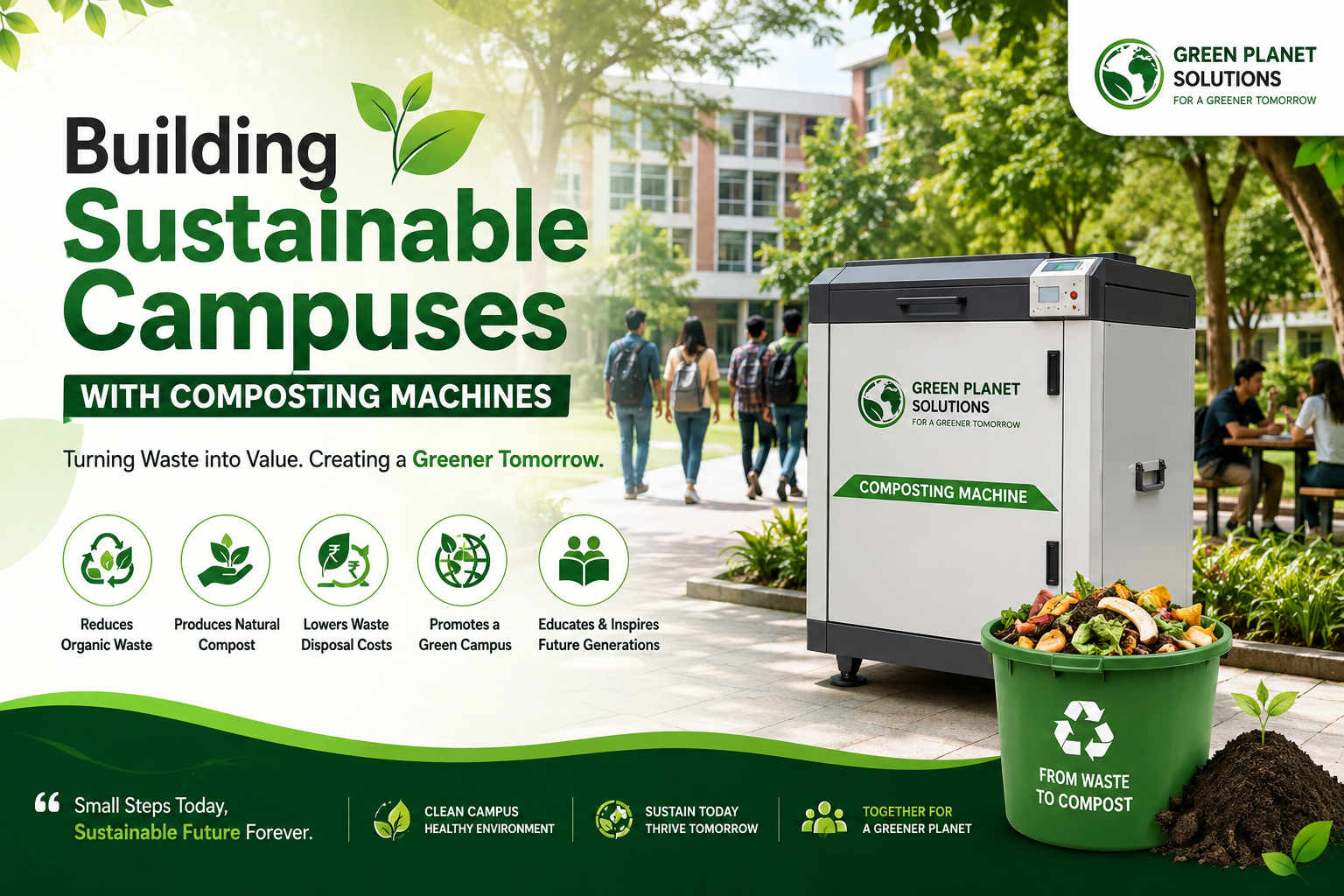
Turning Campus Waste into a Greener Future
Educational institutions are more than places of learning—they are communities where thousands of students, faculty, and staff generate significant amounts of organic waste every day. From hostel kitchens and cafeterias to gardens and canteens, this waste often ends up in landfills, contributing to pollution and greenhouse gas emissions. By installing composting machines, schools, colleges, and universities can transform food and garden waste into nutrient-rich compost while creating a cleaner, greener, and more sustainable campus.
Why Sustainable Waste Management Matters on Campuses
Modern campuses are embracing sustainability as part of their environmental responsibility. However, managing large volumes of biodegradable waste remains a major challenge. Improper disposal leads to unpleasant odors, attracts pests, and increases waste transportation costs.
A composting machine provides an efficient solution by converting organic waste into valuable compost directly on campus. This reduces landfill dependency and supports a circular waste management system where waste becomes a useful resource.
How Composting Machines Work
A composting machine processes biodegradable waste such as leftover food, vegetable peels, fruit waste, tea leaves, coffee grounds, and garden clippings. The machine uses advanced technology along with microbial decomposition to accelerate the composting process.
Within a short period, organic waste is transformed into high-quality compost that can be safely used for campus gardens, lawns, landscaping projects, and tree plantations.
Key Benefits of Composting Machines for Educational Institutions
1. Reduce Campus Waste using Composting Machines
A composting machine can convert up to 90% of organic waste into useful compost, significantly reducing the amount of waste sent to landfills.
2. Promote Environmental Awareness
Students witness sustainable waste management in action, making composting an effective educational tool for environmental studies and sustainability programs.
3. Lower Waste Disposal Costs using Composting Machines
On-site composting minimizes waste collection and transportation expenses, resulting in long-term financial savings for institutions.
4. Produce Natural Fertilizer
The compost generated can be used in campus gardens, sports fields, landscaping, and tree plantations, reducing the need for chemical fertilizers.
5. Maintain a Cleaner Campus
Advanced composting machines are designed to operate with minimal odor, helping campuses maintain a hygienic and pleasant environment.
Where Composting Machines Can Be Used on Campus
Composting machines are suitable for multiple locations within educational institutions, including:
- School and college canteens
- University hostels
- Central kitchens
- Cafeterias
- Botanical gardens
- Landscape maintenance departments
- Residential campus communities
Their compact design allows installation even in campuses with limited space.
Supporting Green Campus Initiatives
Many educational institutions aim to achieve Green Campus certifications and implement sustainable development practices. Installing a composting machine supports these initiatives by reducing carbon emissions, encouraging waste segregation, and promoting resource conservation.
The compost produced can be used to maintain green landscapes, creating a self-sustaining ecosystem where waste is converted into a valuable resource.
Inspiring Students Through Practical Sustainability
A composting machine is more than waste management equipment—it is a practical learning tool. Students gain firsthand experience in environmental conservation, circular economy principles, and responsible waste management. These experiences help build environmentally conscious citizens who carry sustainable habits beyond the campus.
Why Choose Green Planet Solutions?
Green Planet Solutions offers advanced composting machines designed for educational institutions of all sizes. Our systems feature:
- Fast and efficient composting technology
- Energy-efficient operation
- Compact and space-saving design
- Low maintenance requirements
- Odor-controlled processing
- Durable and user-friendly construction
- Multiple capacity options for schools, colleges, and universities
Our expert team also provides installation, training, and after-sales support to ensure seamless operation.
Conclusion
Creating a sustainable campus begins with responsible waste management. Composting machines help educational institutions reduce waste, lower operational costs, produce organic fertilizer, and inspire students to adopt environmentally friendly practices.
By investing in composting technology, campuses can transform everyday organic waste into a valuable resource while taking a meaningful step toward a cleaner, greener, and more sustainable future.
Leave a Reply