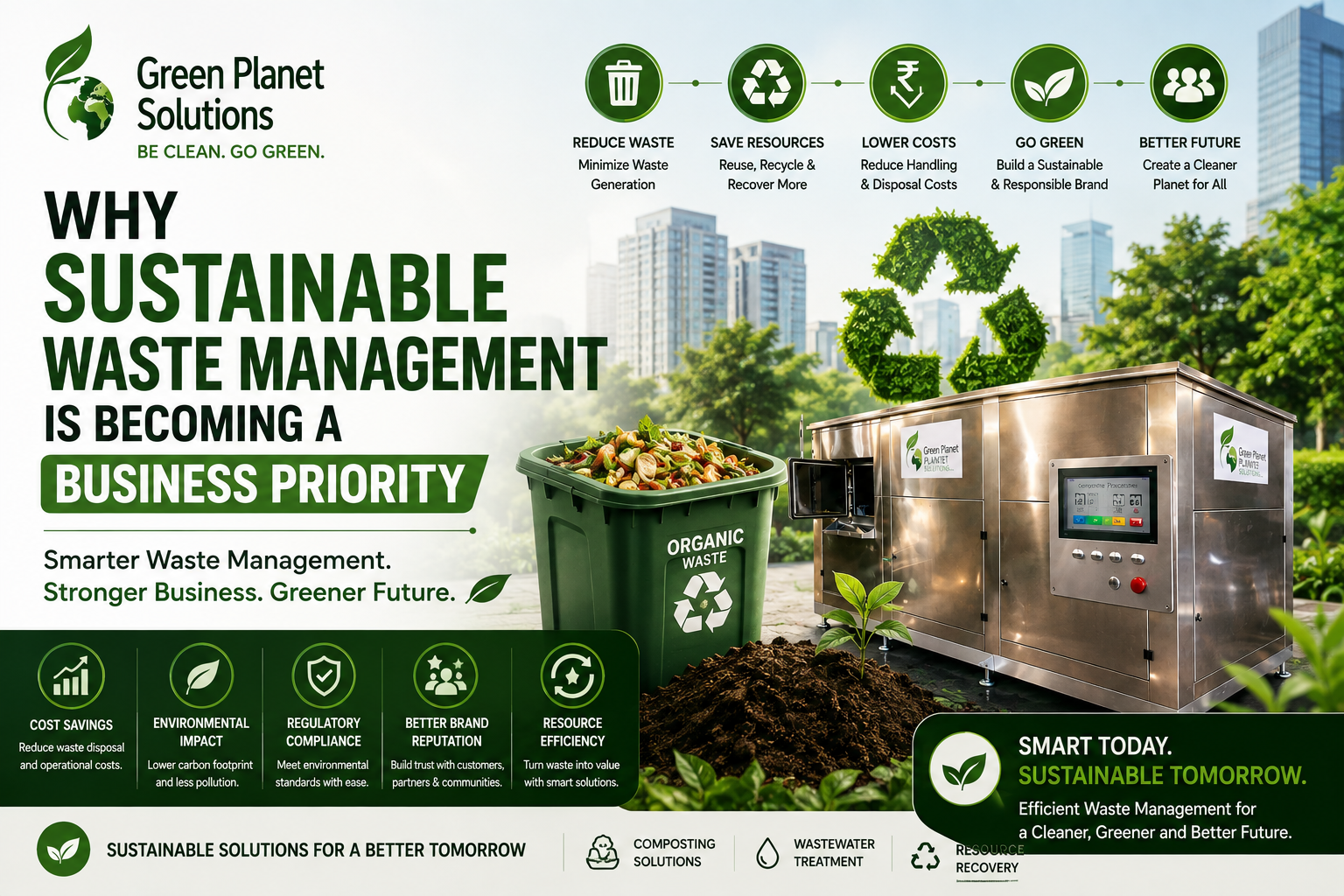
How Smarter Waste Management Helps Businesses Reduce Costs, Strengthen Their Brand, and Build a Greener Future
Waste management was once viewed mainly as an operational responsibility—collect the waste, transport it, and dispose of it. Today, businesses are looking at waste differently. Rising disposal costs, growing environmental awareness, sustainability commitments, and changing customer expectations are making sustainable waste management an important part of business strategy.
From hotels and restaurants to hospitals, shopping malls, industries, and residential communities, organizations are looking for practical ways to reduce waste and use resources more efficiently. Sustainable waste management can help businesses reduce their environmental impact while also creating long-term operational and financial benefits.
What Is Sustainable Waste Management?
Sustainable waste management means managing waste in a way that minimizes environmental impact while making the best possible use of resources.
Instead of simply sending waste to landfills, businesses can focus on reducing, segregating, recycling, composting, recovering, and reusing materials wherever practical.
For organic waste, technologies such as commercial composting machines can help businesses process food and biodegradable waste at or near the point where it is generated.
Why Are Businesses Prioritizing Waste Management?
Businesses generate different types of waste every day. Food waste, packaging, paper, plastics, wastewater, and other materials can quickly add up, particularly in large commercial facilities.
Managing these waste streams efficiently can improve cleanliness, reduce unnecessary disposal, and support broader sustainability goals.
For many organizations, waste management is becoming more than an environmental initiative—it is becoming a business priority.
1. Rising Waste Disposal Costs
Waste collection, transportation, and disposal can represent a significant recurring expense for businesses.
As waste volumes increase, these costs can increase as well. Reducing the amount of waste that requires external disposal can therefore create meaningful savings.
For example, businesses that generate large quantities of organic waste can consider on-site composting to reduce the volume of biodegradable waste sent for disposal.
2. Growing Focus on Sustainability
Sustainability has become an important consideration for businesses across many industries.
Companies are increasingly setting goals around waste reduction, resource conservation, carbon reduction, and responsible operations. Sustainable waste management can become an important part of achieving these objectives.
Small operational changes, when implemented consistently across a large facility, can make a significant difference over time.
3. Customers Expect More Responsible Businesses
Today’s customers are increasingly aware of environmental issues. They may consider a company’s environmental practices when deciding where to stay, eat, shop, or do business.
Hotels, restaurants, shopping malls, and other customer-facing organizations can demonstrate their environmental commitment through visible and practical waste management initiatives.
Responsible waste management can therefore contribute to a stronger and more trustworthy brand image.
4. Businesses Are Looking at ESG Goals
Environmental, Social, and Governance (ESG) considerations are influencing business decisions around the world.
Waste reduction, recycling, organic waste processing, water conservation, and resource efficiency can all contribute to an organization’s environmental objectives.
Implementing measurable waste management practices can help businesses demonstrate that sustainability is part of their everyday operations rather than simply a marketing message.
5. Organic Waste Can Become a Resource
Food and organic waste does not always have to be treated as something with no value.
With appropriate composting technology, biodegradable waste can be processed into compost or stabilized organic material, depending on the system and process used.
This creates an opportunity to move from a “waste disposal” mindset toward a “resource recovery” approach.
6. Cleaner and More Hygienic Workplaces
Poorly managed waste can lead to unpleasant odors, insects, overflowing bins, and unhygienic conditions.
Proper segregation, timely collection, and suitable on-site processing can help businesses maintain cleaner waste handling areas.
This is especially important for hotels, restaurants, hospitals, food courts, cafeterias, and other facilities where hygiene is closely connected to customer and employee experience.
7. Compliance and Environmental Responsibility
Environmental requirements and waste management regulations vary by location and industry. Businesses need to understand and follow the requirements applicable to their operations.
A structured waste management system makes it easier to segregate waste, track disposal practices, and implement appropriate treatment or recovery methods.
Good waste management can therefore support both environmental responsibility and responsible business operations.
8. Technology Is Making Waste Management Smarter
Modern technology is changing the way businesses handle waste.
Commercial composting machines, automated waste processing systems, smart monitoring, and efficient wastewater treatment technologies allow organizations to manage waste more systematically.
Automation can reduce manual intervention and make waste processing easier to integrate into daily business operations.
Industries That Can Benefit from Sustainable Waste Management
Sustainable waste management can be particularly valuable for organizations that generate significant amounts of waste, including:
- Hotels and Resorts
- Restaurants and Food Courts
- Shopping Malls
- Hospitals
- Residential Communities
- Corporate Offices
- Educational Institutions
- Industrial Facilities
- Food Processing Units
- Airports
- Municipal Projects
Each facility has different waste streams and operational requirements, so the right solution should be selected according to the type and quantity of waste generated.
Composting as a Practical Business Solution
For businesses generating large quantities of food and organic waste, commercial composting machines can provide a practical way to process biodegradable waste closer to its source.
Instead of transporting all organic waste to external disposal facilities, businesses can process suitable organic material on-site using an appropriately sized system.
This can help reduce waste transportation requirements, improve waste handling, and support circular economy practices.
How Sustainable Waste Management Can Benefit Your Business
A well-planned waste management strategy can provide several benefits:
Lower Operating Costs
Reducing waste volume and disposal requirements can help control recurring expenses.
Better Resource Efficiency
Recycling, composting, and reuse allow businesses to recover value from materials that would otherwise be discarded.
Improved Brand Image
Visible sustainability initiatives can strengthen a company’s environmental reputation.
Cleaner Operations
Better waste segregation and processing can contribute to cleaner and more organized facilities.
Long-Term Sustainability
Efficient waste management supports broader environmental and corporate sustainability goals.
Why Green Planet Solutions?
Green Planet Solutions provides sustainable solutions for businesses looking to improve the way they manage organic waste and wastewater.
Our commercial composting machines help organizations process suitable organic waste efficiently, while our Sewage Treatment Plant (STP) solutions support responsible wastewater treatment and water management.
We work with commercial, residential, hospitality, industrial, and institutional projects to provide practical solutions based on their specific requirements.
Conclusion
Sustainable waste management is becoming a business priority because it connects environmental responsibility with operational efficiency, cost management, brand reputation, and long-term sustainability.
Businesses no longer have to view waste simply as something that needs to be removed. With the right approach and technology, waste can be reduced, processed, recovered, and converted into useful resources.
As sustainability continues to influence business decisions around the world, organizations that invest in smarter waste management today can position themselves for a cleaner, more efficient, and more sustainable future.
Manage Waste Smarter. Operate Better. Build a Greener Future.
With Green Planet Solutions, businesses can take practical steps toward responsible waste management and contribute to a cleaner planet—one waste stream at a time.
Leave a Reply