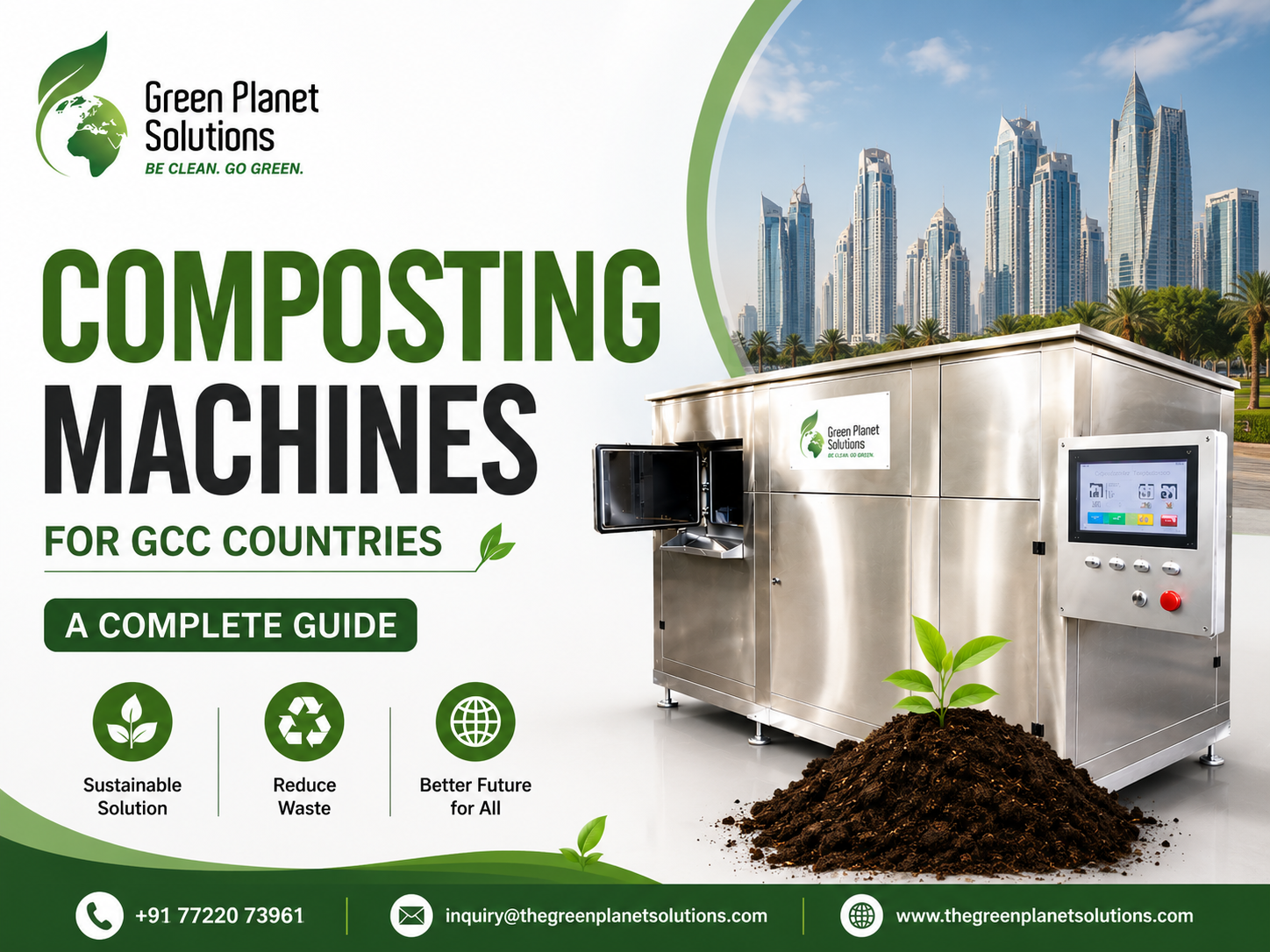
Composting Machines for GCC Countries: A Complete Guide to Sustainable Organic Waste Management
As GCC countries continue to invest in smart cities, sustainable infrastructure, and environmental conservation, effective organic waste management has become a top priority. Hotels, restaurants, hospitals, residential communities, and commercial facilities generate large volumes of food waste every day. Without proper treatment, this waste ends up in landfills, contributing to greenhouse gas emissions and increasing disposal costs.
A commercial composting machine offers an efficient, eco-friendly solution by converting organic waste into nutrient-rich compost within a short period. This guide explains why composting machines are becoming essential across the GCC region and how businesses can choose the right solution.
Why Organic Waste Management Matters in GCC Countries
Countries such as the United Arab Emirates, Saudi Arabia, Qatar, Oman, Kuwait, and Bahrain are rapidly adopting sustainable waste management practices. With growing populations, expanding tourism, and increasing urban development, organic waste generation has reached unprecedented levels.
Traditional waste disposal methods require large landfill spaces and transportation costs while negatively impacting the environment. Composting machines help organizations process waste directly at the source, reducing landfill dependency and supporting national sustainability initiatives.
What Is a Commercial Composting Machine?
A commercial composting machine is an automated system designed to convert food waste, vegetable waste, fruit peels, garden waste, and other biodegradable materials into high-quality compost.
Using controlled temperature, moisture, and microbial activity, the machine accelerates the natural composting process, producing compost in significantly less time than conventional methods. Modern machines are compact, energy-efficient, and designed for continuous commercial use.
Benefits of Composting Machines for GCC Businesses
1. Reduce Organic Waste Volume
A composting machine significantly reduces the volume of organic waste, minimizing the amount sent to landfills and lowering waste disposal costs.
2. Support Sustainability Goals
Many GCC organizations are implementing environmental, social, and governance (ESG) initiatives. Composting helps businesses reduce their carbon footprint while demonstrating environmental responsibility.
3. Lower Waste Management Expenses
Transporting food waste daily can be expensive. On-site composting eliminates frequent waste collection and reduces operational costs over time.
4. Produce Valuable Compost
The compost produced can be used for landscaping, gardens, agriculture, parks, and green spaces, creating value from what was previously considered waste.
5. Improve Corporate Image
Customers, investors, and government authorities increasingly prefer businesses that adopt environmentally responsible practices. Installing a composting machine strengthens a company’s sustainability credentials.
Industries That Benefit Most
Commercial composting machines are suitable for a wide range of industries across the GCC region, including:
- Hotels and Resorts
- Restaurants and Cafés
- Hospitals and Healthcare Facilities
- Shopping Malls
- Corporate Campuses
- Residential Communities
- Educational Institutions
- Airports and Transportation Hubs
- Industrial Canteens
- Municipal Authorities
These organizations generate substantial amounts of biodegradable waste daily, making composting an efficient long-term solution.
Key Features to Look for in a Composting Machine
When selecting a composting machine for GCC operations, consider the following features:
- Fully automatic operation
- Stainless steel construction for durability
- Low energy consumption
- Odor control system
- Easy maintenance
- High waste processing capacity
- User-friendly touchscreen controls
- Compact design for space optimization
- Safety features for commercial environments
Choosing equipment designed for continuous operation ensures reliable performance in demanding conditions.
Why Composting Is Ideal for GCC Climate Conditions
Although GCC countries experience high temperatures and dry climates, modern composting machines are engineered to maintain the ideal internal conditions required for efficient decomposition.
Automated temperature and moisture control systems ensure consistent composting performance regardless of external weather conditions, making them suitable for year-round operation.
How Green Planet Solutions Supports GCC Businesses
Green Planet Solutions provides advanced commercial composting machines designed for businesses seeking reliable, efficient, and sustainable organic waste management solutions.
Our systems are built using premium materials, intelligent automation, and energy-efficient technology to help organizations reduce waste, lower operating costs, and contribute to a cleaner environment. Whether you operate a hotel, hospital, commercial facility, or residential community, our composting solutions can be customized to meet your specific waste processing requirements.
Conclusion
As sustainability becomes a strategic priority across GCC countries, investing in a commercial composting machine is no longer just an environmental initiative—it is a smart business decision. By transforming organic waste into valuable compost, businesses can reduce operational costs, minimize landfill waste, and support long-term environmental goals.
Green Planet Solutions is committed to helping organizations across the GCC region implement innovative composting technologies that deliver both economic and environmental benefits. Together, we can build cleaner, greener, and more sustainable communities for the future.