Introduction
India generates millions of tons of organic waste every day from homes, hotels, restaurants, industries, and commercial spaces. Most of this waste is dumped into landfills, leading to pollution and environmental damage. Composting technology is now helping India move towards a cleaner and more sustainable future by converting organic waste into valuable compost.
Understanding Circular Economy
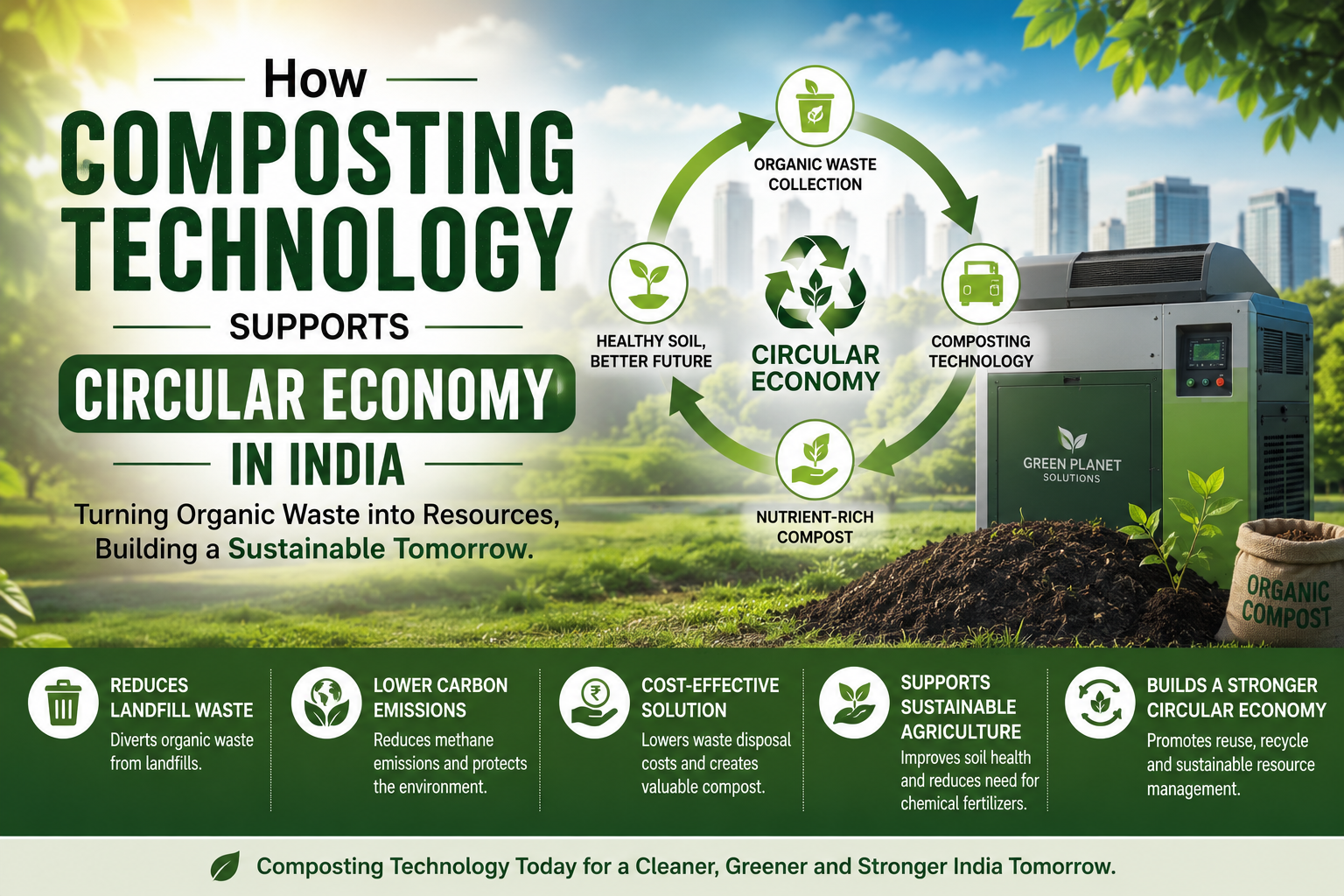
A circular economy is a system focused on reducing waste and reusing resources instead of simply discarding them. Composting technology supports this concept by transforming food waste and organic materials into nutrient-rich compost that can be reused in agriculture and landscaping.
Role of Composting Technology
Modern composting machines use advanced technology to process kitchen waste, food waste, garden waste, and other organic materials quickly and efficiently. These machines help reduce landfill waste while creating eco-friendly fertilizer naturally.
Benefits of Composting Technology
Composting machines provide multiple advantages for businesses and communities. They help reduce waste disposal costs, improve hygiene, minimize foul odors, lower carbon emissions, and support sustainable waste management practices. They also convert waste into useful compost that benefits soil health.
Composting Technology in Commercial Sectors
Hotels, restaurants, airports, residential societies, industries, and corporate offices are increasingly adopting composting machines to manage daily organic waste effectively. This helps organizations become more environmentally responsible while supporting green initiatives.
Environmental Impact
Composting technology plays a major role in reducing pollution and greenhouse gas emissions. By diverting organic waste from landfills, composting systems help create cleaner cities and support India’s sustainability goals.
The Future of Composting in India
As India continues focusing on smart cities, green energy, and sustainable development, composting technology will become an essential part of the country’s circular economy. Businesses and communities are now realizing that waste can become a valuable resource when managed correctly.
Conclusion
Composting technology is transforming the way India manages organic waste. By turning waste into useful compost, it supports sustainability, reduces pollution, and strengthens the circular economy. The future of waste management in India is smart, sustainable, and eco-friendly.
Contact Us
Green Planet Solutions
📞 +91 77220 73961
📧 inquiry@thegreenplanetsolutions.com