Introduction
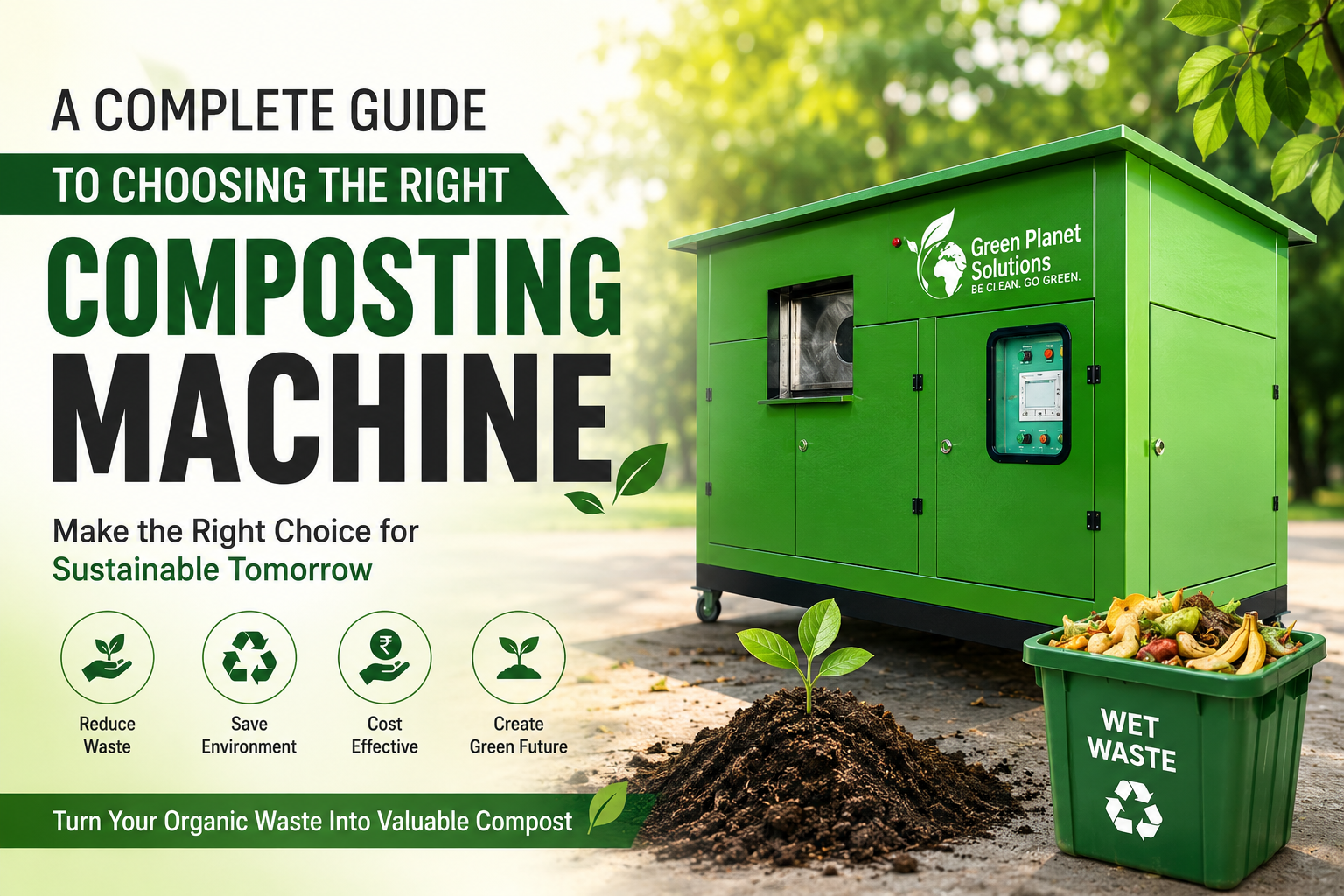
With increasing awareness about sustainable waste management and the Government of India’s focus on the Swachh Bharat Mission, composting machines have become an essential solution for converting organic waste into valuable compost. From housing societies and hotels to restaurants, industries, and municipalities, composting machines help reduce landfill waste while promoting eco-friendly practices. However, choosing the right composting machine can be challenging due to the variety of options available in the market.
Why Composting Machines Are Important
Composting machines play a major role in managing wet waste efficiently. They reduce the amount of waste sent to landfills, lower greenhouse gas emissions, and produce nutrient-rich compost that can be used for gardening and agriculture. Businesses and organizations can also save money on waste disposal costs while contributing to a greener environment.
Understand Your Waste Capacity
The first step in selecting the right composting machine is understanding the quantity of waste generated daily. Small housing societies or cafes may require compact machines, while hotels, industries, and municipal corporations may need high-capacity industrial composting systems. Choosing the correct capacity ensures smooth operation and better efficiency.
Check the Type of Waste
Different composting machines are designed to handle different types of organic waste. Food waste, vegetable waste, garden waste, and biodegradable industrial waste may require specific processing methods. Ensure the machine is suitable for the type of waste your organization produces regularly.
Look for Automation and Ease of Use
Modern composting machines come with automatic features that simplify the composting process. Machines with automatic mixing, temperature control, odor management, and user-friendly control panels help reduce manual effort and improve productivity. Easy-to-operate machines are ideal for organizations with minimal technical staff.
Consider Space Availability
Before purchasing a composting , evaluate the installation space available at your site. Compact models are suitable for apartments and small businesses, while larger industrial units require dedicated areas. Selecting a machine that fits comfortably within your space helps improve operational efficiency.
Focus on Energy Efficiency
Energy-efficient composting machines help reduce electricity consumption and operational costs. Investing in eco-friendly technology not only saves money in the long run but also supports sustainable environmental practices.
Maintenance and Service Support
Regular maintenance is important for the smooth functioning of composting machines. Choose a manufacturer that provides strong after-sales support, maintenance services, and spare parts availability. Reliable customer support ensures long-term machine performance and minimal downtime.
Evaluate Composting Speed
Different machines offer different composting durations. Some advanced composting machines can convert waste into compost within 24 hours, while traditional systems may take several days. Faster composting systems are beneficial for organizations generating large volumes of waste daily.
Cost vs Long-Term Benefits
While price is an important factor, businesses should focus on long-term value rather than only initial investment. A high-quality composting machine can reduce waste management costs, improve sustainability, and create valuable compost for future use. Investing in the right machine provides long-term environmental and financial benefits.
Conclusion
Choosing the right composting machine is an important step toward efficient waste management and environmental sustainability. By considering factors such as waste capacity, automation, energy efficiency, maintenance, and available space, businesses and organizations can select the perfect solution for their needs. Composting technology not only helps manage waste effectively but also supports the vision of a cleaner, greener, and healthier India.