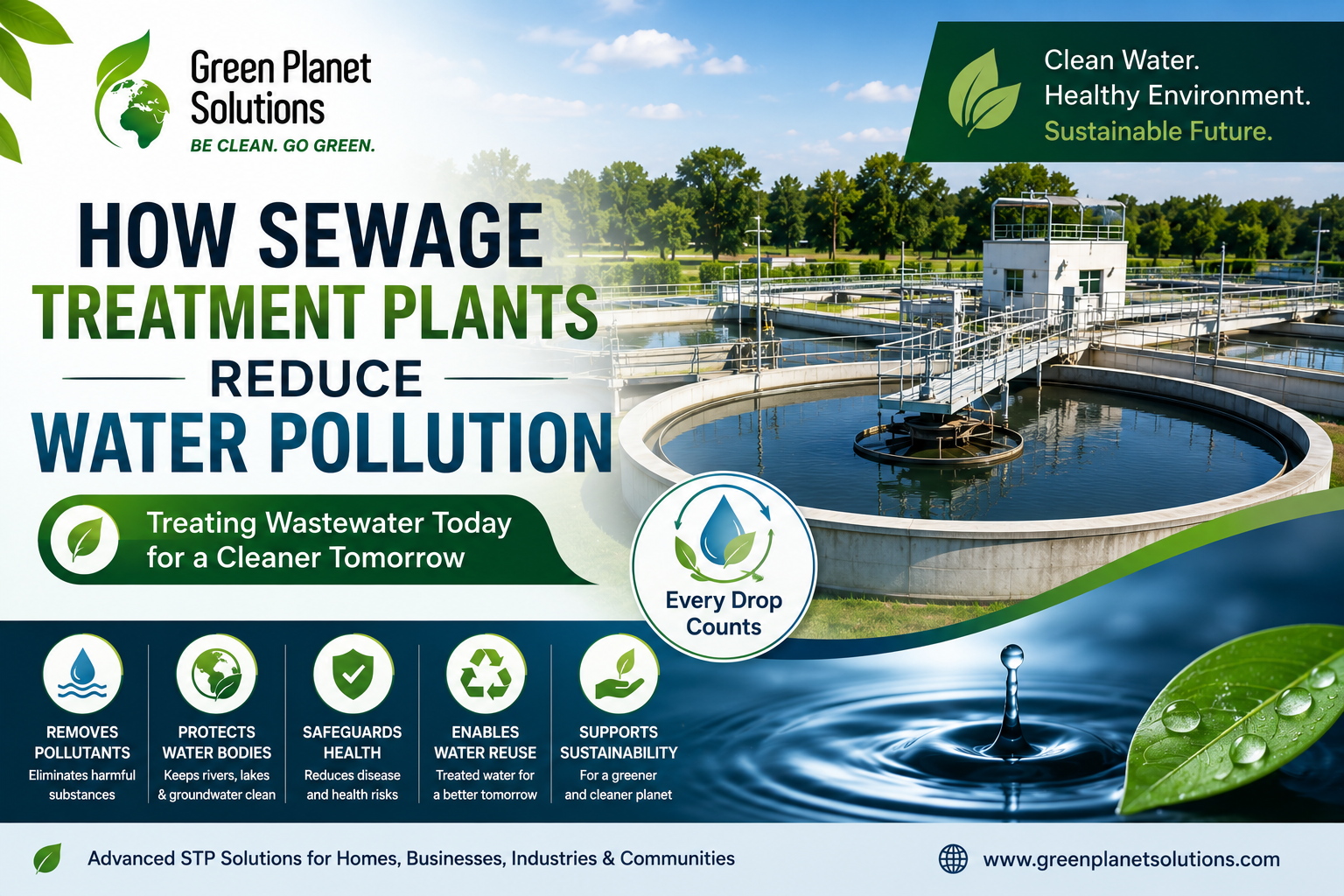
Turning Wastewater into a Resource for a Cleaner and Healthier Environment
Water pollution is one of the major environmental challenges faced by growing cities, industries, hotels, hospitals, and residential communities. Every day, large quantities of wastewater containing organic matter, chemicals, suspended solids, and harmful microorganisms are generated. If this wastewater is released without proper treatment, it can contaminate rivers, lakes, groundwater, and other natural water sources. A Sewage Treatment Plant (STP) provides an effective solution by treating wastewater before it is discharged or reused. By removing pollutants and improving water quality, STPs play an important role in protecting the environment and supporting sustainable development.
What Is a Sewage Treatment Plant?
A Sewage Treatment Plant is a system designed to treat wastewater generated from residential, commercial, institutional, and other facilities. The treatment process removes unwanted contaminants and produces treated water that can be safely discharged or reused for suitable non-potable applications.
Modern STPs use biological, physical, and filtration processes to improve wastewater quality. Depending on the project requirements, technologies such as MBBR, SBR, and MBR can be used.
How Untreated Wastewater Causes Pollution
Wastewater can contain food particles, oils, detergents, organic matter, nutrients, suspended solids, and microorganisms. When discharged directly into natural water bodies, these pollutants can negatively affect water quality and aquatic ecosystems.
High levels of organic matter can reduce the oxygen available in water, while excess nutrients can contribute to unwanted algae growth. Harmful microorganisms can also create health risks for people and animals.
Proper wastewater treatment helps prevent these pollutants from reaching the environment.
How STPs Help Reduce Water Pollution
1. Removes Suspended Solids
The first stages of wastewater treatment remove larger particles and suspended solids from sewage. Screening and settling processes help separate these materials from the wastewater.
Removing solids improves the quality of treated water and prevents pollutants from accumulating in rivers, lakes, and drainage systems.
2. Reduces Organic Pollutants
Wastewater contains biodegradable organic matter that can consume oxygen when released into natural water bodies.
Biological treatment processes use microorganisms to break down organic pollutants. This significantly improves the quality of the treated water before discharge or reuse.
3. Reduces Harmful Microorganisms
Untreated sewage may contain bacteria, viruses, and other microorganisms that can pose health risks.
Depending on the required treatment standard, disinfection processes can be incorporated into an STP to reduce harmful microorganisms and make treated water more suitable for its intended application.
4. Controls Excess Nutrients
Wastewater can contain nutrients such as nitrogen and phosphorus. When excessive amounts enter lakes and rivers, they can contribute to eutrophication and disturb aquatic ecosystems.
Advanced wastewater treatment systems can incorporate processes designed to reduce nutrient levels and protect sensitive water bodies.
Treated Water Can Be Reused
One of the biggest advantages of modern sewage treatment is the opportunity to reuse treated wastewater.
Depending on local regulations and treatment quality, treated water can be used for applications such as:
- Landscape irrigation
- Gardening
- Toilet flushing
- Cooling systems
- Road cleaning
- Certain industrial processes
Water reuse reduces the demand for freshwater and helps organizations manage water resources more efficiently.
STPs Support Sustainable Development
Effective wastewater treatment contributes to a more sustainable approach to water management. Instead of treating wastewater simply as something to dispose of, modern systems allow businesses and communities to recover and reuse water wherever appropriate.
This supports water conservation, reduces pollution, and helps organizations achieve their environmental and sustainability objectives.
Where Are Sewage Treatment Plants Used?
STPs are suitable for a wide range of applications, including:
- Residential Apartments
- Hotels and Resorts
- Hospitals
- Shopping Malls
- Commercial Buildings
- Educational Institutions
- Industrial Facilities
- Corporate Campuses
- Municipal Projects
Each facility has different wastewater characteristics, so the treatment system should be designed according to the project’s capacity, water quality requirements, available space, and intended reuse applications.
Choosing the Right STP Technology
There is no single STP solution suitable for every project. Factors such as wastewater volume, available space, required treated-water quality, operating costs, and reuse requirements should be considered.
MBBR systems are widely used for compact and efficient biological treatment, while SBR systems can provide flexible batch treatment. MBR systems combine biological treatment with membrane filtration and can produce high-quality treated water where stringent standards or reuse requirements apply.
Selecting the right technology helps ensure reliable performance and long-term efficiency.
Why Choose Green Planet Solutions?
Green Planet Solutions provides customized Sewage Treatment Plant solutions for residential, commercial, industrial, hospitality, and institutional projects.
Our solutions are designed around the specific wastewater treatment requirements of each project, with a focus on efficient treatment, water reuse, reliable operation, and sustainable wastewater management.
From system selection and design to installation and ongoing support, Green Planet Solutions helps organizations move toward cleaner water management and a greener future.
Conclusion
Sewage Treatment Plants play a vital role in reducing water pollution by removing solids, organic pollutants, microorganisms, and other contaminants from wastewater. They help protect natural water resources while creating opportunities to reuse treated water for appropriate applications.
As cities and businesses continue to grow, investing in reliable wastewater treatment is becoming increasingly important. A well-designed STP is not simply a waste management system—it is an essential part of responsible water management and sustainable development.
Clean Water Starts with Responsible Wastewater Management
With the right STP technology and proper operation, businesses and communities can reduce their environmental impact, conserve valuable water resources, and contribute to a cleaner and healthier future.