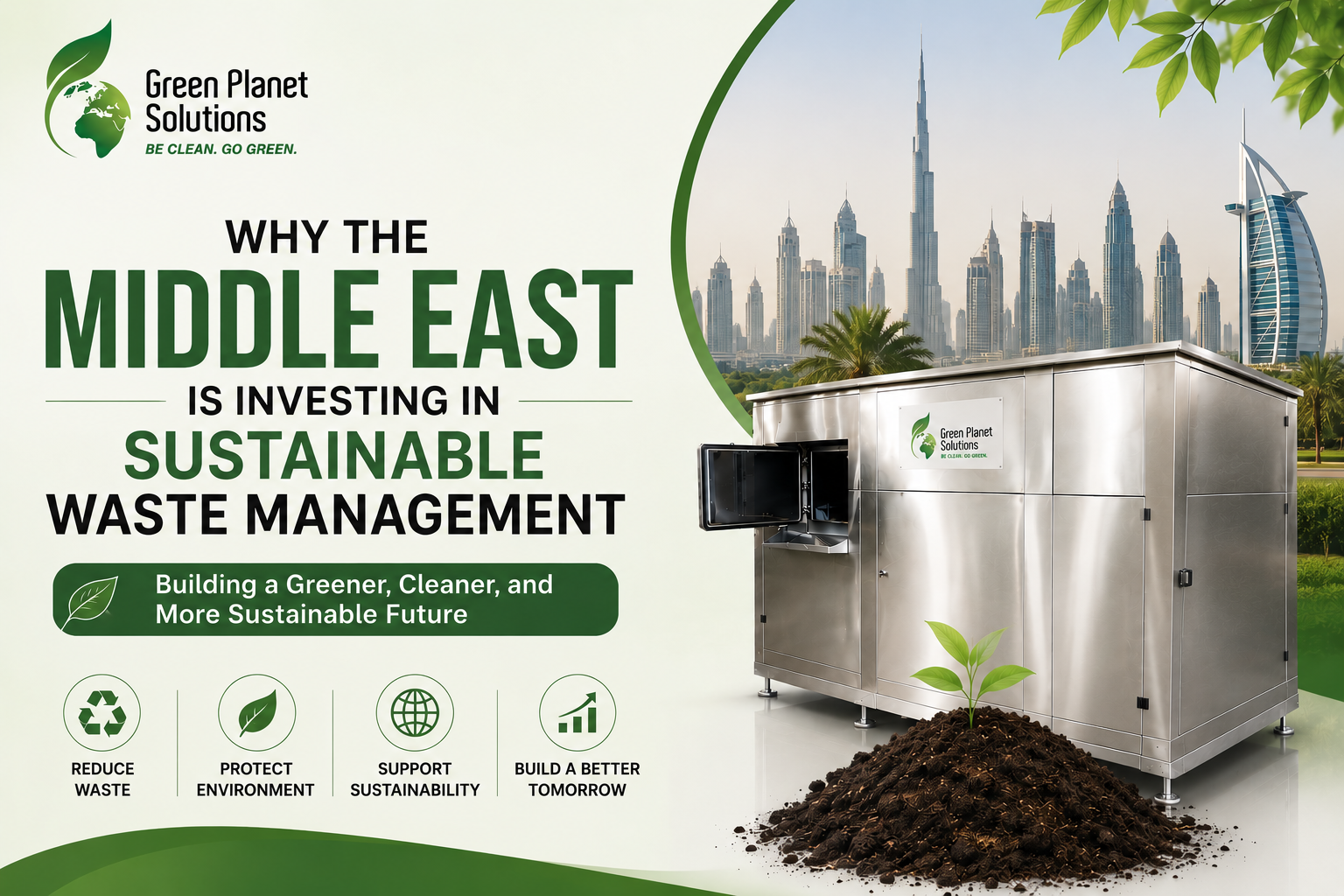
Why the Middle East Is Investing in Sustainable Waste Management
As the Middle East continues to experience rapid urbanization, economic growth, and infrastructure development, sustainable waste management has become a key priority for governments and businesses alike. Countries such as the UAE, Saudi Arabia, Qatar, Oman, Kuwait, and Bahrain are implementing innovative waste management strategies to reduce landfill dependence, protect natural resources, and support long-term environmental goals.
From smart cities to large-scale tourism projects, sustainable waste management is no longer just an environmental responsibility—it is an essential part of economic and social development.
The Growing Waste Management Challenge
The Middle East generates millions of tons of municipal and commercial waste every year. Rapid population growth, expanding hospitality sectors, and increasing consumer demand have significantly increased the amount of organic waste produced by hotels, restaurants, shopping malls, hospitals, and residential communities.
Traditional waste disposal methods are becoming less effective as landfill space decreases and environmental concerns continue to grow. This has encouraged governments and private organizations to adopt more sustainable waste management solutions.
Government Sustainability Initiatives
Many Middle Eastern countries have introduced ambitious sustainability programs aimed at reducing waste and promoting a circular economy.
National development plans encourage businesses to adopt eco-friendly technologies, improve recycling rates, and minimize landfill waste. These initiatives are creating new opportunities for organizations to invest in advanced waste management systems that support long-term environmental goals.
The Rise of Smart Cities using Waste Management
The Middle East is home to some of the world’s most advanced smart city projects. These developments focus on efficient resource management, clean energy, and sustainable infrastructure.
Effective waste management plays a vital role in smart city planning. Automated composting machines, recycling systems, and intelligent waste collection technologies help cities reduce pollution while improving operational efficiency.
Growing Demand from the Hospitality Industry
Tourism continues to be one of the fastest-growing industries across the Middle East. Luxury hotels, resorts, restaurants, and catering businesses generate significant amounts of food waste every day.
Many hospitality businesses are now investing in commercial composting machines to process organic waste on-site. This helps reduce disposal costs, minimize environmental impact, and demonstrate a strong commitment to sustainable operations.
Focus on Reducing Landfill Waste
Organic waste is one of the largest contributors to landfill volume. When food waste decomposes in landfills, it releases methane—a greenhouse gas that contributes to climate change.
By converting food waste into nutrient-rich compost, businesses can significantly reduce landfill waste while creating a useful product for landscaping, agriculture, and green spaces.
Increasing Corporate Sustainability Goals
Environmental, Social, and Governance (ESG) initiatives have become an important part of corporate strategy across the Middle East. Investors, customers, and government authorities increasingly expect businesses to operate responsibly and reduce their environmental impact.
Adopting sustainable waste management solutions not only improves environmental performance but also strengthens brand reputation and demonstrates long-term commitment to sustainability.
Technology Is Driving Change
Modern waste management technologies are making sustainable practices easier than ever before.
Fully automatic composting machines offer features such as:
- Automated operation
- Faster composting cycles
- Low energy consumption
- Odor control systems
- Compact installation
- Easy maintenance
These innovations enable organizations to manage organic waste efficiently without disrupting daily operations.
Industries Leading the Transformation
Several industries are actively investing in sustainable waste management solutions, including:
- Hotels and Resorts
- Restaurants and Food Courts
- Hospitals
- Shopping Malls
- Educational Institutions
- Residential Communities
- Corporate Campuses
- Airports
- Municipal Authorities
These sectors generate large volumes of biodegradable waste and benefit significantly from on-site composting and recycling solutions.
How Green Planet Solutions Supports Sustainable Waste Management
Green Planet Solutions provides advanced commercial composting machines that help businesses convert organic waste into valuable compost quickly and efficiently.
Our solutions are designed for commercial and industrial applications, offering reliable performance, energy efficiency, and user-friendly operation. Whether serving the hospitality sector, healthcare facilities, educational institutions, or residential communities, our systems help organizations reduce waste, lower operating costs, and achieve their sustainability goals.
Conclusion
The Middle East is investing heavily in sustainable waste management because it supports economic growth, environmental protection, and long-term resource conservation. As governments promote greener policies and businesses embrace responsible practices, innovative technologies like commercial composting machines are becoming an essential part of modern waste management.
Organizations that invest in sustainable solutions today are not only reducing waste but also building stronger, more environmentally responsible businesses for the future. Green Planet Solutions is proud to support this transition by delivering reliable composting technologies that contribute to a cleaner, greener Middle East.