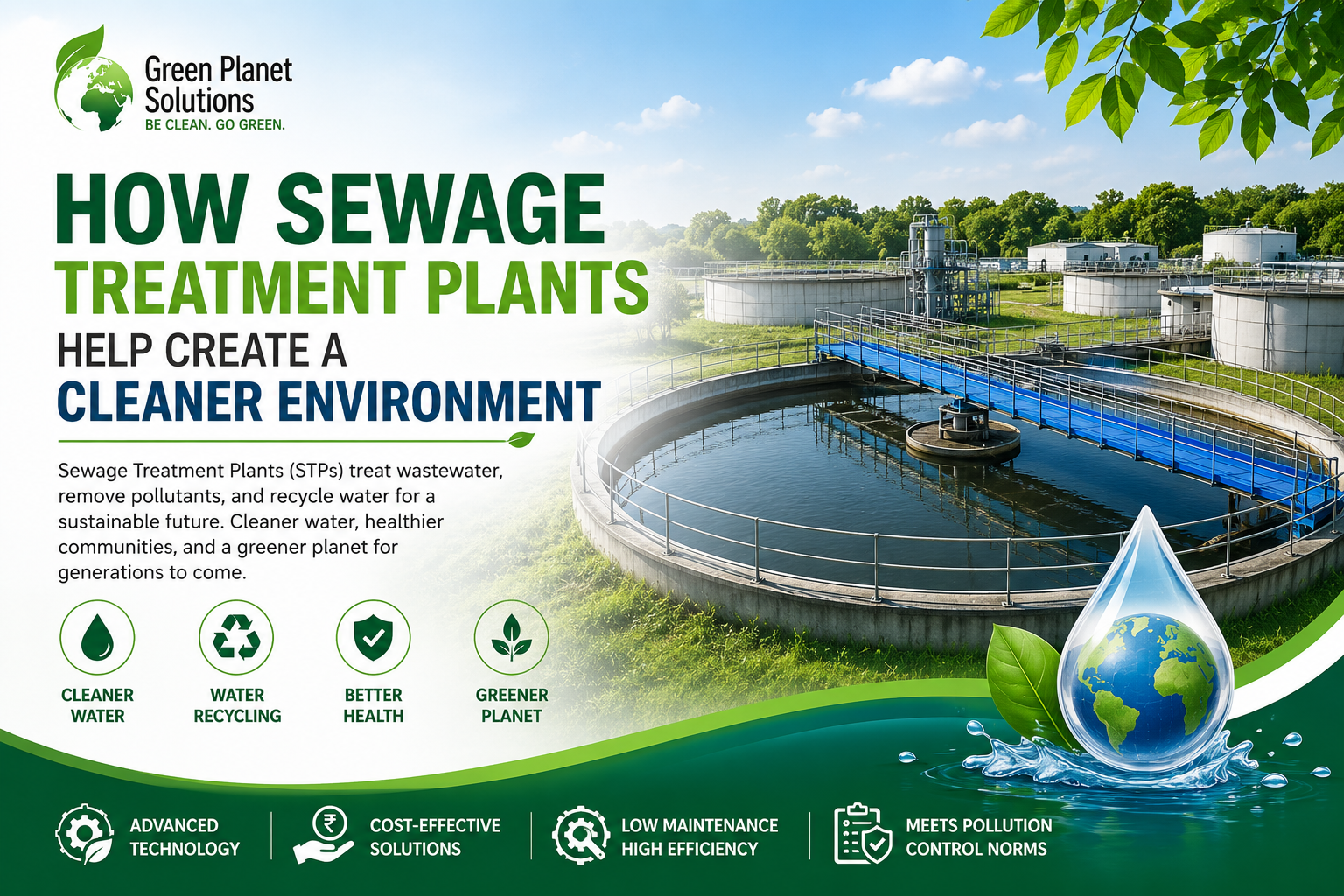
Introduction of Sewage Treatment Plants
Water is one of the most important natural resources for life, but increasing urbanization and industrial growth are creating large amounts of wastewater every day. Without proper treatment, sewage water can pollute rivers, lakes, and underground water sources, causing serious environmental and health problems. Sewage Treatment Plants (STPs) play a vital role in treating wastewater and protecting the environment by converting contaminated water into reusable and eco-friendly water.
What is a Sewage Treatment Plants (STP)?
A Sewage Treatment Plant is a system designed to remove contaminants, harmful bacteria, chemicals, and pollutants from wastewater generated by residential, commercial, and industrial areas. The treated water can then be safely reused for gardening, flushing, industrial operations, and other non-drinking purposes.
Modern STPs use advanced technologies to ensure efficient water purification while reducing environmental impact.
How Sewage Treatment Plants Protect the Environment
1. Reduces Water Pollution
Untreated sewage released into natural water bodies can damage aquatic life and pollute drinking water sources. STPs help remove harmful substances before the water is discharged or reused, keeping rivers and lakes cleaner.
2. Promotes Water Recycling
Treated wastewater can be reused for landscaping, agriculture, industrial cooling, and cleaning purposes. This reduces the demand for freshwater and supports sustainable water management.
3. Improves Public Health
Wastewater contains harmful bacteria, viruses, and toxins that can spread diseases. Sewage Treatment Plants eliminate these contaminants, helping create healthier communities and safer surroundings.
4. Supports Sustainable Development
STPs help industries, residential complexes, airports, hotels, hospitals, and commercial buildings meet environmental regulations and sustainability goals while reducing their ecological footprint.
5. Protects Natural Ecosystems
By preventing untreated sewage from entering the environment, STPs help protect aquatic ecosystems, wildlife, and soil quality.
Key Benefits of Modern Sewage Treatment Plants
- Eco-friendly wastewater management
- Reduced environmental pollution
- Cost-effective water reuse solutions
- Low maintenance and high efficiency
- Compliance with pollution control norms
- Supports green infrastructure development
The Future of Wastewater Management
As cities continue to grow, the importance of efficient wastewater treatment is increasing rapidly. Modern Sewage Treatment Plants are becoming smarter, more compact, and energy-efficient, helping businesses and communities move toward a cleaner and greener future.
Investing in advanced STP solutions is not only beneficial for the environment but also essential for sustainable development and responsible water usage.
Conclusion
Sewage Treatment Plants are an important step toward environmental protection and sustainable living. By treating and recycling wastewater efficiently, STPs reduce pollution, conserve water, and create healthier communities. Businesses and residential projects that adopt modern wastewater treatment solutions contribute significantly to building a greener tomorrow.
Green Planet Solutions
Be Clean. Go Green.
📞 +91 7722073961
📧 inquiry@thegreenplanetsolutions.com