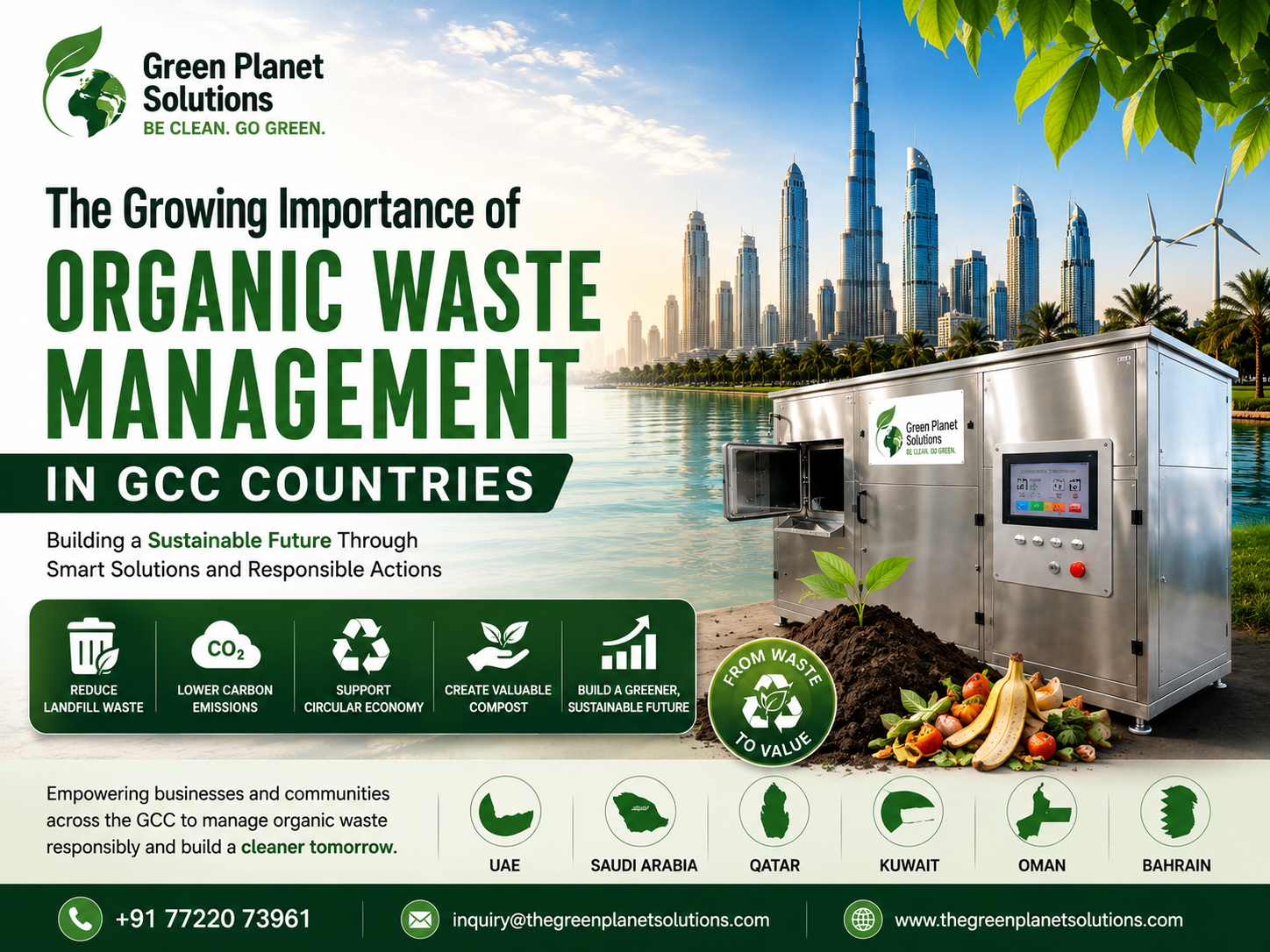
Driving Sustainability and Environmental Responsibility Across the Gulf Region
The Gulf Cooperation Council (GCC) countries, including the United Arab Emirates, Saudi Arabia, Qatar, Kuwait, Oman, and Bahrain, are experiencing rapid economic growth, urban development, and population expansion. While this growth has created numerous opportunities, it has also increased the challenge of managing waste effectively. Among the various waste streams, organic waste has become one of the most significant environmental concerns.
As governments and businesses across the GCC focus on sustainability and environmental protection, organic waste management is emerging as a critical solution for reducing landfill waste, lowering carbon emissions, and supporting a circular economy.
Understanding Organic Waste
waste includes food scraps, fruit and vegetable peels, garden waste, agricultural residues, and other biodegradable materials. Hotels, restaurants, shopping malls, residential communities, food processing facilities, and commercial establishments generate large quantities of organic waste every day.
When organic waste is disposed of in landfills, it decomposes and releases methane gas, a greenhouse gas that is significantly more harmful than carbon dioxide. This contributes to climate change and increases environmental pressure across the region.
Why Organic Waste Management is Becoming a Priority
The GCC region is actively investing in sustainability initiatives as part of its long-term development strategies. Governments are implementing environmental regulations and encouraging businesses to adopt greener practices to reduce their environmental footprint.
Effective organic waste management helps organizations:
- Reduce landfill dependency
- Minimize greenhouse gas emissions
- Improve environmental compliance
- Support sustainability goals
- Recover valuable resources from waste
- Lower waste management costs
As sustainability becomes a key focus area, businesses are increasingly recognizing the importance of responsible waste management practices.
The Challenge of Food Waste in the GCC
Food waste remains one of the largest contributors to organic waste generation in GCC countries. The hospitality industry, restaurants, catering services, and large commercial facilities often produce significant volumes of food waste daily.
Without proper management systems, this waste creates environmental challenges and increases disposal costs. As a result, businesses are seeking innovative solutions that can process organic waste efficiently while supporting sustainability objectives.
The Role of Composting in Organic Waste Management
Composting is one of the most effective methods for managing waste. Modern composting machines accelerate the natural decomposition process and convert food waste into nutrient-rich compost.
The compost produced can be used for landscaping, agriculture, and green infrastructure projects, transforming waste into a valuable resource. Composting not only reduces landfill waste but also supports the development of sustainable communities throughout the GCC region.
Benefits of Organic Waste Management for Businesses
Reduced Waste Disposal Costs
By processing organic waste on-site, businesses can significantly reduce transportation and landfill disposal expenses.
Improved Sustainability Performance
Organizations can strengthen their environmental initiatives and contribute to national sustainability goals.
Enhanced Brand Reputation
Customers, investors, and stakeholders increasingly favor businesses that demonstrate environmental responsibility.
Lower Carbon Footprint
Organic waste diversion and composting help reduce greenhouse gas emissions and environmental impact.
Support for ESG Objectives
Effective waste management contributes directly to Environmental, Social, and Governance (ESG) performance metrics.
How Green Planet Solutions Supports GCC Businesses
Green Planet Solutions is helping organizations across the GCC region adopt smarter and more sustainable waste management practices. Through advanced composting machines and innovative organic waste management solutions, the company enables businesses to transform waste into valuable resources while reducing environmental impact.
Green Planet Solutions provides customized waste management systems for hotels, restaurants, industries, residential communities, institutions, and commercial establishments. With a focus on efficiency, sustainability, and long-term value, the company supports clients in achieving their waste reduction and environmental goals.
By helping organizations manage waste responsibly, Green Planet Solutions contributes to the region’s vision for a cleaner and more sustainable future.
The Future of Organic Waste Management in the GCC
As GCC countries continue to invest in smart cities, sustainability initiatives, and environmental protection programs, the demand for effective organic waste management solutions will continue to grow.
Businesses that adopt composting technologies and sustainable waste management practices today will be better positioned to meet future regulations, reduce costs, and strengthen their environmental performance.
Conclusion
Organic waste management is becoming increasingly important across GCC countries as governments, businesses, and communities work toward a more sustainable future. From reducing landfill dependency and greenhouse gas emissions to creating valuable compost and supporting circular economy initiatives, the benefits are substantial.
With innovative composting technologies and a commitment to sustainability, Green Planet Solutions continues to help organizations across the GCC transform organic waste into opportunity, creating cleaner, greener, and more environmentally responsible communities.