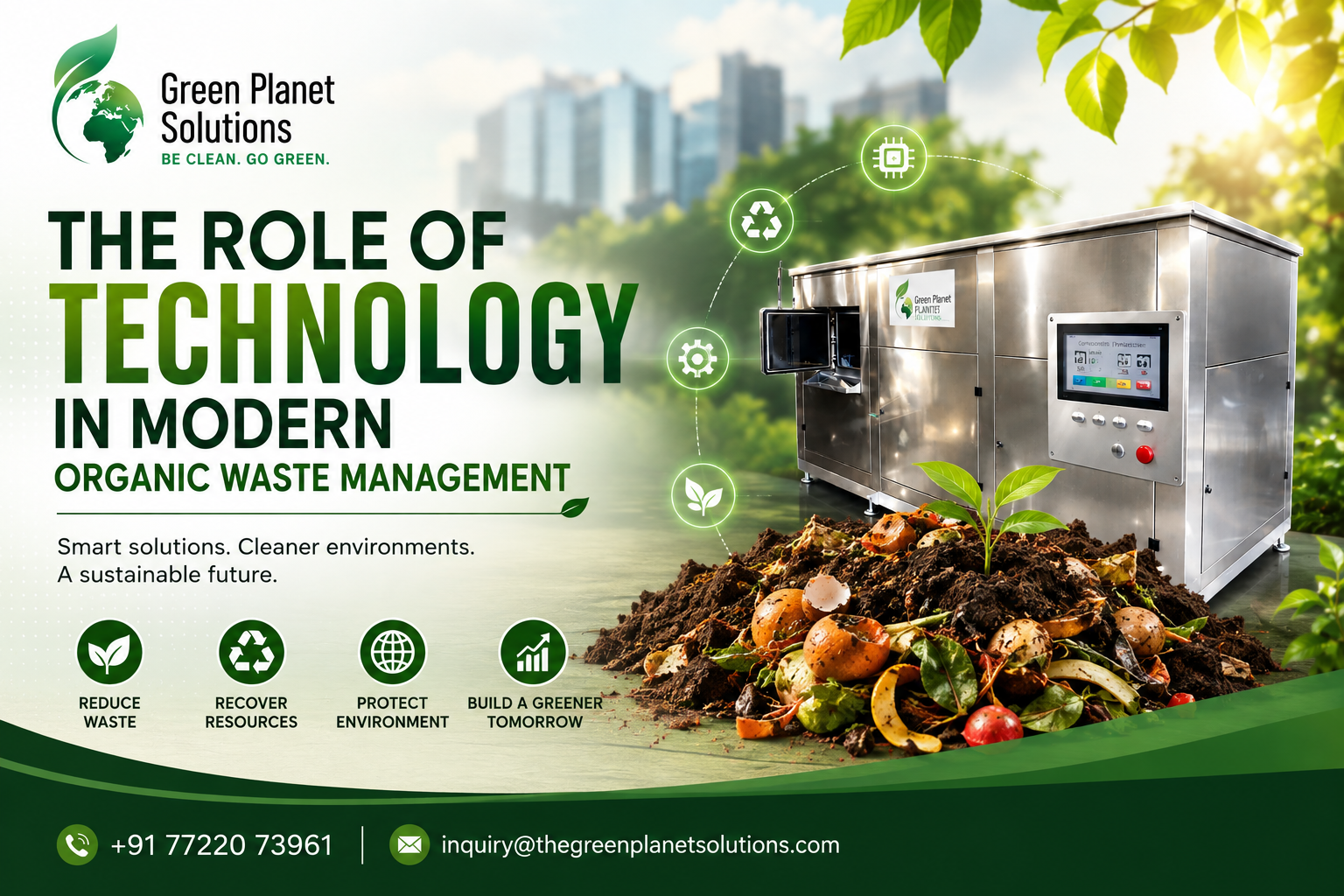
Turning Organic Waste Into a Valuable Resource
Organic waste is a natural part of everyday life. Food scraps from restaurants, hotels, residential communities, supermarkets, and commercial kitchens can quickly become a major waste-management challenge when they are simply collected and sent to landfills. With growing cities and increasing waste generation, businesses are now looking for smarter and more sustainable ways to handle organic waste.
Technology is changing the way waste is managed. Modern solutions such as composting machines, automated processing systems, and smart waste-management equipment can help businesses process organic waste closer to where it is generated and turn it into a useful resource.
Moving Beyond Traditional Waste Disposal
Traditional waste management often depends on collecting organic waste and transporting it to a distant disposal facility. This approach can involve high transportation requirements, unpleasant odours, and unnecessary pressure on landfill sites.
Modern organic waste management takes a different approach. Instead of treating food waste simply as something to throw away, businesses can process it on-site using dedicated technology. This can make waste handling more organized while supporting a cleaner and more sustainable operation.
How Composting Technology Makes a Difference
One of the most practical technologies for waste management is the composting machine. These machines are designed to process food and other suitable organic waste in a controlled environment.
Depending on the system and application, the process can help reduce the volume of organic waste and transform it into compost or compost-like material that can be further managed for beneficial use.
For hotels, restaurants, residential communities, institutions, and other large facilities, on-site composting can provide a more convenient approach to handling significant quantities of food waste.
Automation Makes Waste Management Smarter
Technology has also introduced greater automation into organic waste processing. Modern machines can include automated controls for important operating conditions, reducing the need for constant manual intervention.
This can make daily operations easier for facility teams and provide a more consistent waste-processing routine. Businesses can integrate these systems into their existing waste-management practices without completely changing their overall operations.
Reducing the Burden of Food Waste
A major advantage of technology-driven organic management is the ability to handle waste closer to its source.
For example, a large hotel may generate substantial quantities of food waste every day. Instead of transporting all of this waste away from the property, an appropriate on-site composting solution can help process a portion of the organic waste within the facility.
This approach can help reduce the amount of organic waste requiring external disposal and support more efficient waste-management practices.
Supporting a Circular Approach
Modern waste management is increasingly moving toward a circular approach, where materials are viewed as resources rather than simply waste.
waste contains valuable nutrients and organic matter. Through appropriate processing, it can be converted into useful outputs such as compost, helping return organic material back to the environment.
This shift from “collect and dispose” to “process and recover” is an important step toward more responsible resource management.
Technology and Sustainable Business Operations
Sustainability is no longer limited to environmental organizations. Hotels, restaurants, property developers, hospitals, educational institutions, and commercial facilities are increasingly looking for practical ways to improve their environmental performance.
Organic waste management technology can become part of this larger sustainability strategy. By investing in suitable waste-processing equipment, businesses can demonstrate a commitment to responsible resource management while improving how organic waste is handled on-site.
Choosing the Right Technology
There is no single solution that works for every organization. The right organic waste management system depends on factors such as the quantity and type of waste, available space, operating requirements, location, and expected output.
Before selecting a composting machine, businesses should evaluate their daily waste generation and understand how the equipment will fit into their existing operations.
A properly planned system can make the difference between simply purchasing equipment and creating an effective long-term waste-management solution.
The Future of Organic Waste Management
As technology continues to develop, organic waste management is becoming more efficient, automated, and resource-focused. Businesses are moving toward solutions that can reduce waste volumes, improve on-site processing, and support sustainable practices.
The future is not about producing less waste alone—it is also about managing the waste we generate more intelligently.
A Greener Way Forward
Technology gives businesses an opportunity to rethink organic waste. What was once considered a disposal problem can become part of a more sustainable resource-management system.
With modern composting and organic waste processing solutions, organizations can take practical steps toward reducing their environmental impact and building cleaner operations.
Green Planet Solutions provides sustainable organic waste management solutions designed to help businesses move toward a cleaner and greener future.
BE CLEAN. GO GREEN. 🌱