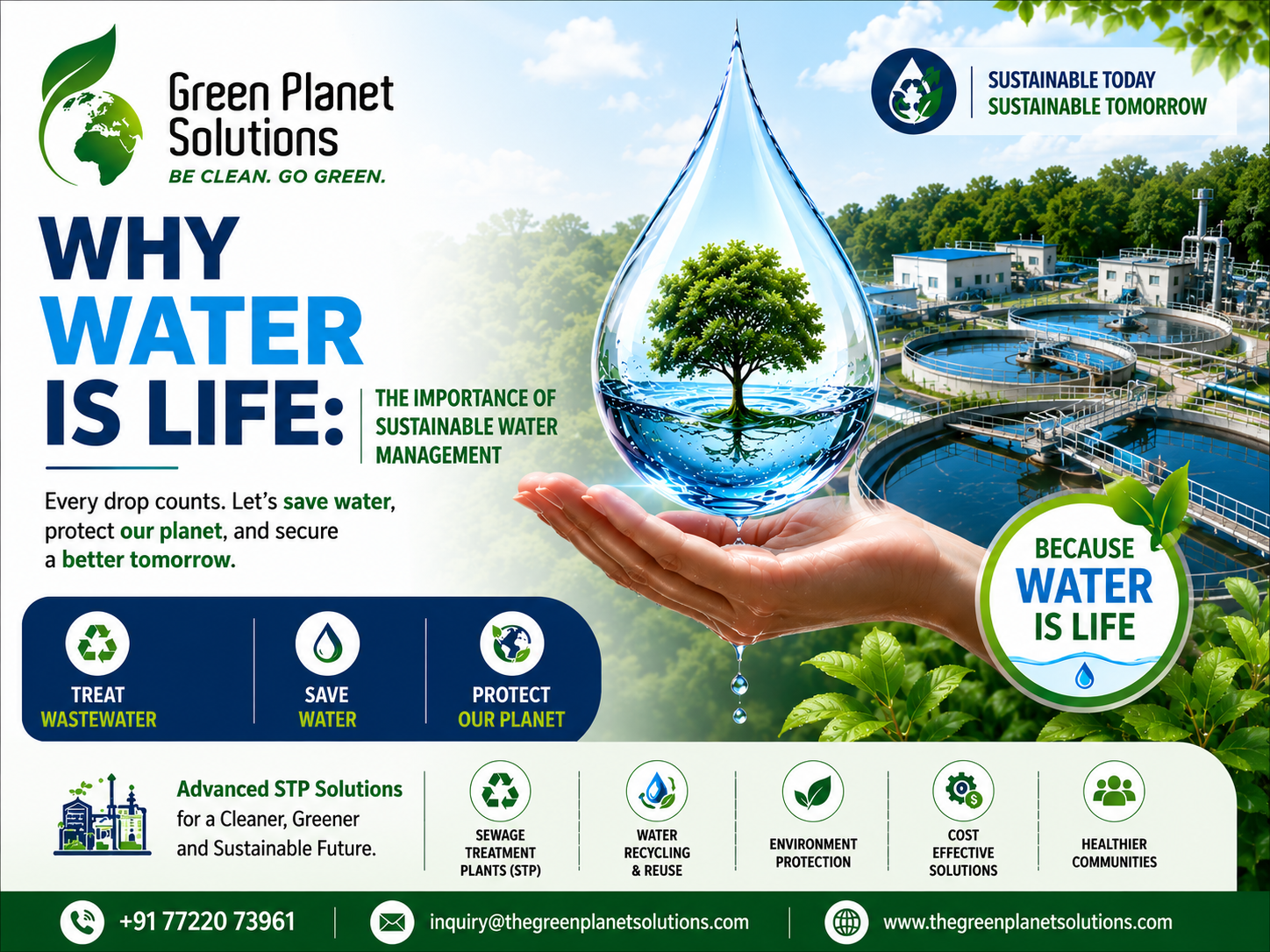
Water: The Foundation of Life
Water is one of the most valuable natural resources on Earth. Every living organism depends on water for survival, making it essential for human health, agriculture, industries, and ecosystems. Despite covering nearly 70% of the Earth’s surface, only a small percentage of water is suitable for drinking and daily use. Rapid urbanization, population growth, and increasing pollution have put immense pressure on water resources, making sustainable water management more important than ever.
Understanding Sustainable Water Management
Sustainable water management refers to the responsible use, conservation, treatment, and reuse of water resources to meet current needs without compromising future generations. It focuses on reducing water wastage, improving water efficiency, treating wastewater, and protecting natural water sources.
Businesses, industries, residential communities, and government organizations are increasingly adopting sustainable water management practices to ensure long-term water security and environmental protection.
The Growing Challenge of Water Scarcity and Water Management
Many cities and regions around the world are facing severe water shortages due to climate change, overconsumption, and groundwater depletion. Rising demand for freshwater and inadequate wastewater treatment have further worsened the situation.
Without proper water management, communities may face:
- Water shortages for domestic use.
- Increased environmental pollution.
- Higher operational costs for industries.
- Health risks caused by contaminated water.
- Damage to ecosystems and biodiversity.
These challenges highlight the urgent need for sustainable water solutions.
The Role of Sewage Treatment Plants (STPs)
Sewage Treatment Plants play a crucial role in sustainable water management. STPs collect and treat wastewater generated from residential buildings, commercial complexes, industries, hotels, and institutions. The treated water can be safely reused for gardening, flushing, cooling systems, and other non-potable applications.
Modern STP systems help:
- Reduce freshwater consumption.
- Minimize environmental pollution.
- Improve water reuse capabilities.
- Meet environmental regulations.
- Lower water procurement costs.
By recycling wastewater, STPs contribute significantly to water conservation and sustainable development.
Benefits of Sustainable Water Management
Implementing effective water management practices offers numerous benefits for organizations and communities:
1. Water Conservation and Water Management
Efficient water usage reduces unnecessary wastage and preserves natural resources for future generations.
2. Environmental Protection
Treating and reusing wastewater prevents contamination of rivers, lakes, and groundwater.
3. Cost Savings
Water recycling systems reduce dependency on fresh water sources, lowering utility costs.
4. Regulatory Compliance
Proper wastewater treatment helps organizations comply with environmental standards and government regulations.
5. Sustainable Development
Responsible water management supports green infrastructure and sustainable communities.
Green Planet Solutions: Building a Water-Secure Future
Green Planet Solutions is committed to promoting sustainable water management through advanced Sewage Treatment Plant solutions. Our innovative technologies help businesses, industries, residential societies, and institutions treat and reuse wastewater efficiently.
Our STP solutions are designed to:
- Improve water recycling.
- Reduce environmental impact.
- Support sustainable development.
- Promote responsible water usage.
- Create cleaner and healthier communities.
Conclusion
Water is not just a resource; it is the foundation of life itself. As water scarcity becomes a growing global concern, adopting sustainable water management practices is essential for protecting our environment and securing future water supplies.
By investing in advanced water treatment solutions such as STP plants, organizations and communities can conserve water, reduce pollution, and contribute to a greener future. Together, we can ensure that every drop counts and build a more sustainable world for generations to come.